
Flat Out Fantastic – Why a Commercial Electric Oven with Griddle is a Smart Choice
The Ultimate Kitchen Workhorse for Modern Commercial Kitchens
A commercial electric oven with griddle is a versatile all-in-one appliance that combines an electric oven, griddle cooking surface, and often additional hot plates or burners in a single unit. This space-saving solution is designed for professional kitchens that need maximum cooking versatility without sacrificing valuable floor space.
Key Benefits at a Glance:
- All-in-one design - Oven, griddle, and burners in one compact unit
- Precise temperature control - Electric elements provide consistent heat from 150°F to 450°F
- Space efficient - Perfect for kitchens with limited square footage
- Easy maintenance - Stainless steel construction with removable grease trays
- Consistent results - Even heat distribution for professional-quality cooking
As one industry expert noted: "Juggling grills, ovens, and flattops can slow down any pro kitchen. Enter the commercial gas range with griddle: your one-stop solution for sizzling breakfasts, perfectly grilled entrees, and even baked goods." The same principle applies to electric units, which offer the added benefits of precise temperature control and easier cleaning.
Whether you're running a compact bistro or a high-volume cafeteria, these versatile units can handle everything from morning pancakes on the griddle to afternoon sheet pan cookies in the oven - all while taking up the footprint of a single piece of equipment.
I'm Sean Kearney from Charbroilers.com, and with over a decade in the restaurant equipment industry, I've helped countless kitchen operators find the perfect commercial electric oven with griddle for their specific needs. My experience at Amazon and founding The Restaurant Warehouse has shown me exactly what busy kitchens need to maximize efficiency and profitability.
Commercial electric oven with griddle terms to know:
- commercial griddle propane
- commercial gas stove 48 inch
- how to clean a commercial stainless steel griddle
What is a Commercial Electric Range with a Griddle and Oven?
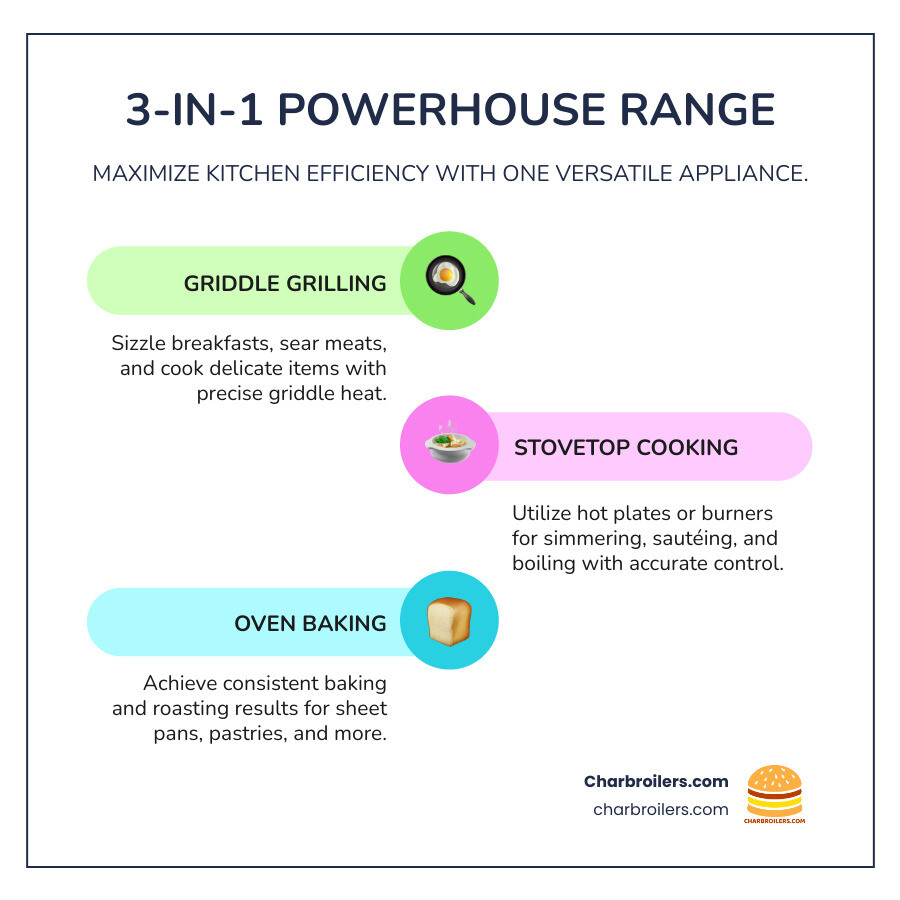
Picture this: it's 7 AM, your breakfast rush is about to hit, and you need to flip pancakes, sauté vegetables, and bake fresh muffins all at once. A commercial electric oven with griddle makes this juggling act effortless by combining three essential cooking methods into one smart appliance.
At its core, this all-in-one appliance brings together a spacious griddle surface, multiple hot plates or burners, and a full-sized oven in a single compact unit. It's designed specifically for professional kitchens where space is precious and efficiency is everything.
The primary uses span the entire spectrum of commercial cooking. You can sear steaks and cook eggs on the griddle, simmer sauces on the hot plates, and bake bread in the oven below – all without taking a single step. This makes it the ultimate kitchen workhorse for any foodservice operation.
What sets electric power apart is its precise temperature control and remarkably even heat distribution. While gas ranges give you that instant flame response, electric units excel at maintaining steady, consistent temperatures. This means no more hot spots on your griddle surface and perfectly even baking results every time.
Electric ranges also serve as an excellent alternative to gas ranges, especially for operations without existing gas lines or those prioritizing temperature precision. For more insights into griddle options, check out our guide with more info about commercial griddles.
The Core Advantages for Your Kitchen
When you invest in a commercial electric oven with griddle, you're getting more than just cooking equipment – you're upgrading your entire kitchen workflow.
Energy efficiency is one of the biggest surprises. While a 36-inch unit might draw 18.2 kW of power, electric elements convert energy into heat more efficiently than you might expect. Modern chrome griddle plates can even slash your energy costs by up to 30% through superior heat retention.
The consistent heat delivery changes everything about your cooking results. Electric elements maintain stable temperatures across the entire griddle surface and throughout the oven cavity. This means your pancakes come out golden every time, and your baked goods rise evenly from edge to center.
Your kitchen's improved workflow becomes immediately obvious. Instead of running between separate appliances, everything you need sits within arm's reach. One chef can manage multiple cooking tasks simultaneously without missing a beat.
Easier cleaning saves you time and hassle at the end of each day. The smooth, sealed surfaces of electric ranges wipe down effortlessly compared to gas grates and burners. Most models feature stainless steel construction with convenient pull-out crumb trays that make maintenance simple.
Safer operation eliminates the risks that come with open flames. There's no chance of gas leaks, and the reduced kitchen heat creates a more comfortable working environment for your staff during those intense dinner rushes.
For deeper insights into maximizing your oven performance, explore The Ultimate Guide to Comparing Commercial Convection Ovens.
Who Benefits Most from This Appliance?
Compact bistros and cafes love these units because they maximize cooking capabilities without eating up precious floor space. When every square foot counts, an all-in-one solution makes perfect sense.
High-volume cafeterias and institutional kitchens rely on the consistent heat and durable construction to serve hundreds of meals daily. The reliable performance keeps service running smoothly even during peak hours.
Diners and breakfast spots find the integrated griddle perfect for their signature dishes. Whether you're flipping eggs Benedict or cooking hash browns, that large, even cooking surface handles the morning rush with ease.
Restaurants with diverse menus appreciate the versatility. You can sear proteins on the griddle, prepare delicate sauces on the hot plates, and bake desserts in the oven – all from one station.
Kitchens without gas lines have no other choice, but they often find electric is actually their preferred option. Installation is simpler, and the temperature control is often superior to what they could achieve with gas.
Operations prioritizing precise temperature control find electric ranges indispensable. When your recipes demand exact temperatures or you need consistent results across multiple batches, the superior temperature stability of electric elements becomes a game-changer.
Key Features and Configurations of a Commercial Electric Oven with Griddle
When you're shopping for a commercial electric oven with griddle, you'll quickly find there's no one-size-fits-all solution. These versatile units come in various configurations, each designed to tackle different kitchen challenges and cooking styles.
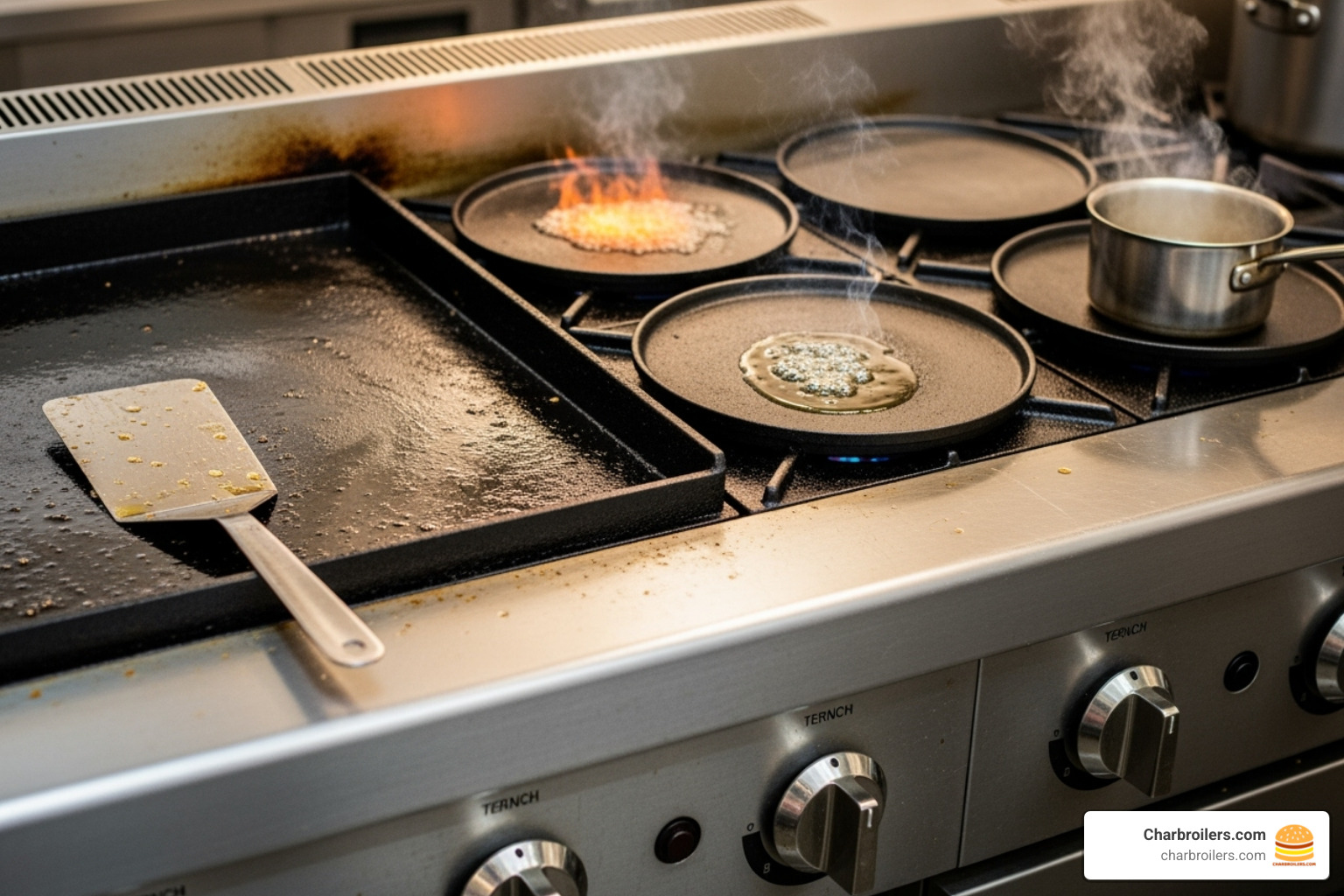
Think of these units as the Swiss Army knife of commercial kitchens. They typically combine cooktop options like hot plates and French plates, griddle surfaces in various sizes, and oven configurations that can handle everything from delicate pastries to hearty roasts. All of this comes wrapped in a sturdy stainless steel framework that's built to withstand the daily grind of commercial food service.
Cooktop Configurations: Beyond the Griddle
While the griddle might steal the spotlight, the cooktop area of your commercial electric oven with griddle offers plenty of other cooking possibilities that'll make your kitchen hum with efficiency.
Hot plates are the workhorses you'll find on most models, typically delivering around 2 kW of power each. Some units even mix things up with a combination of 2.6 kW and 2 kW hot plates, giving you options for high-heat searing or gentle simmering. These are perfect when you need to boil pasta, reduce sauces, or keep soups at the perfect serving temperature.
French plates bring something special to the table – literally. These solid, flat cast iron surfaces provide consistent, gentle heat that's ideal for delicate work. If you've ever tried to make a perfect hollandaise or keep multiple sauces warm without scorching, you'll appreciate the even temperature these plates maintain. Most come with infinite heat controls, so you can dial in exactly the temperature you need.
Many ranges offer combination tops that blend open elements, French plates, and griddle space all in one unit. It's like having multiple cooking stations without eating up your valuable kitchen real estate.
Understanding the Oven Component in a commercial electric oven with griddle
The oven half of your commercial electric oven with griddle is where electric power really shines, offering the kind of consistent heat that gas ovens sometimes struggle to match.
Standard ovens are the most common choice, featuring heating elements at both the top and bottom. With typical 5 kW heating elements, these ovens pack serious power for roasting, baking, and warming. The beauty of electric elements is their ability to maintain steady temperatures – no more worrying about gas pressure fluctuations affecting your bake times.
Convection ovens take things up a notch by adding a fan to circulate hot air throughout the cavity. This means faster cooking times and more even results, which is a game-changer for high-volume operations. Your sheet pans of cookies will brown evenly, and your roasts will cook more uniformly.
Most commercial units feature baker's depth design, meaning they can accommodate full-size sheet pans (18" x 26") in multiple orientations. A typical oven interior might measure around 26.6" x 25.8" x 13.9", giving you plenty of space for multiple dishes or large roasts.
The temperature range on these ovens typically spans from 200°F to 500°F, covering everything from gentle warming to high-heat roasting. This wide range means you can use the same oven for proofing bread dough in the morning and crisping pizza crusts during the dinner rush.
For more insights on maximizing your oven's potential, check out Bake Smarter, Not Harder: A Guide to Used Commercial Convection Ovens.
Choosing the Right Griddle Surface for your commercial electric oven with griddle
The griddle surface is where your commercial electric oven with griddle really earns its keep, and choosing the right one can make a huge difference in your daily operations.
Griddle size matters more than you might think. Common sizes include 24", 36", and 48" widths, and your choice should match your volume and menu needs. A 48-inch griddle gives you massive cooking real estate for busy breakfast rushes or lunch crowds, while smaller sizes work perfectly for more intimate operations.
Plate thickness is where things get technical but important. Commercial griddle plates can be up to 1 inch thick, and this isn't just for show. Thicker plates mean better heat retention, more consistent temperatures across the surface, and faster recovery times when you're cooking at high volume. When you drop a dozen cold burger patties on a thin plate, you'll notice the temperature drop immediately. A thick plate barely flinches.
Polished steel surfaces are the traditional choice and still very popular. They offer excellent heat transfer and durability, though they do require regular seasoning and cleaning to maintain their non-stick properties. Think of them as the cast iron skillet of the griddle world – they get better with proper care.
Chrome plates are the exciting newer option that's gaining popularity for good reason. These surfaces can reduce your energy costs by as much as 30% thanks to superior heat retention. They're also easier to clean, eliminate food taste transfer between different items, and require less prep work. Plus, they help keep your kitchen cooler by containing heat more efficiently.
For more detailed guidance on larger griddles, our 48-Inch Commercial Flat Top Grill Guide: Cooking Up Success covers everything you need to know about maximizing your griddle investment.
Technical Specifications and Installation Essentials
When you're ready to invest in a commercial electric oven with griddle, understanding the technical specifications isn't just helpful—it's absolutely essential. These powerhouse units demand specific electrical requirements, and getting this right from the start will save you headaches, money, and potential safety issues down the road.

Think of electrical requirements as the foundation of your kitchen's performance. Most commercial electric oven with griddle units require dedicated electrical circuits with substantial power capacity. We're talking serious electricity here—a typical 36-inch unit can pull 18.2 kW of total power, which is enough to run several homes!
The voltage and phase requirements vary depending on your kitchen's electrical setup. Common configurations include 208V/3Ph, 240V/1Ph, and 480V/3Ph, each offering different power outputs and installation considerations. Your electrician will need to match these specifications exactly to ensure safe, efficient operation.
Individual components have their own power appetites too. Those handy hot plates typically draw around 2 kW each, while the oven heating element usually requires about 5 kW. The griddle itself offers precise temperature control, typically ranging from 150°F to 450°F, giving you the flexibility to handle everything from gentle warming to high-heat searing.
For a real-world example of what these specifications look like in practice, you can view an example spec sheet to see how manufacturers present this crucial information.
Power and Performance Metrics to Consider
Understanding the performance metrics of your commercial electric oven with griddle is like knowing the horsepower of a car—it tells you what you can expect when the heat gets turned up during your busiest service hours.
Total power output is your first key metric. This number represents the combined electrical draw of every heating element in the unit. A 36-inch range delivering 18.2 kW means serious cooking power, while a 48-inch model with four French plates and a 24-inch griddle might require around 16.4 kW. Higher kilowatt ratings generally translate to faster heating and quicker recovery times when you add cold food to hot surfaces.
Individual element wattage matters just as much as the total. Knowing that your hot plates deliver 2 kW or 2.6 kW each, and your oven runs on a robust 5 kW heating element, helps you plan your cooking workflow more effectively. You'll know exactly which zones can handle your heaviest cooking demands.
Thermostatic controls are where precision meets practicality. Most quality units feature snap-action thermostats that respond quickly to temperature changes. For griddles, manufacturers often place thermostats every 12 inches along the cooking surface, creating what's called "True Zone Cooking." This means you can maintain different temperatures simultaneously—perfect for cooking eggs at 325°F on one end while searing steaks at 450°F on the other.
Recovery time is perhaps the most practical metric for busy kitchens. This measures how quickly your cooking surface bounces back to the set temperature after you add cold food. Thicker griddle plates (up to 1 inch thick) combined with powerful heating elements mean faster recovery, which translates directly to consistent food quality during your dinner rush.
Durability, Maintenance, and Sanitation
Let's be honest—commercial kitchens are tough environments. Your commercial electric oven with griddle needs to handle the heat, literally and figuratively, while staying clean and safe for food preparation.

Stainless steel construction isn't just about looking professional—it's about survival. Quality units feature heavy-duty stainless steel for the front, sides, control panel, backguard, and high shelf. This material resists corrosion, handles daily scrubbing without showing wear, and maintains that clean, professional appearance your customers expect. Welded frame structures add extra stability that keeps everything solid even after years of heavy use.
Adjustable legs might seem like a small detail, but they're crucial for real-world installation. These sturdy, typically 6-inch stainless steel legs let you level the unit on uneven floors and provide clearance for thorough cleaning underneath. Nobody wants to find what's been hiding under an unlevelable range after six months of service.
Grease management systems separate good commercial equipment from great commercial equipment. Look for units with extra-deep, full-width pull-out crumb trays featuring welded corners that actually contain liquids instead of letting them leak onto your floor. Integrated grease troughs, chutes, and large-capacity grease drawers (some hold up to 4-1/2 quarts) make the messy job of grease disposal much more manageable.
NSF Certification provides peace of mind that goes beyond marketing claims. This certification means the unit has undergone rigorous testing for public health and safety standards, particularly regarding material safety and cleanability. Similarly, ETLC Certification from Intertek ensures compliance with North American safety standards, giving you confidence that your investment meets professional-grade safety requirements.
These durability features work together to ensure your commercial electric oven with griddle delivers reliable performance day after day, while making the essential tasks of cleaning and maintenance as straightforward as possible.
Frequently Asked Questions about Commercial Electric Ovens with Griddles
After helping hundreds of restaurant owners choose the perfect equipment, I've noticed the same questions come up again and again. Let me share the answers that matter most when you're considering a commercial electric oven with griddle.
Is an electric range better than a gas range?
This question sparks passionate debates in professional kitchens everywhere, and honestly, there's no one-size-fits-all answer.
Electric ranges shine when precision matters most. They deliver incredibly consistent, even heat that makes them perfect for delicate sauces that can't handle temperature swings, baking where every degree counts, or achieving that perfect golden sear across your entire griddle surface. The sealed surfaces are also a dream to clean at the end of a long shift, and without open flames, your kitchen stays noticeably cooler during those brutal summer rushes.
Gas ranges offer that instant gratification many chefs crave. Turn the knob, see the flame, and you know exactly what's happening. For high-heat wok cooking or when you need to make lightning-fast temperature adjustments, gas responds immediately to your touch.
The truth is, neither option is universally "better." Your best choice depends on your menu, kitchen infrastructure, and chef preference. If you're running a bakery or cafe focused on consistent results, electric might be your hero. If you're doing high-volume stir-fries or your head chef learned on gas, that flame might be calling your name.
How do I clean and maintain the griddle surface?
Keeping your griddle in top shape isn't rocket science, but doing it right makes all the difference in performance and longevity.
For polished steel surfaces, timing is everything. While your griddle is still warm (not scorching hot), scrape off food debris with a griddle scraper. Apply a bit of water or specialized griddle cleaner, then work away stubborn spots with a griddle brick. Rinse with clean water, scraping the dirty water toward your grease trough. Once it's dry, give it a light coating of oil to keep that non-stick surface happy and prevent rust.
Chrome surfaces make life easier. They clean up with just a soft cloth and mild, non-abrasive cleaner. Skip the harsh chemicals or abrasive pads that can damage the chrome finish. The best part? Chrome plates often don't need seasoning, saving you time and effort.
No matter which surface you have, empty and clean that grease trap daily. Trust me on this one – a clogged grease system on a busy Saturday night is nobody's friend. Always follow your manufacturer's specific instructions, as they know their equipment best.
What are the ventilation requirements for this type of appliance?
Here's something that surprises many first-time buyers: even though your commercial electric oven with griddle doesn't burn gas, it still needs serious ventilation.
Think about it – that griddle is cranking out heat, steam, and cooking vapors all day long. Without proper ventilation, your kitchen becomes an uncomfortable, greasy sauna that your staff will hate working in. More importantly, proper ventilation is required by local fire and health codes for good reason.
Your commercial ventilation hood needs to capture and exhaust all that heat, steam, smoke, and grease-laden air. This isn't just about comfort (though your team will thank you) – it's about maintaining air quality, preventing grease buildup on surfaces, and keeping your kitchen safe.
Always work with a qualified HVAC professional and check with your local authorities before installation. Ventilation codes vary by location and are based on your equipment type and cooking volume. Getting this right from the start saves you headaches, potential fines, and ensures your kitchen operates safely and efficiently for years to come.
Conclusion: Maximize Your Kitchen's Potential
A commercial electric oven with griddle truly is the ultimate kitchen workhorse that can transform how your foodservice operation runs. Think about it – you get the versatility of a griddle for those busy breakfast rushes, the precision of electric burners for delicate sauces, and the reliability of an electric oven for consistent baking, all wrapped up in one space-saving unit.
The efficiency gains alone make these units a smart investment. No more having your cooks run between separate appliances during the dinner rush. Everything they need is right at their fingertips, which means faster service and happier customers. Plus, with features like thermostatic controls and even heat distribution, you'll see more consistent results across every dish.
Space optimization is where these units really shine. If you're working with a compact kitchen (and let's be honest, most of us are), getting three appliances' worth of functionality from one footprint is a game-changer. You can use that extra space for prep areas, storage, or even squeeze in an extra table for more revenue.
From a business perspective, investing in a commercial electric oven with griddle makes financial sense. The durability of stainless steel construction, the ease of maintenance with pull-out grease trays, and the energy efficiency of modern electric elements all contribute to lower operating costs over time. When you factor in the versatility to handle everything from pancakes to roasted vegetables to baked goods, you're looking at equipment that can adapt as your menu evolves.
At Charbroilers.com, we've seen how the right equipment can make or break a kitchen's success. A commercial electric oven with griddle isn't just another piece of equipment – it's an investment in your team's efficiency and your customers' satisfaction.
Ready to take your kitchen to the next level? Explore our complete guide to commercial charbroilers and cooking equipment to find all the tools that can help your operation thrive. And if budget is a concern, don't let that stop you – consider financing options for your new equipment to spread the investment over time while you start seeing the benefits immediately.
Your kitchen's potential is waiting to be open uped. The question isn't whether you can afford to upgrade – it's whether you can afford not to.