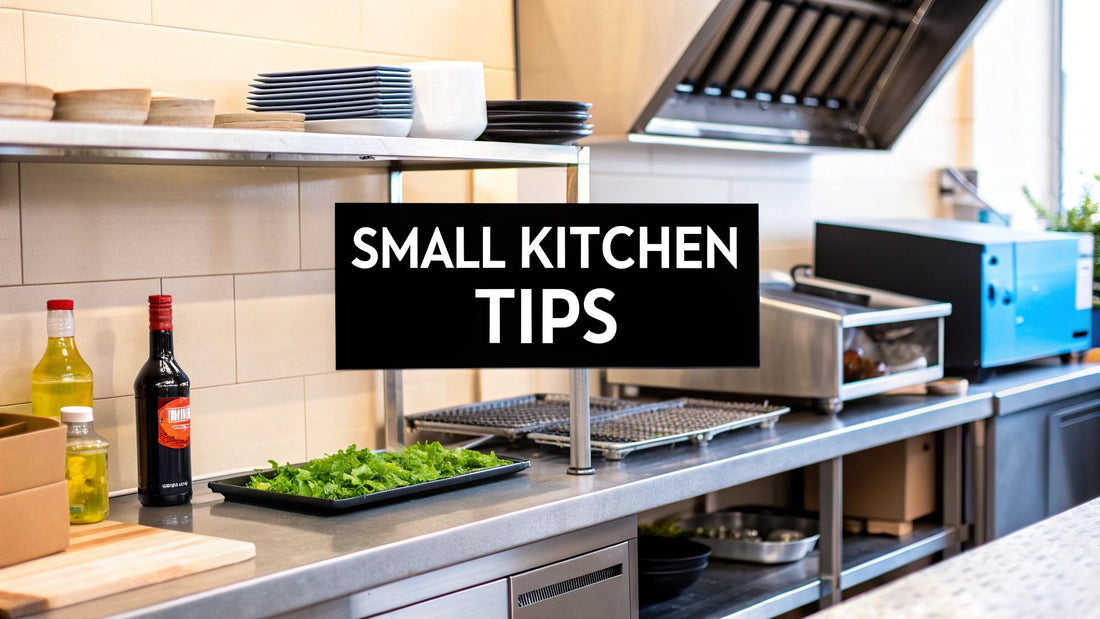
Small Commercial Kitchen Design Tips for Your Space
Don’t let anyone tell you a small kitchen footprint is a limitation. I've seen some of the most successful, high-output kitchens operating in spaces you wouldn't believe. In fact, a compact space can be your secret weapon.
The magic isn't in having more square footage; it's in a smarter, more deliberate design. It all comes down to creating a seamless workflow, keeping things safe, and making sure you're compliant with health codes. It starts with a solid plan that turns tight quarters into a strategic advantage.
Turning Compact Space into an Asset
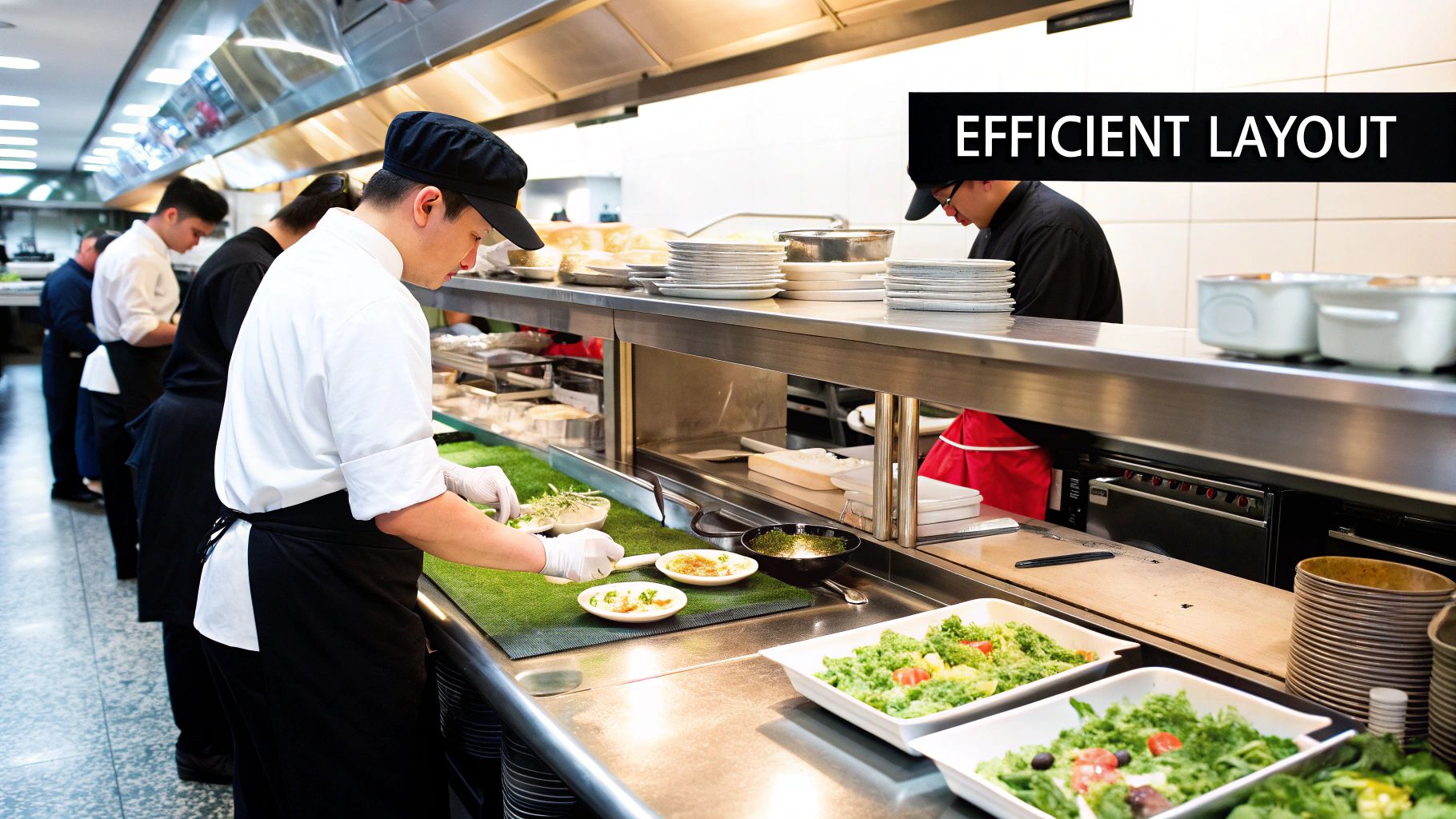
The best small kitchens I've been in operate with the precision of a choreographed dance. Every step has a purpose, every piece of equipment is essential, and not a single square inch is wasted. This kind of efficiency is no accident. It’s the direct result of a plan that puts function ahead of sheer size.
Stop thinking of your kitchen as one big room. Instead, picture it as a series of connected work zones. Even in the tiniest of spaces, you have to create these zones—mentally and physically—to avoid chaos and keep the whole operation flowing smoothly.
The Power of Dedicated Work Zones
The foundational principle here is creating distinct areas for the core jobs every kitchen has to do. This separation is absolutely critical for preventing cross-contamination and letting your team move efficiently without tripping over each other during a mad dinner rush.
- The Prep Zone: This is where it all begins—washing veggies, chopping proteins, and portioning ingredients. It needs to be right next to your fridges and dry storage so your team isn't wasting time running back and forth.
- The Cooking Zone: This is the heart of your operation, what we call the "hot line." It’s home to your heavy hitters: the range, the fryers, and, of course, your commercial charbroiler.
- The Cleaning Zone: This is your dish pit, with its three-compartment sink and dishwasher. You need to place it where it won’t interfere with the hot line but is still easy to get to for a quick turnaround on plates and pans.
A well-designed small commercial kitchen doesn't feel cramped; it feels focused. By defining these zones, you create a natural pathway for ingredients to move from storage to prep, to the cooking line, and finally to the customer.
Before you even think about buying a single piece of equipment, you need to understand these core principles. They're the invisible architecture that supports your entire operation. To help you visualize this, I've broken down the key concepts into a simple table.
Key Principles for Small Kitchen Success
This table summarizes the core ideas you need to nail to create a functional and highly efficient small commercial kitchen.
| Principle | Core Focus | Key Benefit |
|---|---|---|
| Workflow Logic | Creating a natural, one-way path for food from delivery to service. | Minimizes steps, reduces staff collisions, and speeds up ticket times. |
| Zone Separation | Designating specific areas for prep, cooking, and cleaning. | Prevents cross-contamination and keeps the kitchen organized and safe. |
| Vertical Space | Using wall-mounted shelves, racks, and stacked equipment. | Maximizes storage and frees up valuable floor and counter space. |
| Multi-Functionality | Choosing equipment that can perform multiple tasks (e.g., combi-ovens). | Reduces equipment footprint and saves on initial investment costs. |
| Ergonomics | Placing frequently used tools and equipment within easy reach. | Increases staff comfort, reduces physical strain, and boosts productivity. |
Once you've got these principles locked in, every other decision—from the type of flooring to the placement of outlets—becomes clearer.
Later, we’ll get into specific layouts and equipment that bring this to life, including our selection of space-saving infrared, gas, and electric charbroilers that deliver a huge punch without a huge footprint. The goal is to show you that with the right strategy, a commercial kitchen small in size isn't a handicap; it's a streamlined engine built for success.
Strategic Layouts for Maximum Workflow
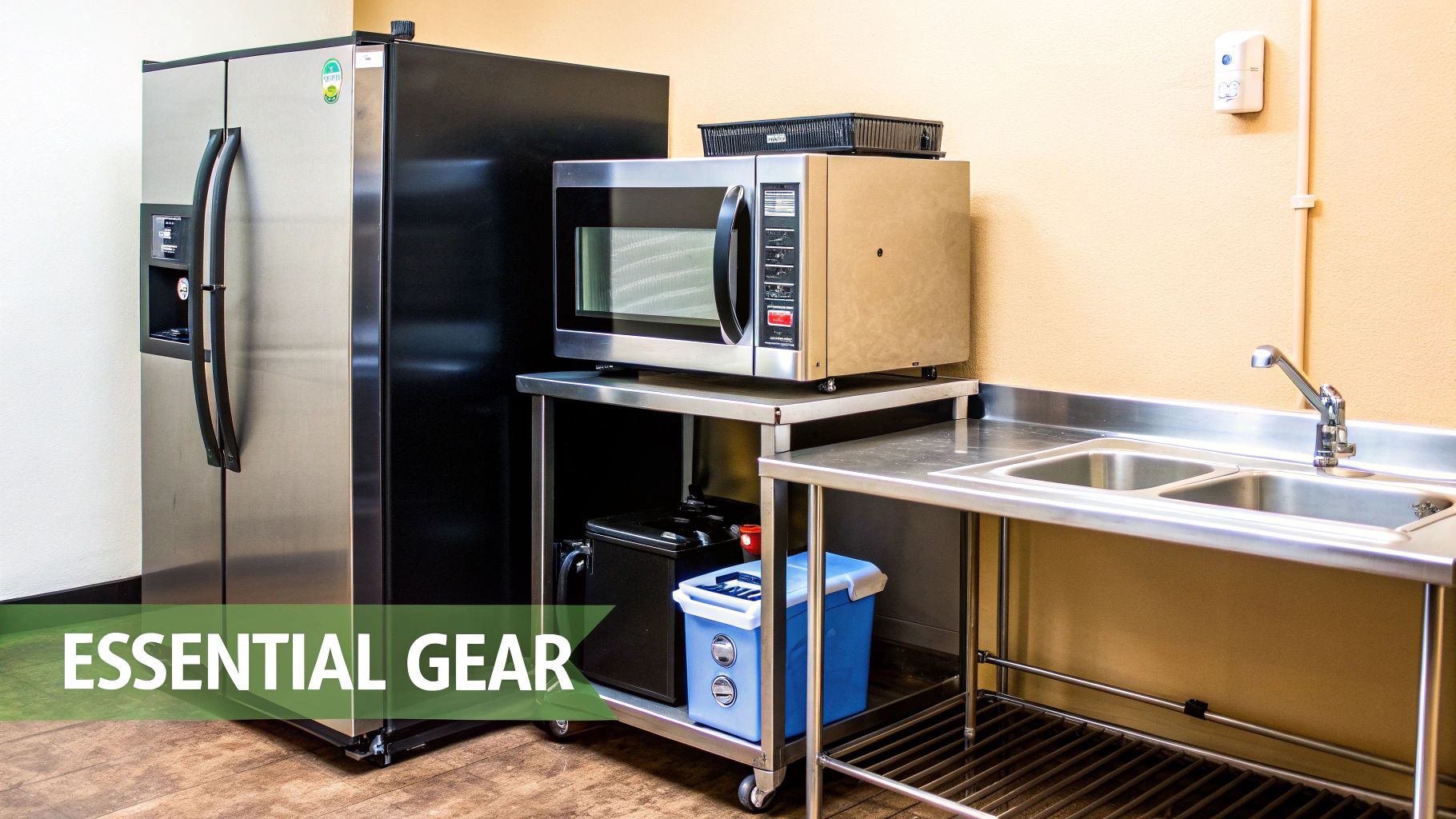
Alright, we've talked about carving out dedicated work zones. Now let's see how they fit together in the real world. When you're dealing with a commercial kitchen small on space, your layout is more than just a floor plan—it's the choreographer of your entire service.
A bad layout is pure chaos. It's staff bumping into each other, cooks taking ten steps when two would do, and ticket times creeping up. All of that hits your bottom line, hard. But a great layout? That's your silent MVP. It just works. The flow feels natural, your crew is less exhausted, and the whole operation runs safer and faster.
Let's dive into three proven layouts that are lifesavers in tight quarters: the galley, the zone-based, and the island.
The Galley or Assembly Line Layout
Ever peeked inside a food truck? That long, narrow setup is a classic galley layout. Think two parallel counters with a path down the middle. It’s built for menus where dishes are made in a clear sequence, moving from one end to the other.
A sandwich shop is the perfect example.
- Station 1: Start with the bread and cold storage.
- Station 2: Move to the prep counter for slicing meats and veggies.
- Station 3: Hit the hot line with a countertop charbroiler or press.
- Station 4: Finish at the end with final assembly and wrapping.
The beauty is in the linear flow. One person can grab a ticket and follow the order down the line with minimal wasted movement. The big catch? That central walkway can get jammed up if you have too many bodies trying to pass each other. It’s a dream for a small crew of one to three people, but a nightmare for a larger team.
Here's a pro tip from years of seeing this go wrong: measure everything. And I mean everything, especially the full swing of every fridge and oven door. A door that swings out and blocks the walkway can bring your kitchen to a dead stop during a rush.
The Zone-Based Layout
If your menu is more complex, a straight line just won't cut it. This is where the zone-based layout shines. Instead of a single production line, you create self-sufficient workstations grouped by function. It’s perfect for a café that needs to sling espresso drinks and grill paninis at the same time without the teams tripping over each other.
Let's map out that small café:
- Beverage Zone: A dedicated spot with the espresso machine, grinders, and milk fridges. Everything the barista needs is right there.
- Hot Food Zone: A separate station with a countertop charbroiler for breakfast items, a small oven, and its own prep space.
- Cold Prep/Bakery Zone: An area for putting together salads, plating pastries, and handling grab-and-go items.
This setup lets your specialists—the barista and the line cook—own their space. The goal is to make each zone a mini-kitchen, stocked with its own tools and ingredients to stop people from constantly crossing the floor. It all still needs to connect logically to your main storage and cleaning areas, but it prevents operational bottlenecks.
The Island Layout
The island layout throws a central workstation into the mix, usually dropped into a galley or L-shaped design. This central hub becomes the command center of the kitchen. I’ve seen chefs run an entire service from a well-placed island, directing the line and jumping in where needed. It’s fantastic for open or exhibition kitchens.
That island could be home to your main cooking battery—a big range, a bank of countertop charbroilers, or just a massive prep surface. It naturally encourages communication and teamwork, with staff working around it.
But be warned: this layout is hungry for square footage. In a truly commercial kitchen small on space, an island can choke your workflow if it’s not perfectly planned. Before you build anything, grab some painter's tape and mark the island's footprint on the floor. Have your team walk through a mock service. Does it feel efficient or just plain cramped?
For a deeper dive on fitting these pieces together, check out our comprehensive guide on commercial kitchen layout design.
Choosing Your Perfect Layout
There's no magic bullet here. The "best" layout is the one that fits your menu, your service style, and your team like a glove.
| Layout Type | Best For | Key Benefit | Main Consideration |
|---|---|---|---|
| Galley/Assembly | Food trucks, sandwich shops, simple menus | Extremely efficient, linear workflow | Can create a bottleneck with too many staff |
| Zone-Based | Cafés, ghost kitchens, diverse menus | Allows for simultaneous, separate workflows | Requires careful planning to avoid isolation |
| Island | Exhibition kitchens, chef-driven concepts | Centralizes command and encourages teamwork | Needs more floor space than other layouts |
In the end, it’s all about creating the path of least resistance. Map your space, trace the journey of your ingredients from the walk-in to the customer's plate, and pick the layout that makes that trip as short and smooth as possible.
Choosing Smart Equipment for Small Spaces
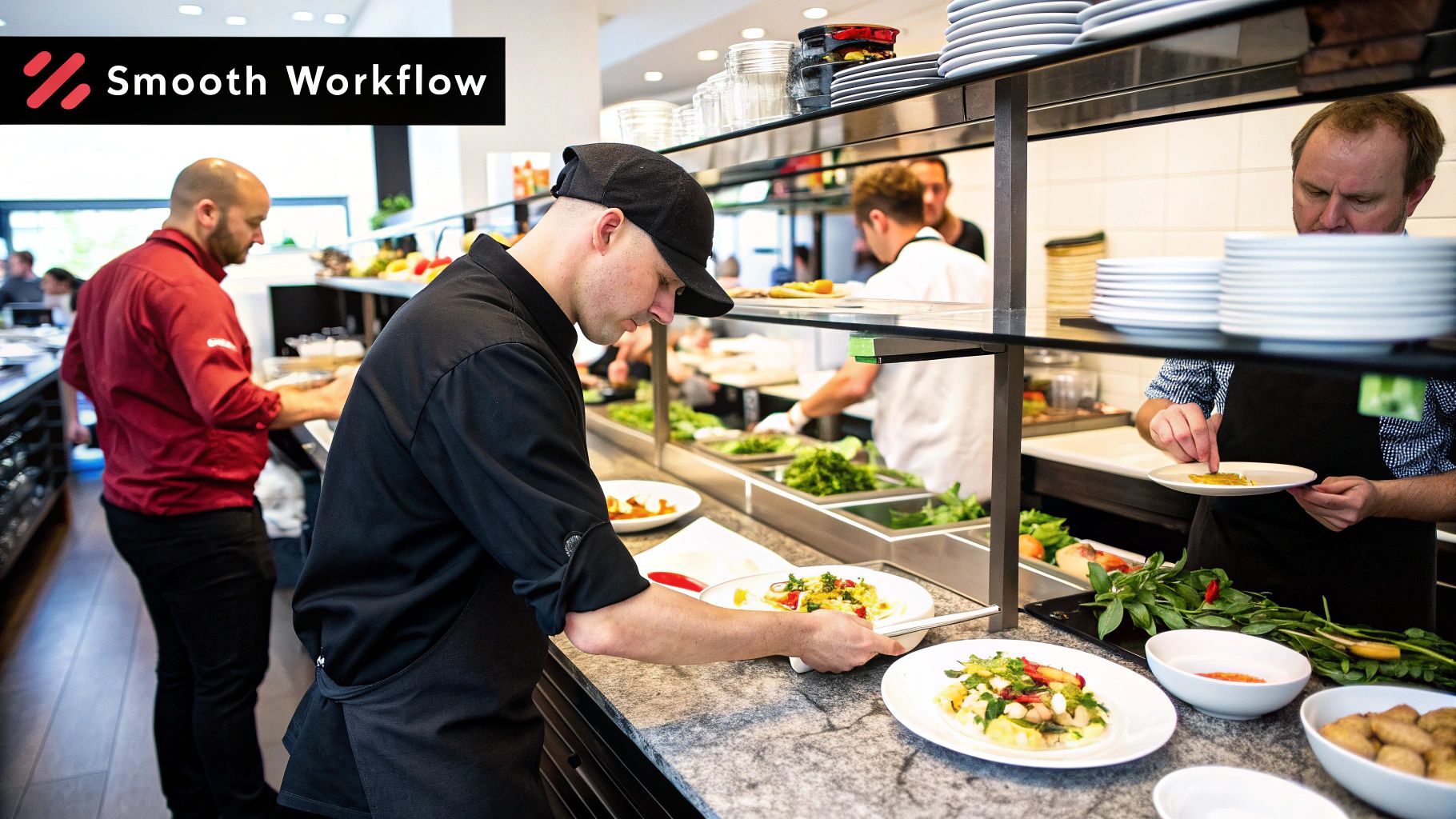
Okay, you've got a solid layout planned. Now comes the fun part: filling that space with the right tools. In a commercial kitchen small on square footage, every single appliance is a critical decision. You're not just buying a piece of steel; you're investing in your kitchen's speed, its versatility, and the very potential of your menu.
The name of the game is choosing gear that pulls its own weight—and then some. It’s all about getting the biggest impact from the smallest possible footprint.
This is where multi-functional equipment becomes your best friend. I'm talking about combo ovens that can steam, roast, and bake, taking the place of three separate machines. Or under-counter refrigeration that doubles as a prep surface. Every piece should serve at least two purposes or save you precious inches. It's a strategy reflected in the wider industry, too—the global market for commercial cooking equipment is set to climb from USD 37.44 billion in 2024 to USD 54.35 billion by 2032, driven by this exact demand for hyper-efficient models.
The Power of Countertop Cooking
One of the smartest moves you can make in a small kitchen is to stop thinking about big, freestanding floor units. Instead, shift your focus to high-power countertop models. These compact beasts sit right on your prep tables or refrigerated bases, which immediately frees up floor space and helps you create a much more logical, comfortable workflow for your cooks.
This approach essentially lets you build a custom cook line piece by piece, tailored perfectly to what you actually serve. You can mix and match different units to get the exact setup you need, rather than getting stuck with a clunky, one-size-fits-all range. A small café, for instance, could line up a countertop charbroiler, a two-burner induction cooktop, and a panini press to create a complete hot line in just a few feet of space.
Finding Your Perfect Commercial Charbroiler
For so many restaurants, the charbroiler is the heart and soul of the kitchen. It's what delivers that smoky, flame-kissed flavor and those perfect grill marks that customers go crazy for. You might think that in a tight kitchen, a powerful charbroiler is just a dream, but our range of compact models is here to prove you wrong.
We offer a wide selection of commercial charbroilers for your restaurant. Our lineup includes infrared, gas, and electric char broilers, all designed to bring high-impact grilling power into any kitchen, no matter how small.
Gas Charbroilers Countertop gas charbroilers are the classic choice for a good reason. They deliver that traditional, authentic flame-grilled taste and come in a variety of sizes to slot into even the narrowest cook lines. Whether you're after the intense, direct heat of radiant models or the deep, smoky flavor you get from lava rocks, a compact gas unit can be the star of your menu without hogging all your space.
Electric Charbroilers What if you can't get a gas line, or your ventilation situation is a headache? Our electric charbroilers are the answer. These units deliver incredibly consistent, even heat for a perfect sear every single time, and they're often much easier to clean. For a small commercial kitchen—especially in a building where installing gas is a no-go—an electric model is a brilliant, efficient choice.
Infrared Charbroilers When you need pure speed and searing power, nothing beats an infrared charbroiler. These units use intense radiant heat to cook food faster and at higher temperatures, which does an amazing job of locking in juices for a seriously moist and flavorful result. A countertop infrared unit can dramatically boost your output during a hectic service, making it a fantastic tool for high-volume spots like burger joints or steakhouses that need to turn tables fast.
The right charbroiler isn’t just about BTUs or size; it's about matching the technology to your menu and workflow. Choosing the right one can define your signature dishes and set your establishment apart.
Beyond the Hot Line: Other Essential Equipment
While the cooking line gets all the glory, a truly efficient kitchen needs an equally smart approach to storage and cleaning. You have to choose every single component with that same space-saving mindset.
- Smart Refrigeration: Forget bulky, reach-in coolers. Look at under-counter refrigerators and freezers. These units pull double duty, keeping cold storage exactly where your cooks need it while giving you more prep surface on top.
- Modular Prep Stations: Seek out stainless steel work tables that have integrated sinks, built-in shelving, or ticket rails. Taking a modular approach helps you build a prep area that feels like it was custom-made for your workflow.
- Compact Warewashing: Don't let a mountain of dirty dishes bring your service to a screeching halt. A high-temperature, under-counter dishwasher can sanitize a full rack of dishes in just a couple of minutes, making sure your team always has clean plates and pans ready to go.
Making these intelligent equipment choices from the get-go will save you from expensive and frustrating upgrades later on. To make sure you’ve got all your bases covered, our commercial kitchen equipment checklist is a fantastic resource to walk you through your purchasing decisions. It’s all about investing in a team of tools that work together to make your compact kitchen a powerhouse of efficiency.
Finding the Right Commercial Charbroiler
A charbroiler is often the heart of the kitchen, the one piece of equipment that defines your menu with that unmistakable smoky flavor and perfect grill marks customers can't get enough of. If you're working with a small kitchen, you might think a powerful charbroiler is just a dream.
That's simply not the case. We've seen countless compact kitchens turn out incredible food with the right gear. Our selection of compact charbroilers is built specifically to bring that essential grilling power to operations of any size.
Let's walk through the main types—infrared, gas, and electric—to figure out which one is the perfect fit for you. Each has its own strengths, and the best choice really comes down to your menu, your kitchen's layout, and how you serve your customers.
Infrared Charbroilers For Speed And Searing
When you need to fire off perfectly seared steaks or a wave of burgers during a dinner rush, infrared technology is your best friend. An infrared charbroiler is the sprinter on your cook line.
These units blast food with intense, direct radiant heat, cooking things way faster than traditional methods. This speed isn't just about cutting down ticket times; it sears the surface of proteins almost instantly, locking in all the natural juices. The result is an incredibly moist and flavorful final product. A countertop infrared model can be a total game-changer for a small steakhouse or a busy burger joint where speed is money.
Gas Charbroilers For Classic Flavor
For that authentic, open-flame taste, nothing beats a gas charbroiler. They are the undisputed classics for a reason. Ask any old-school chef, and they'll tell you there's just no substitute for cooking over a real flame. We carry a wide range of gas models that are perfect for a commercial kitchen with limited space.
With gas, you’ve got two main styles to choose from:
- Radiant Models: These use angled metal plates (radiants) that sit over the burners. As food drips, it hits these hot radiants and vaporizes, creating smoke that infuses the food with that classic BBQ flavor. They heat up fast and pack a punch.
- Lava Rock Models: These use a bed of porous lava rocks to soak up and radiate heat from the burners. When drippings hit the hot rocks, they create a deep, smoky flavor that grill purists absolutely swear by.
You can find countertop gas units in all sorts of widths, making it easy to find one that fits right into your cook line without hogging all the space.
The choice between radiant and lava rock often boils down to a chef's personal preference. Radiant models are a bit easier to clean, but lava rock units can deliver a more intense, smoky profile, though they do need a bit more upkeep.
Making a smart equipment choice, like picking the right charbroiler, is a huge piece of your kitchen's financial puzzle.
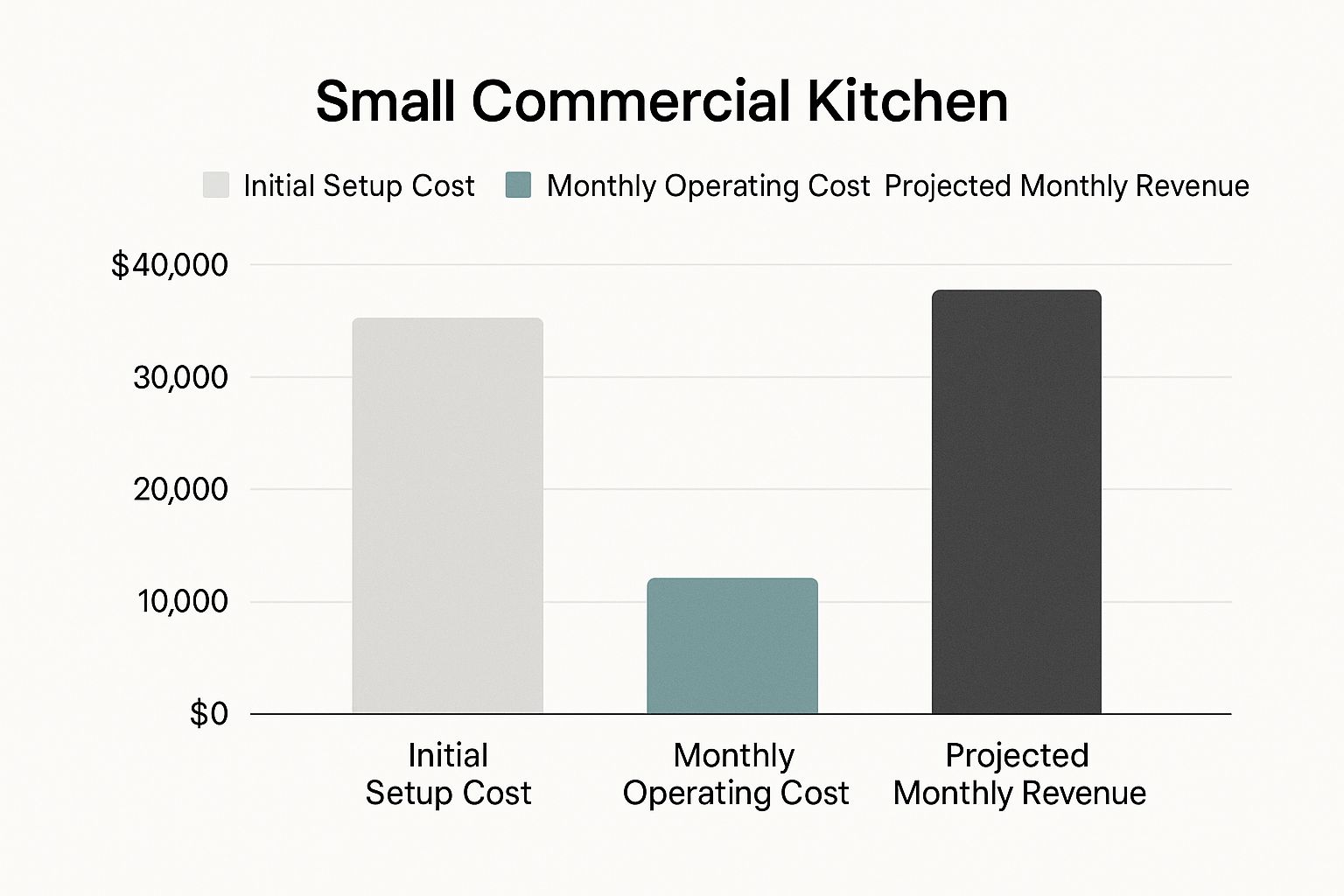
This chart shows how your initial equipment costs, day-to-day operational expenses, and potential revenue are all connected. It really drives home why making a smart, long-term investment from the start is so crucial.
Electric Charbroilers For Versatility And Simplicity
What if you don't have a gas hookup? Or what if local codes make installing proper ventilation a huge headache? Don't worry, our electric charbroilers offer a powerful and surprisingly simple solution.
Modern electric models aren't what they used to be. They deliver incredibly consistent and even heat that can produce a beautiful sear and those sought-after grill marks.
Electric units are fantastic for kitchens where running a gas line is just not practical or would be too expensive. They’re also a dream to clean since you don't have to deal with burners or gas lines. For a pop-up, a food truck, or any kitchen that values easy operation and cleanup, an electric charbroiler is an incredibly smart pick.
Commercial Charbroiler Comparison
Choosing the right charbroiler involves weighing the pros and cons of each heat source against your specific menu and operational needs. This table breaks down the key differences between infrared, gas, and electric models to help guide your decision.
| Charbroiler Type | Best For | Key Advantages | Considerations |
|---|---|---|---|
| Infrared | High-volume searing (steaks, burgers) | Fastest cooking times, locks in moisture, energy-efficient | Higher initial cost, requires specific cleaning |
| Gas | Authentic, open-flame flavor | Classic BBQ taste, wide range of sizes, radiant or lava rock | Requires gas line, more ventilation needed |
| Electric | Kitchens without gas, easy setup, and cleaning | Simple installation, consistent heat, low maintenance | Slower preheat, may lack intense smoky flavor |
Ultimately, the "best" charbroiler is the one that becomes a reliable workhorse in your unique kitchen environment, helping you produce fantastic food efficiently.
Making The Right Choice For Your Kitchen
In the end, the best charbroiler is the one that fits your operation like a glove. It's not just about the heat source—you also need to think about the grates. Cast iron grates, for instance, are amazing at retaining heat and creating those bold, dark grill marks. Stainless steel grates, on the other hand, are easier to maintain and won't rust. For a deeper dive, check out our guide on finding the right commercial charbroiler.
Think it through with a real-world scenario. A small bistro that focuses on delicate fish and grilled veggies would probably love the precise temperature control of an electric model. But a high-energy kitchen pumping out hundreds of burgers an hour? They’d be better off with the raw power and speed of a gas or infrared unit.
By really analyzing your menu and workflow, you can pick a machine that will become the profitable heart of your small kitchen.
Workflow Hacks for Peak Efficiency
Alright, you’ve got a smart layout and the right gear. That’s the foundation. But turning that well-designed space into a high-performance machine? That comes down to operational excellence. This is where the battle-tested workflow hacks I've seen in countless kitchens transform physical limits into a real advantage.
Making your commercial kitchen small on space run like a dream isn't about some grand, sweeping change. It's about the small, consistent things your team does every single shift. These are the habits that keep you out of the weeds during the dinner rush and make sure every plate goes out looking perfect.
Master Your Space and Your Prep
First things first: you have to conquer clutter before it even starts. In a tight kitchen, every flat surface is prime real estate. It's also a magnet for boxes, misplaced tools, and general chaos. The only way to win is to think vertically.
Wall-mounted shelving is your absolute best friend. Use it for your frequently used items—spices, mixing bowls, small appliances—and get them up above your prep counters. This keeps everything you need within arm's reach but off your valuable workspace. I've seen kitchens use magnetic knife strips and hanging pot racks to free up entire drawers and counter sections. It’s a game-changer.
The golden rule is simple: if it doesn't need to be on the counter right this second, it needs a home somewhere else. An organized station isn't just about looking professional; it's a direct line to faster, safer, and more accurate cooking.
Next, you need a militant approach to mise en place. This classic French term, meaning "everything in its place," is the absolute lifeblood of any professional kitchen worth its salt. Before a single ticket prints, every ingredient for every dish on your menu should be chopped, measured, and organized. This front-loads all the work, so cooks aren't scrambling to find an onion or measure out spices mid-service. That's how orders get delayed and mistakes get made.
Choreograph Your Service
With prep dialed in, the focus shifts to the rhythm of service itself. You have to choreograph your cooking and prep schedules to completely stamp out bottlenecks. Think of it like a dance where every single move is planned out.
For example, say you have a dish that needs a 12-minute cook time on the charbroiler and another that takes three minutes on the sauté station. You don't fire them at the same time. The line cook has to know to start the longer-cooking item first, coordinating with other stations so every part of an order finishes together. This takes crystal-clear communication and a deep, ingrained knowledge of your menu's cook times.
This kind of raw efficiency is only getting more important. The commercial cooking equipment sector was valued at USD 13.8 billion globally in 2024 and is projected to hit nearly USD 22.4 billion by 2033. That growth shows just how much demand there is for equipment that can keep up with fast-paced service. You can dig into the numbers and what’s driving them in the full report from Straits Research.
Build a Versatile and Communicative Team
In the tight quarters of a small kitchen, team dynamics are everything. There is zero room for big egos or bad communication. The most successful small teams I've seen talk constantly, using short, clear calls to signal their movements—"Behind!" "Hot pan!"—to prevent accidents and keep the flow smooth.
But it goes beyond just talking. Cross-training is a superpower. When your grill cook can jump on the fry station, or your prep person can help plate dishes during a rush, your kitchen becomes incredibly resilient. Someone calls in sick? Unexpected 50-top walks in? A versatile team can adapt without missing a beat. This flexibility turns what could be a crisis into just another manageable challenge, ensuring your service quality never takes a hit. These are the human elements that make a small commercial kitchen truly great.
Common Questions About Small Kitchens
Venturing into the world of a small commercial kitchen often brings up a ton of questions. After years in this business, I feel like I’ve heard them all. I’ve tackled some of the most common ones here to give you clear, straightforward answers and help you navigate the unique challenges of running a compact but mighty kitchen.
What Is the Most Important Equipment?
While this answer always circles back to your specific menu, the most valuable players in a small kitchen are almost always the multi-functional ones. A high-quality combination oven, for example, can bake, steam, roast, and even grill. It effectively takes the place of several single-use appliances, saving you a tremendous amount of precious space.
Likewise, a powerful countertop charbroiler or griddle can become the heart of your entire cooking line without demanding a huge, clunky footprint. The core strategy here is to prioritize gear that does multiple jobs well. This move not only makes the most of your limited square footage but also gives you a much better return on your investment.
The smartest money you'll spend is on equipment that delivers both versatility and power. A single, well-chosen appliance can often outperform two or three lesser, single-task machines, streamlining your entire workflow.
How Do I Manage Ventilation?
Let's be crystal clear: proper ventilation is absolutely non-negotiable. It’s a matter of safety and legal compliance. In a tight kitchen, this usually means you need a high-efficiency, low-profile hood system. It's critical to bring in a professional to make sure your Type 1 or Type 2 hood is sized correctly for the heat, smoke, and grease your cooking equipment will kick out.
For certain electric appliances like ovens or some fryers, you might be able to look into ventless options. These units use advanced, multi-stage filtration to scrub the air clean, which can be a total lifesaver in spots where installing traditional ductwork is a nightmare or just plain impossible. Always, always double-check your local fire and health codes before you buy anything.
What Are the Biggest Layout Mistakes to Avoid?
The single biggest mistake I see operators make is completely ignoring workflow. When you stick your dishwashing station on the opposite side of the kitchen from the cooking line, you’re just creating traffic jams and slowing down the entire service. It’s a classic rookie error.
Another major fumble is not leaving enough "landing space" next to hot equipment like fryers, ovens, and charbroilers. This isn't just inefficient; it's a serious safety hazard for your team.
Finally, people consistently underestimate their storage needs. This quickly leads to dangerous clutter that blocks movement and creates unsanitary conditions. Always plan for more storage than you think you need. Make full use of vertical shelving and under-counter units to keep your small commercial kitchen organized, safe, and efficient.
At Charbroilers, we get it—the right equipment is the key that unlocks your kitchen's full potential. We offer a wide selection of high-performance commercial charbroilers that are perfect for any size restaurant. Explore our extensive range of space-saving countertop infrared, gas, and electric char broilers to find the ideal solution for your menu and workflow. Find your perfect charbroiler at https://charbroilers.com.