

Mastering Web Content Creation for Restaurant Equipment Supply Websites
Creating compelling web content is a strategic process of planning, producing, and publishing information that attracts the right audience. For a restaurant equipment supply website, this isn't just about listing product specs; it’s about strategic content creation. We're talking everything from blog posts that detail the efficiency of a new commercial oven to quick videos of a charbroiler in action. The end goal? Turn online researchers into loyal customers. This is how you build your brand, climb the search engine rankings, and ultimately, grow your business through expert SEO, local citation services, and targeted article writing.
Building Your Content Foundation
You don't just start writing. That's a rookie mistake. Solid web content creation starts with a solid foundation, and that foundation is built on your business goals. Just like a chef wouldn't start cooking without a recipe, you shouldn't start publishing without a plan. You'll end up with... something, but it won't be the masterpiece you were aiming for.
The real trick is to tie every single piece of content back to what actually matters. Are you trying to generate more leads for a specific line of charbroilers? Or maybe you want to establish your brand as an authority in commercial kitchen efficiency? Whatever it is, that goal should be the starting point for every blog post, social media update, and product description you write. It's the difference between just making noise and having a real conversation with the people you want to serve.
Define Your Unique Brand Voice
Your brand voice is just your company's personality put into words. It needs to feel authentic to your business. Are you a no-nonsense supplier focused on durability and performance? Then your writing should be direct, professional, and data-driven. Or are you a partner to innovative chefs, focused on cutting-edge technology? Your voice should be more sophisticated, forward-thinking, and inspiring.
Whatever you choose, consistency is king. A clear, steady voice builds trust and makes your brand instantly recognizable. The best way to lock this in is by creating a simple writing style guide. You can use a proven writing style guide template to nail down your tone, grammar rules, and any specific industry lingo. This ensures everyone—from your marketing manager to a guest blogger—sounds like they're part of the same team, a key component of professional copyrighting.
A strong brand voice does more than just inform; it creates an emotional connection. It’s what makes a customer feel like they know and trust your expertise before they even make an inquiry, turning a simple search for "commercial oven" into a desire to buy from your company.
This voice should show up everywhere, from the way you describe the perfect sear from a charbroiler to the captions on your LinkedIn feed.
Create Simple Buyer Personas
You can't sell to your customers if you don't know who they are. That's where 'buyer personas' come in. These aren't stuffy, complex demographic reports. They're just simple, relatable sketches of your ideal customers. Before you even think about writing, it's a great idea to do a quick content audit to see who's already visiting your site. Our guide on how to perform a website content audit can walk you through it.
Think about the different types of people who buy from you. You might end up with a few personas like these:
- The Independent Restaurant Owner: These are busy entrepreneurs looking for reliable, cost-effective equipment. They care about durability, ROI, and good value. You might target them with a blog post like, "5 Ways a High-Efficiency Fryer Can Lower Your Operating Costs."
- The Executive Chef: This professional is looking for performance and precision. They're interested in top-of-the-line features, advanced cooking technology, and equipment that can execute their vision. For them, you could write something like, "How Our New Combi Oven Creates the Perfect Sous Vide Results."
- The Procurement Manager: This person is all about the numbers, logistics, and long-term value. They want to know about warranties, service agreements, and the total cost of ownership. A detailed comparison guide or a case study on equipment longevity would be right up their alley.
When you create these personas, your web content creation suddenly gets a lot more focused. You stop writing for some vague, generic "audience" and start crafting messages that speak directly to the professional needs and pain points of the people you want buying your equipment.
Turning Your Strategy Into an Editorial Calendar
Alright, you’ve got your goals locked in and you know who you’re talking to. Now for the fun part: turning those big ideas into an actual plan. This is where we map out the topics, themes, and schedules that will transform random blog posts into a powerful, consistent marketing engine for your equipment supply website.
Flying blind is a recipe for disaster. You end up scrambling for last-minute ideas, and your content feels disconnected. A solid plan ensures every single piece you publish has a purpose and strategically tells your brand's story over time.
This isn't just about filling a feed; it's about building authority, one post at a time.
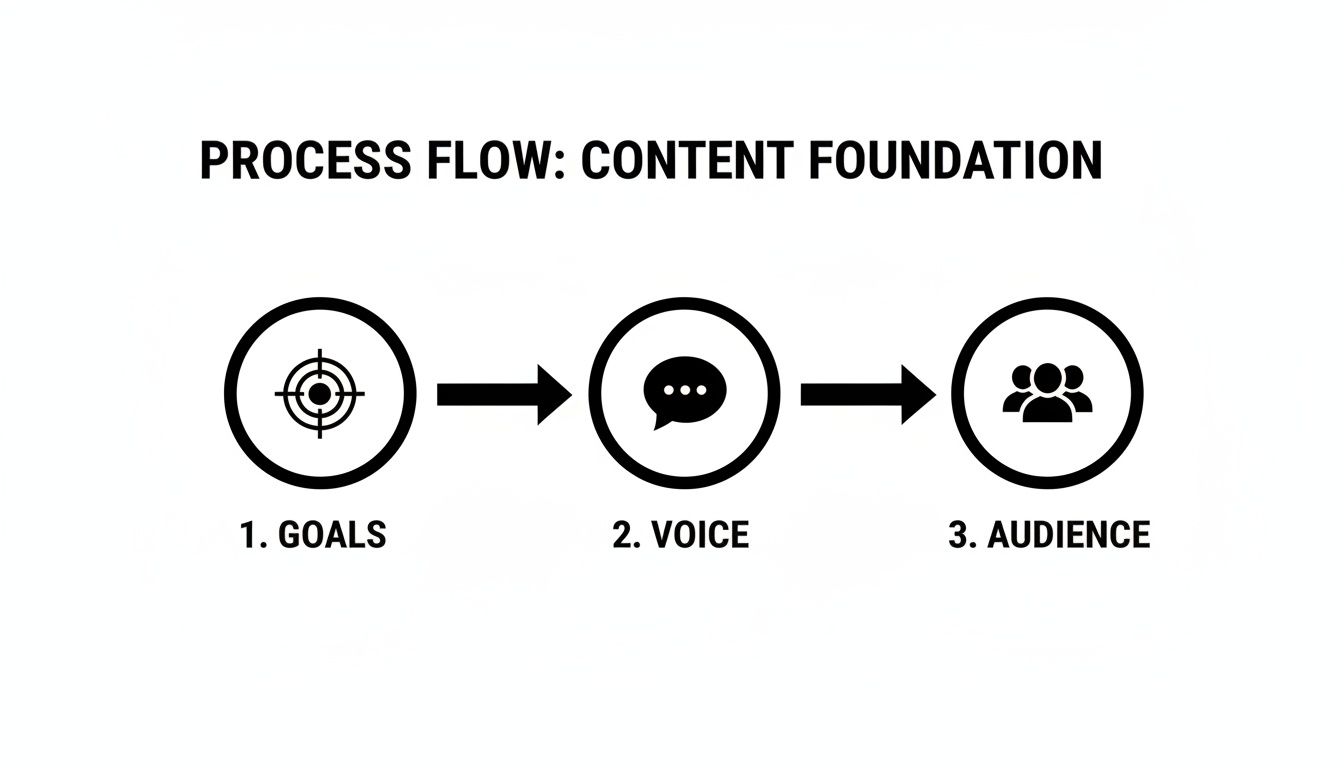
This process—starting with goals, defining your voice, and knowing your audience—is the bedrock of any successful content strategy. It’s not just a suggestion; it's how businesses are staying ahead of the curve. The global digital content creation market hit $27.1 billion in 2023 for a reason. It's projected to soar to $38.9 billion by 2026, growing at a massive 12.8% annually.
This explosion in spending shows just how much value businesses are placing on creating structured, engaging digital experiences. You can dive deeper into these digital content creation statistics to see the trend for yourself.
Establish Your Core Content Pillars
Instead of just brainstorming a random list of blog topics, let's start by defining a few core "content pillars." Think of these as the main categories of your expertise. They're the big-picture themes your company is going to be known for, and everything you create will fall neatly under one of them.
For a restaurant equipment supplier, your pillars have to connect back to what makes you a valuable partner. Here are four powerful examples to get your wheels turning:
- Equipment Deep Dives: Give your customers an expert look at the technology. This is where you can show off the superior engineering of your products, break down a unique feature, or even feature the high-performance components you depend on, like the grates on a commercial charbroiler.
- Operational Efficiency: Don't just sell equipment. Sell solutions. Tell the story of how your products save time, energy, and money. A case study on how a specific refrigerator lowered a client's energy bill is pure gold.
- Industry Trends & Insights: This is your chance to highlight your authority. Discuss new regulations, emerging culinary trends, or innovations in kitchen design. This builds incredible credibility and positions you as a thought leader.
- Client Success Stories: Showcase how your equipment has helped a real restaurant succeed. Are they getting more consistent results? Serving customers faster? Announcing an expansion because of improved workflow? Talk about it! Blogger outreach can be a powerful tool here to amplify these stories.
With these pillars in place, you’ll never be stuck for an idea again. You just have to ask, "What's a great 'Operational Efficiency' story we can tell this month?"
Build a Simple Editorial Calendar
Your editorial calendar is your roadmap. It doesn't need to be fancy or complicated—a simple spreadsheet is all you need to get started. The goal here is to plan your content at least a month in advance to keep a steady stream of valuable posts flowing.
An editorial calendar is more than just a schedule; it's a commitment to your audience. It shows you're dedicated to providing consistent value, which builds trust and keeps them coming back for more—both for information and for their next purchase.
Your calendar just needs to track a few key details for each piece of content. Here’s a super simple template to get your workflow organized:
| Publish Date | Content Pillar | Topic / Working Title | Format | Status |
|---|---|---|---|---|
| October 7 | Equipment Deep Dives | A Buyer's Guide to High-Volume Charbroilers | Blog Post | Writing |
| October 14 | Operational Efficiency | Case Study: How ABC Restaurant Cut Energy Costs by 20% | Video/Blog | Photos Needed |
| October 21 | Industry Trends | The Rise of Ghost Kitchens: Equipping for a New Model | Social Post | Scheduled |
| October 28 | Client Success Stories | From Startup to Success: A Q&A with Chef John Doe | Blog Post | Published |
This straightforward structure gives you a bird's-eye view of everything coming up, keeps your team on the same page, and ensures you're hitting all your key themes. By planning ahead, you turn web content creation from a reactive chore into a proactive strategy that actually drives your business forward.
Creating Authoritative Content That Converts
Alright, you've done the strategic groundwork. Now for the fun part: actually creating the blog posts, photos, and descriptions that make people stop scrolling and start considering a purchase.
When it comes to restaurant equipment content, the job isn't just to fill a page. It's to make a potential buyer so confident in your product's performance that they have no choice but to get a quote. Your website needs to be a showcase of expertise and the final nudge someone needs to choose your brand. This means getting really good at two things: visual storytelling and persuasive copyrighting.
Master Visual Storytelling on a Budget
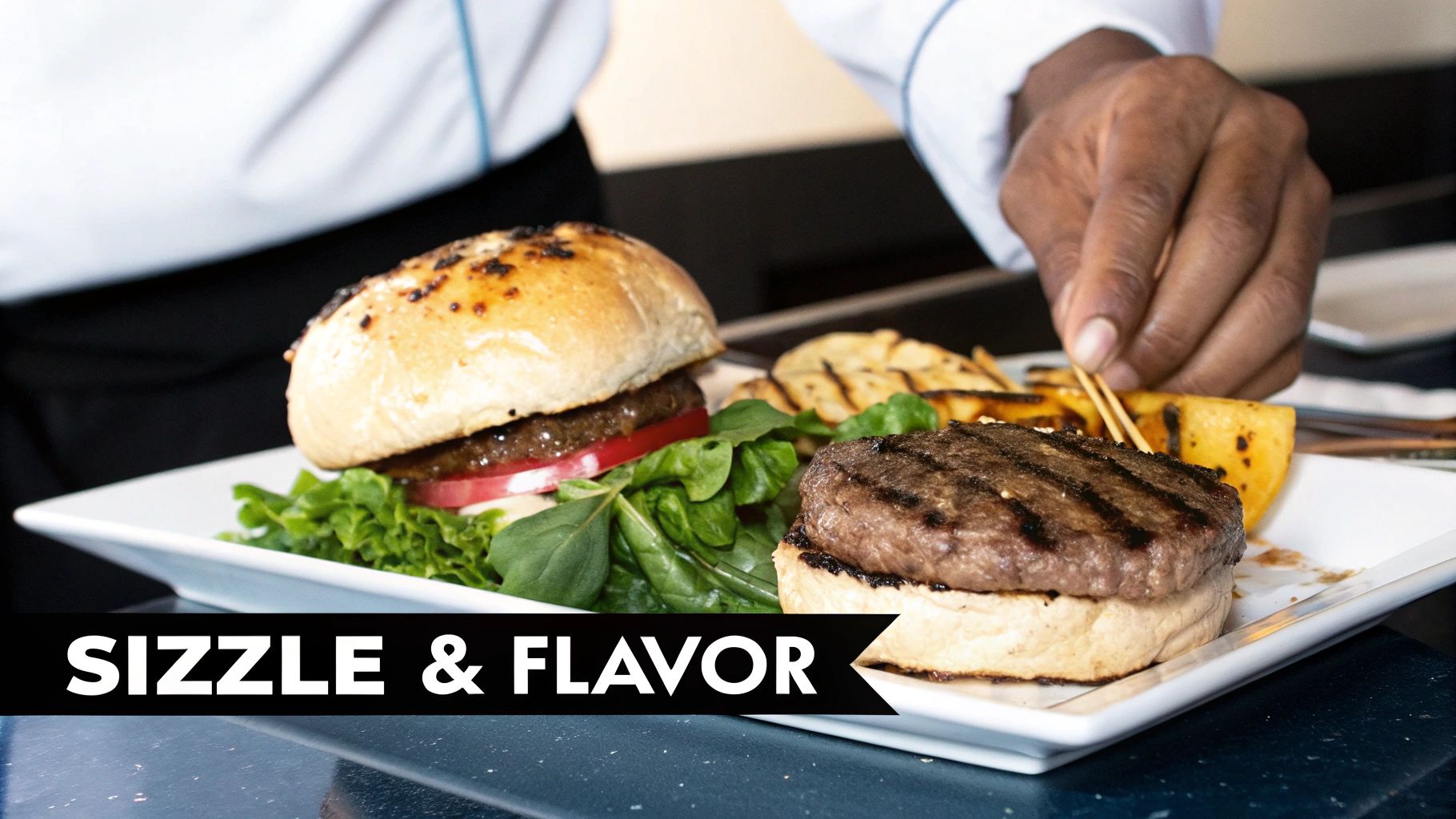
In the B2B world, a picture isn't just worth a thousand words—it’s worth a sales inquiry. People absolutely buy with their eyes first, and your visual content is their first impression of quality. The good news? You don't need a Hollywood budget to pull this off. You just need a plan and a good eye.
Think about what makes your equipment truly stand out. If you're known for durable commercial charbroilers, that’s your visual goldmine. Get shots of the heavy-duty construction. Capture a video of it in action in a busy kitchen. Show off the clean, efficient design. These images tell a story about performance and reliability that words just can't match.
Here are a few practical tips to get better product shots right away:
- Find the Natural Light: Ditch the harsh warehouse fluorescents and find a spot near a window or use softbox lighting. Clean, bright light is a product photographer's best friend.
- Zoom In on the Details: Nobody is wowed by a wide shot of a cluttered storeroom. Get up close. A tight shot of the high-quality welds on a stainless steel table is way more powerful.
- Shoot Short Videos: A quick, 15-second clip of a piece of equipment being unboxed and set up is pure social media magic. It brings a real-world element that a static photo misses.
The best visual content does more than just show a product. It captures the engineering, the care your team puts into manufacturing, and the professional result. It makes people feel like they’re already making a smart investment.
Craft Compelling Copy That Sells
Once your photos have hooked them, your words need to seal the deal. This is where skilled copyrighting goes a long way. Your product descriptions, blog posts, and website copy should be packed with benefit-driven language. Make them imagine the efficiency, the reliability, and the return on investment.
Instead of just "Commercial Charbroiler," paint a picture: "Engineered for high-volume kitchens, our signature charbroiler features heavy-duty cast iron grates to deliver consistent heat and perfect sear marks, reducing cooking times and boosting your kitchen's output. Built with 304-grade stainless steel for maximum durability and easy cleaning." See the difference? One is a label; the other is a solution.
Investing in this kind of storytelling pays off. Content marketing has exploded from a $36.8 billion industry in 2018 to nearly $600 billion in 2024. Projections show it could hit $1.95 trillion by 2032. For equipment suppliers, this just proves how valuable high-quality content is for showing off what makes your products superior.
When planning your content, a mix of formats works best to keep your audience engaged and satisfy search engines.
Essential Content Types for an Equipment Website
Here’s a breakdown of the most effective content formats for engaging buyers and improving SEO, with specific examples for a site selling commercial charbroilers.
| Content Type | Primary Goal | Charbroiler-Specific Example |
|---|---|---|
| Product Pages | Conversion | Detailed descriptions with specs, features, benefits, and a clear call-to-action to "Request a Quote." |
| Blog Posts | SEO & Authority | "The Secret to Perfect Grill Marks: A Guide to Choosing the Right Commercial Charbroiler" or "Maintenance Tips to Extend the Life of Your Grill." |
| Case Studies | Trust & Social Proof | A downloadable PDF showing how a restaurant chain increased throughput by 15% after installing your charbroilers. |
| Short-Form Video | Social Media & Engagement | A 30-second Reel showing the charbroiler in a busy kitchen during peak service, highlighting its performance under pressure. |
| Comparison Guides | Decision Making | A dedicated page or section comparing different models in your lineup, helping buyers choose the perfect fit for their needs. |
This mix ensures you're not just selling products, but also building a brand story that connects with potential customers on multiple levels.
Adaptable Templates for Engaging Blog Posts
Blog posting is a fantastic way to connect with your industry and give your SEO a serious boost, but staring at a blank page is tough for anyone. To get things moving, lean on a few simple, repeatable templates. This saves time and keeps your content consistent.
Here are two easy-to-adapt blog post ideas that work for almost any equipment supplier:
-
The Ultimate Buyer's Guide to [Product Category]:
- The Hook: Start with a common problem the equipment solves.
- Key Considerations: Break down the 3-5 most important factors to consider (e.g., size, power source, material).
- The Features that Matter: Detail one key feature of your product line that addresses these considerations.
- The Payoff: End with a clear call to action, inviting them to browse your selection or speak to a specialist.
-
How to [Achieve a Specific Result] with Our Equipment:
- The Intro: Introduce the goal (e.g., "Achieving Maximum Kitchen Efficiency") and explain why it's so important.
- Pro Tip #1: Share something actionable, like how proper layout can improve workflow.
- Pro Tip #2: Offer another piece of expert advice, like the importance of regular maintenance.
- How Our Product Helps: Briefly explain how a specific piece of equipment is designed to help achieve that goal.
- The Invitation: Invite readers to learn more about the product or download a related guide.
These frameworks give you a solid launchpad. If you need more inspiration, check out these content marketing examples tailored for restaurants to see how others are knocking it out of the park. By pairing stunning visuals with compelling stories, your website will do more than just list your inventory—it’ll turn visitors into customers.
Optimizing Content for Local Search and Discovery
Creating authoritative content is a huge win, but it’s only half the job. Let's be honest, the most amazing blog post about your charbroilers is useless if nobody finds it. This is where you roll up your sleeves and get into search engine optimization (SEO), making sure all that effort actually connects with potential buyers in your area.
For an equipment supplier, this isn't about getting lost in technical jargon. It’s all about local discovery. When a restaurant owner pulls out their phone and types "restaurant equipment supply near me," you need to be the first name they see. That whole process starts with getting inside their head and understanding the exact words they use. Local citation services are critical for ensuring your business information is consistent across the web.
Finding Keywords That Drive Foot Traffic
Keyword research for an equipment supplier really just means thinking like a buyer. What phrases would you search for when you need a new piece of kitchen tech? Your goal is to pinpoint their intent, whether they're in the research phase or ready to buy.
Start by brainstorming terms related to your products, your services, and your location. Since your charbroiler is a star player, that's a great place to begin. Think beyond just "restaurant equipment."
- Product-Specific Keywords: "commercial charbroiler," "heavy-duty gas griddle," "walk-in cooler."
- Location-Based Keywords: "restaurant equipment supply in [Your City]," "commercial kitchen outfitter near me."
- Problem-Based Keywords: "how to choose a commercial oven," "best fryer for a small kitchen."
These phrases become the building blocks for your content. They'll guide your article writing and the language you use to describe your products.
Mastering On-Page SEO Fundamentals
Once you've got your list of keywords, it's time to weave them into your website pages in a way that feels natural. This is what we call on-page SEO, and it's how you send clear signals to search engines about what your content is about. Don't worry, you don't need to be a tech wizard to get this right.
For every single blog post or product page you create, just focus on a few key areas:
- Compelling Title Tags: This is the headline people see in the search results. Make it clear, enticing, and include your main keyword. "Our Charbroiler" is boring. "High-Performance Commercial Charbroilers in [Your City]" gets clicks.
- Enticing Meta Descriptions: This is that little blurb under the title in the search results. While it doesn't directly impact rankings, it massively influences whether someone clicks on your link or a competitor's. Treat it like a mini-advertisement for your page.
- Logical Headings: Use headings (H1, H2, H3) to give your content structure. Your main page title should always be an H1, with sub-topics organized under H2s and H3s. This makes the content scannable and easy to digest for both people and search engine bots.
Optimizing your content isn't about trying to trick Google. It's about providing clear, helpful signals that match your excellent equipment with the businesses actively searching for it. A well-optimized page is simply a well-organized and helpful page.
Dominating Local Search with Google Business Profile
For any B2B supplier with a physical location or service area, your Google Business Profile (GBP) is your single most important tool for local SEO. It's that info box that pops up in Google Maps and local search results, and keeping it fresh and accurate is non-negotiable. Google is prioritizing helpful, high-quality profiles more than ever—it's estimated that 45% of unoriginal, low-quality content has been scrubbed from search results.
Your GBP is more than just a place for your address and phone number; it's a dynamic content platform. You can—and absolutely should—be posting updates, photos, and offers directly to your profile all the time.
Here's how to turn your GBP into a customer magnet:
- Upload High-Quality Photos Weekly: Don't just show the polished product shot. Post pictures of equipment being installed, your team at work, and your showroom. This visual proof builds incredible trust.
- Post Regular Updates: Running a sale on refrigeration units this month? Post about it. Get a new shipment of a popular charbroiler model? Share that story.
- Encourage and Respond to Reviews: Reviews are a massive local ranking factor. Make it a habit to ask happy customers to leave a review and always take the time to respond to feedback—both the good and the bad.
By consistently feeding your GBP fresh content, you send powerful signals to Google that your business is active, relevant, and the best answer for local searches. To make sure you've got all your bases covered, our comprehensive local SEO checklist for restaurants is the perfect roadmap. This turns your online presence from a simple website into a powerful magnet for local business.
Weaving Modern Tools and AI into Your Content Workflow
Let's be honest: you need to work smarter, not harder, to keep a content strategy going. For a modern equipment supplier, this means getting comfortable with tech that handles the tedious stuff and kicks off new ideas. It frees you up to focus on what you do best—telling your company's story.
This isn't about learning complex software or getting a degree in IT. A few practical tools, from simple social media schedulers to an easy-to-use CMS, can take your workflow from chaotic to controlled.
AI is Your Co-Pilot, Not Your Replacement
Artificial intelligence is a huge help in the creative process, but you have to think of it as a partner. It’s not here to replace your expertise. Where AI really shines is in beating that dreaded "blank page" feeling and getting the initial stages of web content creation off the ground fast.
Treat AI like a brainstorming buddy. For instance, if you want to promote your new countertop charbroiler, you could prompt a tool like ChatGPT with:
- "Give me five blog post titles about the benefits of compact charbroilers for small kitchens."
- "Write three LinkedIn captions for a case study about a client's success with our equipment. Focus on ROI and efficiency."
- "What are ten keywords a local equipment supplier could use for 'commercial kitchen design'?"
The ideas and rough drafts AI spits out can save you hours. But the real magic happens when you step in. Your expertise is what adds the authentic case studies, the specific technical details of a product, or the history behind your company's founding. AI can't do that.
The best way to use AI is for the 'scaffolding'—the structure, the outline, the first draft. Then, you use your human experience to build the 'house'—the personality, the authority, and the heart.
This tag-team approach is quickly becoming the new norm. It’s no surprise that 94% of marketers are already planning to use AI for tasks like drafting articles. With over a billion people using these tools every month, the secret is out. Its real power is in helping you scale your article writing efforts without losing the human touch that makes your brand trustworthy.
Picking the Right Tools for the Job
Your tech stack doesn't need to be fancy or expensive; it just needs to make your life easier. A big part of creating content today is using the best AI tools for content creators to work more efficiently.
Start with a few key platforms that simplify specific parts of your workflow. This helps you keep things consistent and high-quality without feeling like you're juggling too much.
An Equipment Supplier's Essential Content Toolkit:
| Tool Category | What It Does | How You'd Use It |
|---|---|---|
| Social Media Scheduler | Plans and automates posts. | Schedule an entire week of LinkedIn posts about your charbroiler features in one go. |
| Graphic Design Tool | Creates pro-looking graphics and spec sheets. | Use a template to whip up a clean graphic for your "End of Year Sale." |
| Video Editing App | Quickly edits short videos for social media. | Trim a clip of a new oven in action, add some text overlays, and post it as a Reel in minutes. |
| SEO Tool | Researches keywords and tracks rankings. | Find out what restaurant owners are searching for and tweak your blog posts to match. |
Creating Viral Moments with Short-Form Video
Static photos of your equipment are a must, but short-form video is where the real engagement is. Platforms like Instagram Reels and TikTok are built for showing off the dynamic, performance side of your products.
The goal is to capture moments that feel real and immediate. A 15-second clip of a chef using your charbroiler for the first time, set to a trending song, can reach thousands more people than a simple photo ever could.
Focus on action, efficiency, and results—the sizzle of the grill, the speed of a commercial dishwasher, the perfect bake from a convection oven. These small, shareable moments are what turn passive scrollers into interested buyers knocking on your door.
Answering Your Content Creation Questions
Even with a great game plan, you're bound to have questions pop up. It happens to everyone. Let's tackle some of the most common ones we hear from restaurant equipment suppliers so you can keep moving forward and see real results from your efforts.
How Often Should My Business Post New Content?
Here's the thing: consistency is way more important than frequency. It’s a marathon, not a sprint.
It is far, far better to publish one fantastic, in-depth blog post a month than it is to churn out four generic, rushed articles just to say you did. For your primary social media channel, like LinkedIn, a good rhythm to aim for is 3-5 engaging posts per week. That’s enough to stay on your customers' minds without overwhelming them.
The real secret is finding a pace you can actually stick with. Think about it—a single, beautifully written article that details the long-term ROI of your charbroiler has way more value than daily, low-effort posts. Use a content calendar to map things out. This not only keeps you organized but also lets you create content in efficient batches, saving you a ton of time.
What Are the Most Important Metrics to Track?
You need to focus on the numbers that actually connect to your business goals. Chasing vanity metrics like "likes" can feel good, but they don't generate leads. Instead, you want to track the data that shows real customer intent and action.
Here are the metrics that truly matter for an equipment supplier:
-
Website Metrics:
- Organic Traffic: How many people are finding you through a Google search? When this number goes up, your SEO efforts are paying off.
- Time on Page: Are people actually reading that awesome case study about your new equipment line, or are they leaving immediately? Longer times on page mean your content is hitting the mark.
- Conversions: This is about tracking actions. Think clicks on your "Request a Quote" button, contact form submissions, or even phone calls made directly from your website.
-
Local SEO Metrics:
- Google Business Profile Insights: This is your goldmine. Seriously. Pay close attention to how many people request directions, click to call you, or visit your website straight from your profile. These numbers show you if your content is successfully driving local business.
Tracking the right data turns your content from a creative hobby into a powerful business-building tool. It's the only way to know for sure what's working and where you should be putting your time and energy.
Can I Do This Myself or Should I Hire Someone?
You can absolutely start this on your own. In fact, it's often the best way to get going. The key is not to try and do everything at once.
Pick one or two things and get really good at them. Maybe that's improving your product photography for your website and committing to writing just one high-quality blog post a month. Master the basics first.
Once you start seeing some traction and your needs get a little bigger, you can think about bringing in some help. The options are flexible. You could hire a freelance photographer for a one-off photoshoot, find a writer for your blog posting, or partner with an agency that specializes in SEO, copyrighting, and blogger outreach. The important thing is to just start creating. Learn what your audience values and build on that success.
Ready to fire up a content strategy that actually brings in more customers? The expert team at Charbroilers.com offers more than just top-tier equipment. We provide SEO, local citation services, blog posting, blogger outreach, copyrighting, and article writing designed to get your restaurant equipment supply website noticed. Let us help you tell your story and dominate search.
Explore our services at charbroilers.com and see how we can help.