

Mastering the Chill How to Install Your Walk-In Refrigerator
Why Walk-In Fridge Installation Matters for Your Commercial Kitchen
Walk in fridge installation is a critical investment for restaurants, catering businesses, and food service operations looking to expand storage capacity and improve product freshness. Here's what you need to know:
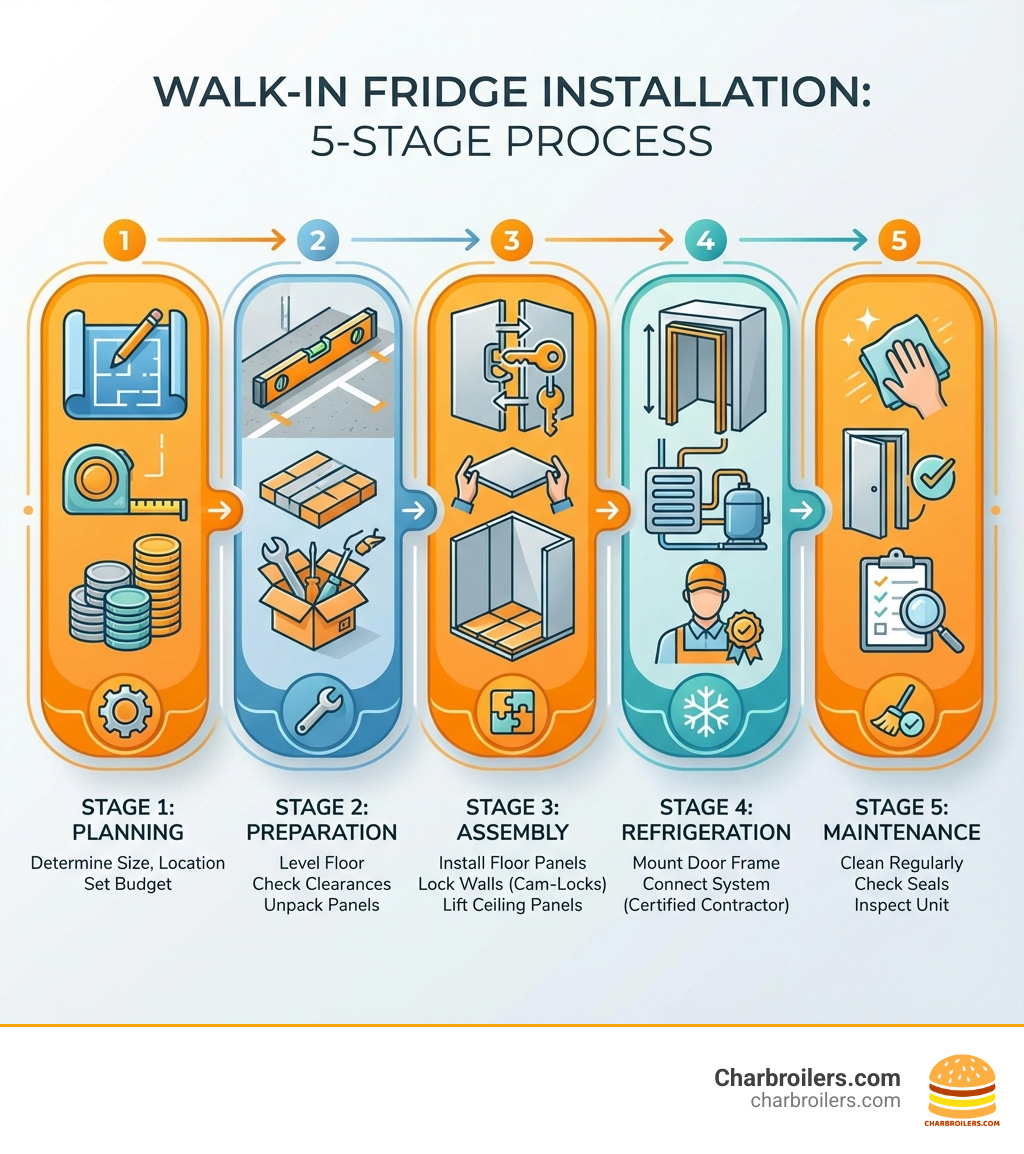
Quick Overview: Walk-In Fridge Installation Steps
- Planning - Determine size, location, and budget ($3,000-$10,000 for basic units)
- Site Preparation - Level the floor, ensure 2" wall clearance, gather tools
- Assembly - Install floor panels (or screeds), lock wall panels using cam-locks, lift ceiling panels into place
- Door Installation - Mount frame, check alignment, adjust sweep gasket
- Finishing - Seal joints with caulk, connect refrigeration system, inspect
Installing a walk-in cooler or freezer might seem daunting, but with proper planning and the right approach, it's a manageable project. The process involves understanding cam-lock panel systems, ensuring a level foundation, maintaining proper clearances, and carefully assembling modular components in the correct sequence.
Whether you're considering a DIY installation or hiring professionals, this guide will walk you through every critical step—from unpacking your panels to making final adjustments to your door sweep.
As Sean Kearney, founder of Charbroilers.com with over a decade of experience in restaurant equipment and supplies, I've helped countless restaurant owners steer walk in fridge installation decisions and optimize their commercial kitchens for efficiency. My goal is to help you understand the process so you can make informed choices that fit your budget and operational needs.
Common walk in fridge installation vocab:
- restaurant walk in fridge
- commercial refrigeration equipment
- commercial refrigerator price
Planning Your Walk-In Fridge: Key Considerations Before You Start
A walk-in fridge is a cornerstone of efficiency and food safety, offering increased storage space, better organization, and the ability to make bulk purchases. This helps maintain product freshness and quality, ensuring high hygiene standards.
When planning, size is paramount. Assess your current and future needs by considering inventory volume, turnover rate, peak usage, and anticipated business growth. The type of goods stored will impact the required dimensions and shelving. Location is equally crucial. Evaluate the available space, considering workflow integration, door swing, delivery access, and adequate ventilation for the refrigeration unit.
Walk-in fridges have potential drawbacks, including a substantial initial cost, large space requirements, and high energy consumption if not properly insulated. A DIY build can be complex and lead to costly errors.
Here's a quick look at the pros and cons of DIY versus professional installation:
| Feature | DIY Installation | Professional Installation |
|---|---|---|
| Initial Cost | Potentially lower upfront | Higher upfront |
| Skills Required | Basic carpentry, electrical, refrigeration | Specialized, certified |
| Time Investment | Significant, often longer | Efficient, quicker completion |
| Risk of Errors | High (inefficiency, leaks, breakdowns) | Low (adherence to standards) |
| Warranty Compliance | Risk of voiding | Ensured |
| Efficiency/Reliability | Variable | Optimized, reliable |
| Peace of Mind | Lower | Higher |
Determining Costs and Financing
A basic walk in fridge installation can range from $3,000 to $10,000 for the unit itself, with custom features or larger sizes increasing the cost. While DIY may seem cheaper, costly errors like poor insulation can negate savings. Professional installation ensures the unit is optimized for long-term efficiency.
Budget for ongoing energy consumption and regular maintenance to prevent expensive breakdowns. Businesses often explore financing options like bank loans, equipment financing, or commercial leases. Consider the long-term ROI a walk-in provides through reduced food waste and improved operational efficiency.
DIY or Hire a Professional?
Tackling a walk in fridge installation yourself requires skills in carpentry, electrical work, and refrigeration. Critically, electrical wiring must be handled by a licensed electrician, and the refrigeration system must be connected by a certified contractor. Without these skills, you risk an inefficient or unsafe unit.
For most businesses, hiring a professional team is the best choice, especially for complex installations. It saves time and ensures the unit is built to industry standards for optimal reliability. Professional installation is also often required to maintain the manufacturer's warranty, as improper installation by unqualified personnel can void it. This is non-negotiable for the refrigeration system. The peace of mind and adherence to local building codes make professional services a worthwhile investment.
Site Prep and Pre-Installation Checklist
Thorough site preparation is key to a successful walk in fridge installation.
When the unit arrives, inspect the delivery receipt against the pieces shipped. Unpack and inspect all parts for shipping damage, noting any issues on the freight bill with photographic evidence for claims. Locate the installation pack (packing list, drawing, cam plugs, cam wrench) and separate panels by type to streamline assembly.
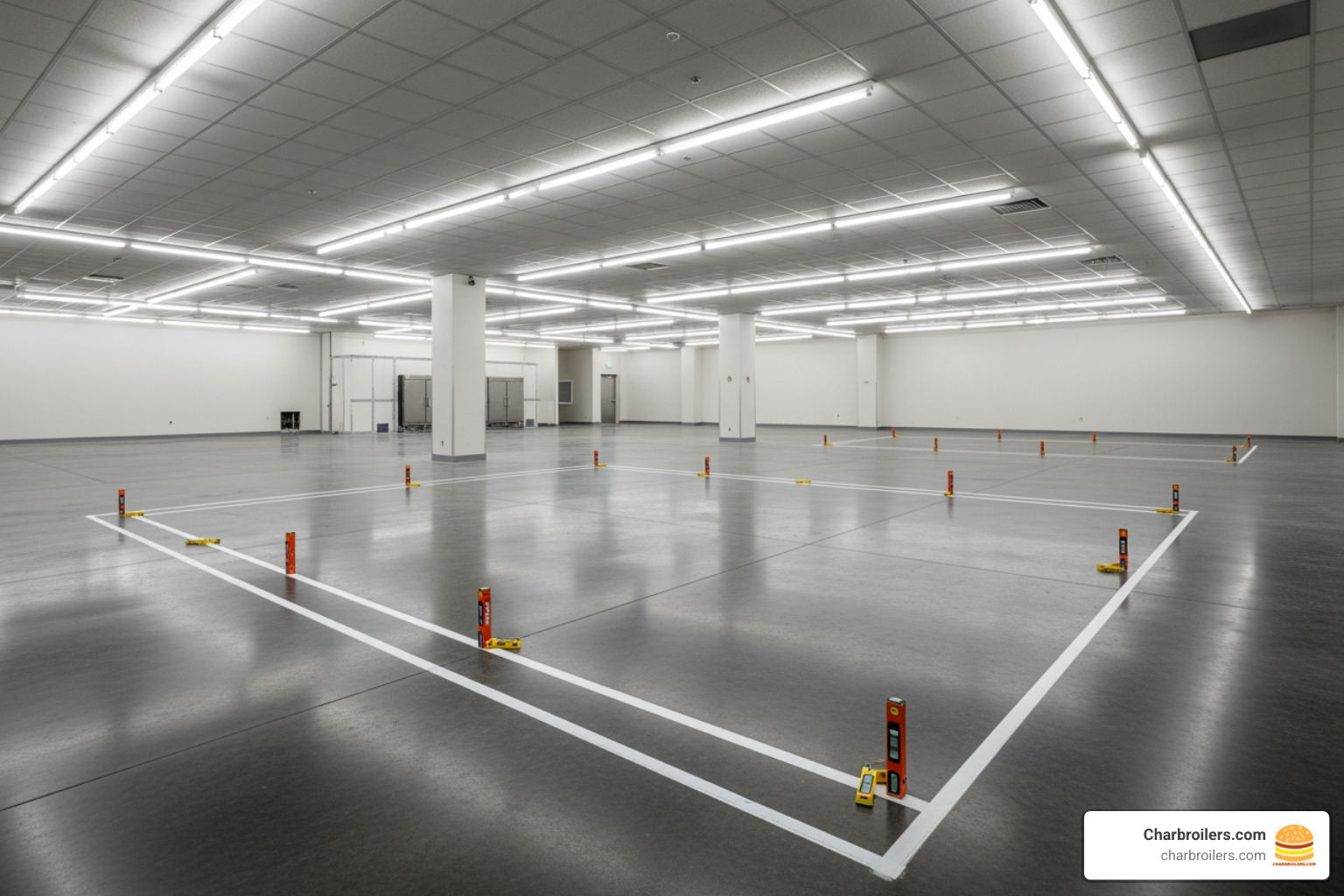
Foundation preparation is the most critical step. The surface must be level (ideally within 3/16" per 10 feet). Outline the perimeter with a chalk line and find the floor's high point to guide your leveling.
- For floored units: Use rot-resistant shims (on 18-inch centers) to level the floor panels. Place a vapor barrier (e.g., 4-mil polyethylene) between the existing floor and the walk-in floor.
- For floorless units: Use shims (4-5 inches wide, every 8 inches) to level the screeds.
Safety is non-negotiable. Always wear PPE (eye gear, hard hat, gloves, steel-toe boots) and use ergonomic lifting methods with a partner. All electrical and refrigeration work must be performed by licensed professionals.
Essential Tools and Materials for Walk In Fridge Installation
Having the right tools makes the process smoother. You'll typically need:
- Level (4-foot carpenter's level)
- Tape measure
- Safety glasses and gloves
- Hammer and pry bar
- Metal snips and utility knife
- Phillips screwdriver and square
- Allen wrench (the supplied cam wrench)
- Drill driver with bits
- NSF-approved silicone caulk and caulk gun
- Shims and vapor barrier material
- Manufacturer-specified fasteners
Recommended Clearances and Spacing
Proper clearances are vital for efficiency. Maintain a minimum of 2 inches of clearance between the walk-in walls/ceiling and any existing building walls. This space allows for easier installation and provides essential airflow for the refrigeration system, preventing it from overworking.
For structural integrity, the maximum ceiling span without extra support is typically 14’ 5-1/2”. Larger units may require support systems like threaded steel rods to prevent sagging. Always consult the manufacturer's guide for specific support instructions.
Step-by-Step Walk In Fridge Installation Guide
With the site prepped, it's time to assemble the walk-in fridge!
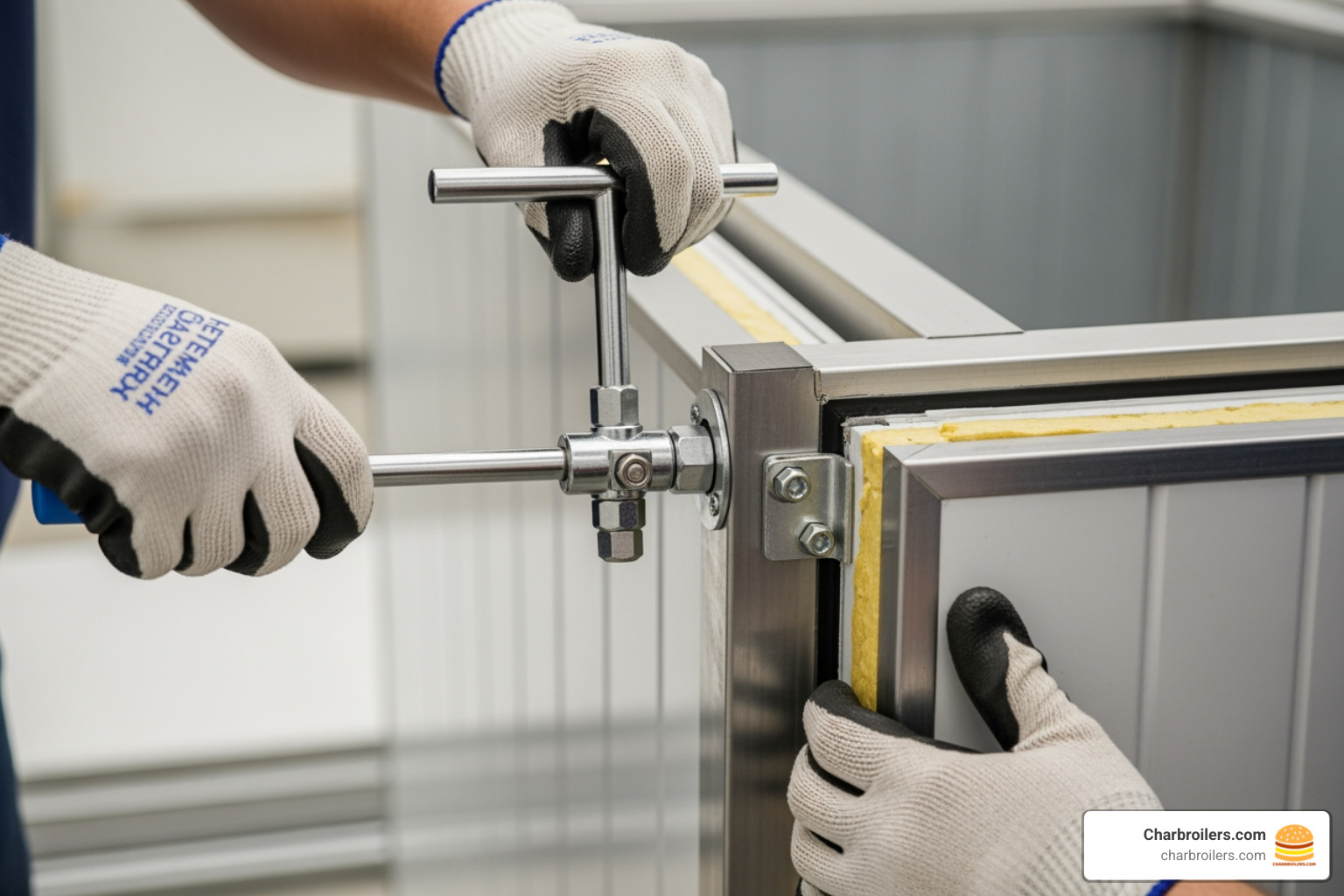
Each panel is marked (e.g., "C" for ceiling, "W" for wall). Follow the assembly drawings carefully, as they are your roadmap. The unit's strength comes from its cam-lock system, which connects panels without external fasteners. Panels have tongue-in-groove edges with male and female locks. Using the supplied cam wrench, turn the lock to pull panels tightly together, creating an airtight seal. Be careful not to overtighten. For a moisture-proof seal, apply a bead of NSF-approved silicone sealant along the tongue edge before fitting panels together.
Assembling a Walk-In with a Floor
For units with an insulated floor, the walk in fridge installation starts from the ground up:
- Lay Floor Panels: On your leveled foundation and vapor barrier, start with a corner panel (F1). Ensure it's perfectly level with shims.
- Lock Panels: Continue laying and cam-locking floor panels, ensuring each is level and flush.
- Install Threshold: If included, install the door threshold bar into the floor panel.
- Erect Walls: Begin erecting wall panels, starting with a corner. Partially lock the bottom cams to the floor pins to allow for adjustments. Do not fully lock walls to the floor until the entire box (walls and ceiling) is assembled and locked together.
Assembling a Floorless Walk-In
For floorless units, the building floor becomes the interior surface:
- Use Screeds: Instead of floor panels, floorless units use vinyl or metal screeds as the base for the walls.
- Apply Sealant: Apply a heavy bead of NSF-approved construction sealant to the bottom of the screeds and at joints to create a moisture-tight seal.
- Secure Screeds: Position and level the screeds with shims, then secure them to the building floor with appropriate fasteners (e.g., ram set pins).
- Assemble Walls: Erect wall panels on top of the screeds using the same cam-lock procedure. Slam braces may be needed for added stability.
Wall, Ceiling, and Door Installation
With the base established, complete the structure:
- Assemble Walls & Ceiling: Continue erecting wall panels, locking them together from bottom to top. Ensure tops are level. Lift ceiling panels into place (don't slide them) and lock them to each other, then to the walls. For spans over 14' 5-1/2", additional ceiling support may be required.
- Install the Door: The door and frame are often pre-assembled. Remove the door by lifting it off its hinges. Position the frame, ensuring it is plumb and level. Proper alignment is crucial for a good seal.
- Adjust Door Sweep: Re-hang the door and check the sweep gasket. It should lightly touch the floor without binding. Adjust by loosening the screws and repositioning it.
- Final Sealing: Check the door reveal for evenness. Caulk all interior joints and any conduit openings with NSF-approved silicone to prevent air and moisture leaks. Tap plug buttons into the cam lock access holes to finish.
Finalizing the Installation and Post-Install Care
With the structure assembled, the final steps ensure your walk-in fridge is ready for service. First, seal all interior panel seams and the wall-to-floor joint with NSF-approved silicone caulk. This is critical for thermal integrity and preventing moisture buildup. Finish by tapping plug buttons into all cam lock locations.
Next is the refrigeration system. All refrigeration components must be installed by a certified refrigeration contractor. This includes the evaporator coil, condensing unit, refrigerant lines, and drainage. For more information, see our guide on commercial refrigeration equipment. Similarly, all electrical connections must be made by a licensed electrical company to ensure code compliance and safety.
Finally, conduct a thorough inspection. Check that the door closes, seals, and locks properly. Verify the interior light and safety releases function correctly. Calibrate the thermometer by placing the probe in ice water (it should read 32°F ± 2°F).
Key Maintenance for Your Walk-In Fridge
Consistent maintenance is paramount for longevity and efficiency.
- Regular Cleaning: Clean interior and exterior surfaces regularly with mild soap and warm water. Avoid abrasive cleaners and high-pressure washers.
- Check Door Gaskets: Inspect door gaskets for a complete, airtight seal. Clean them and replace if torn or brittle.
- Inspect Refrigeration Unit: Regularly clean the condenser coils of dust and debris to ensure proper heat exchange and airflow. For freezers, check the door heater wire for frost.
- Monitor Temperature: Keep an eye on the internal temperature for any fluctuations that could signal a problem.
- Other Maintenance: Lubricate door hinges every two months. Periodically check and tighten all fasteners on hinges and latches. For outdoor units, remove heavy snow from the roof.
Professional maintenance extends equipment life, ensures consistent temperatures, and prevents costly breakdowns.
Frequently Asked Questions about Walk-In Fridge Installation
Here are answers to common questions about walk-in units.
Can I use a pallet jack or forklift inside my walk-in?
Generally, no. Standard walk-in floors are not designed for forklifts, pallet jacks, or hard-wheeled carts, as the concentrated weight can cause damage and void the panel warranty. Use hand trucks with soft wheels. If your operation requires heavy equipment, you must install a specialized heavy-duty floor.
What are the most common installation mistakes to avoid?
To ensure a successful walk in fridge installation, avoid these common pitfalls:
- Unlevel Foundation: The biggest mistake, leading to poor panel fit and compromised seals.
- Insufficient Clearance: Failing to leave 2 inches of clearance hinders airflow and efficiency.
- Overtightening Cam-Locks: This can strip the mechanism or damage the panels.
- Poor Sealing: Inadequate caulking causes air leaks, moisture buildup, and higher energy costs.
- Skipping Inspection: Not inspecting for shipping damage upon arrival can void warranty claims.
- DIY Electrical/Refrigeration: This is dangerous, often illegal, and voids warranties. Always use certified professionals.
- Ignoring the Manual: Deviating from manufacturer instructions can lead to errors.
How long does a typical walk-in fridge installation take?
The duration of a walk in fridge installation varies. Factors include the unit's size and complexity, site readiness, and whether it's a floored or floorless design. A DIY project can take several days or weeks. A professional crew can often complete a standard installation in one to two days, minimizing business downtime.
Conclusion
We've covered a lot of ground today, from the initial planning stages and understanding the costs involved to the intricate steps of site preparation, panel assembly, and crucial post-installation care. The journey of walk in fridge installation might seem complex, but with careful planning, the right tools, and adherence to best practices, it's a manageable and rewarding project.
A properly installed and maintained walk-in fridge is a long-term asset for your business. It improves food safety, boosts operational efficiency, and helps control costs by preserving your valuable inventory. Whether you're a burgeoning artisan food producer or a busy restaurant in Seattle, WA, investing the time and effort into a correct installation will pay dividends for years to come.
For all your commercial kitchen needs, from charbroilers to deep fryers and griddles, we at Charbroilers.com are here to help you equip your business for success. Explore our complete guide to commercial kitchen equipment to find out more.