

5 Key Types of Target Audience for Restaurant Equipment Suppliers
Trying to market your restaurant equipment supply business without a target audience is like a chef cooking without a recipe. You might make something, but it probably won't be what anyone actually wants. For restaurant equipment supply websites, figuring out your specific types of target audience is the very first step toward marketing that actually works. It's the foundation for everything you do, from SEO and content creation to blogger outreach and article writing.
Why Knowing Your Target Audience Is Key
If you try to sell to everyone, you'll end up connecting with no one. Think about it. A chef who throws together a generic, one-size-fits-all buffet? It's functional, sure, but it's completely forgettable. A great chef, on the other hand, designs a tasting menu for a very specific palate. They create an experience that people remember and come back for. That’s exactly how marketing should work for your restaurant equipment business.
When you focus on a specific customer group, you save money, you get a much better return on your investment, and you start building a base of loyal, devoted customers. Every single piece of marketing becomes more powerful when you know who you're talking to.
By understanding the distinct needs of different customer segments, you can move from generic messaging to creating content that directly solves your audience's problems, builds trust, and drives sales for your equipment supply website.
The Foundation of Effective Marketing
Defining your audience isn't just a "nice-to-have" — it's the bedrock of a successful strategy. Every marketing activity, from local citation services to blog posting, gets sharper and more efficient when you have a crystal-clear picture of your ideal customer. For instance, an equipment supplier targeting brand-new cafe owners is going to create entirely different content than one going after established steakhouse chains.
This focused approach lets you:
- Craft compelling copyrighting that speaks directly to your customer’s real-world pain points and their biggest goals.
- Optimize your blog posts with the keywords that your specific audience is actually typing into Google.
- Improve local citation services by making sure your business shows up exactly where your local customers are looking.
At the end of the day, a deep understanding of your audience is a non-negotiable ingredient in any recipe for business growth. For more strategies on this, check out our guide on how to increase restaurant sales. This guide will break down the core types of target audience to help you get started.
Demographic Targeting: Who Your Customers Are
Before you can figure out what your customers want, you have to know who they are. This is where demographic targeting comes in. It’s the starting point for really understanding the different types of target audience out there.
Think of it like being a chef. You wouldn't just grab random ingredients from the pantry; you'd pick specific ones based on the dish you're making. Demographic data gives you that same kind of clarity for your marketing by sorting your audience into clear, factual groups.
Key Demographic Segments to Consider
When you start digging into demographics, you want to focus on the details that actually change how people in the foodservice world make decisions. These data points help you sharpen everything from your article writing and ad copy to your product descriptions.
A few key variables make all the difference:
- Age: Are you targeting a young entrepreneur opening a trendy brunch spot, or a seasoned restaurateur aged 40+ looking to upgrade a fine dining kitchen? Age changes everything.
- Income Level: This one’s a biggie. It tells you how price-sensitive your customers are. A food truck startup will be looking for budget-friendly fryers, while an established hotel chain might spring for top-of-the-line, high-capacity models.
- Occupation: The head chef at a massive resort has a completely different set of needs than the owner of a small, independent catering business.
- Business Size: A family-style pizzeria lives and dies by efficiency. That single fact influences their need for specific ovens, table sizes, and even your marketing messaging.
Knowing these details helps you show up in the right places. For instance, if you’re trying to reach young restaurant managers, you’d lean heavily on Instagram, where the largest user base is aged 25-34. But if you’re selling to established business owners, Facebook’s slightly older audience might be a better bet. You can dig into the latest social media demographics to get even more specific with your strategy.
Let's look at how this plays out for an equipment supplier marketing to a local pizzeria. Depending on who runs the pizzeria, their needs—and your marketing pitch—will change dramatically.
Demographic Segments for a Local Pizzeria
| Demographic Segment | Marketing Focus | Potential Equipment Needs |
|---|---|---|
| Young Entrepreneurs (25-35) | Social media content, case studies on modern tech, financing options, digital marketing guides. | High-tech, multi-function pizza ovens, modern POS systems, smaller, energy-efficient equipment. |
| Established Family Owners (40-60) | Email newsletters, loyalty programs, durability and warranty info, blog posts on ROI. | Larger, robust ovens for high volume, heavy-duty mixers, easy-to-clean furniture, reliable refrigeration. |
| Corporate Franchise Managers (30-55) | Corporate account benefits, bulk pricing, online ordering systems for supplies, white papers on efficiency. | Conveyor ovens for speed and consistency, standardized equipment packages, a commercial-grade slicer for high volume. |
As you can see, starting with a clear demographic target prevents you from trying to be everything to everyone.
When you start with these concrete facts, you build a solid foundation for all your marketing. You’re not just guessing who your customers are anymore; you're using real data to define them. That makes every decision that follows more targeted and, ultimately, more effective.
Psychographic Targeting: What Motivates Their Choices

If demographics tell you who your customers are, psychographics get to the heart of why they do what they do. This is where you move past the surface-level details and start exploring the deeper motivations that actually drive their buying decisions. Frankly, it's one of the most powerful types of target audience segmentation because you're tapping directly into your customer’s mindset.
Think of it like this: you could have two restaurant owners with nearly identical demographic profiles. Same age, same location, same business size. But one is an ambitious chef who lives for culinary innovation, while the other is a pragmatic business owner laser-focused on squeezing every last drop of profit from their margins. They need completely different equipment and will tune out marketing messages that don't speak their language.
Connecting With Core Values and Lifestyles
Psychographic segmentation is all about grouping people by their psychological traits—their values, their interests, their lifestyles. For a restaurant equipment supplier, this means figuring out what really makes your clients tick. Does a client prioritize sustainability enough to invest in a pricey, energy-efficient freezer? Or do they value speed and volume above all else, making a high-output pizza oven a no-brainer?
Understanding the 'why' behind a purchase allows you to create marketing that resonates on an emotional level. It transforms your sales pitch from "Here's what this product does" to "Here's how this product aligns with what you believe in."
That deeper connection is what builds real loyalty. After all, research shows 81% of consumers are more likely to buy from brands that deliver personalized experiences, which is exactly what psychographics helps you do. You're not just selling a product; you're providing a solution that fits into their worldview.
To put this into practice, you need to create content that speaks to these specific mindsets. A blog post titled "The Best High-Performance Grills for Ambitious Chefs" is going to attract a totally different reader than one called "Cost-Effective Kitchen Solutions for a Leaner Operation."
This mindset-first thinking should influence everything from your copyrighting to your blogger outreach. It’s especially critical when you look at the latest food service industry trends, where values like efficiency and sustainability are becoming major decision-drivers. When you understand these motivations, you stop just selling equipment and start building much stronger, more meaningful relationships with your ideal clients.
Geographic Targeting: Where Your Customers Are Located
For any business in the foodservice world—especially a restaurant equipment supplier—location is everything. Geographic targeting isn't just about knowing a customer's city or zip code. It's about digging into the unique character of their local environment.
Think about how much the local climate shapes a restaurant's needs. If you’re an equipment supplier in a hot, coastal town, you know the demand for commercial ice machines is sky-high. Move that business up to a chilly northern region, and suddenly you're selling more hot beverage warmers and soup kettles. It's all about context.
Geographic segmentation isn’t just about where your customers are—it's about how their location influences their daily business challenges, menu choices, and equipment requirements. This insight is your greatest asset for local marketing.
Mastering Local SEO with Geographic Insights
Understanding your local geography is the playbook for winning at local search. Your content and SEO strategy should directly reflect the real-world needs of businesses in your area. This creates a level of relevance that generic, one-size-fits-all marketing just can't touch.
For example, your approach needs to be specific:
- A supplier in a coastal town should be creating content and targeting keywords like "commercial deep fryers for seafood restaurants." This speaks directly to local businesses with a high-demand, specific need.
- A supplier in a college town should pivot their focus. Their best keywords will be things like "espresso machines for cafes" or "compact pizza ovens for late-night spots," matching the local business scene.
This approach gives you a much clearer picture of what your customers need, allowing you to tailor your blog posts to answer the exact questions they're asking. When you truly understand what is local SEO and how to apply it, you become the go-to expert in your region. This focus turns your location into a powerful competitive advantage.
Local Marketing Strategy by Geographic Segment
Let's break down how an equipment supplier can put this into practice. The table below shows how you can tailor your SEO and content strategy to different types of neighborhoods, making your marketing much more effective.
| Neighborhood Type | Dominant Restaurant Type | Targeted SEO Keyword | Relevant Blog Post Topic |
|---|---|---|---|
| Urban Financial District | Fast-Casual Lunch Spots | "high-speed panini press for cafes" | "5 Ways to Speed Up Your Lunch Rush" |
| Hipster/Arts District | Artisan Coffee Shops & Bakeries | "commercial espresso machine repair" | "Choosing the Right Grinder for Your Beans" |
| Suburban Family Area | Pizzerias & Family Diners | "stackable convection ovens for pizza" | "How to Maximize Kitchen Space in a Small Diner" |
| Coastal Tourist Town | Seafood & Ice Cream Shops | "best commercial ice cream freezers" | "Keeping Your Seafood Fresh: A Guide to Refrigeration" |
By aligning your marketing with the specific needs of each geographic segment, you move from shouting into the void to having a meaningful conversation with your most likely customers. It's about being the right answer, in the right place, at the right time.
Behavioral Targeting: How Your Customers Act
Actions speak louder than words. While demographics tell you who your customers are and psychographics explain why they buy, behavioral targeting gets down to what they actually do. This is where the rubber meets the road—it’s one of the most powerful ways to segment your audience because it’s based on hard data about how customers interact with your business.
For a restaurant equipment supplier, this means slicing your customer list based on their past actions. You can look at their purchase history, how loyal they are, and how often they use your products or services. This kind of data lets you create laser-focused marketing that feels like you're reading their minds, building a much stronger relationship over time.
By analyzing what your customers do, you can start predicting what they'll need next. It’s the difference between reacting to their needs and proactively meeting them, which is the secret sauce for building real, long-term customer value.
Turning Actions into Insights
Behavioral data is pure gold for your marketing, especially for things like email campaigns and blogger outreach. A first-time buyer who just picked up a commercial charbroiler? They might get a helpful automated email with a guide on equipment maintenance. On the other hand, a loyal client who buys from you every single quarter could get an exclusive sneak peek at new inventory before anyone else sees it.
This isn't just theory; it flat-out works. Behavioral segmentation groups people based on how they interact with products, revealing clear patterns in their buying habits and brand loyalty. Look at social media—a whopping 43.8% of U.S. TikTok users bought something on the platform in 2024 because their behavior showed they were ready to pull the trigger. Businesses that use this kind of targeted approach can see up to a 760% jump in email revenue. It’s that powerful. You can discover more social media insights from Sprout Social to see these trends for yourself.
At the end of the day, tracking behavior means you can stop guessing and start knowing what your customers want. You can craft content, offers, and outreach that are perfectly timed and incredibly relevant. That doesn't just increase their lifetime value—it solidifies their loyalty to your brand for the long haul.
Creating Your Ideal Customer Persona
Okay, we’ve broken down the different ways to slice up your audience. Now it's time to put those pieces together. The real magic happens when you build a detailed ideal customer persona—think of it as a semi-fictional character who represents your perfect customer. This step is what turns all that abstract data into a real, tangible person you can market to.
It’s a lot like how a chef develops a new signature dish. You don't just toss ingredients into a pan and hope for the best. You carefully layer the flavors—the demographics, psychographics, and behaviors—to create something complete and memorable. This persona becomes the person you're talking to when you write blog posts, design your local SEO strategy, or craft your next email campaign.
Meet Chef Maria: A Practical Persona Example
Let's walk through building a persona for a restaurant equipment supplier. We'll call her 'Chef Maria.' By layering the segmentation types we just discussed, a very clear picture of who she is and what she needs starts to form.
-
Demographics: Maria is 38 years old, lives in a major city, and has a culinary degree. With over 15 years in the trenches, she knows her way around a professional kitchen.
-
Geographics: She runs a restaurant in a fiercely competitive urban market. That means she needs equipment that gives her an edge, whether it's through better efficiency or superior quality.
-
Psychographics: Maria is all about sustainability and the farm-to-table movement. She’s not looking for the cheapest option; she sees her equipment as a long-term investment in her craft and values quality and durability above all else.
This infographic shows how her online habits—like purchase history and brand loyalty—add that final, crucial layer of understanding.
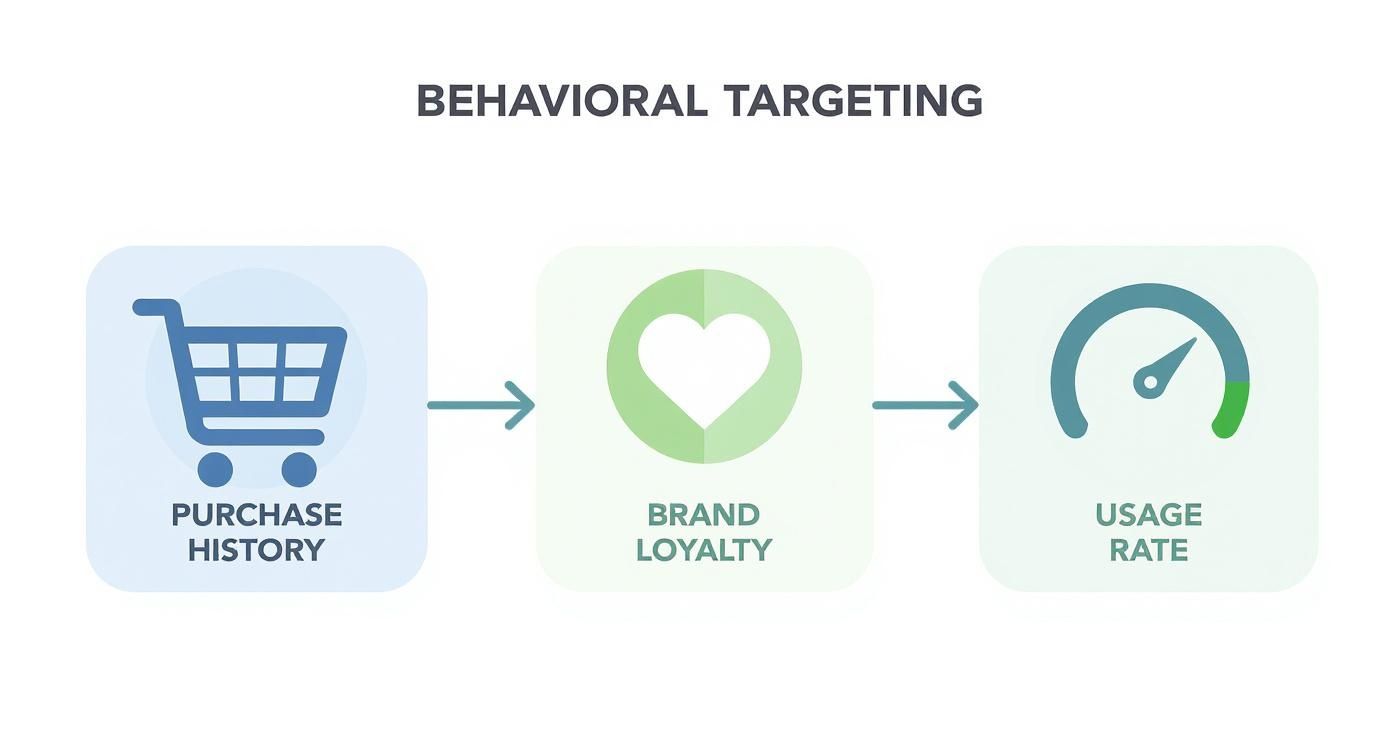
Her digital footprint tells us she’s a researcher. She digs deep into potential suppliers and gravitates toward brands that share her commitment to quality.
By creating a detailed persona like Chef Maria, you stop shouting into the void and start having targeted, effective conversations. Every piece of content, from an article on energy-efficient charbroilers to an email about new inventory, can be written to solve her specific problems and connect with her values. When you do that, your message is guaranteed to hit the mark.
Frequently Asked Questions
How Can I Gather Audience Data on a Budget?
You don't need a huge marketing budget to start figuring out who your customers are. The best place to start is with the data you already have.
Take a look at your sales records. What are the common threads? Are you selling more of one type of charbroiler? Do you see the same names popping up for repeat purchases? These simple observations can tell you a lot. You can also create simple, free surveys with tools like Google Forms or check the free analytics dashboards on your social media and website. You'd be surprised by the goldmine of demographic and behavioral data you can get without spending a dime.
What Is the Biggest Mistake to Avoid?
The single biggest mistake we see is creating a customer persona, patting yourself on the back, and then letting it collect dust. Markets shift, food trends come and go, and your audience’s needs will change right along with them. A persona you built three years ago might be completely useless today.
Stale personas lead to stale marketing. If your understanding of the customer is stuck in the past, your SEO, content, and outreach will fail to connect with who they are now. You have to treat your personas like living documents.
How Often Should I Update My Customer Personas?
For an industry as fast-moving as restaurant equipment, a good rule of thumb is to review and refresh your personas at least once a year.
That said, don't just wait for the calendar to tell you when. You should also revisit them anytime there's a major market shift. Did a disruptive new piece of kitchen tech just launch? Did local dining trends suddenly pivot? Staying on top of these changes ensures your marketing stays sharp and relevant.
Ready to take your marketing to the next level with content that truly speaks to your ideal customer? At Charbroilers.com, we don't just provide top-tier equipment; we offer the insights to help your restaurant thrive. Explore our full selection of commercial charbroilers at https://charbroilers.com.