
How to Start Catering Business: A Practical Guide
Starting a catering business isn't just about cooking great food. It begins with a solid blueprint that defines your niche, your legal setup, and your financial game plan. This foundational work—from digging into your local competition to creating a detailed budget for equipment and licenses—is what turns a passion for food into a profitable company.
Building Your Catering Business Blueprint
Before you even think about tasting menus or designing a logo, your journey into the catering world starts with a plan. This isn't just scribbling ideas on a napkin; it's about building a strategic foundation that will support your business through the inevitable growing pains and successes that lie ahead. A well-thought-out blueprint is the real difference between a fun hobby and a sustainable, profitable venture.
The global catering services market was valued at around USD 164.59 billion in 2024 and is expected to hit nearly USD 311.87 billion by 2034. That massive growth signals a huge opportunity for new entrepreneurs who can meet what today's customers are looking for. The data shows there's plenty of room for new players, but only if they approach it strategically.
This visual breaks down the core process of planning, structuring, and budgeting your new business.
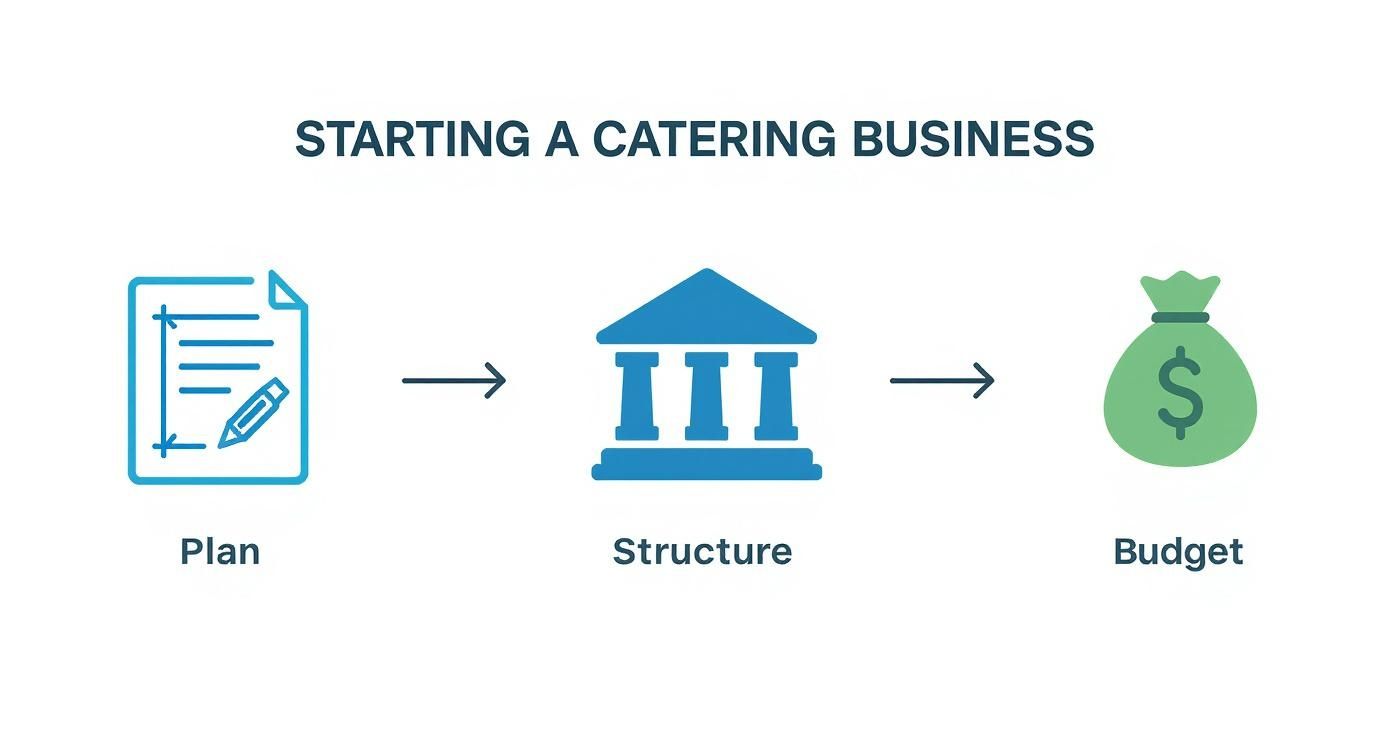
As you can see, success starts with a clear plan, gets solidified with the right legal structure, and is grounded in a realistic financial budget.
Find Your Unique Space in the Market
The first real step is deciding exactly what kind of caterer you want to be. Trust me, a generic "we cater everything" approach rarely works. You'll end up stretched too thin. Instead, find a niche that lines up with your skills and passion—a corner of the market where you can truly stand out.
Think about a few of these possibilities:
- Corporate Lunches: This is all about reliability. Businesses need high-quality, on-time meals for meetings and events. Punctuality and professionalism are king here.
- High-End Weddings: Here, you're selling an experience. It’s about creating bespoke, elegant dining for a once-in-a-lifetime event. This demands creativity and absolutely flawless service.
- Specialized Diets: You can carve out a loyal following by catering to specific needs like vegan, gluten-free, or farm-to-table menus. Authenticity is everything in this space.
Your goal isn't just to cook food; it's to solve a specific problem for a specific group of people. Once you nail that down, every other decision you have to make becomes a whole lot clearer.
Analyze Your Local Competitors
Once you have a niche in mind, it's time to do some local recon. Take a hard look at the other caterers in your area, not to copy them, but to figure out what they're not doing. Are they all serving the same traditional wedding fare? Maybe there's a wide-open lane for a modern, globally-inspired menu.
Your competitors are your best source of free market research. Pore over their menus, their pricing, and their online reviews. You're looking for the gaps you can fill and the weaknesses you can exploit. Don't just look at what they do well; focus on what customers are complaining about.
For example, if you see a bunch of online reviews griping about a popular caterer's bland vegetarian options or poor communication, you’ve just found two powerful selling points for your new business.
Choose the Right Business Structure
One of the most critical—and frankly, driest—decisions you'll make early on is your legal structure. It feels technical, but it directly impacts your taxes and personal liability. Getting this wrong can have serious consequences for your personal finances.
The most common options are a sole proprietorship, which is simple but offers zero liability protection, or an LLC (Limited Liability Company), which creates a wall between your personal assets and business debts. For a deeper dive, this guide on Choosing Your Business Structure is an excellent resource that breaks it all down.
Create a Realistic Budget
Finally, you need to translate your vision into cold, hard numbers. A detailed budget is non-negotiable. Start by listing every potential startup cost you can think of, from major equipment purchases down to small administrative fees. This list will tell you exactly how much cash you need to get off the ground.
Your budget also has to account for your kitchen. Whether you're building a new space from scratch or renting time in a commissary kitchen, the layout is crucial for efficiency. Effective content like blog posting and article writing can help restaurant equipment suppliers reach caterers in need of design guidance.
Navigating Licenses and Financial Setup
Now that you have your business blueprint mapped out, it's time to build the legal and financial fortress around your passion. This is the part that isn't as glamorous as menu tasting but is absolutely critical for your survival and success.
Think of this phase as gathering all the unglamorous but vital ingredients in your recipe for a real business. We're talking about the paperwork and money matters that protect you, your clients, and your future. So many new caterers trip up here, and it's a costly mistake. Let’s make sure you aren't one of them.
Securing Your Essential Permits and Licenses
Before you can even think about serving your first appetizer, you need to get your permits in order. These aren't just bureaucratic hoops to jump through; they're your badge of legitimacy, proving you operate safely and professionally.
Each one has a specific job, from ensuring food safety to making you a compliant local business. Here’s what you’ll almost certainly need to get started:
- Business License: This is your basic ticket to operate in your city or county. It’s usually the first document you'll need and officially registers your business with the local government.
- Food Handler's Permit: You and any staff touching food will need this certification. It proves you understand safe food prep and storage, and most local health departments offer the necessary courses and exams.
- Health Department Permit: This one is a big deal. The health department will inspect your kitchen space to make sure it meets their strict standards for sanitation and equipment. You simply cannot operate legally without this approval.
Getting these documents sorted out does more than just keep you out of trouble. When clients or venue managers ask for your licenses—and they will—having them ready shows you’re a serious, professional operator they can trust.
Understanding and Choosing Business Insurance
Insurance is your financial safety net, plain and simple. Imagine a guest slipping at an event or, worse, a foodborne illness outbreak. A single accident could be financially devastating without the right coverage. It’s what stands between a lawsuit and your business and personal assets.
As you get your finances sorted, take the time to understand the various small business insurance requirements. General liability insurance is the bare minimum, covering things like bodily injury and property damage, but you might also need commercial auto or property insurance depending on your setup.
Don't look at insurance as just another bill. See it as an investment in your peace of mind and the long-term health of your business. The cost of a policy is a tiny fraction of what a potential lawsuit could cost you.
Establishing a Solid Financial Foundation
Smart financial management is what really separates the thriving catering businesses from the ones that are constantly struggling. Your very first move should be to open a dedicated business bank account. Mixing personal and business funds is a recipe for a massive headache, especially when tax time rolls around.
With a bank account set up, let’s talk funding. Here’s a quick look at what it might take to get started.
This table provides a sample breakdown of the initial investments you'll likely need to launch a small-to-medium-sized catering operation.
| Expense Category | Estimated Cost Range (Low End) | Estimated Cost Range (High End) |
| :--- | :--- | :--- | :--- |
| Commercial Kitchen Rental (Deposit + First Month) | $2,000 | $5,000 |
| Licenses, Permits, and Legal Fees | $500 | $2,500 |
| Business Insurance (Initial Premium) | $1,000 | $3,000 |
| Kitchen Equipment and Supplies | $3,500 | $20,000 |
| Initial Food and Beverage Inventory | $1,000 | $5,000 |
| Marketing and Branding (Website, Business Cards) | $500 | $3,500 |
| Transportation (Van Down Payment or Rental) | $500 | $6,000 |
| Working Capital/Contingency Fund | $1,000 | $5,000 |
Keep in mind that these figures can vary widely based on your location, business model, and the scale of your initial operations.
The average startup cost for a catering business in the US typically falls somewhere between $10,000 and $50,000. While things like rising food costs can be a challenge, the industry is strong. In fact, corporate spending continues to support its growth, and the US caterers industry is projected to hit $14.4 billion in revenue in 2025. Knowing these numbers helps you position yourself for a successful launch.
Designing Your Menu and Sourcing Equipment
With the paperwork sorted, we get to the fun part—the food. This is where your creativity comes alive, but it’s also where your business will sink or swim. Your menu isn't just a list of dishes; it’s your brand, your sales pitch, and the single biggest factor in your profitability.
Of course, you can't bring that vision to life without the right tools. The equipment you choose will dictate your kitchen's speed, consistency, and ability to handle the pressure of a big event. Let's dig into crafting a menu that sells and getting the gear you need to execute it flawlessly.
Crafting a Profitable and Scalable Menu
A killer catering menu is a beautiful thing. It has to taste amazing, look incredible on the plate, and—most importantly—make you money. Every item has to be designed not just for flavor, but for its ability to be prepped in large quantities and travel without turning into a disaster.
This all starts with food costing. It's not glamorous, but it's non-negotiable. You have to calculate the exact ingredient cost for every portion you serve. The industry benchmark is to keep food costs between 25-35% of your menu price. Creep above that, and you’re just working for your suppliers.
Think of your menu like an investment portfolio. Some items are your high-margin workhorses (think elegant pasta dishes or creative salads). Others are the lower-margin showstoppers that wow the client, like a prime rib carving station. The magic is in the mix—creating a balance that feels premium but protects your bottom line.
Look at your menu as a whole. Do you have multiple dishes that pull from the same core ingredients? That's a pro move. It slashes waste and makes inventory a heck of a lot simpler. A smartly designed menu lets your team operate like a well-oiled machine, even when things get chaotic.
Choosing Your Kitchen Arsenal
The equipment you buy is the backbone of your entire operation. It needs to be tough, reliable, and ready for the volume you're planning for. Trust me, trying to run a pro catering gig with residential appliances is a recipe for failure. They just can't handle the heat.
Here’s a look at the essential gear you’ll need to think about:
- Cooking Equipment: This is where the magic happens. You’ll need commercial-grade ranges and ovens—convection ovens are a game-changer for even cooking. Depending on your menu, you might need specialty items like a commercial charbroiler to get those perfect grill marks and smoky flavor that clients love.
- Refrigeration: You can never have enough cold storage. It's crucial for food safety. We're talking reach-in fridges, freezers, and maybe even a walk-in cooler if you're planning to go big.
- Holding and Transport: Getting food from your kitchen to the event site at the perfect temperature is everything. Insulated food carriers (often called cambros) and holding cabinets are your best friends here.
- Prep Equipment: Think workhorses like commercial mixers and food processors, sturdy stainless steel tables, and a solid collection of knives and utensils. A smooth prep phase makes for a smooth event.
Remember, any serious cooking equipment—especially gas-powered units like charbroilers—will affect your kitchen's ventilation. You have to get this right. Our guide on commercial kitchen ventilation requirements is a great place to start understanding the rules for a safe and legal setup.
Buying New, Used, or Leasing Equipment
How you get all this gear is one of the biggest financial decisions you'll make early on. You've got three main options, and each one impacts your startup capital differently.
| Option | Pros | Cons | Best For |
|---|---|---|---|
| Buying New | Full warranty, latest tech, zero surprises. | Highest upfront cost, depreciates fast. | Caterers with solid funding and a long-term plan. |
| Buying Used | Huge savings, can get premium brands for less. | No warranty, risk of repairs, might be older tech. | Startups on a tight budget who know how to inspect equipment. |
| Leasing | Low initial cash outlay, predictable payments. | Costs more over time, you don't own it in the end. | Businesses that need to protect their cash flow at all costs. |
There's no single "right" answer here. It comes down to your budget and your business plan. Many successful caterers I know use a hybrid strategy. They buy essential, high-use items new (like refrigeration) and hunt for deals on used prep tables or shelving. It’s a smart way to balance reliability with cash management, setting you up for success from day one.
Building Your Brand and Marketing Your Services
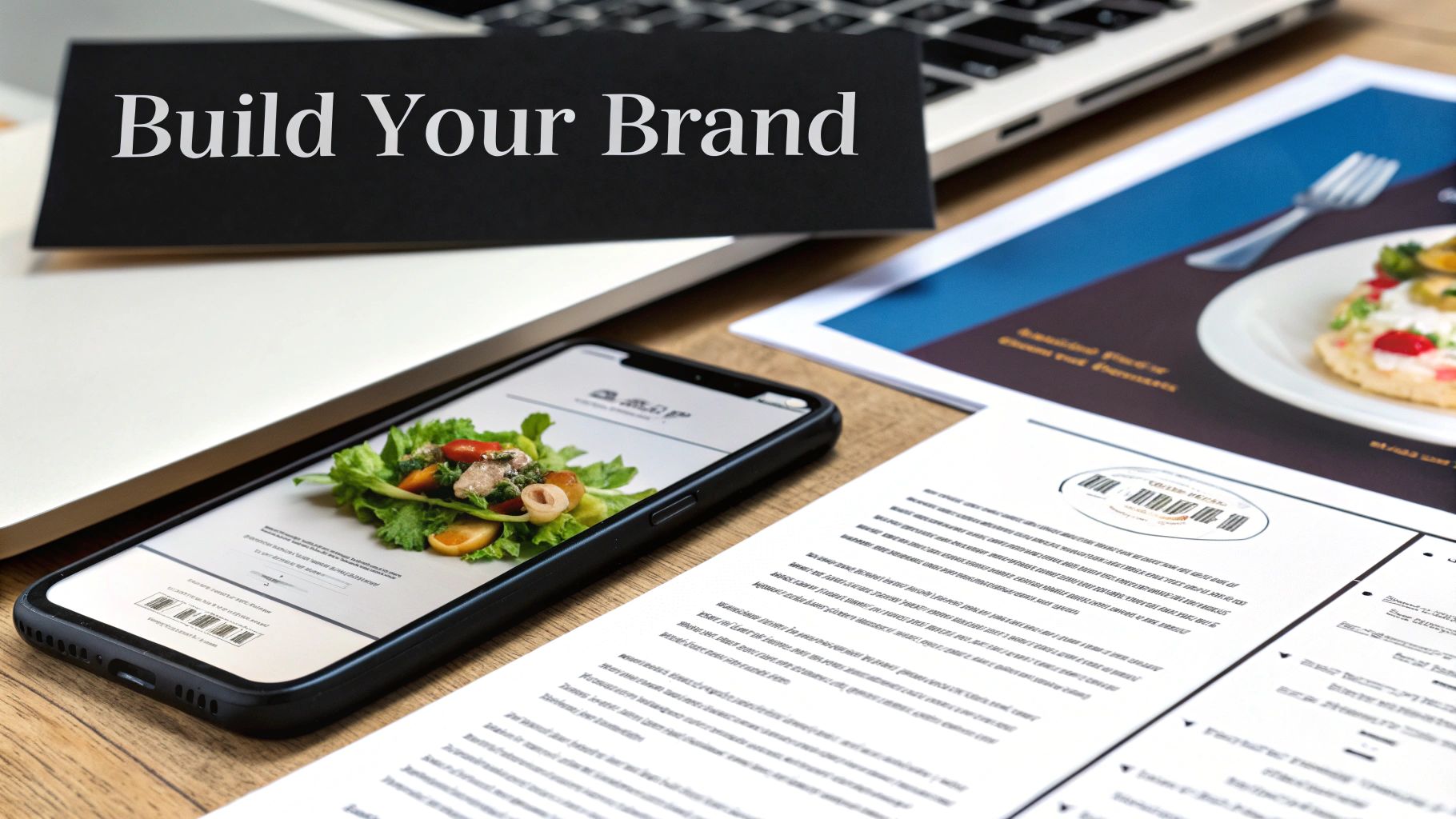
Crafting an incredible menu is a massive achievement, but it's only half the battle. Let's be honest: the most delicious food in the world won't sell itself if nobody knows you exist. This is where you put down the chef's knife and pick up the marketer's hat. It's time to build a brand that people remember and a marketing engine that keeps the phone ringing.
A great brand does more than just look good on a business card. It tells your story, communicates your specialty, and sets the stage for the experience you're going to deliver. It’s what makes a potential client pick you over a dozen other caterers. So, let’s get into the nitty-gritty of creating an identity that sticks and using marketing tactics that actually bring in paying customers.
Defining Your Brand Identity
Before you even think about spending a dollar on ads, you need to know who you are as a business. Your brand identity is the whole package—your name, your logo, your colors, and the way you talk to customers. It’s the vibe people get when they interact with your company.
Start by nailing the essentials:
- A Memorable Name: You want a name that's easy to remember, spell, and hints at what you do. If you specialize in rustic, farm-to-table weddings, "Hearth & Harvest Catering" clicks instantly, while something like "The Gilded Spoon" might send the wrong signal.
- A Professional Logo: This logo is going everywhere—your website, menus, business cards, even the sleeve of your chef coat. It doesn’t need to be complicated, but it must look professional and be easy to read at any size.
- A Unique Voice: How do you want to sound? Are you the fun, casual crew perfect for a backyard BBQ bash? Or are you the sophisticated, elegant team that corporations call for their high-end events? Whatever you choose, keep that voice consistent across the board.
These pieces fit together to create a cohesive brand that feels trustworthy and, most importantly, attracts your ideal client.
Building Your Digital Storefront
In this day and age, your website is your single most important marketing tool. It’s your 24/7 salesperson, your portfolio, and your booking agent, all rolled into one. You don't need a crazy-expensive, complicated site to get started. What you need is something clean, professional, and that works great on a phone.
Think of your website as the digital version of a menu tasting. It needs to be visually appealing, easy to navigate, and make people’s mouths water. High-quality photos of your food aren't a luxury; they are an absolute necessity.
Your site must clearly lay out your menu options, showcase stunning photos of your dishes from past events, and give potential clients a dead-simple way to get in touch. A prominent, easy-to-use contact form is non-negotiable for capturing those valuable leads.
The industry is changing fast. The global catering management market is expected to jump from USD 118.3 billion in 2025 to over USD 180.3 billion by 2035. This boom is being driven by clients who expect modern conveniences—a staggering 97% of buyers now want features like delivery tracking and easy online ordering. A solid website is your first step to meeting them where they are.
Dominating Local Search
When someone in your town needs a caterer for a last-minute corporate lunch or is planning their wedding, where do they go first? A search engine. They’re typing in "caterers near me" or "wedding catering in [Your City]." Getting your name to the top of those results is a game-changer.
This is where Local SEO (Search Engine Optimization) becomes your best friend. It’s all about tuning up your online presence to grab the attention of people searching nearby. One of the best ways to do this is by building local citations—mentions of your business name, address, and phone number on online directories. Our in-depth guide on local citation building is a great resource to get you started on climbing those local rankings.
Don't sleep on social media, either. Platforms like Instagram and Pinterest are visual goldmines for a catering business. Use them as a living portfolio to share mouth-watering photos of your food, behind-the-scenes action, and glowing reviews from happy clients. A strong visual game helps people imagine your food at their event.
Timeless Offline Marketing Strategies
While having a killer online presence is crucial, don't forget the power of old-school, real-world connections. Some of your absolute best leads will come from people you meet face-to-face.
Not all marketing channels are created equal, especially when you're just starting out. Here’s a quick look at where you can focus your energy.
Catering Marketing Channel Comparison
| Marketing Channel | Primary Audience | Typical Cost | Key Benefit |
|---|---|---|---|
| Local SEO | Active searchers looking for immediate solutions | Low to Medium | High-intent leads, long-term asset |
| Social Media | Browsers, potential future clients | Low (organic) to High (ads) | Brand building and visual storytelling |
| Venue Networking | Event planners, venue managers | Low (time investment) | High-quality, consistent referrals |
| Bridal Shows | Engaged couples actively planning | Medium to High | Direct access to a target-rich environment |
Focus heavily on building relationships with local event planners, wedding coordinators, and venue managers. These folks are always looking for reliable caterers and can become a powerful referral engine for your business. Offer to host a private tasting for them. When they experience your amazing food firsthand, you'll be the first person they call.
Assembling Your Team and Launching Operations
You can craft the most incredible menu and have a business plan tighter than a drum, but your success ultimately hinges on your people. At any event—from a corporate lunch to a lavish wedding—your team is your brand in motion. They're the ones bringing your culinary vision to life and creating the experience that clients will remember long after the last plate is cleared.
This is the point where all your planning turns into action. It's about finding the right talent, training them to meet your high standards, and orchestrating the beautifully complex dance of event execution. Getting this part right is what separates the pros from the amateurs and sets you up for a flawless first event.
Hiring Your Core Catering Team
Let's be real: you can't do it all yourself. The first move is figuring out the key roles you need to fill to deliver a seamless service. For most new catering businesses, this means building a small but mighty core team that can handle the fundamentals of food production, service, and logistics.
Start by mapping out the non-negotiable positions:
- Lead Chef/Cook: This is your kitchen general. You need someone with serious culinary chops who can execute your menu consistently, manage inventory like a hawk, and uphold impeccable food safety standards.
- Event Staff/Servers: These folks are the face of your company. They need to be personable, professional, and quick on their feet. Their service directly shapes the guest experience, so look for people with a genuine hospitality mindset.
- Utility/Driver: This role is the unsung hero of every catering gig. You need a reliable person to handle the logistics of moving food, equipment, and supplies safely and on time. They're often the first to arrive and the last to leave.
When you write your job descriptions, get specific. Don't just say "looking for a server." Try something like, "Seeking a professional and energetic event server to provide exceptional service at weddings and corporate functions." That small tweak helps attract candidates who actually get what the job demands.
Mastering Event Execution
Once your team is in place, the real work begins. Flawless event execution is all about meticulous planning and crystal-clear communication. Every single event, no matter how small, deserves its own detailed operational plan. Think of it as your blueprint for success on game day.
Your plan should be built around a comprehensive event timeline. This document breaks down the entire event, minute by minute, and assigns responsibilities to each team member so everyone knows exactly what they need to be doing and when.
Think of your event timeline as sheet music for an orchestra. Every person knows their part, when to play it, and how it fits into the larger performance. Without it, you get chaos instead of harmony. A well-constructed timeline prevents confusion and ensures nothing falls through the cracks.
For example, the timeline should spell out what time the van gets loaded, when staff should arrive on-site, the exact moment appetizers hit the floor, and the full schedule for cleanup. This level of detail empowers your team to work independently and efficiently, freeing you up to handle the big picture.
Managing Inventory and Transportation
Two of the biggest operational hurdles in catering are managing your inventory and nailing down transportation. Wasting food is like setting cash on fire, and a transportation mishap can torpedo an entire event. You need rock-solid systems for both.
Effective inventory management starts way before the event day. It involves precise ordering based on your food costing, a first-in-first-out (FIFO) storage system to guarantee freshness, and a post-event review to track waste. This data is gold—it helps you tighten your ordering for future gigs and improve your profit margins over time.
Transportation is about more than just having a van; it's about a well-oiled logistics plan.
- Packing Lists: Create detailed checklists for every single item heading to the event—food, serving dishes, linens, your charbroiler, everything.
- Safe Transport: Use high-quality insulated carriers to keep food at safe temperatures. Secure everything in the vehicle to prevent spills and damage.
- Contingency Planning: Always check the route for traffic or construction ahead of time and have a backup plan. A simple delay can create a massive domino effect on your event timeline.
By focusing on building a great team and perfecting your operational systems, you create a reliable foundation for your new business. This is how you deliver a consistently excellent product and build a reputation for being the caterer who always gets it right.
Common Questions About Starting a Catering Business
As you start sketching out your business plan, you’re going to have questions. A lot of them. It's totally natural when you're turning something you love into a real-deal profession. This last section is all about tackling those nagging questions we hear all the time from people just like you.
Think of it as your go-to guide for those "what if" and "how do I" moments. We'll get straight to the point on the practical stuff that can feel like a roadblock, from where you're legally allowed to cook to how you can price your services without shortchanging yourself.
Can I Start a Catering Business From My Home Kitchen?
This is the big one, isn't it? The dream of starting small from your own kitchen is tempting because it keeps costs down. The short answer, though, is a firm "it depends." The reality is governed by what are called cottage food laws.
These rules can be wildly different from one state to the next, sometimes even changing by county. They lay out exactly what kinds of "low-risk" foods you can sell (often cutting out things with meat or dairy) and usually put a ceiling on how much you can make. For example, Texas has a hard cap of $50,000 in gross sales per year for home-based food businesses.
To make it work, you'll almost certainly need to get your home kitchen inspected and prove that your business cooking is 100% separate from your personal meal prep. Your first call should always be to your local health department—they have the final say on what’s allowed in your area.
For most caterers who want to grow, renting a spot in a licensed commercial or commissary kitchen is the way to go. It gives you the legal green light, the space, and the professional-grade gear you need to scale up without hitting a legal wall.
How Do I Price My Catering Services Profitably?
Pricing can feel like you're walking a tightrope, but having a solid method takes the guesswork out of it. Smart pricing is really just a mix of knowing your costs inside and out, understanding what the market will bear, and valuing your own time and skill.
Start by building a formula that covers all your bases:
- Calculate Your Food Cost: Add up the price of every single ingredient for each dish. A good target to aim for is keeping your food cost between 25-35% of what you charge the client.
- Factor in All Labor: This is more than just paying your on-site staff. You have to account for every hour you spend on menu planning, shopping, prepping, cooking, and cleaning up.
- Include Your Overhead: Don't let the hidden costs sink you. Things like insurance, marketing, kitchen rent, utilities, and gas for your vehicle all need to be worked into your prices.
- Add Your Profit Margin: Once every cost is covered, add your profit. A common starting point for new businesses is 15-25%.
Using a "per-person" pricing model usually makes the most sense to clients. It rolls all your costs and your profit into one simple number. It's also a good idea to scope out what similar caterers in your niche are charging to make sure your numbers are competitive but still profitable.
What Is the Biggest Mistake New Caterers Make?
Hands down, the single most damaging mistake new caterers make is underestimating the importance of logistics. So many talented cooks pour their heart and soul into creating incredible food but completely drop the ball on the details of getting that food from point A to point B perfectly.
It only takes one forgotten serving spoon, an unexpected traffic jam that throws off your whole schedule, or a failure to keep food at a safe temperature during transport to ruin an event. And with it, your reputation. The best caterers are just as much masters of logistics as they are culinary geniuses.
They live by their checklists. They do site visits to spot potential problems ahead of time. And they always have a backup plan. Nailing the operational side of your business—the transport, the on-site setup, the timing—is every bit as crucial as perfecting that signature dish.
At Charbroilers.com, we know that having the right tools is the foundation for bringing your culinary vision to life. A tough, reliable commercial charbroiler can become the workhorse of your kitchen, delivering that incredible smoky flavor and grill-marked presentation that makes your menu stand out. Explore our selection of professional-grade charbroilers to find the perfect fit for your new catering business.