
How to Start a Grill Without Lighter Fluid: Easy Tips
Starting your grill without lighter fluid is easier than you think. You can use a charcoal chimney starter with some old newspaper, an electric starter, or even just a paper towel dabbed in cooking oil. These methods are cleaner, much safer, and guarantee your food tastes like pure smoke, not harsh chemicals.
Why Grilling Without Lighter Fluid Is a Game Changer
Ever bite into a beautifully grilled burger and get a weird, faint chemical aftertaste? Chances are, the culprit was the lighter fluid used to get the charcoal going. I’ve seen it happen countless times. Ditching the bottle is hands-down one of the best moves you can make to level up your grilling game, ensuring you get nothing but pure, unadulterated flavor every single time.
The problem comes down to the petroleum distillates hiding in most lighter fluids. If that stuff doesn't burn off completely—and it often doesn't—those chemicals hang around and transfer straight to your food. It completely masks the rich, smoky essence you worked so hard to achieve and can ruin an otherwise perfect cookout.
Preserving Flavor Purity
Beyond just avoiding that nasty taste, learning how to start a grill without lighter fluid puts you squarely in control of the entire cook. You're no longer introducing an unpredictable chemical variable that can sabotage the final product. Suddenly, your carefully chosen seasonings, wood chips, and the quality of the meat itself become the real stars of the show, as they should be.
This is especially critical in a professional kitchen, where consistency and quality are everything.
For any chef or restaurant owner, the entire goal is to deliver a predictable and delicious experience. Getting rid of chemical starters is a foundational step. It guarantees that the authentic taste of your grilled food is what shines through—not the fuel you used to cook it.
A Safer and More Reliable Method
Let's be honest, lighter fluid became popular back in the mid-20th century because it was quick and easy. But for decades, people have debated its safety and impact on flavor. We now know that using too much fluid or not letting it absorb properly can lead to unevenly lit coals and that distinct chemical smell. You can learn more about the history and proper use of different grilling fuels, but the consensus is clear.
Ultimately, moving away from lighter fluid is about embracing a better technique to get better results. The modern alternatives aren't just safer; they're often far more effective, giving you a reliable and even start for your coals. And a bed of evenly lit coals is the foundation of any great grilling session.
Mastering the Charcoal Chimney Starter
If there's one tool that professional pitmasters and serious backyard grillers alike swear by, it's the charcoal chimney starter. This simple yet brilliant device is easily the most reliable way to get a fire going without a drop of lighter fluid, giving you perfectly lit coals that burn evenly and cleanly every single time. It’s a method that relies on pure physics—natural convection, to be exact—to get the job done right.
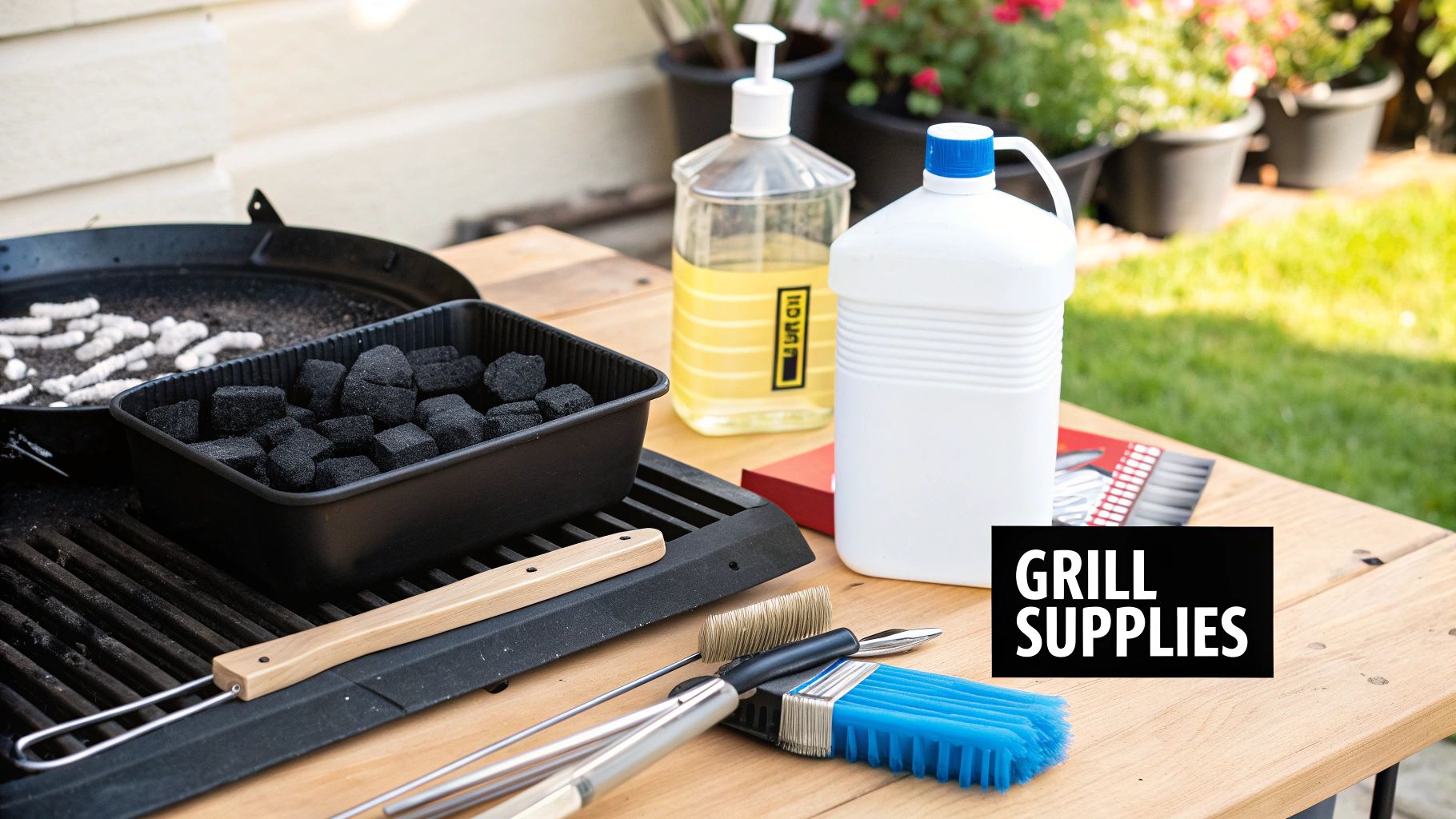
Think of it as a metal cylinder designed to hold your charcoal, with a chamber underneath for kindling. This setup allows air to circulate from the bottom, igniting the coals evenly without any chemical assistance. This method is king because it completely avoids that nasty chemical taste and smell from lighter fluid, which is made from hydrocarbons that can absolutely ruin the pure flavor of your food. You can discover more insights on why this is a preferred method for clean-tasting results.
Using one couldn't be simpler. You just stuff a couple of sheets of newspaper into the bottom chamber, fill the top with charcoal, and light the paper. The fire from the paper lights the bottom layer of coals, and the "chimney" effect pulls that heat upward, lighting the rest of the charcoal from the bottom up.
Getting the Setup Right
The secret to a clean start is using the right amount of newspaper—and it's probably less than you think. A common rookie move is to wad up three or four full sheets too tightly, which can create a blizzard of flyaway ash.
Instead, just loosely crumple one or two sheets. That’s plenty of fuel to get the coals roaring without creating a mess.
Once the paper is lit, set the chimney on the charcoal grate of your grill. The whole process takes about 15-20 minutes. Now, you just have to wait for the visual cues that tell you the coals are perfect.
Knowing When the Coals Are Ready
You’ll know it’s go-time when you see flames licking the top layer of charcoal and the coals are covered in a beautiful, uniform blanket of light gray or white ash. This is the sign they've hit the ideal temperature for cooking.
A common mistake I see is dumping the coals way too early, when only the bottom half is glowing. Patience is your best friend here. Waiting for that ashen glow across the top ensures every single coal is fired up and ready to contribute to a stable, even heat source.
Once they're ready, it's time to pour. Carefully and safely pour the hot coals out of the chimney and onto the grill grate. Always wear heat-resistant gloves for this step—that chimney handle gets screaming hot. Arrange your coals for direct or indirect heat, pop your cooking grate on top, and you’re ready to grill with pure, clean heat.
DIY and Natural Fire Starter Alternatives
So, you don't have a chimney starter handy? Don't sweat it. Your kitchen pantry is probably hiding everything you need to get that charcoal lit without a drop of lighter fluid. It's all about using what you've got in a pinch, and these methods are simple, effective, and completely chemical-free.
One of the most reliable tricks I've seen involves just two things you definitely have: paper towels and cooking oil. Cooking oil is a fantastic, cheap alternative because the fat provides a slow, clean burn. Just drizzle a bit of vegetable oil on a crumpled paper towel, tuck it under your charcoal pile, and light it up. You'll get a steady flame that won't leave any nasty chemical aftertaste on your food.
Other Household Hacks
Beyond the oil-and-paper trick, plenty of other everyday items can step in as excellent fire starters. What you use really just depends on what's available.
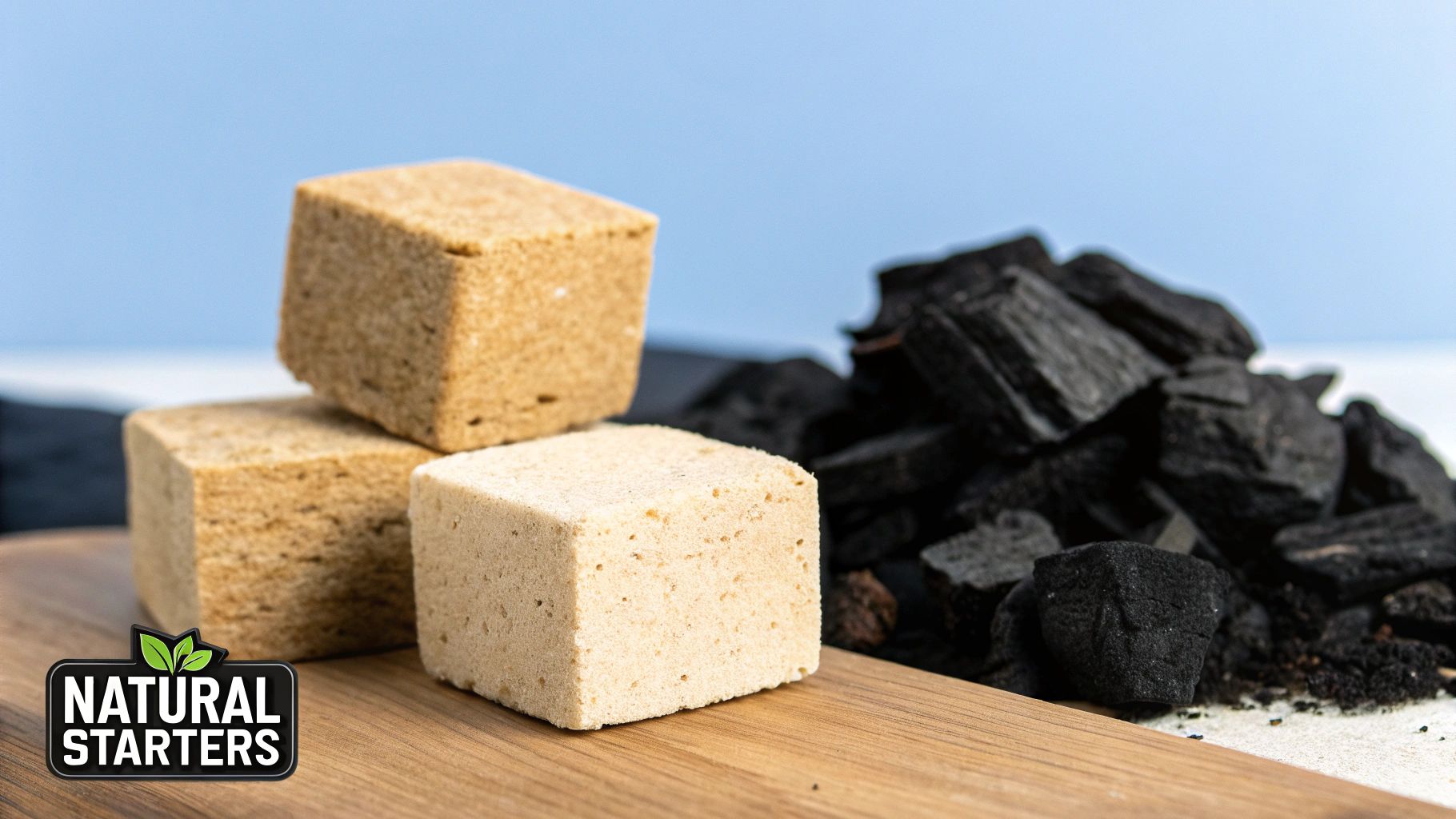
- Cardboard Egg Cartons: The design of a cardboard egg carton is practically made for this. Pop a charcoal briquette in each cup, light the carton itself, and it’ll act like a slow-burning wick, igniting the coals sitting right on top of it.
- Fatwood Sticks: If you happen to have some, fatwood sticks are the premium natural option. This is just pinewood packed with flammable resin, so it lights instantly and burns hot, making it an incredibly reliable starter.
- Crumpled Newspaper or Paper Bags: Good old newspaper or a torn-up paper bag works, too. You’ll need a bit more of it compared to the oil-soaked paper, and you have to be quick about building your charcoal pyramid over the flames before they burn out.
Once you have your fire going, controlling the temperature is your next big job. This chart gives you a solid idea of the temperature ranges for different heat levels on your grill.
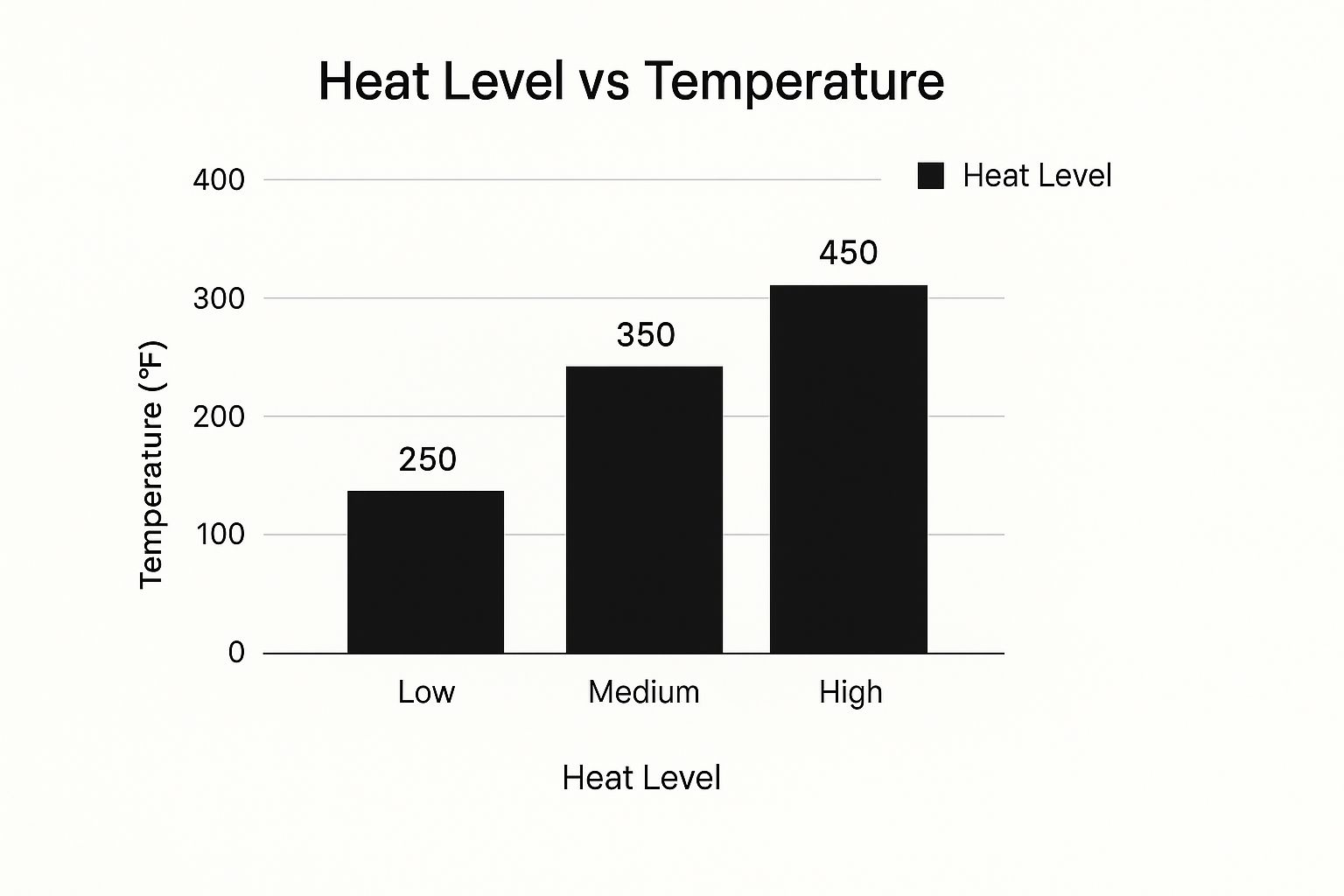
Knowing these zones is what separates the pros from the amateurs, whether you're searing steaks over a blistering fire or slow-cooking ribs. Arranging your coals for different temperatures is a critical skill, and you can learn how to master indirect cooking on your grill with our detailed techniques.
Using Electric and Hot Air Lighters
When you need to get a fire going fast without a drop of lighter fluid, technology has your back. For those who appreciate modern convenience, electric and hot air starters are the cleanest, most efficient way to get charcoal glowing with practically zero effort.
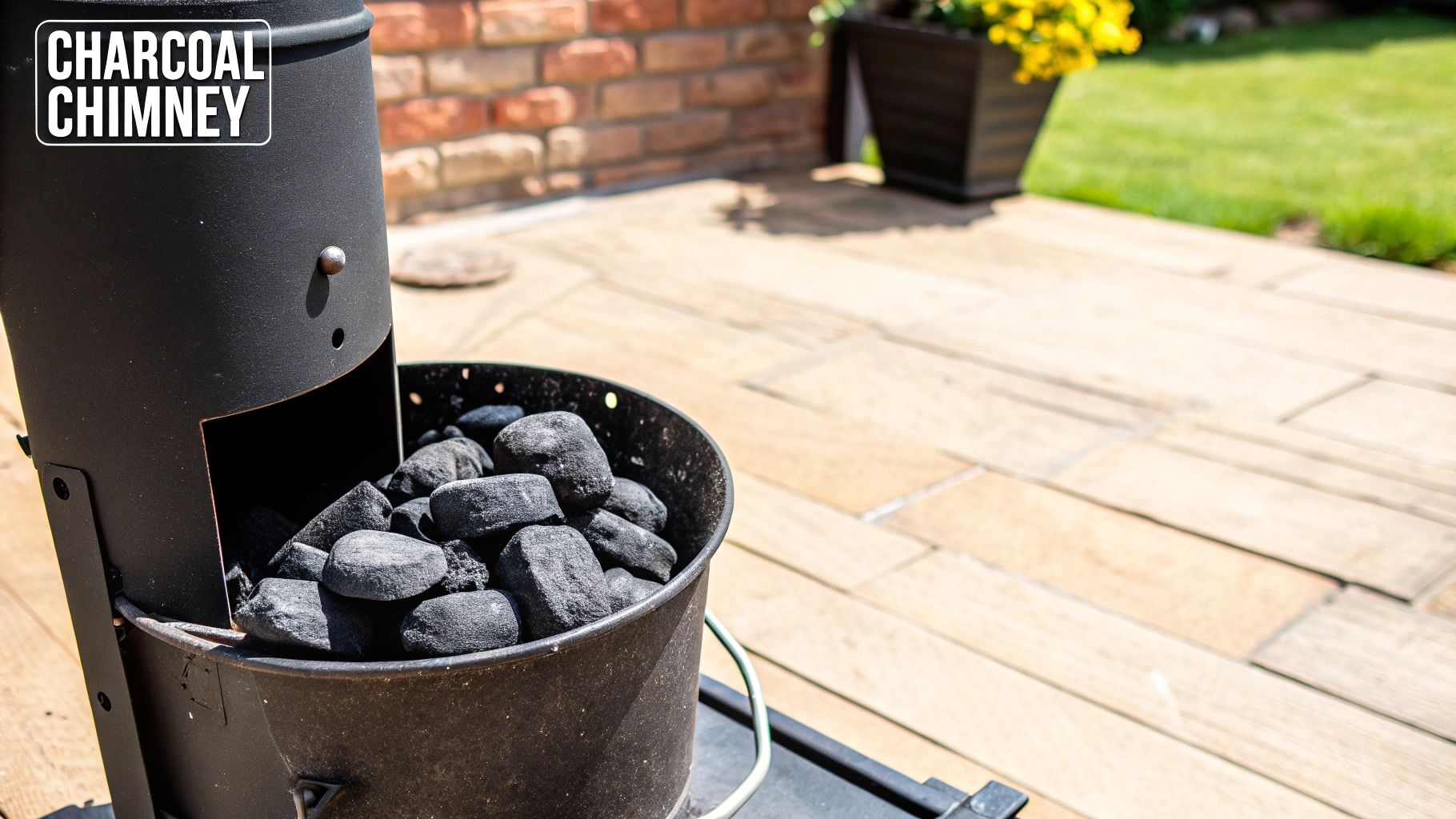
You've got two main players in this game: electric coil starters and hot air lighters. The electric charcoal starter is simple but effective—you just bury its heating coil in your pile of charcoal. Plug it in, and the coil gets red-hot, igniting the coals from the inside out in just a few minutes.
Hot air lighters, on the other hand, feel a bit like something from the future. Gadgets like the well-known Looftlighter blast a focused stream of super-heated air (think of a hair dryer on steroids) directly at the charcoal. Just point it at the coals, and within 60 seconds, you'll see sparks fly as a fire roars to life.
Speed and Simplicity
The real beauty of these tools is their incredible speed and the fact you can use them over and over. You don't need paper or kindling, and there is absolutely no chemical aftertaste. It’s just pure, clean heat that gets you grilling faster than almost any other method out there.
The biggest selling point is foolproof consistency. Whether you're a beginner or a seasoned pro, an electric or hot air starter removes all the guesswork and variables, delivering ready-to-cook coals every single time.
Of course, there's one practical catch: you need an electrical outlet. These tools are perfect for a backyard patio or a commercial kitchen where power is easy to access, but they're not going to work for camping or tailgating. For a restaurant, this is almost never an issue.
In a professional kitchen, having the right gear is everything. We offer a wide selection of commercial charbroilers for your restaurant, including infrared, gas, and electric char broilers. Each one is built for performance and the daily grind.
Choosing the Right Commercial Charbroiler
Sure, mastering the grill in your backyard is one thing, but the professional kitchen is a completely different beast. When you’re moving from burgers for the family to serving a packed dining room, your equipment needs a serious upgrade. The charbroiler you choose is just as critical as your lighting technique for getting that perfect, clean-tasting char every single time.
For kitchens that live and die by the sear, our infrared charbroilers are absolute game-changers. They use powerful infrared technology that heats the grates directly, which means fewer flare-ups and an incredibly even cooking surface. This is the secret weapon for getting those deep, crusty sear marks on steaks and burgers in a fraction of the time.
Gas and Electric Charbroiler Options
If you’re a chef who needs pinpoint precision, our gas charbroilers offer unmatched temperature control. I’ve seen countless chefs fall in love with their versatility. You can make quick adjustments on the fly, perfectly cooking delicate fish one minute and a thick-cut ribeye the next. Their rock-solid performance makes them a cornerstone in any high-output kitchen.
But what if you have gas restrictions or are focused on efficiency? Our electric charbroilers are a powerful and dependable alternative. These units are engineered for fantastic heat distribution and are a breeze to maintain. This makes them a perfect fit for food trucks, concession stands, or any kitchen where running a gas line just isn't in the cards.
Picking the right unit is about so much more than just the fuel type. You have to match the charbroiler’s strengths to your menu, your kitchen's workflow, and your peak volume to make sure every plate that goes out is perfect.
At the end of the day, the goal is to set your team up for success. A top-tier charbroiler doesn't just make your food taste better; it streamlines your entire kitchen's operation. Once you understand what makes each type tick, you can make a smart investment that pays off with every single order.
For a deeper dive into the nuts and bolts, check out our full guide on getting fired up about commercial charbroilers.
Common Questions About Starting Your Grill
Even with a few new tricks up your sleeve, it's normal to have some questions before you kick the lighter fluid habit for good. I get it. Let's tackle some of the most common ones I hear so you can fire up that grill with total confidence, whether it's in your backyard or a high-volume commercial kitchen.
Is It Really Safer to Avoid Lighter Fluid
Absolutely, and it's not even a close call. Lighter fluid is a volatile chemical that can cause some seriously dangerous flare-ups if you're not careful.
More importantly, if that fluid doesn't burn off completely, you're left with a chemical residue that goes straight into your food. Nobody wants a steak that tastes like petrol. Methods like a chimney starter or an electric lighter completely sidestep these risks, giving you a clean, controlled start every time.
A controlled start is also the first step to maintaining a clean cooking environment. For more on that, check out our guide on how to clean your grill to keep your equipment in prime condition.
How Long Does It Take for Charcoal to Be Ready
With a chimney starter, you can expect your charcoal to be perfectly ready in about 15-20 minutes. In my experience, that's often faster and way more reliable than playing the waiting game with lighter fluid. The coals are good to go when they're mostly covered in a light layer of white or gray ash.
Electric starters can blow that timeline out of the water. Some of the hot air models can get a fire roaring in as little as 60 seconds, with the coals fully ashed over and ready for cooking in under 10 minutes.
One of the biggest myths is that non-fluid methods are slow. The opposite is usually true. They create a consistent, evenly lit bed of coals much faster, getting you to that perfect cooking temperature without all the guesswork.
Can I Use These Methods for Both Briquettes and Lump Charcoal
Yep! Every single method we've talked about—chimney, electric, natural kindling—works great for both traditional briquettes and natural lump charcoal.
The process is exactly the same. Just know that lump charcoal usually lights a bit faster and burns hotter, which is great for searing. Briquettes, on the other hand, give you a more uniform, long-lasting heat, perfect for low-and-slow cooking. Your choice comes down to what you're cooking, not how you're lighting it.
At Charbroilers, we know that incredible grilled flavor starts with the right foundation. We offer a huge selection of commercial charbroilers built for the demands of a professional kitchen, including powerful infrared, versatile gas, and efficient electric char broilers. Find the perfect model to elevate your menu at charbroilers.com.