

How to Reduce Labor Costs in Your Restaurant
Feeling the squeeze from high labor costs? It’s a constant battle for restaurant owners, one that can slowly chip away at your hard-earned profits. The good news is that you have more control than you think.
The key to getting labor costs in check isn't about cutting staff or slashing hours, which can hurt morale and service. Instead, it’s about working smarter. We're going to dig into three core areas that can make a real difference: using smart technology, scheduling based on data, and designing a more efficient menu.
Your Guide to Smarter Labor Management
For most restaurants, labor is the biggest controllable expense you have. It often eats up 30-35% of your total revenue. Getting that number right is often the difference between just surviving and actually thriving. To truly tackle labor costs, you have to look beyond the obvious and focus on making your entire operation more efficient.
This guide will give you a practical game plan to reduce expenses without sacrificing the quality of your food or the guest experience. We'll skip the generic advice and get straight to actionable tactics that work in the real world of foodservice.
This visual breaks down the three pillars we'll be exploring to get your labor costs under control.
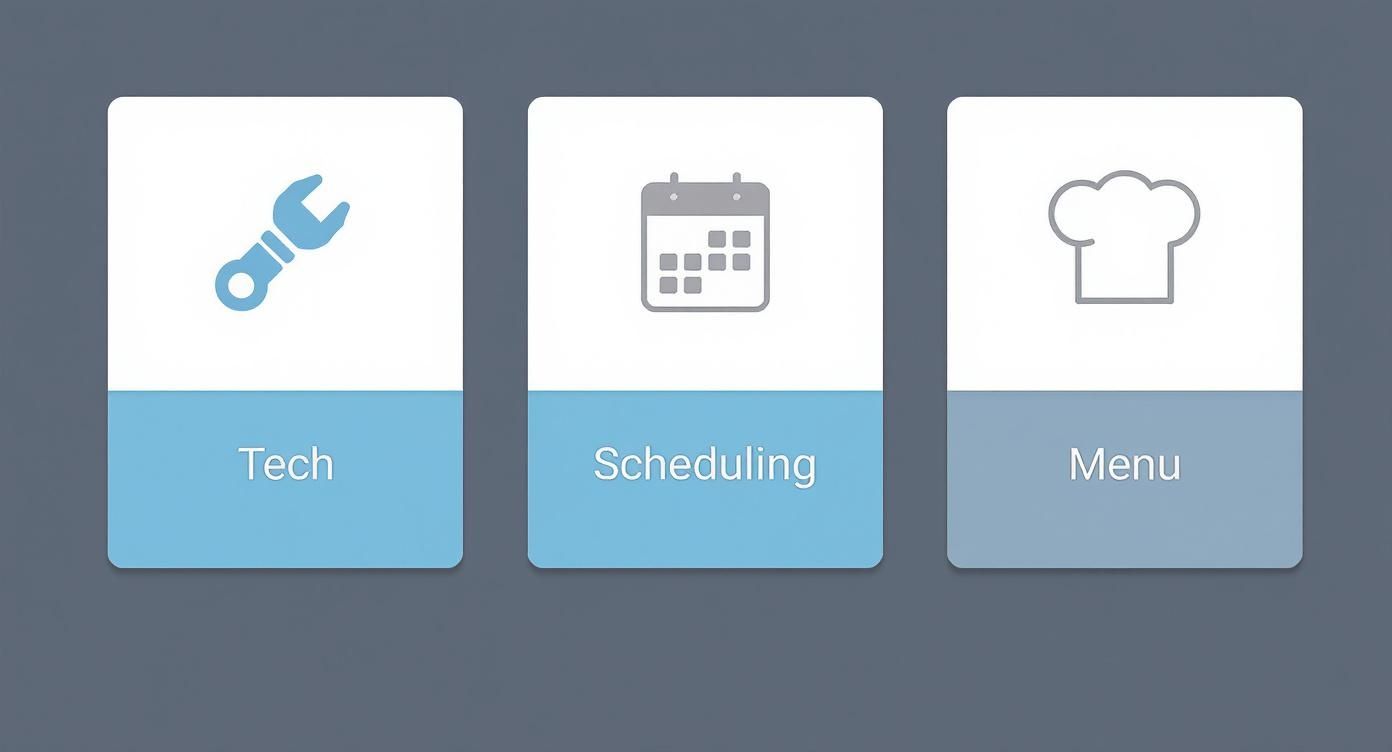
As you can see, a balanced approach is what really moves the needle. When you combine the right tech, smarter scheduling, and a well-thought-out menu, you create a powerful system that protects your bottom line.
Core Areas for Cost Reduction
So, what do these strategies actually look like in practice? Let's break down what each pillar involves. Think of them as different tools in your toolkit, each targeting a specific part of your operation to build a leaner, more productive restaurant.
-
Technology and Automation: This is all about investing in modern kitchen equipment and software that helps your team work faster and with fewer mistakes. Imagine a combi oven that automates complex cooking processes or a POS system that instantly sends orders to the kitchen, cutting down on communication errors between your front and back of house.
-
Data-Driven Scheduling: Stop relying on gut feelings to write the schedule. This strategy means using your own sales data to build smarter schedules. You can pinpoint your actual peak hours and slow periods, making sure you have exactly the right number of people on the floor at all times. This prevents both wasteful overstaffing and the service nightmare of being understaffed.
-
Menu Engineering: Your menu is one of the most powerful cost-control tools you have. This is the process of analyzing every dish to see how much labor it really takes to produce. It could mean simplifying a few complex recipes or finding ways to use the same ingredients across multiple dishes, which drastically cuts down on prep time and relieves stress in the kitchen.
By zeroing in on these three areas, you're not just saving money in the short term. You're building a more resilient, efficient, and profitable restaurant that's set up for the long haul.
To give you a clearer picture, here’s a quick overview of how these strategies compare.
Labor Cost Reduction Strategies at a Glance
This table summarizes the core strategies we'll be covering, highlighting their primary benefits and what you'll need to focus on to implement them effectively in your restaurant.
| Strategy | Primary Benefit | Implementation Focus |
|---|---|---|
| Technology/Automation | Reduces manual tasks and improves speed of service. | Investing in modern equipment and software tailored to your specific operational needs. |
| Data-Driven Scheduling | Prevents overstaffing and understaffing by matching labor to demand. | Analyzing sales data from your POS to create precise, forecast-based schedules. |
| Menu Engineering | Lowers prep time and simplifies kitchen workflow. | Analyzing dish profitability and labor intensity to optimize your menu offerings. |
Each of these strategies offers a unique path to lower labor costs, but they are most powerful when used together to create a cohesive, efficient operation.
Streamline Operations with Kitchen Technology
Putting the right kitchen technology in place is one of the most direct moves you can make to cut down on labor costs. Smart, one-time equipment purchases can pay you back every single shift, empowering a smaller crew to get more done without ever sacrificing quality or speed. This isn't just theory—it's about getting tools into your kitchen that actively eliminate manual, time-sucking tasks.
Take a modern combi oven, for example. Instead of a line cook juggling multiple pots and pans, a combi oven can handle different food items all at once with precise, pre-programmed settings. This frees up your skilled people to focus on more important things like plating and quality control, making the entire kitchen more productive.
Integrate Your Front and Back of House
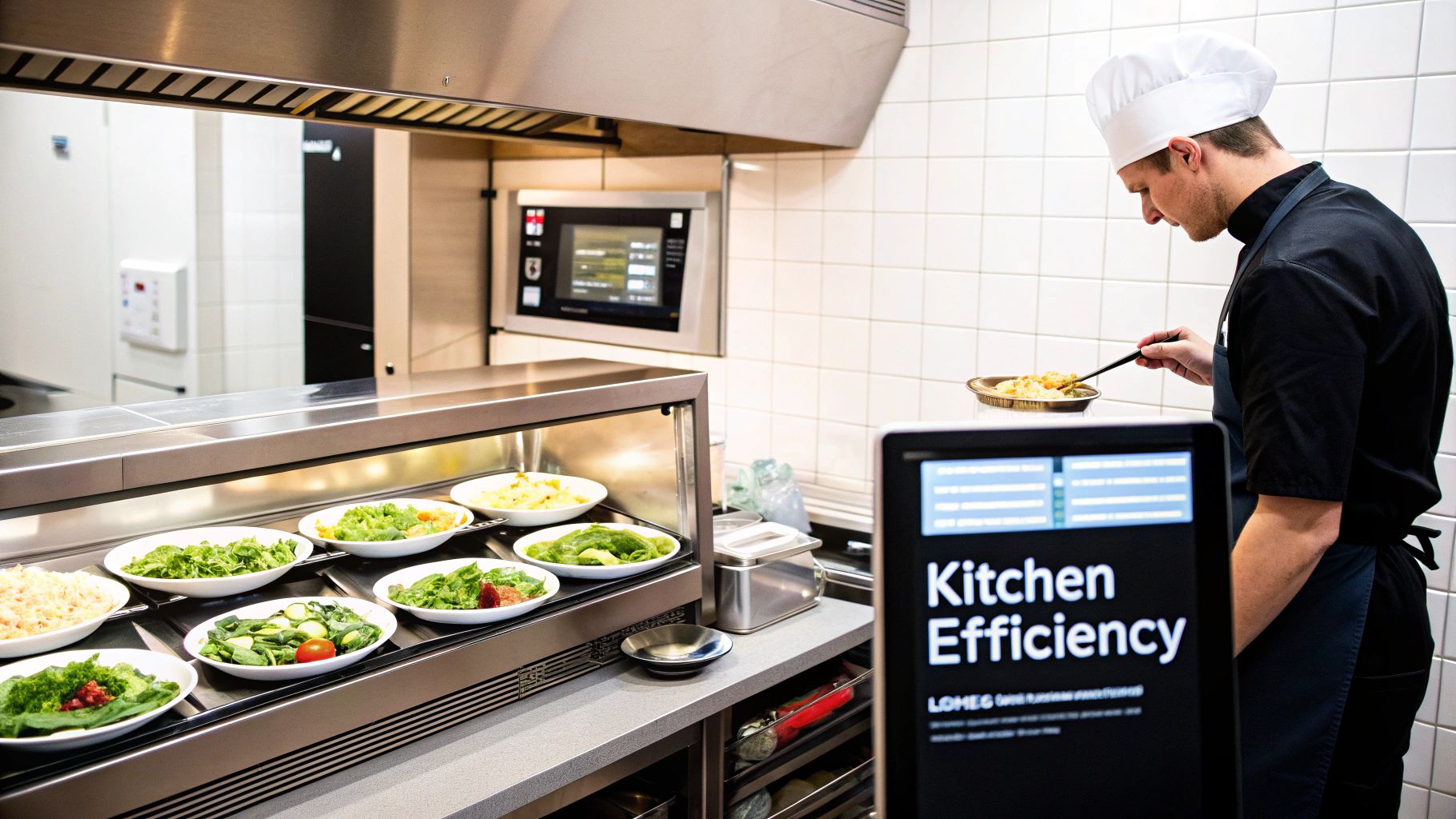
One of the biggest black holes for time and money is the communication breakdown between servers and cooks. A fully integrated Point of Sale (POS) and Kitchen Display System (KDS) closes that loop for good. When an order is punched in, it pops up instantly and clearly on a screen in the kitchen. No more trying to decipher messy handwriting or shouting orders across the line.
This seamless connection has a huge impact on how your kitchen runs:
- Faster Ticket Times: Orders hit the kitchen instantly, which means food gets prepped and out to the customer that much quicker.
- Fewer Mistakes & Less Waste: Crystal-clear digital orders mean the cooks make the right dish the first time. That drastically cuts down on expensive do-overs and wasted food.
- Smarter Workflow: Cooks can see the whole order board at a glance, letting them pace and prioritize dishes for a smooth, efficient service.
We've seen restaurants absolutely crush their ticket times just by making sure orders are transmitted accurately. That simple change directly leads to turning more tables and happier guests.
Automation Beyond the Cooking Line
This idea of automation isn't just for the hot line; it belongs in every part of your restaurant, right down to the dish pit. An automated, high-capacity dishwashing system can be a total game-changer. It doesn’t just save an incredible number of labor hours compared to someone scrubbing by hand—it also brings down your utility bills by using water and energy way more efficiently.
This isn't just a hunch; it's a strategy that mirrors what's happening across the industry to combat rising wage pressures. In fact, recent productivity studies show that output can jump significantly with only a small increase in hours worked, proving just how powerful technology can be. The right placement of this kind of equipment is also critical, a topic we dive into in our guide on commercial kitchen design layout.
Investing in automation isn't about replacing your people. It's about giving them the tools to eliminate bottlenecks and repetitive work. This lets your team focus on what really moves the needle—crafting amazing food and delivering outstanding service.
Adopt Data-Driven Staff Scheduling
Are you still building schedules based on gut feelings? It’s time to stop guessing and start using the data you already have sitting right in your restaurant’s POS system. That thing is a goldmine, tracking every single sale and customer interaction. Tapping into that information is the first real step toward building schedules that actually match your customer flow.
This means you can finally pinpoint your busiest and slowest hours with scary accuracy. Instead of just thinking you know, you’ll see that the lunch rush really kicks into high gear between 12:15 PM and 1:30 PM, or that Tuesday nights have a consistent, predictable dip in traffic. armed with that knowledge, you stop paying staff to stand around during a lull and you’re never caught scrambling when a surprise rush hits.
Build a More Flexible and Versatile Team
Getting your schedule aligned with sales data is a huge win, but the real power move? Cross-training your employees. A versatile team gives you the flexibility to run leaner shifts without ever letting the guest experience slip. When your staff is multi-skilled, you unlock a whole new level of operational agility.
Think about how this plays out in the real world:
- Adaptability During a Rush: A prep cook who knows how to work the fry station can jump in during an unexpected dinner surge, keeping the kitchen from getting buried in tickets.
- Covering Multiple Roles: A server who can also manage takeout and delivery orders can handle both front-of-house duties and the booming off-premise side of the business. No need for an extra person.
- Handling Unexpected Absences: Bartender calls out sick? No problem. A cross-trained host or server can step behind the bar to handle the basics, preventing a total service meltdown.
This isn't just about giving people more tasks. It’s about transforming your staff from a group of individual specialists into a cohesive, adaptable unit that can pivot on a dime. Every labor dollar you spend becomes that much more productive.
The goal isn't just to cut hours; it's to make the hours you schedule more impactful. Data-driven scheduling tells you when you need people, while cross-training ensures you have the right people ready for any situation.
When you combine these two strategies, you can build tighter, more efficient schedules. You suddenly find you can cover all your bases with fewer people on the clock, which hits your payroll expenses directly. For any owner serious about getting labor costs under control while keeping service standards high, this approach is fundamental. It’s simply a smarter way to manage your most valuable—and most expensive—asset.
Engineer Your Menu for Labor Efficiency
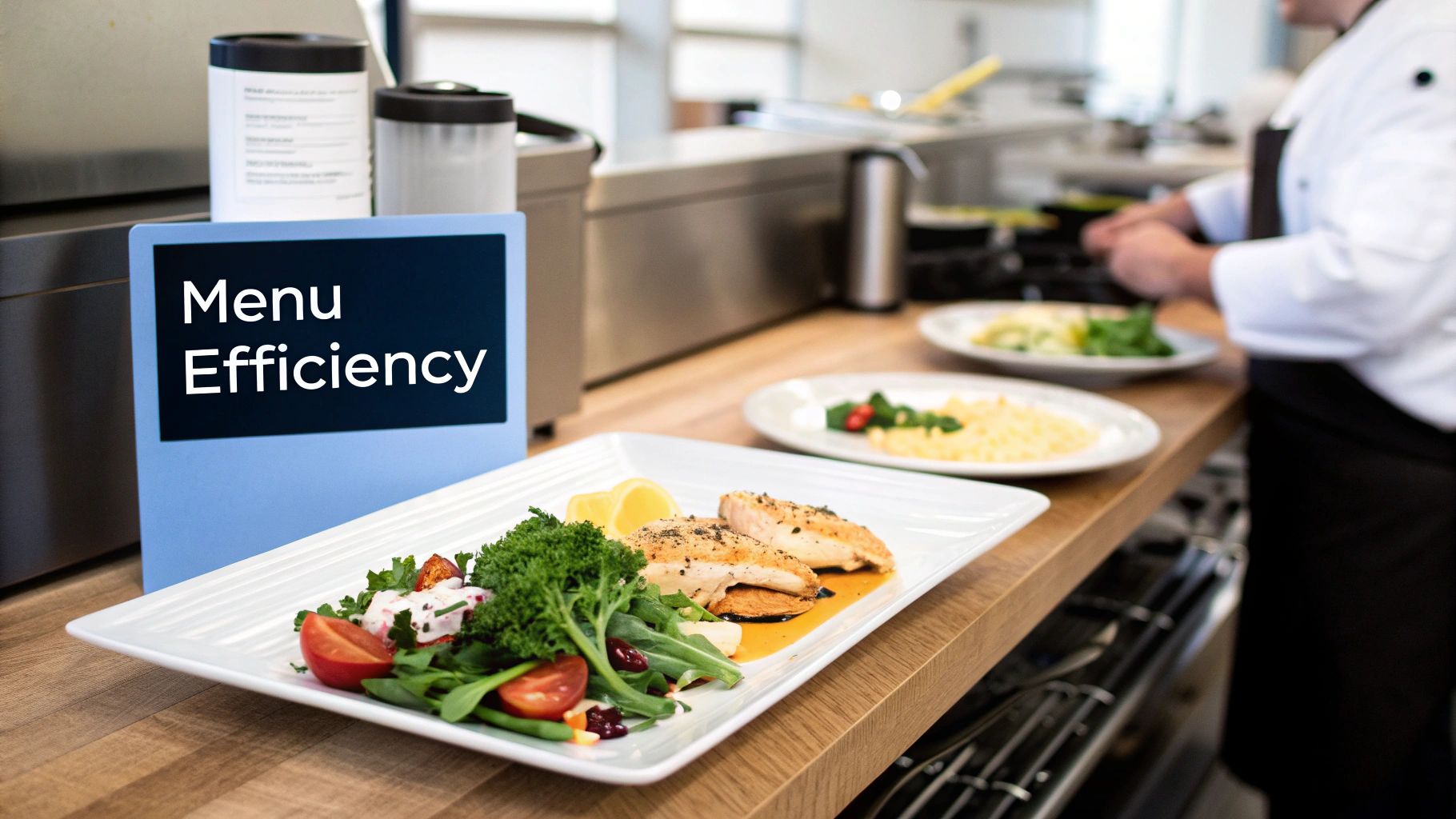
Your menu is so much more than a list of what you sell; it’s one of the most powerful operational tools you have, directly hitting your bottom line. When hunting for ways to reduce labor costs, many owners forget about the hidden expenses tied to each dish. It’s time to look at every single item not just for food cost and popularity, but for the one thing that often goes unmeasured: the actual minutes and hours it takes your team to prep and plate it.
That signature entrée with 15 carefully prepped ingredients might be a showstopper, but is it secretly wrecking your kitchen’s efficiency? If one complex dish grinds your ticket times to a halt during a dinner rush, its true cost is way higher than what’s on the spreadsheet. The real goal is to build a menu that's both exciting for guests and streamlined for your kitchen crew.

Simplify Recipes Without Sacrificing Quality
Simplifying your menu doesn't have to mean making it boring. It's about making smart, strategic swaps that save huge amounts of prep time without the customer ever noticing a difference in quality. Just a few small changes can free up hours for your kitchen staff every single week.
Let’s look at a few practical examples:
- Sauce Strategy: Instead of having a prep cook spend hours making a complex mother sauce from scratch, think about using a high-quality, pre-made demi-glace or hollandaise for certain dishes. This simple swap can slash prep time from hours to just a few minutes.
- Component Reduction: Take a hard look at a dish with multiple, intricate garnishes. Can you combine two elements or get rid of one that doesn't really add to the flavor profile? Every step you remove from the plating process speeds up service.
- Equipment Utilization: Can a dish be tweaked to cook in a combi oven or on a high-efficiency charbroiler instead of needing constant attention in a sauté pan? Using your equipment to its full potential is a massive labor-saving tactic.
Cross-Utilize Ingredients for Maximum Efficiency
One of the smartest ways to simplify your kitchen's workflow is to design menu items that share the same core ingredients. This concept, known as cross-utilization, creates a massive ripple effect that cuts down on labor costs. When your team only has to prep one batch of roasted peppers or caramelized onions for three different dishes, you’ll see the savings immediately.
This approach makes everything from inventory management to daily prep lists so much easier. It means less time spent on redundant chopping and dicing, and it also cuts down on food waste since you're more likely to use up entire cases of product. Staying on top of emerging food service industry trends can also spark ideas for versatile ingredients that appeal to modern diners.
The most profitable menus are often the smartest, not the biggest. By engineering each dish to be efficient, you ease the burden on your staff, speed up service, and boost the profitability of every single plate that leaves your kitchen. It’s a foundational strategy for sustainable cost control.
Let's face it, the classic nine-to-five, eight-hour shift just doesn’t work in the restaurant world. Our industry is all about peaks and valleys, and if your schedule is a flat line, you’re bleeding money. To really get a handle on labor costs, you have to think differently about scheduling and start building a more flexible team.
This isn’t just about cutting expenses; it’s about making your team happier and less likely to burn out. Moving away from a one-size-fits-all schedule lets you match your staffing to your actual customer flow. You stop paying people to stand around during the slow hours, meaning every payroll dollar is spent serving guests and making money. It's a fundamental shift, but it’s absolutely critical for the long-term health of your business.
Use Power Shifts and Part-Time Staff
One of the smartest moves you can make is to bring in "power shifts." Think about it: why schedule a line cook for a full eight-hour day when your real chaos is a four-hour block during the dinner rush? Bring them in just for that peak window. You get maximum firepower right when you need it most, without paying for the quiet hours before and after.
Building a solid crew of part-time staff is another game-changer, especially for handling those predictably busy weekends, holidays, or big local events. This strategy comes with some serious perks:
- Kill the Overtime: You won't have to beg your full-timers to work extra hours at time-and-a-half.
- Access More Talent: You can attract great people who can't commit to a full-time grind, like culinary students or industry vets looking for extra cash.
- Stop the Burnout: Your core team gets more stable, predictable schedules. That stability goes a long way in cutting down on turnover, which we all know is a massive hidden cost.
Embrace Modern Work Arrangements
The idea of flexible work isn't new, but it's more important than ever for controlling costs. As labor markets get tighter, smart businesses are using flexible scheduling and part-time roles to match their labor hours directly to customer demand. It’s a proven way to boost productivity. You can dig into the broader labor market trends over at the Bureau of Labor Statistics.
Here's the bottom line: when you offer flexibility, you're not just trimming your budget. You’re making your restaurant a better place to work. In a market where everyone is fighting for good people, that’s a huge competitive advantage. It leads to lower turnover, which means you spend less time and money hiring and training new faces.
Outsource Non-Core Restaurant Tasks
Let's be honest. Your team is incredible at what they do—creating fantastic food and delivering unforgettable hospitality. But are they the best people to be running payroll, deep cleaning the kitchen hoods, or managing your digital marketing?
Probably not. Strategic outsourcing is a powerful, and frankly, underused tool for cutting down labor costs. It's all about handing off specialized tasks to experts who can often do them better, faster, and cheaper than you can in-house.
The goal here is simple: free up your key staff to focus on what actually makes you money. Every hour your manager spends wrestling with payroll spreadsheets is an hour they're not on the floor coaching staff. Similarly, having staff spend time on digital marketing tasks they aren't trained for is inefficient. Partnering with a team that provides article writing and blogger outreach services can generate more buzz and online visibility for your restaurant equipment supply website than a manager could achieve in their spare time.
Identifying Smart Outsourcing Opportunities
So, where do you start? Take a hard look at all the necessary jobs that fall outside your core business of food and service. These are your prime candidates for outsourcing, and you'll often see improvements in both your bottom line and the quality of the work.
A few no-brainers come to mind:
- Linen and Uniform Services: The costs of buying, washing, ironing, and replacing your own linens pile up fast. A professional service handles it all, and it almost always pencils out to be cheaper than the combined labor, utility, and supply costs of doing it yourself.
- Payroll and HR: This is a huge time-suck and a minefield of compliance issues. Outsourcing to a dedicated provider removes hours of administrative headaches and dramatically lowers your risk of making a costly mistake.
- Digital Marketing: Your online presence is crucial. Instead of tasking an employee with managing your website's content, consider outsourcing it. Experts in SEO, local citation services, and blog posting can improve your search rankings and attract more customers looking for restaurant equipment, delivering a far better return on investment.
For decades, companies have outsourced labor-intensive work to get more competitive and slash their unit costs. When you let experts handle these specialized functions, your core team can put 100% of their energy into what they do best: serving customers and running a great restaurant.
Marketing is another area that’s ripe for outsourcing. Things like managing social media and getting the word out to local food bloggers can be a full-time job. Instead of trying to do it yourself, looking into professional blogger outreach services can connect your restaurant with influential voices who can drive real foot traffic—far more effectively than a manager trying to do it in their spare time.
When you let experts handle these functions, your core team can put 100% of their energy into what they do best: creating happy, paying customers who come back again and again.
Running into the same questions over and over again when trying to tackle restaurant labor costs? You're not alone. Getting clear, straightforward answers is the first step to confidently putting cost-saving strategies into action and, more importantly, avoiding the common pitfalls along the way.
What Is a Good Labor Cost Percentage?
For most restaurants, a healthy labor cost percentage lands somewhere between 25% and 35% of your total revenue.
But let's be clear: this isn't a hard-and-fast rule. A fine-dining spot with high-touch service and a complex menu is naturally going to run on the higher end of that scale. On the flip side, a quick-service joint should be aiming for the lower end to keep the business profitable. It all comes down to your specific concept.
How Can I Reduce Costs Without Cutting Hours?
This is the golden question, isn't it? The secret is to boost your team's productivity during the hours they’re already on the clock. It's about focusing on efficiency gains, not just hacking away at the schedule.
A few moves can make a huge difference here:
- Smarter Tech: A good Kitchen Display System (KDS) isn't just a fancy screen. It speeds up communication, cuts down on errors, and keeps the whole line moving.
- Cross-Training: When your team members can jump between different roles, they become incredibly valuable. Your host can help bus tables during a rush, or a line cook can step in to handle prep. This flexibility is key.
- Menu Engineering: Take a hard look at your menu. Are there overly complicated dishes that monopolize a cook's time for very little profit? Simplifying a few items can drastically cut down on prep and cook times.
When you invest in making your team more efficient, they can handle more business without burning out. This naturally lowers your labor cost as a percentage of sales, and you don't have to touch anyone's paycheck.
For top-tier cooking equipment that boosts kitchen efficiency, explore the high-performance selection at Charbroilers.com.