
How to Increase Restaurant Revenue Proven Tactics
Boosting your restaurant's bottom line is a constant battle, but real success comes from a smart, multi-pronged attack, not a single magic bullet. To truly increase revenue, you have to nail a combination of menu optimization, sharp digital marketing, and smooth operations. This guide is all about giving you actionable strategies to turn your menu into a sales engine and pull more customers through the door.
Your Blueprint for a More Profitable Restaurant
Running a restaurant is tough. You're navigating a sea of competition with notoriously thin profit margins. Passion for food and hospitality gets you started, but sustainable growth is built on a rock-solid financial foundation.
The good news? You don't need a massive budget or a complete overhaul to see a real difference. Small, strategic tweaks across your business can snowball into substantial revenue gains.
Think of this guide as your roadmap. We're focusing on practical tactics that directly hit your bottom line. We'll dig into how to transform your menu from a simple list into a powerful marketing tool, use your online presence to grab local customers, and plug the profit leaks in your day-to-day operations. Getting a handle on these pillars is the first step toward building a more resilient and profitable restaurant. It's also critical to keep an eye on the latest food service industry trends to keep your strategies fresh and effective.
The Opportunity in a Growing Market
The restaurant industry is getting bigger. Projections show the global foodservice market could hit $4.03 trillion in revenue by 2025, up from $3.48 trillion in 2024. This growth is a huge opportunity, but making a profit is still the name of the game, with average net profit margins often stuck between a razor-thin 3% and 5%.
You can dig into more of these industry stats on the Sculpture Hospitality blog. It all just hammers home the need for smart revenue-boosting strategies to grab a bigger piece of this expanding pie.
To really thrive, you can't just focus on attracting new guests. You have to maximize the value of every single visit. That means looking at your business from every angle—from the welcome at the door to the follow-up email after their meal.
Key Strategies to Increase Restaurant Revenue at a Glance
Before we dive deep, let's get a high-level view of the core strategies we're about to cover. This table breaks down the main goal for each area and the kind of impact you can expect. It helps paint a clear picture of how each piece contributes to the larger puzzle of a more profitable restaurant.
| Strategy Area | Primary Goal | Key Tactic Example | Expected Revenue Impact |
|---|---|---|---|
| Menu Optimization | Increase average check size and profitability per dish | Highlighting high-margin "Star" items with better placement and descriptions | High |
| Digital Marketing | Drive new and repeat customer traffic | Optimizing your Google Business Profile for local "near me" searches | High |
| Operational Efficiency | Reduce waste and improve staff productivity | Implementing inventory controls and upselling training programs | Medium to High |
| Technology Integration | Enhance guest experience and create new sales channels | Using a CRM for personalized loyalty offers and promotions | Medium |
This table is your quick-reference guide. As you read through the detailed tactics in the following sections, you can see how each one fits into the big picture of boosting your bottom line. Now, let's get into the specifics.
Turn Your Menu into a High-Profit Sales Tool
Think of your menu as your best salesperson. It’s more than just a list of what you offer; it's the most powerful marketing tool you have inside your restaurant. A strategically designed menu can guide customers, tell your brand’s story, and seriously bump up your revenue—all without spending a single dime on outside ads.
Too many operators see their menu as a static, "set it and forget it" document. That's a huge mistake. Your menu should be a living, breathing tool that you constantly tweak based on sales data and what your customers are actually ordering. With a bit of menu engineering, you can transform it from a passive price list into an active profit-generating machine.
This whole process is about digging into your sales data to figure out which dishes are your winners and which ones are just taking up space. It's a mix of psychology, smart design, and good old-fashioned financial analysis, all aimed at nudging diners toward your most profitable items.
This infographic really nails the core pillars of revenue growth, and it all starts with getting your menu right.
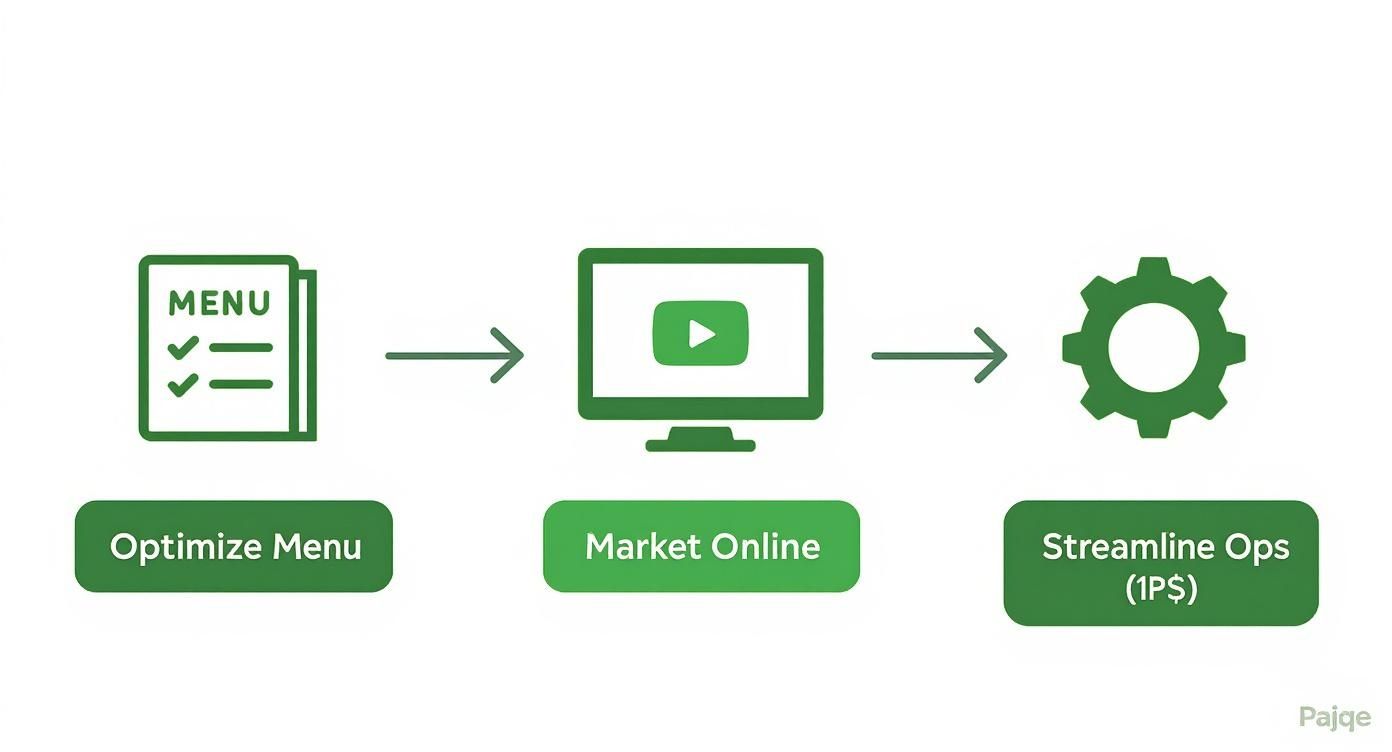
As you can see, a killer menu is the foundation. It makes your marketing more effective and your operations smoother, which flows directly to your bottom line.
Understand Your Menu Matrix
First things first, you need to classify every single item on your menu. The goal is to figure out its popularity (how often it sells) and its profitability (how much money you make on it). This simple analysis sorts your dishes into four clear categories, giving you an immediate action plan.
- Stars: These are your rockstars. They’re super popular and highly profitable. Customers already love them, and they make you great money. Your job is simple: shine a massive spotlight on them.
- Puzzles: These are the high-margin items that just don't sell well. They’re a huge opportunity just waiting to be unlocked. You need to ask yourself, "Why aren't people ordering this?"
- Plowhorses: Everyone loves these dishes, but their profit margins are low. They're reliable and keep people coming back, but they aren’t doing much heavy lifting for your bank account.
- Dogs: These are your weakest links. Nobody's ordering them, and you're not making money on them when they do. They’re eating up valuable menu real estate and probably costing you money in inventory.
Once you’ve sorted your menu this way, you can stop guessing and start making data-driven decisions that actually grow your revenue.
Put Your Menu Stars in the Spotlight
Now that you know who your "Stars" are, you have to make them impossible for your customers to ignore. Your menu layout is prime real estate. Eye-tracking studies have shown that diners’ eyes naturally drift to specific spots on a menu.
People tend to look at the top right corner first, then scan over to the top left, before settling in the middle. This is often called the "Golden Triangle." This is exactly where you should place your most popular, highest-margin dishes to guarantee they get seen.
Key Takeaway: Don't just make a list. Use design tricks like putting a box around your star items, adding a small icon, or using a slightly different font. These subtle visual cues scream "this is important" and pull the customer's eye right where you want it to go.
This tactic is especially powerful for full-service restaurants (FSRs), which are a massive piece of the industry pie. In 2024, global FSRs pulled in roughly $1.6 trillion in sales. For these businesses, a key metric is sales per square foot (SPSF), and smart menu design directly boosts that number by guiding guests to more profitable choices. For more on how tech is changing the game for FSRs, check out the insights on MenuTiger's blog.
Solve Your High-Profit Puzzles
Your "Puzzles" are hidden gems. The margins are fantastic, but for some reason, they're collecting dust. Your mission is to figure out why and get them selling.
Start by talking to your servers—they’re on the front lines. Is the name confusing? Does the description sound bland? Sometimes a tiny change is all it takes.
Here are a few things you can try right away:
- Rewrite the Description: Use language that makes people hungry. Instead of "Chicken Breast," try "Pan-Seared Chicken Breast with a Rosemary-Garlic Glaze." It’s been shown that descriptive words can boost sales of an item by up to 27%.
- Run it as a Special: Give the dish some temporary love to create buzz and get people to try it. If it flies out of the kitchen, you know you’ve got a winner on your hands.
- Train Your Staff: Get your servers excited about it so they can genuinely recommend it. A simple, "The chef's special sea bass is my absolute favorite tonight," is incredibly persuasive.
- Suggest a Pairing: Add a wine or side dish pairing suggestion right on the menu. It makes the dish feel more special and helps increase the total check size.
By giving your Puzzles a little push, you can turn them into new Stars and open up a whole new stream of revenue.
Use a Smart Digital Presence to Bring More Customers Through the Door
In today's world, your online presence is just as real and important as your dining room. Customers looking for a place to eat aren't just wandering down the street anymore. They're on their phones, searching.
A strong digital game isn't just a "nice-to-have." It's essential if you want to increase your restaurant's revenue. The idea isn't simply to be online; it's to show up at the exact moment a hungry customer is looking for what you offer. For restaurant equipment supply websites, this means leveraging services like SEO and blog posting to connect with your target audience effectively.
When someone types "best charbroiled steak near me" into Google, you want your restaurant to be at the top of that list. Getting this right is how you turn a quick search into a booked table.
Dominate Nearby Searches with Local SEO
Search Engine Optimization (SEO) is the craft of getting your restaurant to show up higher in search results. For a local business like yours, the game is won with local SEO. This is all about making sure you appear for searches happening right in your neighborhood.
Think like your customer for a second. They aren't just searching for "restaurants." They're looking for "Italian food downtown" or a "family-friendly burger spot nearby." Showing up for those specific, high-intent searches is your direct line to new business.
Here's a number that should get your attention: a massive one in three people find and book restaurants directly through Google. That statistic alone proves that your Google Business Profile (GBP) is probably the most powerful free marketing tool you have. It's your digital storefront, and keeping it in top shape is non-negotiable.
Your Google Business Profile Is Your Best Friend
For many potential customers, your GBP is the very first time they'll interact with your brand. It’s that info box that pops up in Google Maps and local searches, showing off your photos, reviews, address, and hours. An incomplete or outdated profile is the digital equivalent of a "closed" sign on your front door.
To turn your profile into a customer magnet, you have to be meticulous.
- Keep Your Info Current: Your hours, address, and phone number need to be 100% accurate, always. Nothing sends a potential diner to your competitor faster than driving to your location only to find you closed because the hours online were wrong.
- Upload High-Quality Photos: Show off your best dishes, your inviting atmosphere, and maybe even your kitchen team in action. People eat with their eyes first. A killer photo of a perfectly seared steak coming off your commercial charbroiler can be the tipping point.
- Actively Manage Reviews: Get in the habit of responding to all reviews—good and bad—quickly and professionally. It shows you care about feedback and builds trust with people who haven't visited yet.
- Use the Right Keywords: Weave terms people might search for into your business description. Think "charbroiled burgers," "outdoor patio dining," or "family-style meals."
Getting your business listed and dialed in on Google is the absolute first step. This foundation is crucial before moving on to broader strategies like blogger outreach or more advanced copywriting for your site.
Your digital presence is a direct reflection of your restaurant's brand and quality. A professional, up-to-date online profile signals a professional, well-run establishment, encouraging diners to give you a try.
Build Trust with Consistent Local Citations
It's not just about Google. Your restaurant's information needs to be the same everywhere online. Local citations are simply mentions of your business's name, address, and phone number (what we call NAP) on other sites like Yelp, TripAdvisor, and local business directories.
Search engines use these citations to confirm you are who you say you are. Inconsistent information—like an old address on one directory and your current one on another—confuses both search engines and customers, and it will hurt your rankings. Professional local citation services can ensure this data is consistent across the web, strengthening your online foundation.
The golden rule here is NAP consistency. Every single listing must match your Google Business Profile perfectly. This consistency builds a web of trust around your business, telling search engines you're a legitimate local spot worth showing to people. It's a simple but incredibly powerful way to increase restaurant revenue by making yourself easier to find.
Create Content That Tells Your Story
Good SEO isn't just about technical tweaks; it's about connecting with people through great content. Your website's blog is the perfect place for this. Don't just list what's on your menu—tell the stories behind the dishes.
Write a post about how your chef developed the recipe for that signature charbroiled ribeye. Do a feature on the local farm you source your produce from. Talk about the top-of-the-line commercial charbroiler that gives your steaks that perfect sear and smoky flavor. Utilizing expert article writing services can help you craft compelling narratives that resonate with customers and improve your search rankings.
This kind of content does a few amazing things for you:
- It Builds Your Brand: It shows you're passionate and that you know your stuff.
- It Attracts Organic Traffic: People looking for recipes or local food stories might just stumble upon your restaurant.
- It Establishes Authority: You're no longer just a place to eat; you're a local culinary expert.
When you combine a solid local SEO foundation with engaging, story-driven content, you create a digital presence that doesn't just attract new customers—it builds a loyal community around your brand.
Streamline Your Operations for Maximum Profit
Sustainable revenue growth isn't just about flashy marketing or a perfectly engineered menu. Sometimes, the real money is hiding in plain sight, right in the day-to-day grind of your operations. Every bit of wasted food, every inefficient process, and every missed upsell is a small leak that, over time, can seriously drain your bottom line.
To really move the needle on revenue, you’ve got to tighten the screws on how your business actually runs. It’s a two-pronged attack: sell more while wasting less. This means getting smart with inventory and empowering your team to be active players in boosting sales.
The goal here is to turn your operation from a cost center into a finely tuned profit engine. Plugging these leaks means you keep more of the money you're already making, which is often a heck of a lot easier than constantly chasing new customers.
Curb Food Waste with Smart Inventory Management
Food waste is the silent killer of restaurant profits. We're talking tens of thousands of dollars a year for the average restaurant just from spoilage and over-portioning. You're literally throwing cash in the trash can.
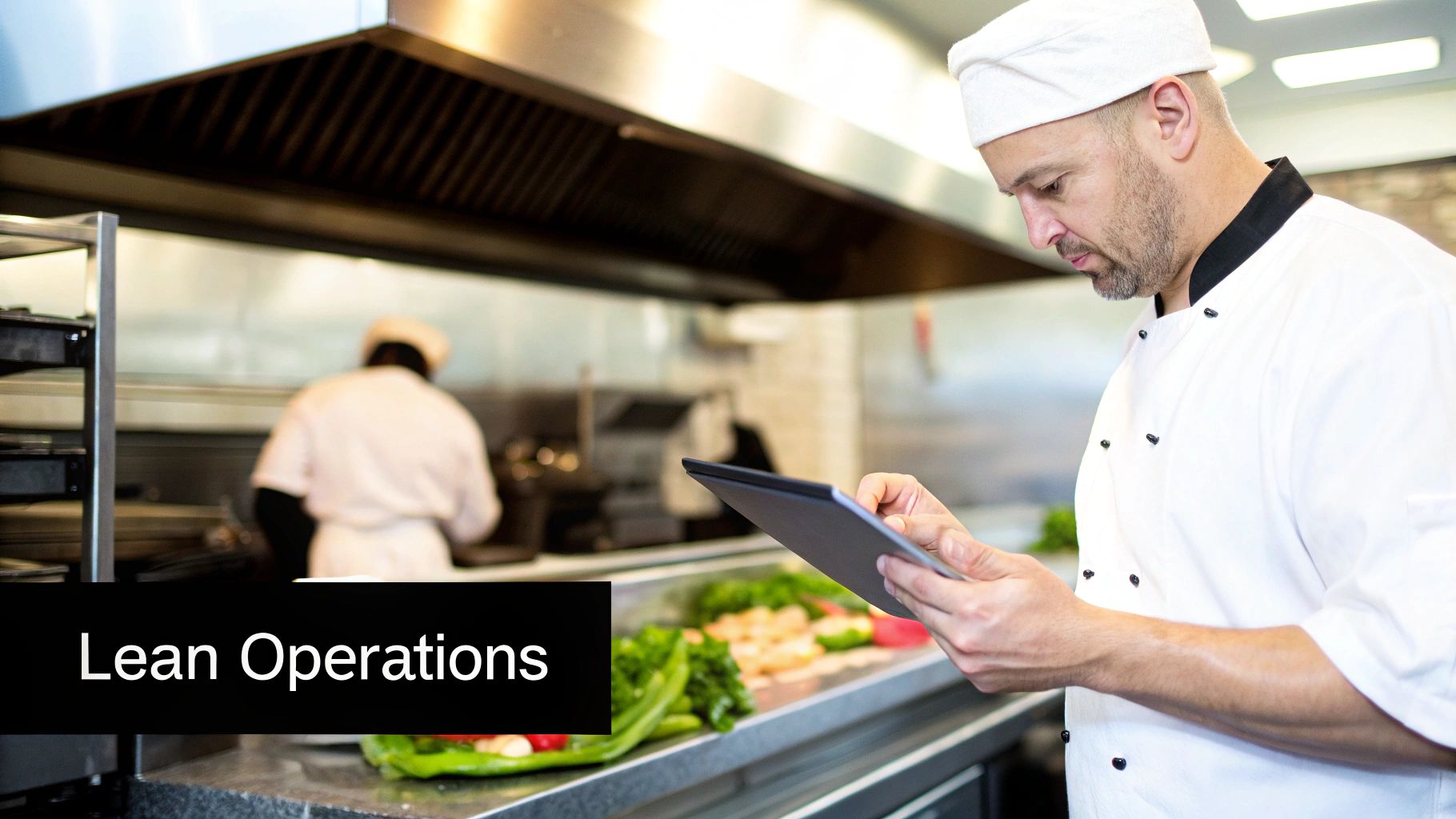
Your first line of defense is a solid inventory management system. This doesn't have to be some complex, expensive software. It can start with meticulous tracking and a hardcore first-in, first-out (FIFO) mindset. Label everything, organize your walk-in logically, and do regular stock counts so you know exactly what you have. No guessing games.
This kind of detailed tracking lets you make purchasing decisions based on real data, not just a gut feeling. You'll cut down on spoilage and make sure every ingredient you paid for ends up on a customer's plate, where it can actually make you money.
A World Resources Institute study found that for every $1 a restaurant invests in reducing food waste, they save an average of $6. That's a return on investment you just can't ignore.
Empower Your Team with Upselling and Cross-Selling Scripts
Your front-of-house staff is your sales team, plain and simple. But they need the right tools to actually sell. Training them to upsell and cross-sell effectively can dramatically increase your average check size without ever making a customer feel pressured. The secret is making recommendations feel helpful and authentic, not like a canned sales pitch.
Forget the generic "Do you want an appetizer?" approach. Train your team to offer specific, enticing suggestions that sound natural.
- Upselling Example: "The ribeye is fantastic tonight. Have you thought about adding our signature blue cheese crust? It really takes it to the next level."
- Cross-Selling Example: "That pasta pairs beautifully with a glass of our Chianti. It's a classic for a reason."
Give your team simple, conversational scripts and, most importantly, let them taste the menu items they’re recommending. There’s nothing more powerful than a server's genuine enthusiasm for a dish. This simple shift turns every table interaction into a revenue-generating opportunity.
Optimize Your Kitchen with the Right Equipment
How smoothly your kitchen runs is directly tied to the gear you're using. An old, unreliable piece of equipment can create a bottleneck for the entire line, leading to longer ticket times, frustrated customers, and wasted energy. The right equipment, on the other hand, can be a massive profit driver.
Take a high-quality commercial charbroiler, for instance. A modern unit heats up faster, holds its temperature consistently, and uses a lot less energy than an older model. This means your cooks can fire off perfectly seared steaks and burgers more quickly, turning tables faster during a chaotic dinner rush.
That consistency also cuts down on food waste from items being cooked improperly. By slashing ticket times and lowering utility bills, a piece of equipment like a new charbroiler stops being an expense and starts being an investment in your profitability. This idea applies to every piece of equipment in your kitchen. When your workflow is smooth, your profits follow.
Use Technology to Create Unforgettable Experiences
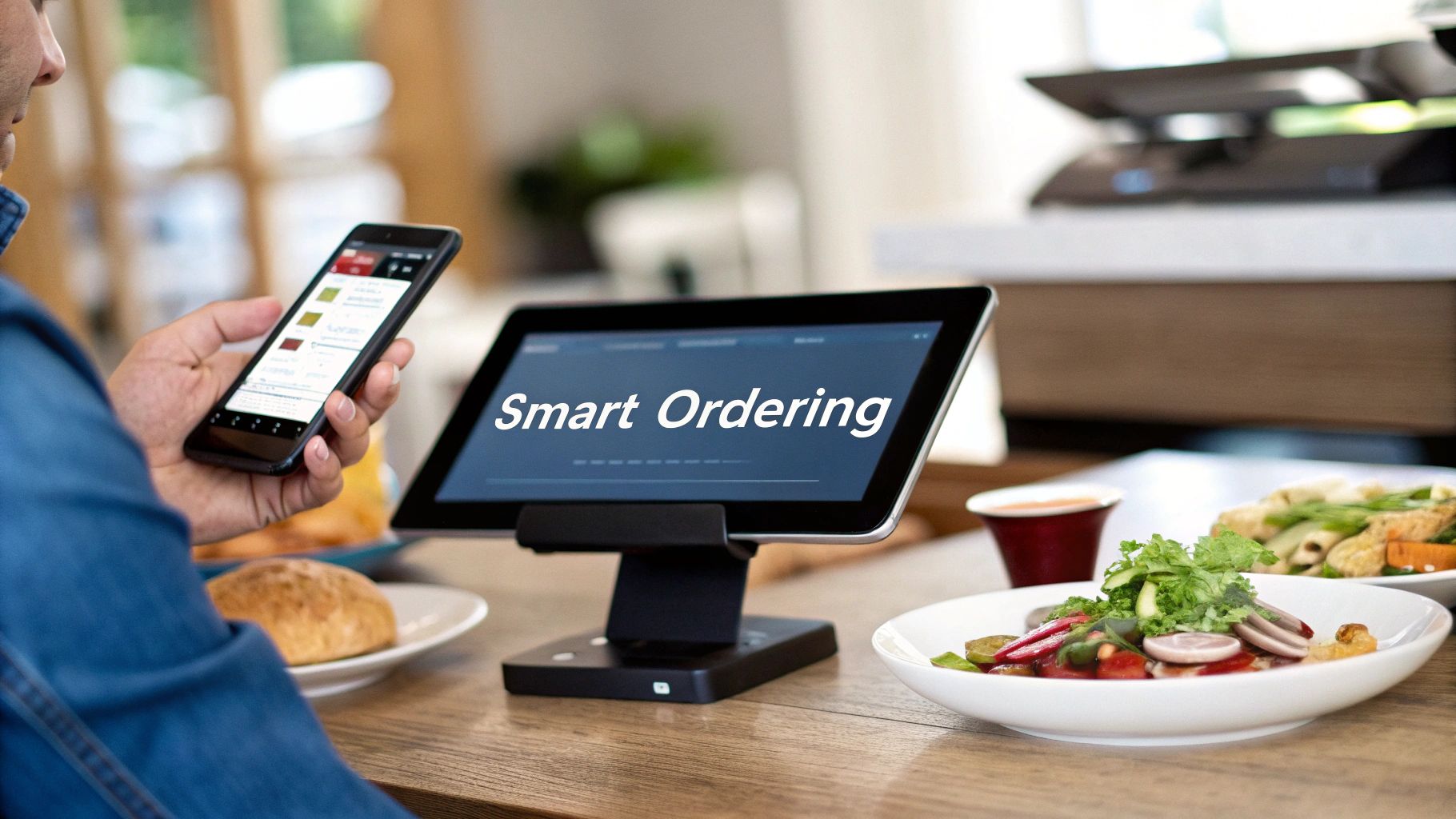
Think of technology in your restaurant like a trusted sous chef—it should work quietly in the background, making everything run smoother. Its real job is to simplify your operations and make customers happier, which naturally leads to an increase in your restaurant's revenue. When you're strategic about it, the right tech can open up powerful new sales channels and build the kind of customer loyalty that lasts.
The trick is to avoid adding tech just for the sake of it. Every new system you bring in, whether it's for online ordering or customer management, needs to have a clear purpose. It has to make you more money, save you time, or create an experience your guests can't stop talking about.
Choose the Right Online Ordering System
Online ordering isn't a "nice-to-have" anymore; it's a fundamental part of the business. But not all systems are built the same, and the wrong one can slice right through your thin profit margins with hefty commission fees. Third-party marketplaces might get you some eyeballs, but they often come at a steep price and put a barrier between you and your own customer data.
A direct, in-house ordering system built into your website puts you in the driver's seat. You keep 100% of the revenue, you own all the customer data, and you can shape the entire experience to reflect your brand. This strategy effectively turns your website into a direct sales machine, creating a much more sustainable and profitable model for your takeout and delivery business.
Nearly 80% of customers would rather order or book directly from a restaurant's own website to support them. That’s a huge signal from diners that they want a direct relationship with you, giving you a massive opportunity to capture more profitable sales.
Build Loyalty with a Modern CRM
A Customer Relationship Management (CRM) system is basically your digital black book of regulars. It keeps track of what guests like, when they visit, and what they spend, giving you the power to craft truly personal experiences. This data is absolute gold for building loyalty programs that people actually care about.
Forget the generic "buy ten, get one free" punch card. A CRM lets you send targeted, personal offers that hit home. Imagine sending an email to a guest who always orders your charbroiled steak, offering them a free glass of their favorite red wine on their next visit. That personal touch makes customers feel seen and appreciated, which is how you turn a one-time visitor into a regular for life.
Think about what you could do with a good CRM:
- Automated Birthday Offers: Send a special discount or a free dessert to customers during their birthday month without lifting a finger.
- "We Miss You" Campaigns: Automatically ping guests who haven't stopped by in a while with a tempting reason to come back.
- Segmented Promotions: Target specific groups. For instance, you could announce your new vegetarian dishes only to guests who have ordered plant-based meals before.
This kind of personalized marketing drives repeat business and helps build a real community around your brand.
Unlock the Power of Your POS Data
Your Point of Sale (POS) system is so much more than a cash register. It's a treasure chest of data that can show you exactly how to increase your restaurant's revenue. Every single transaction holds clues about what your customers love, when they visit, and what they're happy to spend money on.
Digging into your POS reports is one of the smartest things you can do to make data-backed decisions.
For example, your sales data can tell you your busiest and slowest hours with perfect accuracy. With that knowledge, you can run a happy hour special during a lull to drive traffic or adjust staffing to cut labor costs during peak times. You can also spot trends—like if a certain side dish is almost always ordered with your charbroiled chicken. That's a perfect cue to create a new, profitable combo meal.
By analyzing this data, you stop guessing and start knowing what your customers truly want. This allows you to fine-tune your menu, sharpen your service, and create the kind of experience that keeps them coming back again and again.
Common Questions About Increasing Restaurant Revenue
Even with the best game plan, questions always pop up when you're trying to grow your restaurant's revenue. Let's tackle some of the most common ones so you can move forward with confidence.
What’s the Fastest Way to Increase Sales?
The quickest win is to focus on the guests already sitting in your dining room. It's all about maximizing that average check size through good old-fashioned upselling and cross-selling.
You don't need a massive new marketing campaign for this. Just train your staff to make specific, tempting suggestions. Shifting from a generic "Would you like an appetizer?" to "Our chef's crispy calamari is incredible tonight, can I start you with an order?" is a night-and-day difference. It works, it's immediate, and it doesn't cost you a dime in new ad spend.
How Can I Attract More New Customers?
To get new faces in the door, you have to be visible where they’re looking—and that’s online. Start by getting obsessed with your Google Business Profile (GBP). Think about it: how many people pull out their phones and search for "restaurants near me"? A well-managed GBP with fantastic reviews and mouth-watering photos is your single best tool for getting found.
After that, consistent local SEO and some smart social media marketing are your best friends. Creating blog posts that tell the story behind your menu—like why you chose a specific commercial charbroiler for that perfect sear—can attract foodies looking for a truly unique dining experience.
Should I Raise My Menu Prices?
Raising prices is a touchy subject, but it can be a powerful move if you do it right. You have to be sure the value you’re providing justifies the new price tag. Instead of a blanket increase across the board, use menu engineering to see where you can bump up the price on your high-profit, high-demand "Star" items without scaring anyone off.
There’s also a new opportunity right now. With fast-food prices going up, the perceived value of a great casual dining experience has improved. This gives independent restaurants a bit more wiggle room on pricing. Many owners have successfully raised prices by simultaneously improving the restaurant's vibe and really marketing what makes them special. You can find more data on how inflation is impacting restaurant pricing strategies.
The bottom line is this: you can justify higher prices if you deliver tangible value. Whether it’s through better ingredients, a more inviting atmosphere, or service that makes people feel special, customers will pay more when they feel they're getting more.
How Important Is Technology in Growing Revenue?
Technology is a huge help, but only if it's solving a real problem. For instance, putting an online ordering system directly on your website is a no-brainer. It lets you capture all those takeout and delivery sales without forking over a huge commission to third-party apps.
A good Customer Relationship Management (CRM) tool can also be a game-changer for building loyalty programs that keep your regulars coming back. The right tech doesn't just add bells and whistles; it makes your operation smoother, improves the guest experience, and ultimately opens up new, more profitable ways to make money.
At Charbroilers.com, we know that the right equipment is the heart of a profitable kitchen. A high-quality commercial charbroiler isn’t just about getting that incredible flavor customers love. It's about improving efficiency, speeding up ticket times, and cutting down on waste—all of which hit your bottom line directly. Explore our selection of professional-grade charbroilers and find the perfect model to elevate your menu and drive revenue growth at https://charbroilers.com.