
12 Good Blog Topics for Restaurant Equipment Suppliers in 2025
In the competitive world of restaurant equipment supply, standing out requires more than just top-tier products; it demands a content strategy that sizzles. A powerful blog can attract restaurant owners, chefs, and managers, positioning your brand as an indispensable industry resource. But what makes for truly good blog topics? The answer lies in providing tangible value that showcases your expertise—from SEO guides that pack dining rooms to copywriting tips that sell more on menus.
This listicle breaks down 12 proven content formats, tailored specifically for the restaurant equipment niche. We'll provide actionable ideas for each, showing you how to leverage your expertise in SEO, local citations, copyrighting, and blogger outreach to create content that not only ranks but also builds lasting customer relationships and drives sales. The goal is to create a resource hub that professionals trust. To truly ignite your content strategy, consider integrating your blog topics with broader digital marketing strategies for restaurants to reach a wider audience. By providing useful, in-depth content, you transition from a simple supplier to a vital partner in their success. Prepare to discover how to turn your industry knowledge into compelling posts that resonate with your target audience.
1. Topic 1: Masterful How-To Guides for Restaurant Operations
Instructional "how-to" guides are foundational, high-value blog topics because they directly address the urgent, practical needs of your target audience. Restaurant professionals constantly search for solutions to specific problems, from optimizing a Google Business Profile to properly maintaining a new piece of equipment. By providing clear, step-by-step answers, you position your brand as an indispensable technical and marketing resource.
This approach is highly effective for SEO. Posts like "How to Write a Menu Description That Sells More Steaks" or "A Restaurant Owner's Guide to Claiming Local Citations" target long-tail keywords. These specific search terms are used by professionals with high purchase intent, driving qualified traffic directly to your site.
Actionable Implementation Steps
To execute this strategy, focus on specificity and clarity. Instead of a general post about SEO, create a detailed guide for a specific platform or goal.
- Choose a Specific Task: Select a common but often misunderstood procedure, such as optimizing online ordering pages, conducting keyword research for menu items, or deep cleaning a popular equipment model.
- Use Visuals: Incorporate high-quality photos, screenshots, or short video clips for each step. Visual aids are crucial for demonstrating technical processes.
- Incorporate Expert Tips: Add sidebars or blockquotes with pro-tips, like a copywriting formula for specials or a trick for getting more positive online reviews.
This format provides immediate value, builds trust, and naturally integrates keywords, making it one of the most effective and good blog topics for establishing authority in the restaurant equipment space.
2. Topic 2: Engaging Listicles and Roundups for Food Professionals
Listicles and roundups are highly effective blog topics that package information into an easily digestible, scannable format. For busy restaurant professionals, content like "11 Essential SEO Tools for Restaurant Websites" or "7 Copywriting Mistakes Every Menu Makes" offers quick, high-value insights. This format leverages psychological triggers, as numbered lists promise a finite, organized, and predictable reading experience.

From an SEO perspective, these posts perform exceptionally well. They naturally attract backlinks and social shares, boosting your site's authority. Titles such as "The Top 5 Content Marketing Strategies for Restaurants This Year" target users actively comparing tactics, which means they often have high commercial intent. This drives relevant traffic from chefs and managers who are in the decision-making phase of improving their marketing.
Actionable Implementation Steps
To create a compelling listicle, focus on a unique angle and provide genuine value for each list item. Avoid generic compilations and instead offer expert curation.
- Choose a Niche Theme: Instead of a broad topic, narrow it down. Create a roundup of "Top 5 Link Building Tactics for Food Blogs" or "9 Underutilized Features in Google Business Profile for Restaurants."
- Structure for Scannability: Use clear subheadings for each list item. Keep descriptions concise and use bold text to highlight key takeaways.
- Start and End Strong: Place your most compelling points at the beginning and end of the list to capture and maintain reader interest.
This structure is ideal for presenting complex information simply, establishing your brand as a helpful curator, and confirming that listicles are truly good blog topics for engaging the hospitality industry.
3. Case Studies and Success Stories
Case studies are powerful blog topics that build credibility by showcasing tangible results. For a restaurant marketing agency, a success story can illustrate how your SEO or content services helped a client increase their online reservations, improve local search rankings, or boost catering inquiries. These narratives provide social proof and demonstrate the real-world value of your services, moving beyond abstract concepts to highlight proven outcomes.
This strategy is excellent for SEO and converting bottom-of-the-funnel leads. Posts like "How We Helped [Client Restaurant] Double Their Online Orders with a New Website Copy" target businesses actively seeking solutions with a proven ROI. These detailed stories answer specific business questions and position your brand as a partner in your clients' success.
Actionable Implementation Steps
To create a compelling case study, focus on a clear problem-solution-result framework. Showcasing a relatable challenge and a data-backed victory is key.
- Structure the Narrative: Clearly outline the client's initial problem (e.g., poor local search visibility), the solution you provided (local citation building and GMB optimization), and the quantifiable results (e.g., a 40% increase in "near me" traffic).
- Incorporate Direct Quotes: Use testimonials from the restaurant owner or manager. A direct quote like, "Their blogging service brought in a whole new wave of customers," adds immense authenticity.
- Visualize the Data: Include before-and-after screenshots of analytics, or a simple chart showing the improvement in keyword rankings or website traffic.
This format provides compelling evidence of your service's impact, making it one of the most persuasive and good blog topics for driving purchasing decisions.
4. Research-Backed Data Posts and Reports
Publishing original, research-backed data posts establishes your brand as a primary source of industry information, making it a powerful content strategy. Instead of commenting on trends, you create them by analyzing survey data, internal metrics, or industry reports to offer unique insights. For a restaurant marketing firm, this could mean a report on "The Impact of Blog Content on Restaurant Booking Rates" or "2024 Trends in Restaurant SEO."

The SEO value of this approach is immense. Original research is a "link magnet," attracting backlinks from industry publications, news sites, and other blogs that cite your findings. This significantly boosts your domain authority. Posts like "Annual Survey: How Restaurants Are Using Blogger Outreach" become evergreen assets that position you not just as a service provider, but as a thought leader.
Actionable Implementation Steps
To create an authoritative data post, focus on a compelling question and a clear methodology. This turns raw numbers into a narrative that resonates with restaurant owners.
- Identify a Knowledge Gap: What questions do restaurant professionals have that lack clear data? This could be about the ROI of different marketing channels, the most effective keywords for menus, or customer search behavior.
- Collect and Analyze Data: Use customer surveys, internal campaign data, or public information to gather insights. Partnering with a restaurant association can add significant credibility.
- Visualize the Findings: Create high-quality charts, graphs, and infographics to make complex data easy to understand. Offer a downloadable PDF report in exchange for an email to generate leads.
This method requires more upfront investment but delivers unparalleled authority and long-term SEO benefits, making it one of the most impactful and good blog topics for market leaders.
5. Expert Interviews and Q&A Posts
Featuring interviews with industry leaders is a powerful way to borrow authority and offer unique insights to your audience. Conversational posts, such as a Q&A with a renowned food blogger or a seasoned restaurant marketing consultant, provide valuable perspectives that readers can't find elsewhere. This positions your brand not just as an agency, but as a central hub for industry wisdom.
From an SEO perspective, this strategy is highly effective. Content featuring well-known experts often attracts backlinks from other industry blogs and can be shared across the expert’s professional network, amplifying its reach. Posts like "An Interview with SEO Expert [Name] on Local Search for Restaurants" target niche keywords while also building your site’s credibility, making this one of the most dynamic and good blog topics for audience engagement.
Actionable Implementation Steps
To successfully execute an expert interview, your focus should be on preparation and creating a valuable conversation. The goal is to extract unique, actionable advice that benefits your readership.
- Identify and Research Experts: Choose influential figures in the restaurant marketing or culinary world whose expertise aligns with your services. Thoroughly research their work and past interviews.
- Prepare Thoughtful Questions: Develop open-ended questions that go beyond the obvious. Ask about their biggest marketing challenges, unique content strategies, or predictions for the industry.
- Leverage Their Network: After publishing, create shareable graphics with key quotes and tag the expert on social media. Encourage them to share the published interview with their followers to maximize traffic.
6. Trend Analysis and Industry Reports
Publishing trend analyses and industry reports establishes your brand as a forward-thinking authority. Restaurant professionals are always looking for an edge, from understanding new consumer dining habits to anticipating digital marketing shifts. By analyzing data and providing insightful predictions, you offer strategic value that goes beyond simple service descriptions, positioning your company as a vital partner in their success.
This type of content is a powerful tool for link-building and attracting high-authority traffic. Posts like "The Top 5 Restaurant SEO Trends for Next Year" or "Data-Driven Insights: Is Video Content the Future of Food Blogging?" are highly shareable. They attract an audience of industry leaders, journalists, and other bloggers, which can lead to valuable backlinks and media mentions, significantly boosting your domain authority.
Actionable Implementation Steps
To create impactful reports, focus on data-backed insights and expert commentary. Avoid making broad claims without evidence to support them.
- Gather Credible Data: Use industry surveys, marketing data, and reputable market research to form the foundation of your analysis.
- Incorporate Expert Quotes: Interview food bloggers, SEO specialists, or restaurant owners to add credibility and unique perspectives to your report. For more on this, see how to identify key food service industry trends.
- Use Data Visualization: Create charts, graphs, and infographics to make complex trends easy to understand and highly shareable on social media.
This strategic approach provides immense value, encourages sharing, and generates authoritative backlinks, making trend analysis one of the most good blog topics for building a respected brand presence.
7. Personal Stories and Narratives
Sharing personal stories and narratives builds a powerful, emotional connection with your audience, transforming a faceless service provider into a relatable partner. These posts go beyond technical advice to share the human side of the industry: the lessons from a disastrous marketing campaign, the journey of helping a client's restaurant succeed, or the story behind your agency's founding. This authenticity fosters deep loyalty and trust.
From an SEO perspective, this narrative approach can be highly effective. Posts like "What My First Failed SEO Campaign Taught Me About Restaurant Marketing" or "From a Single Blog Post to a Packed Restaurant: A Client Story" can capture unique, long-tail searches from readers seeking inspiration and community. These emotionally resonant stories are also highly shareable on social platforms, which extends your reach and creates valuable backlinks.
Actionable Implementation Steps
To craft a compelling narrative, focus on authenticity and a clear takeaway for the reader. The goal is to share a genuine experience that offers a valuable lesson.
- Identify a Core Lesson: Choose a personal failure, success, or turning point with a clear moral. What did you learn that could help another professional?
- Use Sensory Details: Describe the stress of a looming deadline, the excitement of seeing a client rank #1, or the frustration of a technical SEO issue. This immerses the reader in your story.
- Connect to a Broader Insight: Conclude by linking your personal experience back to a universal industry challenge or principle, providing a clear, actionable insight for your audience.
This strategy creates memorable content that resonates on a human level, making it one of the most uniquely good blog topics for building a dedicated community around your brand.
8. Controversial Takes and Hot Takes
Opinion-based posts that challenge industry norms are powerful tools for generating discussion and high-level engagement. These "hot takes" disrupt conventional thinking and encourage your audience to form an opinion, making your content memorable. For a restaurant marketing brand, this could involve questioning a long-held SEO "best practice" or debating the true ROI of social media influencers. When done respectfully, these posts position your brand as a confident thought leader.
This strategy excels at driving social shares and comments. Posts like "Why Your Restaurant's Food Blog is a Waste of Time" or "The Truth: Most Local Citations Are Useless" are designed to spark debate. This heightened engagement signals to search engines that your content is valuable, which can boost rankings and authority for related keywords.
Actionable Implementation Steps
The goal is to be provocative, not alienating. Your argument must be well-reasoned and backed by experience or data to maintain credibility.
- Challenge a "Best Practice": Identify a common industry belief, such as "you must post on Instagram daily," and present a well-argued contrarian view.
- Acknowledge Counterarguments: Address the opposing viewpoint directly within your post. This shows you've considered all angles and strengthens your own position.
- Use a Confident Tone: Write with conviction, but avoid aggressive or dismissive language. Frame your take as a fresh perspective intended to advance the industry conversation.
This approach provides a unique angle, making it one of the more advanced yet good blog topics for capturing attention and building a loyal, engaged audience.
9. Resource Guides and Toolkits
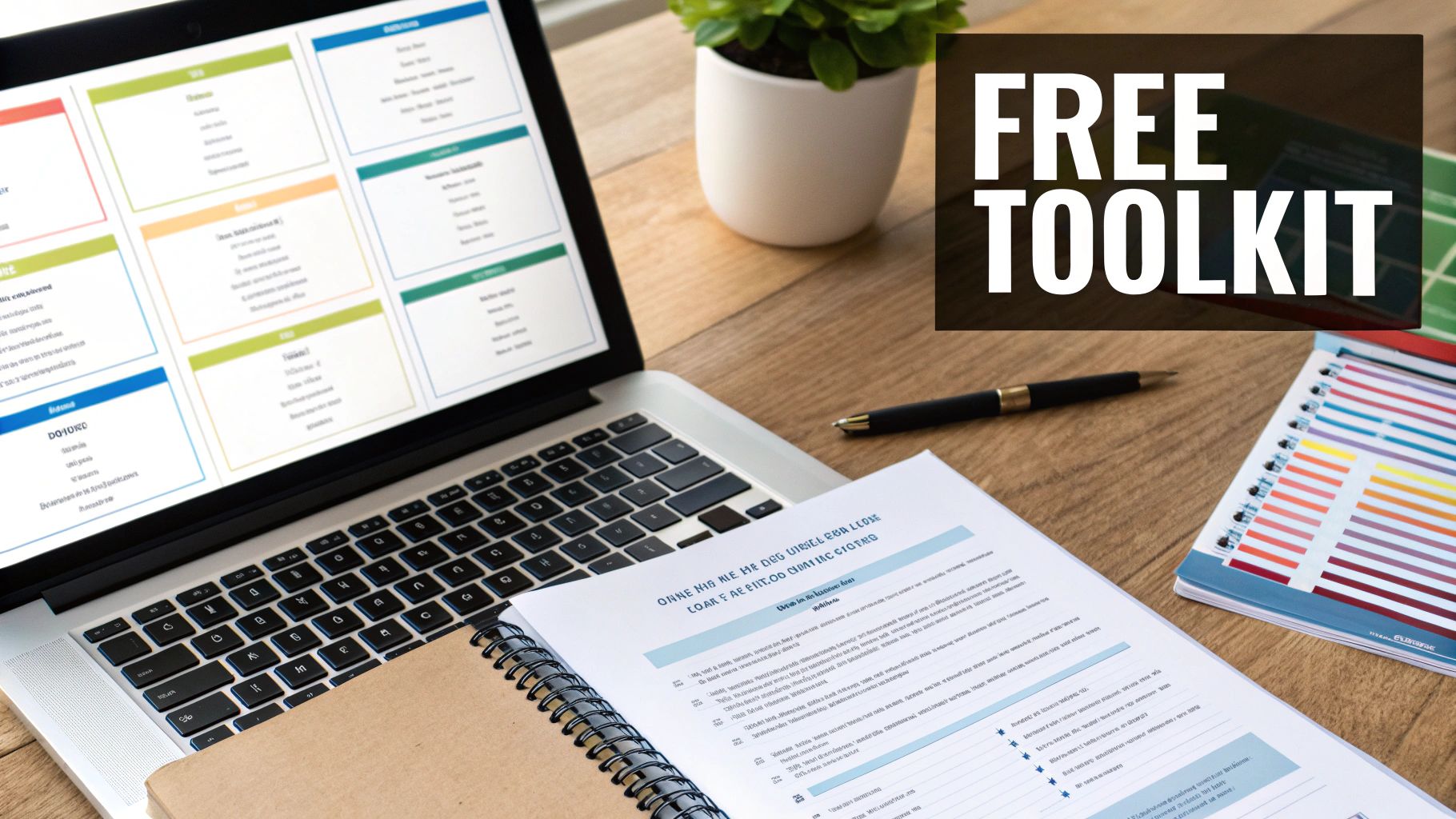
Creating comprehensive resource guides and toolkits is a powerful strategy because it provides immense, tangible value to your audience. Unlike a standard post, a toolkit bundles checklists, templates, and frameworks that restaurant professionals can immediately download and use. This transforms your blog from a source of information into an indispensable practical utility.
These high-value assets serve as lead magnets and encourage repeat visits. For instance, a "Complete Local SEO & Citation Building Toolkit" with downloadable audit checklists and outreach templates addresses a direct operational need. This positions your brand as a supportive partner, not just a service provider. These are fundamentally good blog topics because they build loyalty and generate qualified leads.
Actionable Implementation Steps
To succeed with this format, focus on creating genuinely useful and professionally designed resources that solve real-world problems for restaurant owners and managers.
- Identify a Core Need: Pinpoint a recurring challenge, like staff training on managing online reviews, building local business listings, or creating a content calendar. You can learn more about building a restaurant’s local presence with a local citation building guide.
- Bundle Valuable Assets: Create a package of resources. A "New Restaurant SEO Launch Kit" could include a keyword research template, a GMB optimization checklist, and a blogger outreach email template.
- Gate Premium Content: Offer the toolkit in exchange for an email address. This allows you to build your marketing list with highly interested prospects who see clear value in your expertise.
This approach delivers immediate utility, making it an excellent method for capturing leads and establishing your authority in the restaurant equipment and digital marketing industry.
10. Debates and Comparison Posts
Comparison posts are powerful blog topics that address readers at a critical decision-making stage. For restaurant professionals, choosing between SEO tools, email marketing platforms, or even content strategies is a constant challenge. By creating content that systematically compares two or more options, you guide them toward the best solution for their specific operational needs, establishing your brand as a trusted advisor.
This format is a magnet for high-intent search traffic. Posts like "Yoast vs. Rank Math: Which is Best for Restaurant Websites?" or "Comparing the Top 3 Blogger Outreach Services" target users actively researching a purchase. This positions your website to capture qualified leads and demonstrates deep industry knowledge, making it one of the most effective and good blog topics for driving conversions.
Actionable Implementation Steps
To create a valuable comparison post, focus on fairness, depth, and clarity. The goal is to provide a balanced evaluation that genuinely helps the reader.
- Establish Clear Criteria: Define the evaluation points upfront, such as features, ease of use, pricing, and customer support. Apply these criteria consistently to all items being compared.
- Use a Comparison Table: Present key data in a simple, scannable table. This visual aid allows busy professionals to quickly grasp the core differences.
- Declare a "Winner" for Different Scenarios: Instead of one overall winner, recommend products for specific use cases, like "Best for Multi-Location Restaurants" or "Best Budget-Friendly Option for Startups."
11. Mistakes, Failures, and Lessons Learned
Candidly sharing failures and the lessons learned from them builds immense credibility and trust. This type of content humanizes your brand by moving beyond perfect, polished marketing to show genuine reflection and growth. For an audience of seasoned restaurant professionals, who understand that mistakes are part of the business, this transparency is highly relatable and valuable.
This approach is powerful for SEO because it tackles real-world problems. Posts like "The Top 5 SEO Mistakes We See on Restaurant Websites (And How to Fix Them)" or "Our Biggest Content Campaign Failure: A Postmortem" attract an audience seeking authentic, hard-won advice. This honesty fosters a strong community connection and positions your brand as a trustworthy partner.
Actionable Implementation Steps
To create an effective "lessons learned" post, focus on the takeaway value for the reader, not just the failure itself.
- Own the Mistake: Clearly state what went wrong without making excuses. For example, detail a client campaign that underperformed and why.
- Analyze the 'Why': Break down the reasons behind the failure. Was it a flawed keyword strategy, poor copywriting, or an oversight in technical SEO?
- Share Actionable Learnings: Conclude with specific, practical insights that your audience can apply to avoid similar pitfalls. For instance, provide a new client onboarding checklist that resulted from the mistake.
This strategy transforms a negative experience into positive, educational content, making it one of the most compelling and good blog topics for building an authentic brand.
12. Curated Content and Weekly Roundups
Curated roundups are highly valuable blog topics because they position your brand as a central hub for industry knowledge. Instead of creating everything from scratch, you aggregate the best articles, news, and resources about restaurant marketing and SEO from across the web. This saves your audience time and effort, building trust by consistently delivering high-quality, relevant information.
This content strategy is excellent for building an engaged audience and an email list. Posts like "This Week in Restaurant SEO: Top 5 News Stories" or "Monthly Content Marketing Roundup" encourage repeat visits and newsletter sign-ups. While not directly targeting long-tail keywords like a how-to guide, this approach establishes your site as an authoritative source, which indirectly boosts your overall SEO performance and brand credibility.
Actionable Implementation Steps
Success with curated content hinges on consistency and adding your unique perspective. Don't just list links; explain why each piece of content matters to a restaurant owner or manager.
- Develop a Niche Focus: Curate content specifically for your audience, such as new Google algorithm updates affecting local search, innovative restaurant websites, or noteworthy food blogger collaborations.
- Add Your Own Commentary: For each link you share, write a short paragraph explaining its significance. Add your expert opinion to provide unique value.
- Establish a Consistent Schedule: Publish your roundup on the same day each week or month. Consistency trains your audience to anticipate and look forward to your content.
This format provides immense value with less content creation overhead, making it one of the most efficient and good blog topics for becoming a go-to resource in the hospitality industry.
12 Blog Topic Types: Side-by-Side Comparison
| Content Type | 🔄 Complexity | ⚡ Resources & Speed | 📊 Expected Outcomes | Ideal Use Cases | ⭐ Key Advantages / 💡 Tip |
|---|---|---|---|---|---|
| How-To Guides and Tutorials | Medium–High, sequential steps | Moderate resources (screenshots, testing); slow ⚡ | High organic intent traffic and conversions ⭐⭐⭐ | Product tutorials, onboarding, problem-solving | Builds authority; include TOC and update regularly 💡 |
| Listicles and Roundups | Low–Medium, simple structure | Low resources; fast ⚡ | High engagement and shareability ⭐⭐ | Social shares, quick SEO wins, lead magnets | Scannable content; start/end strong, curate carefully 💡 |
| Case Studies and Success Stories | High, data and permissions required | High resources; time-intensive ⚡ | Strong lead generation and trust ⭐⭐⭐ | B2B sales enablement, client proof points | Use metrics and quotes; follow problem→solution→result 💡 |
| Research-Backed Data Posts and Reports | Very high, statistical rigor | Very high resources (research, analysis); slow ⚡ | Significant backlinks, thought-leader status ⭐⭐⭐ | Industry authority, press outreach, link building | Cite methodology, offer downloadable reports 💡 |
| Expert Interviews and Q&A Posts | Medium, coordination required | Moderate resources (scheduling, editing); moderate ⚡ | Unique insights and audience cross-promotion ⭐⭐ | Thought leadership, perspective pieces, promotion with experts | Prep strong questions; promote via expert's channels 💡 |
| Trend Analysis and Industry Reports | High, needs monitoring + synthesis | High resources (data, expert input); moderate–slow ⚡ | Positions brand forward-thinking, media attention ⭐⭐⭐ | Strategic planning, annual predictions, industry audiences | Support forecasts with data and cite experts 💡 |
| Personal Stories and Narratives | Low–Medium, craft-focused | Low resources; fast–moderate ⚡ | Strong emotional engagement and memorability ⭐⭐ | Brand building, founder posts, audience connection | Balance vulnerability with actionable lessons 💡 |
| Controversial Takes and Hot Takes | Medium–High, risks reputational impact | Low–Moderate resources; fast ⚡ | High engagement but polarizing results ⭐⭐ | Sparking debate, opinion leadership, viral potential | Back claims with evidence; handle disagreement professionally 💡 |
| Resource Guides and Toolkits | High, curation and design needed | High resources (templates, hosting); moderate ⚡ | High perceived value, repeat visits, list growth ⭐⭐⭐ | Lead magnets, evergreen reference, product support | Gate premium items for emails; keep versions updated 💡 |
| Debates and Comparison Posts | Medium–High, requires unbiased testing | Moderate resources; moderate ⚡ | High intent traffic and conversion potential ⭐⭐⭐ | Purchase decisions, product comparisons, affiliate posts | Use consistent criteria; disclose affiliations 💡 |
| Mistakes, Failures, and Lessons Learned | Medium, sensitive presentation | Low–Moderate resources; moderate ⚡ | Builds trust and relatability when authentic ⭐⭐ | Postmortems, culture pieces, learning-focused audiences | Emphasize lessons and corrective actions 💡 |
| Curated Content and Weekly Roundups | Low, ongoing sourcing | Low resources; fast and repeatable ⚡ | Consistent engagement and subscriber retention ⭐⭐ | Newsletters, industry digests, audience retention | Add original commentary and credit sources consistently 💡 |
Turning Great Topics into Your Strongest Marketing Asset
Finding good blog topics is the crucial first step, but the journey from a great idea to a powerful marketing asset requires strategic execution. Throughout this guide, we've explored 12 distinct content formats tailored specifically for restaurant and hospitality professionals. From a detailed how-to guide on mastering local SEO to an insightful case study showcasing a client's success, each format offers a unique avenue to connect with your audience and solve their most pressing challenges.
The true value lies not just in choosing a topic but in how you bring it to life. This is where specialized expertise becomes a game-changer. It’s about leveraging professional copywriting to transform technical marketing concepts into engaging, benefit-driven narratives. It requires a deep understanding of SEO to ensure your content ranks high when a restaurant owner searches for solutions. And it involves strategic blogger outreach to amplify your message and build authority within the culinary community.
From Ideas to Impact: Your Action Plan
Transforming your list of good blog topics into a successful content strategy is an ongoing process. The key is to move from planning to consistent, high-quality execution.
- Commit to a Content Calendar: Don't let great ideas languish. Schedule your posts, assign responsibilities, and commit to a regular publishing cadence to build momentum and audience expectations.
- Focus on Quality Over Quantity: One deeply researched, well-written article that solves a real problem is far more valuable than five superficial posts. Invest the time to create content that becomes a go-to resource.
- Analyze and Adapt: Use analytics to track what resonates with your audience. Which topics get the most engagement? Which formats drive the most traffic? Use this data to refine your strategy and double down on what works.
Once you've identified these sizzling blog topics, effective execution is key. Learn essential blog post writing tips to ensure your content truly shines and captures your audience's attention from the first sentence to the last.
Ultimately, a well-executed blog does more than just sell services; it builds a trusted brand. By consistently delivering actionable, insightful content, you position your company as a reliable partner invested in your customers' success. This is how you turn a simple list of good blog topics into your strongest, most enduring marketing asset, fostering loyalty and driving growth for years to come.
Ready to put these ideas into action with expert help? Explore our services at RestaurantEquipmentSEO.com to find the perfect solution—from SEO and local citations to article writing and blogger outreach—that will not only bring your blog topics to life but also elevate your brand. Let your content do the talking.