

Your Essential Food Prep Table Buying Guide
Let’s be honest, the glory often goes to the big-ticket items—the six-burner range, the high-tech combi oven. But any seasoned chef will tell you where the magic really begins: the humble food prep table. This isn't just a slab of metal; it's mission control for your entire kitchen. It's where raw ingredients start their journey to becoming someone's favorite dish.
A prep table is the foundation of your kitchen’s entire workflow. Get it right, and service flows smoothly. Get it wrong, and you're in for a world of hurt.
The Conductor of Your Kitchen's Symphony
Think of a busy dinner service. It’s controlled chaos, a symphony of sizzling, chopping, and plating. Every station, from the grill to the fryer, has its part to play. The food prep table? That's the conductor's podium. It's where every single component is prepped, measured, and staged for its moment in the spotlight.
Without a functional, well-placed prep table, that symphony quickly descends into a mess of clanging pans and frustrated cooks. Ticket times drag on, and quality takes a nosedive.
A great table directly impacts three things that make or break a kitchen: efficiency, safety, and organization. A smart layout shaves seconds off every task by cutting down on wasted movement. Those seconds add up fast during a packed service, meaning faster output and a less exhausted crew. When chefs have what they need right where they need it, they work cleaner, faster, and with more precision.
More Than Just a Surface: Safety and Sanity
Speed is one thing, but safety is everything. A food prep table is your first line of defense in food safety. A non-porous surface like stainless steel is a must-have—it gives bacteria nowhere to hide and makes sanitizing a breeze, keeping the health inspector happy. In this business, that's not optional.
Good organization is just as critical. Features like undershelves or drawers aren't just for storage; they create a system. They help you keep raw and cooked ingredients completely separate, slashing the risk of cross-contamination.
The right table isn't just about having a place to chop vegetables. It's about building a system that makes every action, from unboxing produce to plating the final dish, second nature. That's how you build consistency and excellence into every meal that leaves your kitchen.
This guide is your deep dive into picking the perfect food prep table. We’ll cover the nuts and bolts—materials, sizing, maintenance—so you can make an investment that pays you back for years. A well-chosen table isn't just furniture; it's a tool that will become the bedrock of your success.
Choosing the right one means thinking about how your team actually moves and works. The goal is a seamless flow where every tool and ingredient is exactly where it should be.
- A Better Workflow: A table that fits your space and needs means less running around. Staff can get more done with less physical strain.
- Rock-Solid Food Safety: The right materials, like stainless steel, are non-negotiable for preventing bacterial growth and meeting health codes.
- Smarter Organization: Built-in features like shelves and drawers cut down on clutter, which reduces the chance of accidents and cross-contamination.
At the end of the day, this single piece of equipment sets the rhythm for your entire kitchen.
Decoding Materials for Durability and Safety
The material of your food prep table is its single most important feature. Think of it as the foundation for everything else—it dictates safety, how long the table will last, and frankly, how easy your life will be. In the controlled chaos of a commercial kitchen, stainless steel is the undisputed champion. Its surface is non-porous, meaning there's nowhere for bacteria to hide, making it a breeze to clean and sanitize. That's a huge deal for passing health inspections.
But here’s the thing: not all stainless steel is created equal. Understanding the nuances is what separates a smart purchase from a future headache. In many ways, these tables are a lot like robust steel work benches, built for strength and hygiene above all else.
The Tale of Two Steels: 304 vs. 430 Grade
When you start shopping, you’ll constantly see two numbers pop up: 304 grade and 430 grade.
304 grade is the gold standard for any surface that will touch food. It has more chromium and nickel, which gives it incredible resistance to rust and corrosion. It can stand up to acidic foods like tomatoes, harsh cleaning chemicals, and salty brines without breaking a sweat.
Then there's 430 grade. It's a solid, more budget-friendly option, but it has less nickel. This makes it more likely to corrode over time, especially in a damp kitchen environment. Because of this, you’ll often find 430 grade used for parts that don’t touch food, like the table legs or an undershelf meant for dry storage.
To make this crystal clear, here’s a simple breakdown of how they stack up.
Stainless Steel Grade Comparison
| Feature | 304 Grade Stainless Steel | 430 Grade Stainless Steel |
|---|---|---|
| Corrosion Resistance | Excellent; high nickel and chromium content | Good; less nickel makes it more susceptible |
| Best Use Case | Tabletops, sinks, food-contact surfaces | Table legs, undershelves, equipment stands |
| Cost | Higher | More economical |
| Durability | Superior long-term performance | Good for non-critical, dry applications |
The bottom line is simple: If you're going to chop, mix, or prep ingredients directly on the surface, you need 304 grade stainless steel. It’s a non-negotiable for food safety and the long-term health of your table.
This infographic drives home just how crucial a durable, clean workspace is in any kitchen.
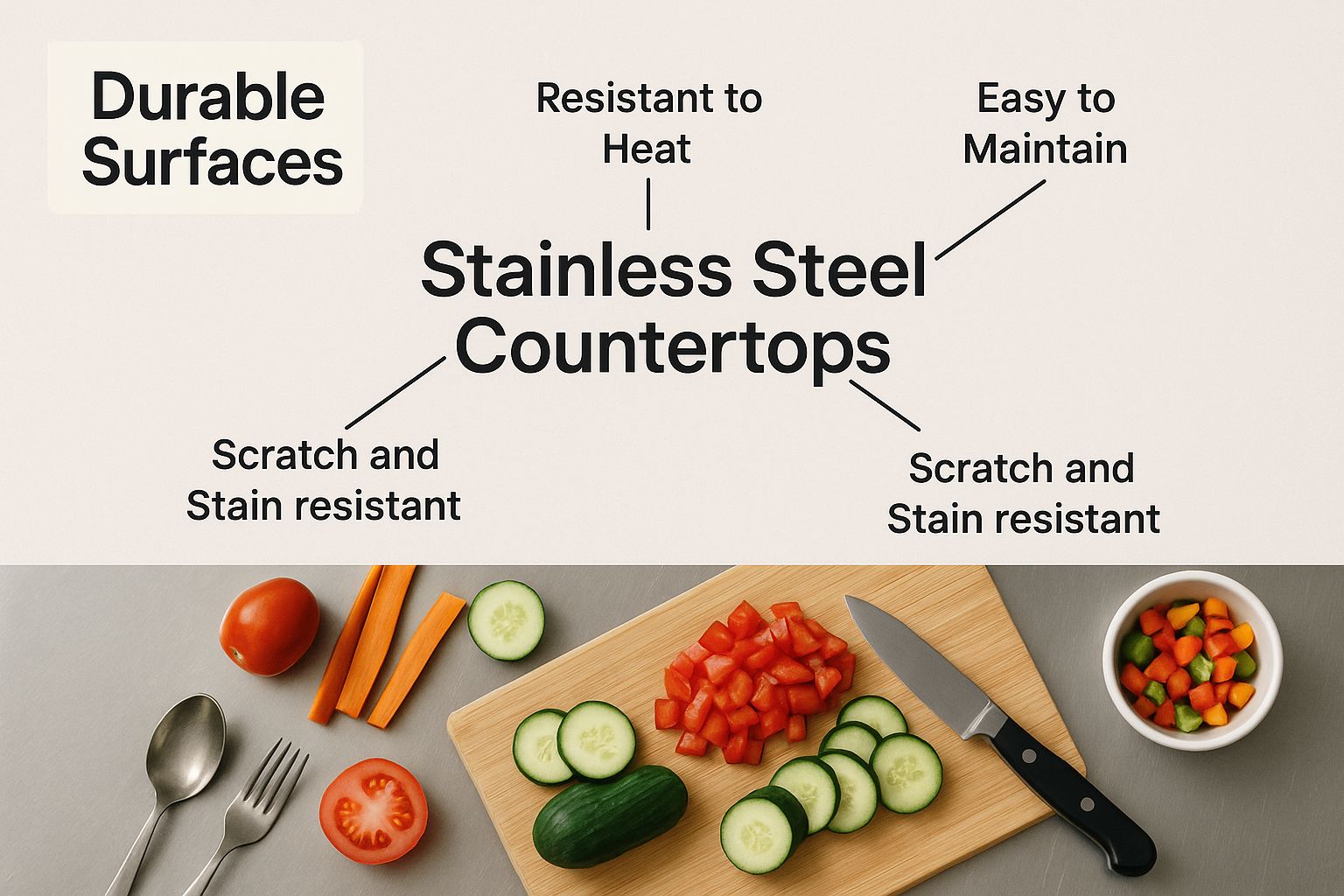
As you can see, a resilient surface isn't just a feature—it's the core of an efficient and safe kitchen workflow.
Understanding Steel Thickness: The Gauge Game
Another key spec you'll run into is the steel's gauge. This is just a way of talking about its thickness. It’s a bit counterintuitive, but remember this: a lower gauge number means thicker, stronger metal.
For a busy commercial kitchen, you should be looking for 14 or 16 gauge steel. These tables are built like tanks and can handle the daily abuse of heavy equipment, constant chopping, and aggressive scrubbing without denting or warping.
Higher gauges, like 18 or 20, mean the steel is thinner. These are fine for lighter-duty work—think assembling sandwiches or plating desserts—but they won't hold up as well under serious pressure.
Exploring Alternative Materials
While stainless steel is the go-to for most kitchens, there are a few other materials that shine in very specific roles.
- Wooden Tops (Baker's Tables): Usually made from hard maple, these are a baker's best friend. The wood absorbs a tiny bit of flour, which helps keep dough from sticking, and it has a slight "give" that's easier on the wrists when you're kneading all day. The downside? Wood is porous and needs serious, consistent maintenance to keep it sanitary and prevent cracks.
- Polyethylene (Poly) Tops: These plastic surfaces are fantastic for butchering and heavy cutting tasks. They're non-porous, easy on your knife edges, and can often be removed for a deep clean in the dish pit. Many chefs use color-coded poly cutting boards right on top of their stainless steel tables to prevent cross-contamination between raw meats, poultry, and vegetables.
Ultimately, your menu and workflow should guide your choice. Matching the material to the task is the final, critical step in picking the perfect table for your kitchen.
Choosing the Right Size and Configuration
Picking a new food prep table is so much more than just filling an empty spot in your kitchen. This decision is about fine-tuning the very heartbeat of your operation. Get it right, and you’ve got a powerful tool that makes service faster and smoother. Get it wrong, and you’ve just created a frustrating bottleneck that will slow your entire team down.
Think about it this way: a tiny corner cafe has no business with an aircraft-carrier-sized prep station. Likewise, a high-volume catering kitchen can't possibly operate on a single, cramped little table. The real goal is to perfectly match the table's footprint and features to how your kitchen actually works, making every inch of that steel count. It all starts with two fundamental ideas: the space you have and the comfort of your crew.
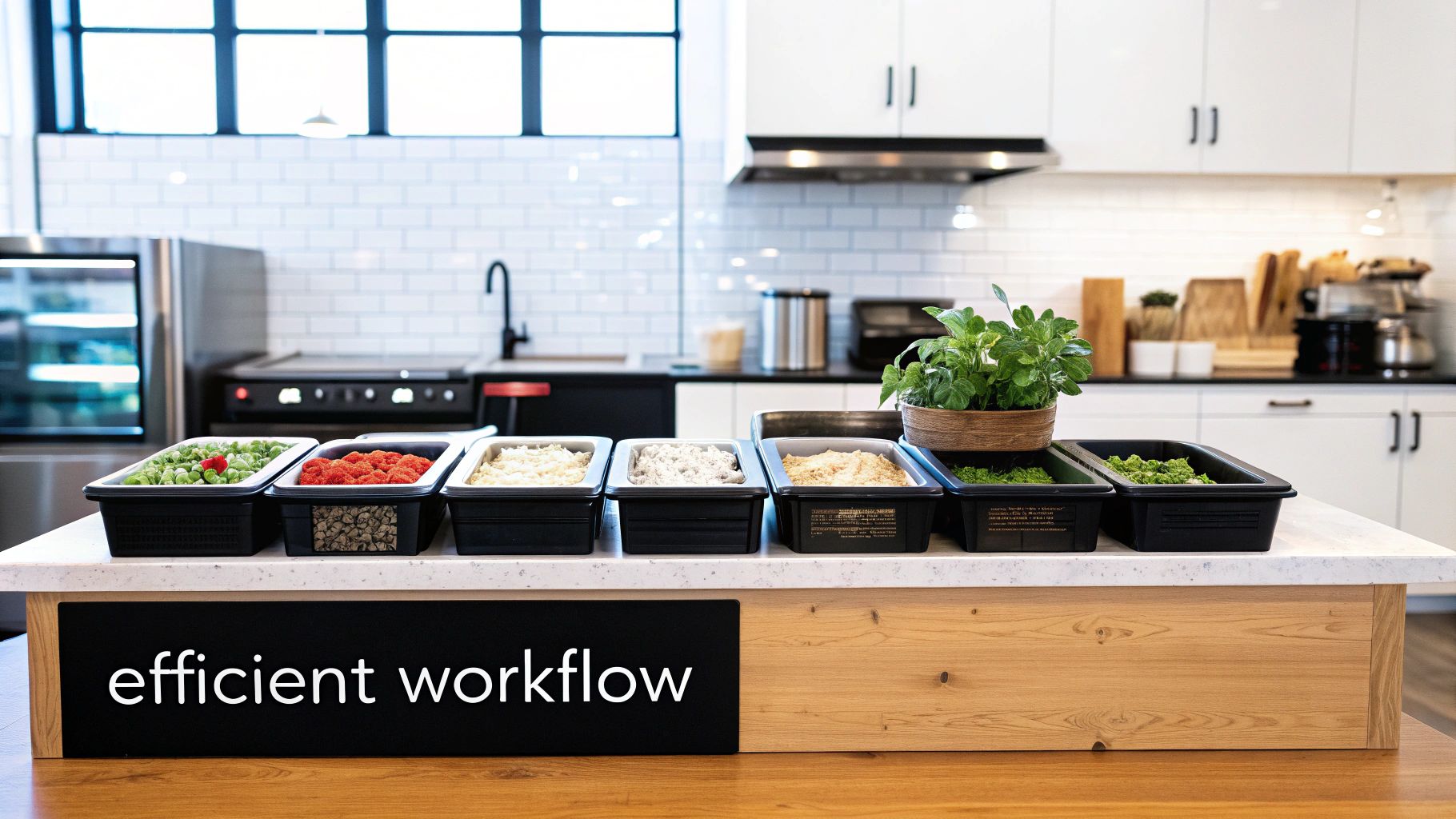
Measuring Your Space and Your Needs
First things first, break out the tape measure. You need the exact length and width of the spot where the table is going to live. But don't just stop there—you have to think about the flow of traffic around it. Your staff needs at least 36 inches of clearance to move safely and efficiently, especially when they're hustling with hot pans or heavy stock pots. A table that’s just a few inches too big can quickly turn a main walkway into a dangerous chokepoint.
Next up is height. The industry standard for a prep table is between 34-36 inches tall. This isn't just a random number; it’s all about ergonomics. This height allows most chefs to work for hours without hunching over or reaching awkwardly. Good posture isn't a luxury in a kitchen—it prevents the kind of back and shoulder strain that kills productivity and morale over a long, tough shift.
Open Shelves vs Cabinets and Drawers
Once you’ve nailed down the dimensions, the next big decision is what’s going on underneath the tabletop. This choice will directly shape your kitchen’s organization and speed. Each style serves a totally different purpose.
- Open Undershelves: This is the classic, go-to option for a reason. An open shelf gives you instant access to bulky stuff like 50-pound sacks of flour, giant mixing bowls, or appliances you use all the time. It’s the perfect setup for items that are too big for a cabinet and need to be grabbed on the fly.
- Cabinet Bases: If you need more organized, enclosed storage, a cabinet base is your best bet. It keeps your gear protected from the daily kitchen chaos of dust and splashes, giving your line a much cleaner, more professional look. This is a great choice for stashing clean pots, pans, and other small wares neatly out of sight.
- Tables with Drawers: When it’s all about precision and keeping things organized, drawers are a game-changer. They create a dedicated home for all those small hand tools, thermometers, cutlery, and other utensils that always seem to get lost on an open shelf. This setup is a lifesaver for pastry or garde manger stations where specific tools are needed at a moment's notice.
A well-chosen configuration isn't just storage—it's a system. It makes sure every tool and ingredient has a logical home, cutting down on the wasted time and motion your crew spends just looking for things.
A busy bakery, for example, would get a massive benefit from a long, open table with an undershelf to hold all those heavy bags of flour and sugar. A small sandwich shop, on the other hand, might get way more value out of a compact table with drawers to keep knives, gloves, and sandwich wrap perfectly organized. When you’re thinking about your own layout, checking out a wide range of Los Angeles restaurant equipment can give you some great ideas for configurations that will fit your unique needs.
At the end of the day, the perfect food prep table should feel like a natural part of your kitchen. By taking the time to carefully measure your space, consider your team's comfort, and nail down your storage needs, you can choose a table that doesn't just fit—it makes your whole operation better.
Refrigerated Prep Tables: The Ultimate Workflow Hack
While your standard stainless steel food prep table is the undisputed workhorse of the kitchen, some operations just need more firepower. That’s where refrigerated prep tables come in, transforming a simple workspace into a self-contained assembly line.
These aren't just tables with a mini-fridge stuffed underneath. They are purpose-built systems designed from the ground up to make your workflow faster and keep your food safe.
Think about your busiest lunch rush. With a standard table, your crew is constantly reaching into a separate cooler, grabbing ingredients, and then hustling back to their station. Every one of those trips bleeds precious seconds and gives temperatures a chance to fluctuate, putting the cold chain at risk. A refrigerated prep table puts a full stop to all that wasted motion.
The Anatomy of an Efficiency Machine
Often called sandwich prep or pizza prep tables, these units merge three critical functions into one slick piece of equipment: a refrigerated base, a tough work surface, and a cold well right on top for ingredients. It's a combination that absolutely changes the game for speed and consistency.
The base is a powerful undercounter refrigerator or freezer, keeping all your backup ingredients perfectly chilled right where you need them. On top of that, you've got the work surface—almost always a full-length, built-in cutting board made from a heavy-duty material like polyethylene.
But the real magic happens up top. A refrigerated rail holds an array of food pans packed with prepped toppings—lettuce and tomatoes for subs, pepperoni and mushrooms for pizzas. Everything is within arm's reach and held at a perfectly food-safe temperature.
Sandwich and Salad Prep Tables Explained
Built for delis, cafes, and any spot focused on quick assembly, sandwich and salad prep tables are engineered for pure speed. The cutting board is usually between 8 to 12 inches deep, giving you just enough space to build a sandwich or toss a salad without making a mess.
The refrigerated rail is the star of the show here. It’s set up to hold standard food pans, letting you create a custom layout of all your go-to toppings. This doesn't just make you faster; it ensures every single item is made with ingredients that have been held at a consistent, safe temperature.
The move toward this kind of specialized gear is a major trend in the industry. In fact, the global market for food prep tables was valued at around USD 1.18 billion in 2023 and is expected to hit USD 1.62 billion by 2029. That kind of growth tells you just how much kitchens are prioritizing high-efficiency equipment.
The Pizza Prep Table Difference
A pizza prep table might look similar, but it has some key differences designed specifically for slinging pies. The most obvious one is the cutting board, which is way deeper—we're talking 16 to 20 inches or even more. That extra real estate is there to handle large pizza skins, giving your cooks plenty of room to stretch dough, spread sauce, and layer on toppings.
You'll also notice the refrigerated rail on a pizza table is often raised. This is a smart ergonomic tweak that lets your team grab ingredients easily without having to awkwardly reach over the massive dough in front of them. It helps prevent cross-contamination and makes for a much more comfortable shift. Little design choices like that make a huge difference in a busy pizzeria. Finding equipment that fits your menu is critical, and browsing the options from a Dallas restaurant supply expert can help you zero in on the perfect unit for your kitchen's flow.
Ultimately, the choice between a standard work table and a refrigerated unit boils down to your menu and your volume. If you're cranking out cold items all day long, an integrated refrigerated food prep table isn't a luxury—it's a core strategic tool for boosting speed, consistency, and food safety.
Essential Features And Customization Options
Once you've nailed down the right material and size, it's time to get into the details that truly make a food prep table work for you. These features and customizations are what turn a simple steel surface into the command center of your kitchen. Getting these right isn't just about convenience; it's a strategic move to boost efficiency, tighten up safety, and bring a sense of calm to the chaos of service.
Think of a basic prep table as a blank canvas. By thoughtfully adding the right features, you're painting a picture of a seamless workflow. Every bell and whistle should have a purpose, whether that’s making a specific task easier, keeping things cleaner, or just making it possible to move the table around.
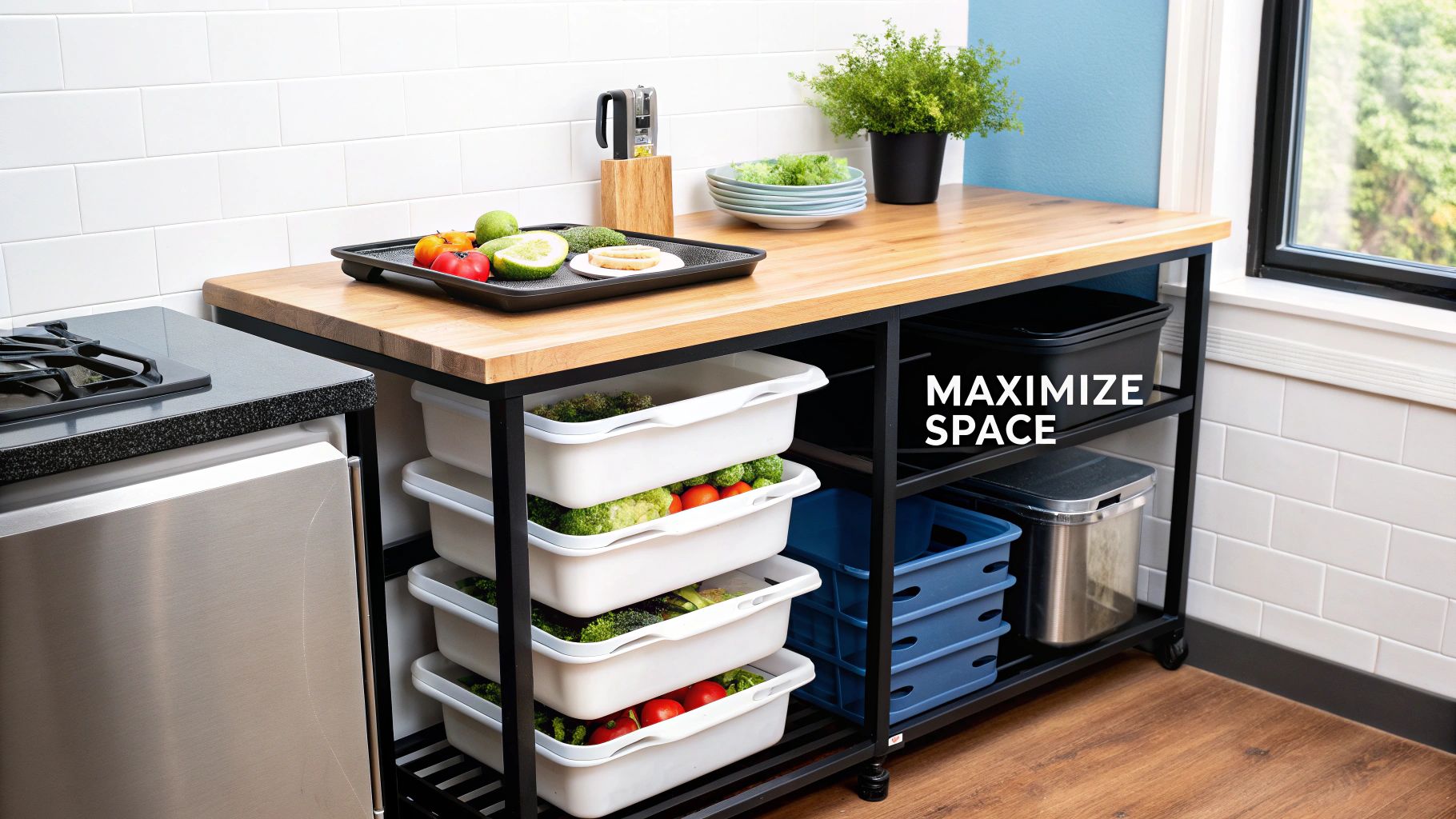
Core Features You Can't Ignore
Some features are so fundamental they’re practically non-negotiable for any serious commercial kitchen. These are the workhorses that tackle the everyday challenges of sanitation, safety, and workflow, forming the bedrock of a truly functional prep station.
-
Backsplashes: Is your table going against a wall? You need a backsplash. Period. This little raised lip, usually around 1.5 to 2 inches high, is a lifesaver. It stops food, liquids, and utensils from disappearing into that impossible-to-clean gap between the table and the wall. It’s a sanitation must-have and one of the first things a health inspector will notice.
-
Edge Types: The shape of the table's edge actually matters more than you’d think for safety and cleaning. A clean, modern square edge looks sharp but can have corners that bite. A bullnose edge is rounded off, which is a lot kinder to your staff's hips as they hustle through a tight kitchen. For really messy prep, a marine edge is raised all the way around to contain spills and slop.
-
Casters vs. Stationary Legs: Wheels or no wheels? It all comes down to how much you need to rearrange your space. Casters give you the freedom to roll the table out for deep cleaning or to change up your line for a special menu. Just make sure they lock securely. Stationary legs, on the other hand, offer rock-solid stability, which is exactly what you need for heavy-duty work like butchering or parking a big piece of equipment on top.
Smart Customizations For Peak Performance
With the basics sorted, you can start looking at the add-ons that take your table from good to indispensable. These are the smart additions that help organize tools, manage waste, and make the whole workstation more ergonomic for your crew.
A well-customized table anticipates the needs of your chefs. It puts every tool, ingredient, and disposal option exactly where it needs to be, eliminating wasted steps and mental friction during a busy service.
To see just how powerful customization can be, look no further than specialized equipment like pizza prep tables. The demand for these purpose-built units is exploding for a reason. In fact, the market for pizza prep tables was valued at USD 1.75 billion and is expected to hit USD 4.92 billion by 2033, all because kitchens want high-efficiency, specialized gear.
While there are countless ways to trick out a prep table, some add-ons consistently deliver the biggest bang for your buck. These features are designed to solve common kitchen headaches by improving storage, organization, and overall workflow.
Essential Food Prep Table Features
| Feature | Primary Benefit | Best For |
|---|---|---|
| Undershelves | Maximizes vertical storage space for ingredients, containers, or small appliances. | Kitchens with limited storage; keeping bulk items off the floor. |
| Drawers | Keeps small utensils, thermometers, and tools organized and off the work surface. | Stations for pastry, plating, or any task requiring many small tools. |
| Overhead Pot Racks | Provides easy-access hanging storage for pots and pans without using shelf space. | High-volume kitchens where cookware needs to be grabbed quickly. |
| Sink Inserts | Adds a small, convenient sink for rinsing produce or washing hands at the station. | Produce prep areas or stations located far from a main sink. |
| Casters (Wheels) | Allows the table to be moved for cleaning or reconfiguring the kitchen layout. | Dynamic kitchens that need flexibility and easy deep cleaning. |
Choosing the right combination of these features will directly impact how smoothly your kitchen runs, turning a simple piece of steel into a productivity powerhouse.
Tailoring Your Table To Your Workflow
The best way to build your perfect workstation is to think about what actually happens there. A station dedicated to chopping vegetables has very different needs than one for assembling sandwiches or plating desserts. A quick look through the range of available Houston restaurant equipment can spark some great ideas for a setup that fits your operation like a glove.
Here’s a quick list of popular add-ons to get you started:
- Undershelves: Add one or more tiers of storage for bulk items, small appliances, or Cambros. Adjustable ones are the most versatile.
- Drawers: Fantastic for corralling small but essential tools like peelers, thermometers, and tasting spoons, keeping your countertop clear.
- Pot Racks: An overhead rack puts pots and pans right where you need them, freeing up valuable shelf and cabinet space.
- Cutting Board Brackets: These handy brackets let you securely attach a poly cutting board to the side of the table for dedicated chopping tasks.
- Sink Inserts: Some tables can be outfitted with a small prep sink, which is perfect for a quick rinse without having to walk across the kitchen.
Keeping Your Food Prep Table in Fighting Shape
Your food prep table is a workhorse. It’s a serious investment, and just like any other piece of critical kitchen gear, it'll only last as long as you treat it right. Proper, consistent maintenance isn't just about making the stainless steel sparkle—it's the bedrock of food safety, preventing cross-contamination, and keeping your kitchen up to professional standards. If you let cleaning slide, you're rolling out the welcome mat for harmful bacteria and inviting corrosion that can permanently ruin the surface.
Think of daily care as a non-negotiable part of your closing duties. A simple routine stops food particles and grime from building up, which become a nightmare to remove later. This small daily effort guarantees you’re meeting health codes and preserves the integrity of the steel, making sure your workspace stays clean and professional for years to come.
Your Daily Cleaning Checklist
At the end of every single shift, your prep surfaces need a thorough cleaning. No excuses. This is your frontline defense against bacteria and surface damage.
- Step 1: Clear and Scrape: Get all food scraps, containers, and cutting boards off the table. Use a soft plastic or rubber scraper to gently lift off any stubborn, stuck-on bits of food.
- Step 2: Wash It Down: Grab a clean cloth, warm water, and a mild detergent. Wash the entire surface—don't forget the backsplash, legs, and the undershelf.
- Step 3: Rinse It Clean: With a different clean cloth and fresh water, wipe everything down again. This removes any soap residue that can leave streaks and actually attract more dirt.
- Step 4: Sanitize the Right Way: Apply a food-safe sanitizer, following the manufacturer's directions to the letter. Pay close attention to the required contact time, then just let it air dry.
Protecting That Stainless Steel Finish
Stainless steel is tough, but it's not bulletproof. The absolute worst mistake you can make is grabbing the wrong tools or chemicals for the job. Going too aggressive with your cleaning can cause more problems than it solves, creating tiny scratches where bacteria love to hide.
You've got to protect your investment. That means knowing what to use, and more importantly, what to stay away from. Harsh chemicals and abrasive pads can strip away the steel's protective layer, basically inviting rust and corrosion to move in.
Here's what to never use:
- Steel wool or abrasive scouring pads: These are guaranteed to scratch the surface.
- Harsh chemicals: Things like chlorine bleach, oven cleaners, or any cleaner with chlorides will cause pitting and rust.
- Leaving acidic or salty foods on the surface: Spills from vinegar, citrus juices, or brines need to be cleaned up right away.
By sticking to a simple but consistent cleaning routine, you’ll make sure your food prep table stays a safe, dependable, and pristine centerpiece in your kitchen's workflow.
Common Questions About Food Prep Tables
After covering the basics, a few specific questions always seem to pop up when it's time to actually pull the trigger on a new food prep table. Getting these details right can make all the difference, so let's clear up a few common sticking points. Think of this as the final check-in to make sure you’ve thought through every angle before you invest in your kitchen’s next workhorse.
We'll tackle the most frequent points of confusion, from picking the right metal to deciding on must-have features.
What Is the Best Grade of Stainless Steel?
This is a big one. For any surface that food will actually touch, 304 grade stainless steel is the undisputed industry standard. You simply can't cut corners here. Its higher nickel and chromium content gives it fantastic protection against rust and corrosion, which is crucial when you're dealing with acidic ingredients, salts, and harsh cleaners day in and day out. It's the safest, most durable material for your main work surface.
Now, that doesn't mean other grades are useless. The more budget-friendly 430 grade is perfectly fine for parts that don't touch food, like the table legs or an undershelf meant for storing dry goods.
How Do I Choose the Right Height?
The standard height for a commercial prep table hovers between 34 and 36 inches. There's a good reason for that—it’s designed to be ergonomic for the average person standing and working. Getting this right is a huge factor in preventing back and shoulder strain during those long, grueling shifts.
A table at the correct ergonomic height is more than a comfort feature; it's a direct investment in your team's productivity and long-term well-being. It minimizes fatigue, allowing staff to work more efficiently and safely.
If your crew is particularly tall or short, or if the table is for a specialized task like kneading dough where a lower posture is better, then it's worth looking into adjustable legs or even a custom height.
Is a Backsplash Really Necessary?
If your table is going against a wall, the answer is an emphatic yes. A backsplash is absolutely crucial. That little raised edge is your first line of defense, stopping food, liquids, and utensils from falling into that impossible-to-clean gap behind the table. That gap is a sanitation nightmare waiting to happen.
Beyond just keeping things clean, it also saves your wall from getting destroyed by splashes and dings. In fact, most local health departments demand a backsplash in these setups to meet sanitation codes, so it’s often a non-negotiable feature for staying compliant. For more in-depth advice on making smart purchases for your kitchen and home, you can explore these helpful general buying guide resources.
We provide information on SEO, local citation services, blog posting, blogger outreach, copyrighting, and article writing for restaurant equipment supply websites. Visit us at https://charbroilers.com to learn more.