
Build Your Employee Training Program Template
An employee training program template is a reusable game plan for how you develop your people. Think of it as a structured framework that keeps your training consistent, no matter when an employee starts or what their role is. It’s the key to making sure every single person gets the same high-quality instruction, which is essential for scaling your business without losing your edge.
Why a Training Template Is a Non-Negotiable Asset

First things first, let's stop thinking of a template as just another corporate document. It’s a strategic tool. It's how you build a workforce that's competent, confident, and consistent. Without one, training often becomes a free-for-all, leading to huge knowledge gaps and performance that’s all over the map.
Imagine you run a restaurant equipment supply website. You hire two new content writers a month apart. One gets trained by a 10-year veteran, while the other learns the ropes from a manager who’s only been there a year. You can bet they'll end up with different skills and follow different SEO procedures. That creates confusion for your clients and headaches for your team. A solid template stops that from happening.
Drive Consistency and Efficiency
A well-built training template ensures every new hire gets the same core knowledge from day one. This isn't just about making things neat and tidy; it’s critical for quality control, staying compliant, and building a cohesive company culture where everyone is on the same page.
It also makes life a lot easier for your managers. Instead of having to reinvent the wheel every time someone new joins, they can just follow a proven roadmap. This frees them up to spend their time on what really matters—coaching their team and managing performance, not just teaching the basics over and over again.
By laying out a clear, repeatable path, a training template gives employees the power to own their development. It helps create a sustainable culture where getting better is just part of the daily routine, not a special event.
Boost Employee Retention and Engagement
When you invest in structured training, you're sending a clear message: we value you and we're committed to your growth. That kind of commitment has a direct line to loyalty and retention. It’s not just a hunch; studies have shown again and again how much quality training impacts how people feel about their jobs.
The data is pretty staggering. A whopping 94% of employees say they would stick around longer if their company invested in their development. On top of that, 92% believe that good training has a positive impact on their engagement at work.
Now, think about the costs. Replacing an employee can set you back as much as 33% of their annual salary. When you look at it that way, the ROI on keeping your talent happy through solid training becomes crystal clear. You can dig into more of the industry data connecting training and retention if you want to see the numbers for yourself.
At the end of the day, a strong template does several jobs at once:
- Ensures Uniformity: Everyone learns the same core processes, values, and company principles.
- Improves Scalability: Onboarding stays smooth and repeatable, even as your company grows fast.
- Reduces Errors: Consistent training cuts down on mistakes that happen because of bad or incomplete information.
- Empowers Managers: It gives your leaders the tools they actually need to build up their teams.
By putting a thoughtful template in place, you’re doing more than just training people—you’re building a stronger, more resilient organization from the inside out.
Defining Your Training Goals and Needs
Before you even think about building an employee training program, you have to know why you're building it. Jumping straight into creating modules without a clear purpose is like cooking without a recipe; you might end up with something, but it probably won’t be what your team actually needs.
The real starting point is a thorough needs analysis. This isn't just corporate jargon—it's the practical process of figuring out the gap between where your team is now and where they need to be. It’s all about digging in to find the specific challenges holding them back from doing their best work.
Start by Talking to the Right People
To get a clear picture, you need to gather information from a few different angles. Don’t just rely on what you think the problems are. Instead, have real conversations with managers and team members to get to the root of the issues.
- Talk to Managers: They have a bird's-eye view of team performance and can usually pinpoint recurring issues or skill gaps tied directly to business goals. For instance, a marketing manager for a restaurant equipment supply website might notice their team struggles with technical SEO, which is tanking their blog performance.
- Talk to Team Members: Your frontline employees have invaluable, ground-level insights. They know exactly where processes are clunky and what specific knowledge would make their jobs easier and more effective.
Using a dedicated training needs assessment template is a great first step. It helps you gather consistent, actionable data instead of just a collection of opinions.
Set Clear and Measurable Learning Objectives
Once you've identified the needs, the next step is to translate them into clear, measurable learning objectives. Vague goals like "improve copywriting" are impossible to track and ultimately useless. You need to focus on tangible outcomes.
Think in terms of SMART goals—Specific, Measurable, Achievable, Relevant, and Time-bound. This framework is perfect for turning fuzzy ideas into a concrete action plan for your training template.
Let's go back to that restaurant equipment supplier. If their content team needs better product knowledge, a weak objective would be "Learn more about charbroilers." A much stronger, more effective objective is: "By the end of this module, each content writer will be able to identify the top three selling points of our main charbroiler models and write a 500-word blog post that answers five common customer questions with 100% accuracy."
This level of clarity makes sure your training is razor-focused and that you can actually measure its success. It also aligns every piece of your training directly with real business outcomes.
Structured training isn't just a nice-to-have; it's a powerful tool for retention and productivity. In fact, organizations with a structured onboarding process see an 82% improvement in new hire retention. As roles change, continuous development is key; 32% of required skills for jobs changed between 2021 and 2024. This just highlights how important it is to have adaptable training templates that keep skills fresh.
Crafting the Core Modules of Your Template
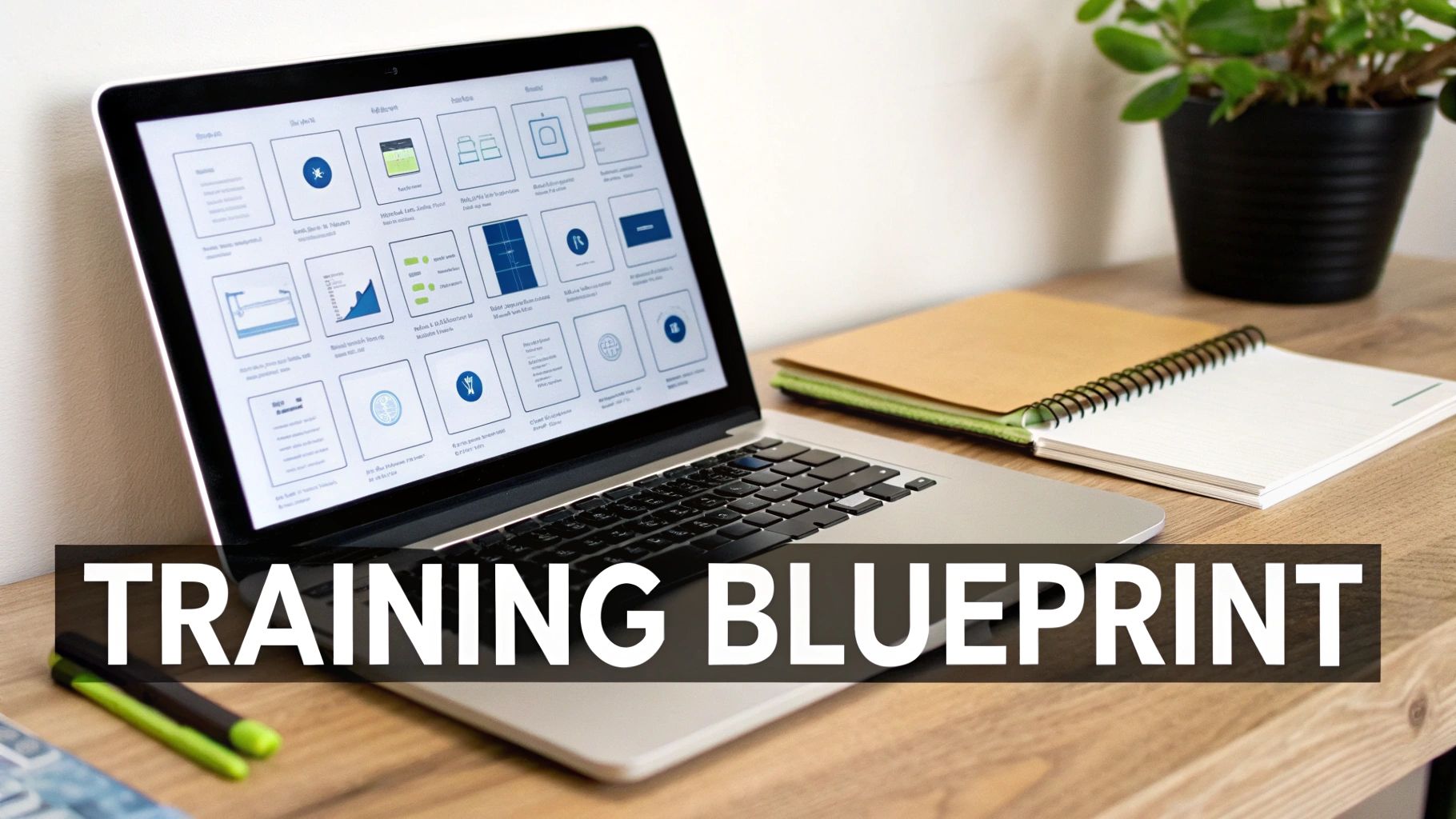
Once you've nailed down your goals, it's time to translate that strategy into something tangible. This is where your employee training program template starts coming to life. Think of it less like a rigid, one-size-fits-all document and more like a flexible blueprint you can adapt for any role or department.
The smartest templates begin with foundational modules that apply to absolutely everyone. This stuff is the bedrock of your company’s training, making sure every employee—from SEO specialists to article writers—shares a common understanding of the business. That consistency is gold for building a cohesive, well-informed team.
Foundational and Onboarding Modules
Consider this the universal starting point for every new person walking through the door. These initial modules aren't really about specific job duties; they're about immersing a new employee in your company's world. The aim is simple: make them feel prepared, welcomed, and plugged into the mission from day one.
A few must-haves for this stage include:
- Company Culture and Values: Don't just hand them a mission statement. Use real stories and examples that show what your values actually look like in the wild.
- Essential Tools and Systems: Walk them through the software everyone uses daily. This means communication tools, project management software, HR systems—the whole shebang.
- Key Policies and Procedures: Lay out the non-negotiables, like security protocols, communication etiquette, and other critical company standards.
A strong onboarding module does more than just inform; it integrates. It helps a new hire understand not just what to do, but how and why things are done at your company, which fast-tracks their journey to becoming a productive team member.
Role-Specific and Skill-Based Modules
With the foundation poured, your template needs to branch out into specialized training paths. This is where you get to tackle the specific skill gaps you identified earlier. For a business providing SEO and content services to restaurant equipment suppliers, these modules become incredibly targeted and have a direct impact on daily performance.
For instance, someone on the marketing team might need a module dedicated to content creation. That could cover everything from brainstorming blog topics to the nitty-gritty technical details. For anyone needing a crash course on writing high-performing articles, we've got a great guide on how to write SEO-friendly blog posts.
On the other hand, a local SEO specialist would need modules all about citation building and blogger outreach. We're talking deep dives into creating consistent NAP, finding local directories, and pitching guest posts to relevant food industry blogs.
The secret ingredient here is modularity. When you create distinct, focused blocks of content, you can easily mix and match them to build a perfectly tailored training plan for any role imaginable.
Incorporating Diverse Learning Formats
To keep people from zoning out, your template should encourage a mix of learning formats. Just throwing documents at them is a recipe for boredom and poor retention. A blended approach works wonders because it caters to different learning styles and keeps the material from getting stale.
To give you an idea, you should build these formats right into your template:
- Self-Paced E-Learning: Perfect for foundational knowledge and technical skills that people can absorb on their own schedule.
- Interactive Workshops: Use these for group problem-solving, role-playing tough client scenarios, or getting some hands-on practice.
- Peer Mentorship: Nothing beats pairing a new hire with a seasoned pro. It provides ongoing, real-world guidance and support that you just can't get from a manual.
Essential Modules for a Comprehensive Training Template
To help you visualize this structure, here’s a table outlining the core components you should build into your training program template. It breaks down the essentials by training phase, ensuring you cover all your bases for a well-rounded learning journey.
| Training Phase | Core Module | Key Topics to Cover |
|---|---|---|
| Onboarding | Company Culture & Values | Mission, vision, real-world examples of values, team structure, communication norms. |
| Onboarding | Tools & Systems | Email, communication platforms (e.g., Slack), project management software, HR portal. |
| Onboarding | Policies & Compliance | Security protocols, code of conduct, safety procedures, data privacy. |
| Role-Specific | Service Knowledge | Deep dive into our offerings (SEO, copyrighting), key features, client benefits, competitive advantages. |
| Role-Specific | Job-Specific Skills | Technical skills for the role (e.g., keyword research, citation building), sales techniques, SEO best practices. |
| Role-Specific | Process & Workflow Training | Department-specific workflows, standard operating procedures (SOPs), client reporting process. |
| Continuous Learning | Advanced Skill Development | Leadership training, advanced SEO strategies, new industry trends, public speaking. |
| Continuous Learning | Soft Skills Enhancement | Communication, teamwork, problem-solving, time management, emotional intelligence. |
By mapping out your modules this way, you create a clear and logical path for every employee, from their first day to their ongoing professional development.
When you build these three core components—foundational, role-specific, and varied formats—into your employee training program template, you're not just creating a document. You're building a robust, adaptable system that champions learning across your entire organization.
How to Bring Your Training Template to Life
A brilliant employee training program template is just a document until you actually put it into action. Successfully rolling it out involves more than just emailing a link; it requires a real strategy to get everyone on board, from the top down to the newest hire.
Your first move is to get genuine buy-in from your leadership. Don't just present it as "training." Frame it as a direct solution to their biggest headaches, like reducing costly errors or boosting client satisfaction scores.
Once leadership is on your side, it's time to build some excitement among the team. You have to clearly communicate the "what's in it for me" factor. Show them exactly how this training will help them master their roles, cut down on daily stress, and even open up doors for career growth. A simple announcement won't do the trick—think about creating a small internal launch campaign to generate some real buzz.
Choosing the Right Way to Deliver
The way you deliver the training is just as important as the content itself. A one-size-fits-all approach almost never works, so you’ll want to pick a method that actually fits your team's workflow and how they prefer to learn.
Here are a few common models I've seen work well:
- Learning Management System (LMS): An LMS is fantastic for self-paced learning, tracking who has completed what, and keeping all your materials in one tidy place. It’s a lifesaver for remote teams or for foundational knowledge that people can absorb on their own schedule.
- Live Workshops (In-Person or Virtual): For interactive, hands-on learning, nothing beats a workshop. Use them for diving into complex topics, role-playing tough client scenarios, or getting hands-on practice with new SEO tools.
- A Hybrid Model: This blended approach often gives you the best of both worlds. It combines the flexibility of an LMS for core knowledge with the energy and engagement of live sessions for practical application and team building.
If you're looking for more practical steps on deploying and adapting your template, this comprehensive employee training plan template guide is a great resource.
Customize for Maximum Impact
The real magic of a template is how you can adapt it. Your master template should be a solid starting point, but you absolutely have to customize it for different departments to make sure it’s always relevant. Generic training modules are the fastest way to lose an employee's attention.
Customization is the bridge between a good template and a great training experience. It shows employees you understand their specific challenges and are invested in giving them the exact tools they need to succeed.
Let's take a general module on copywriting, for instance. It's useful, sure, but it becomes so much more powerful when you tailor it. For a company providing content to restaurant equipment suppliers, you could transform that module into a specialized session on writing compelling product descriptions for commercial charbroilers.
Or, you could focus it on creating engaging blog content. For an idea of what that looks like, we can create a 2500-word well-researched restaurant equipment blog post that demonstrates this kind of specialized content in action. This level of specificity turns a generic skill into a high-value, job-specific asset, making the training immediately useful and way more valuable.
Measuring Training Success and Driving Improvement
Rolling out a new employee training program is a huge step, but the real work begins after the launch. You can't just set it and forget it. To make sure your program is actually making a difference and not just a box-ticking exercise, you need to measure its success and use what you learn to keep making it better. This is how a static template becomes a living, breathing tool that grows with your team.
It's easy to fall into the trap of looking at simple completion rates. Knowing who finished the training is one thing, but it tells you nothing about whether the training actually worked. The real proof is in tangible business outcomes and seeing people do their jobs better.
Key Performance Indicators That Matter
If you want to know if your training is effective, you have to look at the numbers that connect directly to your business goals. Ditch the vanity metrics and focus on the KPIs that show real change.
Here are a few metrics I always keep an eye on:
- Improved Job Performance: Track specific goals related to the training content. For example, if you just trained your content team on advanced SEO, are their articles ranking higher? A 15% increase in organic traffic for their assigned client blogs is a clear win.
- Higher Employee Engagement Scores: People who feel competent and see a future with the company are naturally more engaged. Keep an eye on your engagement survey results to see if they tick up after a training rollout.
- Better Retention Rates: Nobody wants to stay in a dead-end job. When you invest in your employees' growth, they're more likely to stick around. A drop in voluntary turnover in a specific department can be a powerful sign that your training is hitting the mark.
This entire process, from creating the template to delivering the training and measuring the results, is a continuous loop.
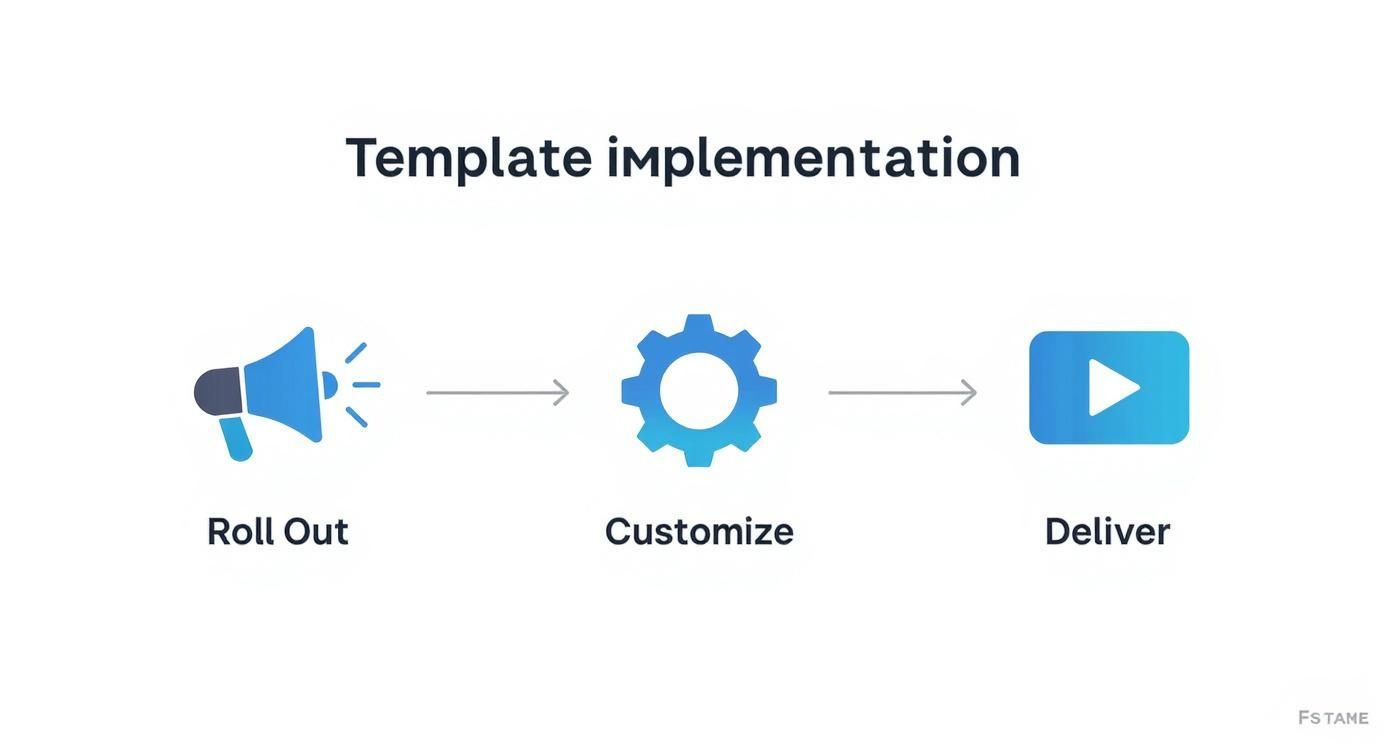
This just goes to show that implementation isn't a one-and-done event. It’s a structured cycle where each step builds on the last to make sure the training really lands.
Gathering and Analyzing Meaningful Feedback
Good data is the fuel for improvement, and the best way to get it is by asking for feedback. You'll get the clearest picture by mixing hard numbers with real conversations. Simple surveys, one-on-one check-ins, and performance data are your best friends here.
A quick post-training survey can tell you if the content felt relevant or if the instructor was engaging. But don't stop there. Managers should follow up with informal one-on-ones to see how employees are actually applying what they learned. Are they more confident? Are their articles generating more leads for clients? That's the stuff you really want to know.
The point of collecting feedback isn't to get a grade; it's to find specific things you can fix. A comment like, "The module on SEO copywriting was too generic" is a golden ticket. It tells you exactly where to go back and add specific examples relevant to writing about restaurant equipment.
The financial upside of doing this right is huge. Companies that formalize their training programs generate 218% higher income per employee and see a 24% higher profit margin than those that don't. On top of that, they report 17% greater productivity and 21% higher profitability. The connection between employee development and a healthy bottom line couldn't be clearer. You can learn more about the impact of training on business performance.
When you pull all this information together—from performance metrics to survey comments—you can start to spot patterns and pinpoint areas for refinement. It’s a lot like how you might perform a website audit to find and fix weak spots. You review the data, identify what’s not working, and make targeted improvements. This is how you ensure your training program remains a powerful, results-driven asset for your company.
Common Questions About Training Templates
As you start piecing together your own training framework, a few questions inevitably bubble to the surface. Getting these sorted out early on will save you a ton of headaches and help you build a much more effective program from day one.
Think of your template as a living document, not some static file that just sits there collecting digital dust. A good rule of thumb is to block off time for a major review at least once a year. This keeps your training aligned with shifting business goals, new SEO algorithm updates, or big industry changes.
That said, don't wait a full year to fix something that’s obviously broken. You need to be ready to jump in and make quick updates whenever a critical process changes, you roll out new software, or you get consistent feedback that a module is confusing or out of date.
How Should We Train Remote Teams?
When it comes to remote or hybrid teams, a blended learning strategy is, without a doubt, the way to go. If you just rely on one single method, you’re practically asking for disengagement.
Instead, mix and match different formats to create a much richer, more engaging experience.
- Self-Paced Online Modules: These are perfect for foundational knowledge and the technical aspects of SEO. People can learn this stuff on their own time.
- Live Virtual Workshops: Use these for interactive Q&A sessions, collaborative problem-solving, and role-playing tricky client scenarios. This is where the real connection happens.
- Virtual Mentorship: Pairing new hires with seasoned pros provides that ongoing, personalized support that’s so crucial. It also helps build team camaraderie, even when everyone’s miles apart.
The key is to offer flexibility while still creating intentional moments for people to connect and work together. This turns training from a passive chore into an interactive process that actually sticks.
"A great remote training program feels less like a course and more like a conversation. It's about giving people the information they need in a way that respects their time and leverages technology to bring them closer together, not push them further apart."
Creating Great Training on a Budget
Let’s be clear: you do not need a massive budget to create a truly impactful training program. Some of the most effective training strategies are surprisingly low-cost. Your most valuable investment here isn't expensive software—it's thoughtful planning.
Tap into the incredible resource you already have: your internal talent.
Encourage peer-led "lunch and learn" sessions where a top-performing SEO specialist or a seasoned copywriting pro on your team shares their magic. Set up a structured mentorship program; it costs next to nothing but can deliver immense value. Focus on refining your on-the-job training with crystal-clear checklists and achievable goals.
At Charbroilers.com, we know that a well-trained team is the backbone of any successful restaurant. When your staff has deep product knowledge on essential equipment, from compact countertop charbroilers to heavy-duty floor models, it directly impacts customer satisfaction and your bottom line.
Explore our selection of high-quality commercial charbroilers to see how the right equipment can elevate your kitchen's capabilities.
Find the perfect charbroiler for your business at https://charbroilers.com.