
Commercial Convection Ovens: Understanding Hood Requirements
Understanding Hood Requirements for Commercial Convection Ovens

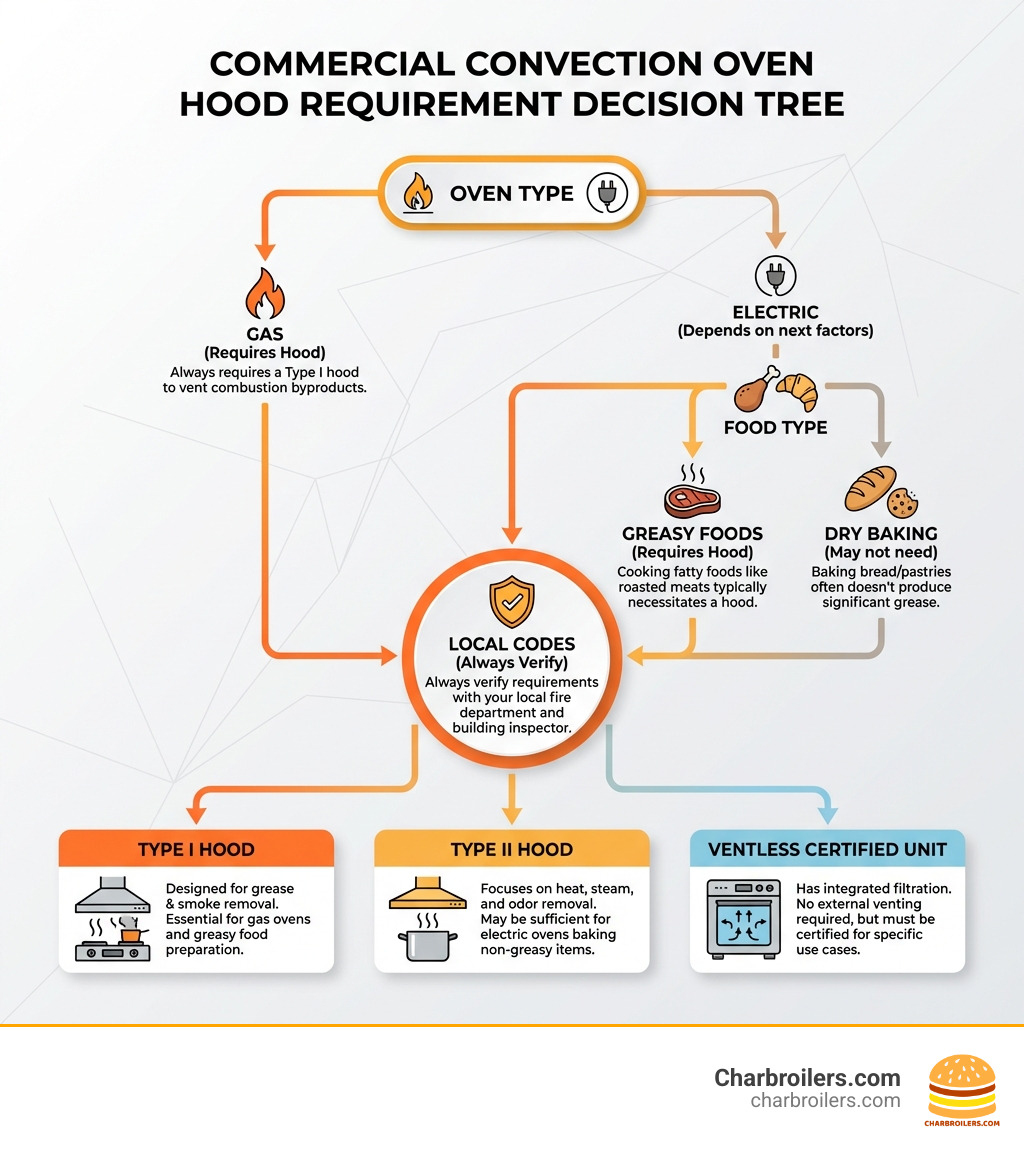
Do commercial convection ovens require a hood? The answer depends on several factors: the oven's power source (gas vs. electric), the type of food being cooked, and your local building codes. In most cases, gas convection ovens require a Type I hood to vent combustion byproducts, while electric convection ovens may not need a hood if they have integrated filtration systems and don't produce significant grease or smoke. However, cooking fatty foods like roasted meats typically necessitates a hood regardless of oven type. Always verify requirements with your local fire department and building inspector before installation.
| Scenario | Hood Required? |
|---|---|
| Gas convection oven | Yes (Type I hood) |
| Electric convection oven baking bread/pastries | Often no (check local codes) |
| Electric convection oven roasting meats | Usually yes (Type I hood) |
| Certified ventless convection oven | No (built-in filtration) |
Making the right choice isn't just about equipment—it's about safety, compliance, and cost. A traditional commercial hood system can cost $20,000 to $40,000 to install, a significant investment. But skipping a required hood can lead to failed inspections, fire hazards, and business shutdowns. The rules are complex because not all ovens are the same; gas models produce combustion byproducts, while electric models might not need a hood. Your menu and local regulations, which vary widely, also play a critical role.
This guide breaks down the key factors—from Type I vs. Type II hoods to ventless alternatives—to help you make a safe, compliant, and profitable decision. With over a decade in the restaurant equipment industry, I'm here to help you steer these requirements.
Important do commercial convection ovens require a hood terms:
- ventless commercial convection oven
- how does a commercial convection oven work
- convection oven safety tips
The "Why" Behind the Hood: Safety, Air Quality, and Compliance
Proper ventilation is essential for a safe, healthy, and compliant commercial kitchen. Commercial cooking equipment, including convection ovens, produces emissions that must be managed for several key reasons:
- Grease-Laden Vapors: Cooking fatty foods creates airborne grease, a major fire hazard. Type I hoods are designed to capture these flammable particles.
- Heat and Smoke: Ovens produce significant heat and smoke, which must be removed for staff comfort and to maintain air quality.
- Steam Management: Ovens with steam features can create humidity and slippery floors. Type II hoods are designed to manage this moisture.
- Fire Prevention: A Type I hood with a fire suppression system is the first line of defense against dangerous grease fires.
- Employee Safety & Air Quality: Proper ventilation removes heat, smoke, odors, and harmful combustion byproducts (like carbon monoxide from gas ovens), creating a safer, healthier work environment.
- Code Compliance: Ventilation standards are legal requirements. Non-compliance in jurisdictions like Seattle, WA, can lead to fines and business closure.

Type I vs. Type II Hoods: What's the Difference?
Commercial kitchen hoods are divided into two main categories, and understanding their function is key to choosing the right one for your convection oven.
- Type I hoods: Often called "grease hoods," their purpose is to remove heat, smoke, and airborne grease. They are required above appliances that produce grease, like fryers, grills, and ovens used for roasting. Due to the fire risk, Type I hoods must have an automatic fire suppression system.
- Type II hoods: Also known as "condensate hoods," these are designed to remove non-greasy emissions like heat, steam, and moisture. They are used over appliances like coffee machines, dishwashers, and some light-duty ovens. They do not typically require a fire suppression system.
The primary difference is what they filter. If your convection oven cooks anything that produces grease or smoke, you will likely need a Type I hood. If it only generates heat and steam, a Type II hood might be sufficient, or no hood may be needed if local codes permit.
| Feature | Type I Hood | Type II Hood |
|---|---|---|
| Primary Purpose | Removes grease, smoke, heat, and odors | Removes heat, steam, moisture, and odors |
| Emissions Handled | Grease-laden vapors, smoke | Water vapor, combustion byproducts (non-grease) |
| Typical Appliances | Fryers, broilers, grills, charbroilers, griddles, high-heat ovens, most convection ovens cooking fatty foods | Coffee machines, dishwashers, steam kettles, warming cabinets, some light-duty electric ovens |
| Fire Suppression | Required for hood and often appliances beneath | Not typically required |
| Ductwork | Specific requirements for grease ducts (e.g., welded, liquid-tight) | Standard ductwork for heat and moisture |
| Construction Material | Heavier gauge steel or stainless steel | Lighter gauge steel, stainless steel, or copper |
Do Commercial Convection Ovens Require a Hood? The Deciding Factors
The question of do commercial convection ovens require a hood is decided by a few key factors. The most important is your local authority (fire marshal, building department), followed by the oven's specifications, its power source, and your menu. Always consult your local officials in Seattle, WA, before any installation, as they have the final say.

The Role of Local Codes and the International Mechanical Code
The International Mechanical Code (IMC) provides a baseline for kitchen ventilation, but local authorities have the final say. Jurisdictions like Seattle, WA, often adapt the IMC with their own specific amendments, meaning what's acceptable in one city may not be in another.
Always verify requirements with your local fire marshal and building department before installation. They are the primary authorities who will inspect and approve your setup. Engaging them early with your kitchen plans, equipment specs, and menu is the best way to ensure compliance and avoid costly mistakes.
Gas vs. Electric Ovens: A Clear Distinction
The oven's power source is a major determining factor.
- Gas Ovens: These almost always require a hood. Gas combustion creates harmful byproducts, including dangerous carbon monoxide, which must be safely vented outside. A Type I hood is typically necessary to manage these gases, even if you aren't cooking greasy foods.
- Electric Ovens: These offer more flexibility. An electric oven may not need a hood if it's used for light-duty applications (like baking pastries) and doesn't produce significant grease or smoke. Some code exemptions exist for light-duty electric ovens. However, if you use an electric oven to roast meats or other greasy foods, the resulting vapors will likely necessitate a Type I hood.
The Menu Matters: How Food Type Influences Hood Needs
What you cook is just as important as the oven you use.
- Grease and Smoke Production: This is the golden rule. Any cooking that generates grease-laden vapors or smoke requires a Type I hood. This is why equipment like charbroilers, fryers, and griddles always need robust ventilation. A convection oven roasting fatty meats falls into the same category.
- Roasting Meats: If your oven is used for roasting chicken, beef, or other fatty items, a Type I hood is almost certainly required, whether the oven is gas or electric.
- Baking Bread and Pastries: If you're baking non-greasy items like bread, scones, or cakes, the emissions are mostly heat and steam. In this case, an electric oven might be exempt from hood requirements, especially if it has internal filtration. A Type II hood might be needed to manage heat and steam, depending on local codes.
- High-Volume Cooking: Even if individual items aren't greasy, cooking in high volumes generates more heat, steam, and odors, which may trigger the need for a hood system.
Exceptions and Alternatives: The Rise of Ventless Technology
Recent advancements in kitchen technology have introduced alternatives to traditional hoods, offering new answers to the question, do commercial convection ovens require a hood? These ventless solutions provide significant cost savings and installation flexibility by using integrated systems to neutralize emissions internally. This allows equipment to be placed almost anywhere, a game-changer for small cafes, food trucks, or kitchens with space constraints.
Are there commercial convection ovens that do not require a hood?
Yes, thanks to technological innovation and specific code allowances, there are several exceptions.
- Light-Duty Electric Ovens: The IMC provides exemptions for certain light-duty electric ovens (convection, bread, retherm) from Type II hood requirements, provided the HVAC system can handle the heat and moisture load.
- Integrated Filtration: Many modern electric ovens feature built-in filtration systems, often using catalytic converters to break down grease and smoke, making the exhaust clean enough to release into the kitchen.
- Steam-Reduction Systems: For ovens producing significant steam, integrated condensation systems can manage moisture internally, reducing the need for a Type II hood.
- UL Certifications: When considering a ventless oven, it is essential to look for certifications from UL, EPA, or NSF. This documentation confirms the appliance meets safety standards for ventless operation and is crucial for approval from local inspectors in Seattle, WA.
Understanding Ventless Convection Ovens
Ventless ovens use a multi-stage filtration process to clean the air produced during cooking. Air passes through filters and a catalytic converter, which breaks down grease and smoke into harmless water vapor and carbon dioxide. This "air scrubbing" allows clean air to be recirculated back into the kitchen.
-
Advantages:
- Installation Flexibility: Place the oven almost anywhere, ideal for small or unconventional spaces.
- Cost Savings: Avoids the high cost of hood installation ($20,000-$40,000) and reduces energy loss from exhausting conditioned air.
- Mobility & Faster Build-Out: Easier to relocate and requires less construction.
-
Disadvantages:
- Higher Upfront Cost: The oven itself is typically more expensive than a traditional model.
- Maintenance: Internal filters and catalytic converters require regular cleaning and replacement.
- Grease Limitations: Extremely heavy grease production may still overwhelm the system and require a hood in some jurisdictions.
Convection with Steam vs. Combi Ovens
The presence of steam also impacts ventilation needs.
- Convection Ovens with Steam: These are convection ovens that can inject steam, which is great for baking. They offer limited humidity control.
- Combi Ovens: These are more versatile, combining convection (dry heat), steam (moist heat), and a combination of both with precise humidity control.
Both types produce steam, which generally requires a Type II hood to manage heat and moisture. If used for greasy foods, a Type I hood is necessary. However, just like standard convection ovens, certified ventless combi ovens are available. These models have internal systems to manage both grease and steam, offering maximum cooking flexibility without an external hood.
The Bottom Line: Costs and Consequences of Your Decision
When deciding if your commercial convection oven needs a hood, the financial and legal implications are significant. This choice affects your budget, legal standing, insurance policies, and business continuity. Non-compliance with local codes can lead to serious penalties, voided insurance, and even shutdowns.
The Cost of a Commercial Hood System
Installing a traditional hood system is a major investment for any foodservice operation in Seattle, WA.
- Installation Cost ($20,000-$40,000): This is a typical range for a complete system, including the hood, exhaust fan, ductwork, and installation. Costs vary based on size, complexity, and local labor.
- Ongoing Maintenance: Hood systems require regular professional cleaning, especially Type I hoods that accumulate grease, adding a recurring operational expense.
- Energy Costs: Hoods exhaust conditioned (heated or cooled) air, which must be replaced by a make-up air system. This puts a strain on your HVAC and increases utility bills.
- Make-up Air Systems: A dedicated make-up air unit is often required for larger hoods, adding another significant installation and operational cost.
When comparing options, consider the total cost of ownership, not just the initial price of the oven.
Potential Consequences of Non-Compliance
Ignoring ventilation requirements can lead to a cascade of negative consequences.
- Failed Inspections and Shutdowns: Local inspectors in Seattle, WA, can issue fines or even shut down your business until ventilation issues are corrected.
- Voided Insurance Claims: If a fire occurs and you're not code-compliant, your insurance provider may deny your claim, leaving you with devastating financial losses.
- Fire Hazards: Improper ventilation, especially with grease-producing foods, dramatically increases the risk of a grease fire.
- Unsafe Working Conditions: Poor air quality from heat, smoke, and fumes creates an unhealthy and uncomfortable environment for staff.
Cutting corners on ventilation is never worth the risk. The investment in a proper hood or certified ventless technology is an investment in your business's safety and longevity.
Conclusion
Navigating the question of do commercial convection ovens require a hood is a critical step for any foodservice operation. We've seen that the answer is rarely a simple yes or no, but rather a complex interplay of the oven's fuel type, the food we cook, and the specific regulations enforced by our local authorities in Seattle, WA.
Here are our key takeaways:
- Always verify local codes: The International Mechanical Code provides a framework, but our local fire department and municipal building office in Seattle, WA, have the final say. Contact them early in your planning process.
- Gas ovens almost always require a Type I hood: Due to combustion byproducts like carbon monoxide, gas convection ovens need robust ventilation.
- Electric ovens have more flexibility: For light-duty use or non-greasy foods, especially with integrated filtration, an electric convection oven might be exempt. However, if cooking fatty foods, a Type I hood will likely be needed.
- Your menu matters: Grease and smoke-producing foods (like roasted meats) demand a Type I hood. Non-greasy baking might allow for exemptions or a Type II hood for steam management.
- Ventless technology is a game-changer: Certified ventless convection ovens and combi ovens offer significant cost savings and design flexibility by eliminating the need for traditional ductwork, but always look for UL, EPA, or NSF certifications and verify local acceptance.
- Costs and consequences are real: A traditional hood system is a major investment ($20,000-$40,000 plus ongoing maintenance). Non-compliance can lead to fines, shutdowns, and voided insurance.
The importance of due diligence cannot be overstated. Making an informed decision now will save us headaches, money, and ensure the safety and compliance of our commercial kitchen for years to come.
At Charbroilers.com, we understand the complexities of outfitting a commercial kitchen. While we specialize in high-performance charbroilers, deep fryers, and griddles that demand robust ventilation, we're committed to helping you understand all aspects of commercial kitchen equipment and its requirements.
Explore our comprehensive guides on commercial kitchen equipment to learn more and make the best choices for your business.