
Digital Marketing for Restaurants: Your Growth Playbook
Digital marketing for restaurants isn't just about posting pretty food pictures online. It’s the art of using digital channels to pull in new diners, keep your regulars coming back, and build a brand that people talk about. We're talking about moving beyond old-school flyers and ads to focus on your website, search engine visibility, social media, and email to drive actual foot traffic and online orders.
Why Digital Marketing Is No Longer Optional For Restaurants
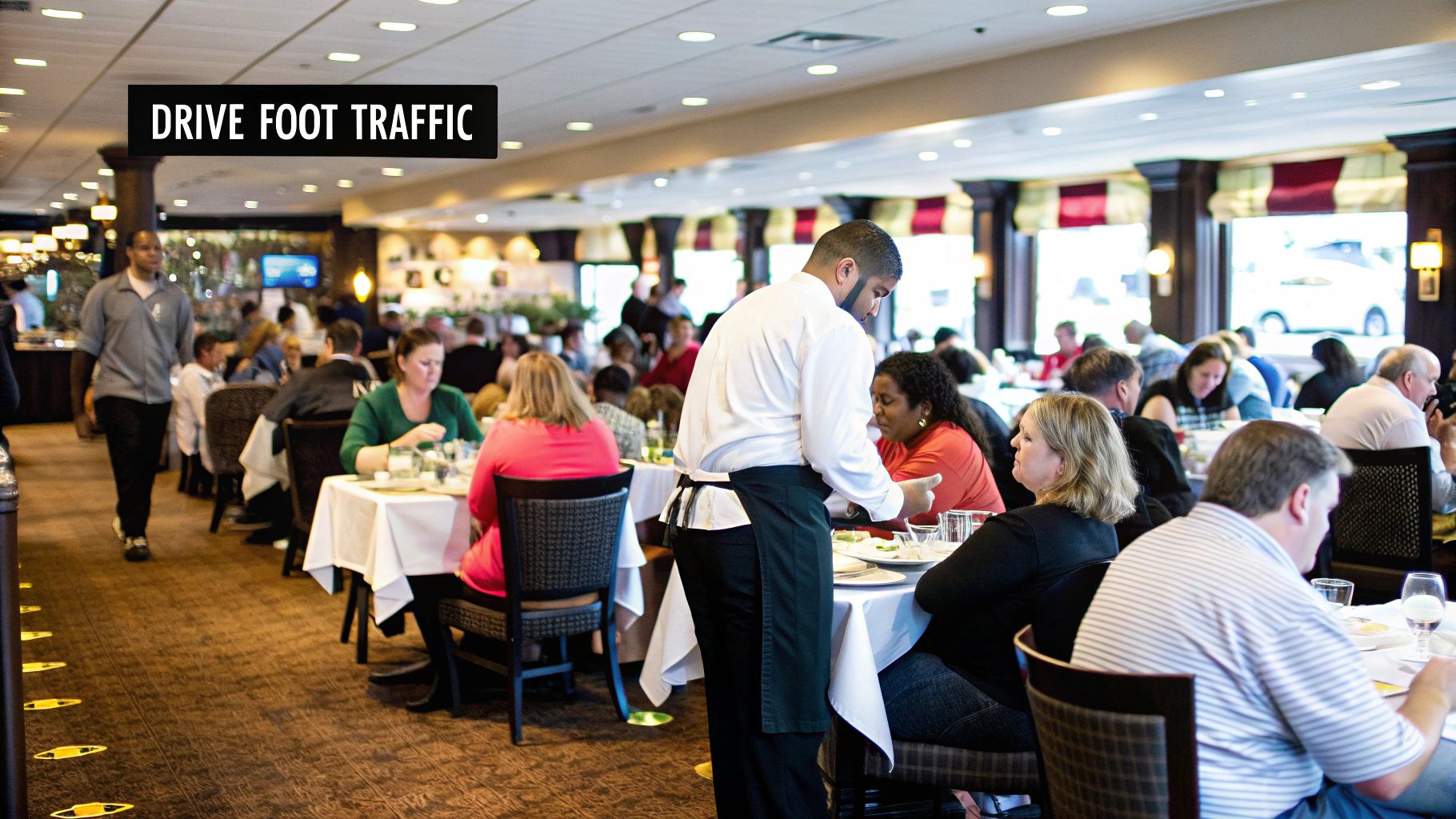
Running a restaurant is tough. Margins are notoriously tight, and the competition is everywhere. You're juggling recipes, staff, and inventory, but in today's world, your online presence is just as critical as your physical location. A smart digital marketing strategy isn’t a "nice-to-have" anymore; it's the engine that powers a modern restaurant's growth.
This isn't just a fleeting trend. It's a fundamental shift in how people decide where to eat. Your customers are on Google, scrolling through Instagram, and reading reviews long before they even think about walking through your door.
A strong online presence bridges the gap between a potential customer's craving and a confirmed reservation. It ensures that when someone in your area searches "best tacos near me," your restaurant doesn't just show up—it stands out.
From Afterthought to Core Strategy
The sharpest restaurant owners get this, and they're putting their money where their mouth is. In fact, digital marketing has become the top technology investment for restaurants across the board.
Here's a look at where operators are focusing their tech budgets, based on a recent survey of 550 restaurant professionals.
Top Technology Investment Priorities for Restaurants
| Technology Category | Percentage of Operators Prioritizing |
|---|---|
| Digital Marketing & Advertising | 46% |
| Online Ordering & Delivery Platforms | 39% |
| Reservation & Table Management | 35% |
| Loyalty & Rewards Programs | 31% |
| Point of Sale (POS) Systems | 28% |
As you can see, almost half of all operators are prioritizing digital marketing, making it the leading tech focus for the second year in a row. This data drives home a critical point: marketing isn’t just an expense. It's a direct investment in filling seats and boosting your bottom line. It's how you solve slow weeknights, promote seasonal specials, and build a loyal community that keeps coming back.
Turning Clicks Into Customers
Great digital marketing creates multiple ways for diners to find you. Each channel has a job to do, all working together to turn online interest into real business.
- Search Engine Optimization (SEO): This is all about making sure your restaurant pops up first when hungry locals are searching. It’s the digital version of having the best corner spot on a busy street. Understanding the basics of what is organic traffic is a great starting point for any SEO effort.
- Social Media Marketing: Platforms like Instagram and Facebook are your stage. They let you showcase your incredible food, the vibe of your space, and your brand's personality through mouth-watering visuals. This is how you build a community of followers who become your biggest fans.
- Email Marketing: Think of email as your direct line to your customers. It’s perfect for announcing a new menu, sending out an exclusive offer, or just reminding your regulars why they love you.
Ultimately, a smart digital strategy connects you with the right people at the exact moment they’re ready to eat. To get a solid handle on the fundamentals, it's worth reviewing these core digital marketing best practices. Think of this guide as your roadmap to turning your online engagement into real-world success.
Building Your Digital Foundation with a Website and Local SEO
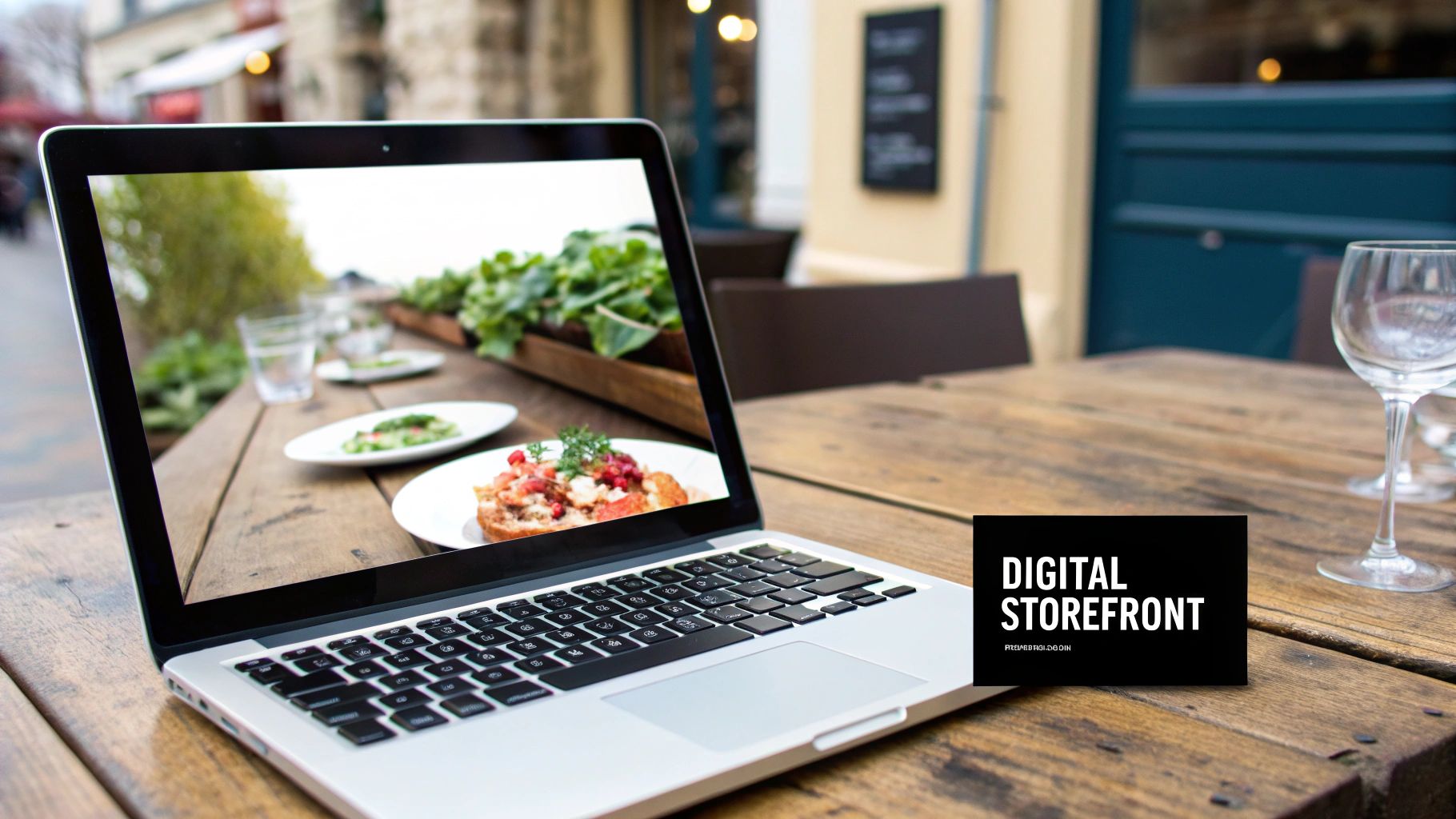
Think of your website as your restaurant's digital front door. It’s the central hub where hungry customers find your menu, get a feel for your story, and ultimately decide whether to book a table or order takeout. Just like your physical location needs a great spot on a busy street, your digital presence needs a powerful website and sharp local SEO to act as its flashing neon sign.
This foundation isn't just important; it's non-negotiable in the world of digital marketing for restaurants. A clunky, slow website will turn potential diners away faster than a bad review. At the same time, being invisible on Google Maps is the modern-day equivalent of being tucked away in a back alley with no sign.
Designing a Website That Converts
A great restaurant website does more than just look pretty. It’s an active tool designed to turn casual visitors into paying customers. It has to be a sales machine, a brand ambassador, and an operations asset all rolled into one. The main goal? Make it incredibly easy for people to take that next step.
This means you need to get inside the head of a potential customer. They're probably on their phone, just minutes away from deciding where to eat. Your site has to deliver what they need, instantly.
- Mobile-First Design: Let's be real, almost all local searches happen on a smartphone. Your website must work flawlessly on a small screen. Menus need to be readable without any pinching or zooming, and that "Book a Table" button has to be easy to tap.
- High-Quality Food Photography: People eat with their eyes first. Professional, mouth-watering photos of your dishes are an investment, not an expense. They're the single most important element for showing off the quality of your food.
- Seamless Online Ordering: If you offer takeout or delivery, the ordering process needs to be dead simple. A confusing system is a surefire way to lose a sale. Integrate a user-friendly platform right into your site.
- Visible Core Information: Don't make people hunt for the basics. Your address, phone number, and hours should be impossible to miss. Stick them in the header or footer of every single page.
Your website isn't just a digital menu; it's the first taste a customer gets of your brand. A clean, fast, and intuitive site builds immediate trust and signals a professional operation, making people confident in their choice to dine with you.
Mastering Local SEO for Restaurants
Once you have a great website, local SEO is how you make sure people actually find it. This is all about optimizing your online presence to show up in relevant local searches. When someone types "Italian food near me" into Google, local SEO is what determines if your restaurant pops up.
The absolute heart of this strategy is your Google Business Profile (GBP). This free tool is one of the most powerful marketing assets a restaurant has. A fully optimized profile can dramatically boost your visibility in both Google Search and Maps. The first step is to follow a clear process for adding your restaurant business to Google and claiming your profile.
Fine-Tuning Your Google Business Profile
An empty or outdated GBP is a massive missed opportunity. You need to treat it like a mini-website that requires regular attention to perform at its best.
To turn your profile into a customer magnet, focus here:
- Complete Every Section: Fill it all out. List your services (dine-in, takeout, delivery), add attributes like "outdoor seating," and write a compelling business description.
- Upload Enticing Photos: Don't just set it and forget it. Regularly add high-quality pictures of your food, the dining room, your storefront, and even your team. Help people visualize the experience.
- Encourage and Respond to Reviews: Positive reviews are a huge ranking signal. Actively ask your happy customers for a review and always, always respond professionally to both the good and the bad.
- Use Google Posts: Think of these as free mini-ads. Share updates about specials, upcoming events, or new menu items directly on your profile to catch the eye of people searching.
Building Authority with Citations and Links
Beyond your GBP, local SEO is about building your restaurant's credibility all across the web. The two key ingredients for this are local citations and backlinks.
A local citation is simply any online mention of your restaurant's Name, Address, and Phone number (NAP). The golden rule here is consistency. Your NAP must be identical everywhere, from Yelp and TripAdvisor to local food blogs. Any inconsistencies will confuse search engines and can hurt your rankings. Professional local citation services can help ensure this consistency across all major platforms.
Backlinks are links pointing from other websites to yours. They act like a vote of confidence, telling search engines your site is a legitimate resource. For a restaurant, this could be a link from a local food blogger. For restaurant equipment supply websites, this might mean getting featured on an industry news site. This is where services like blogger outreach and article writing come in handy, helping you land valuable features. Expert copyrighting ensures your story is told in a way that captures attention from both your target audience and search engines.
Using Social Media to Create Buzz and Drive Bookings
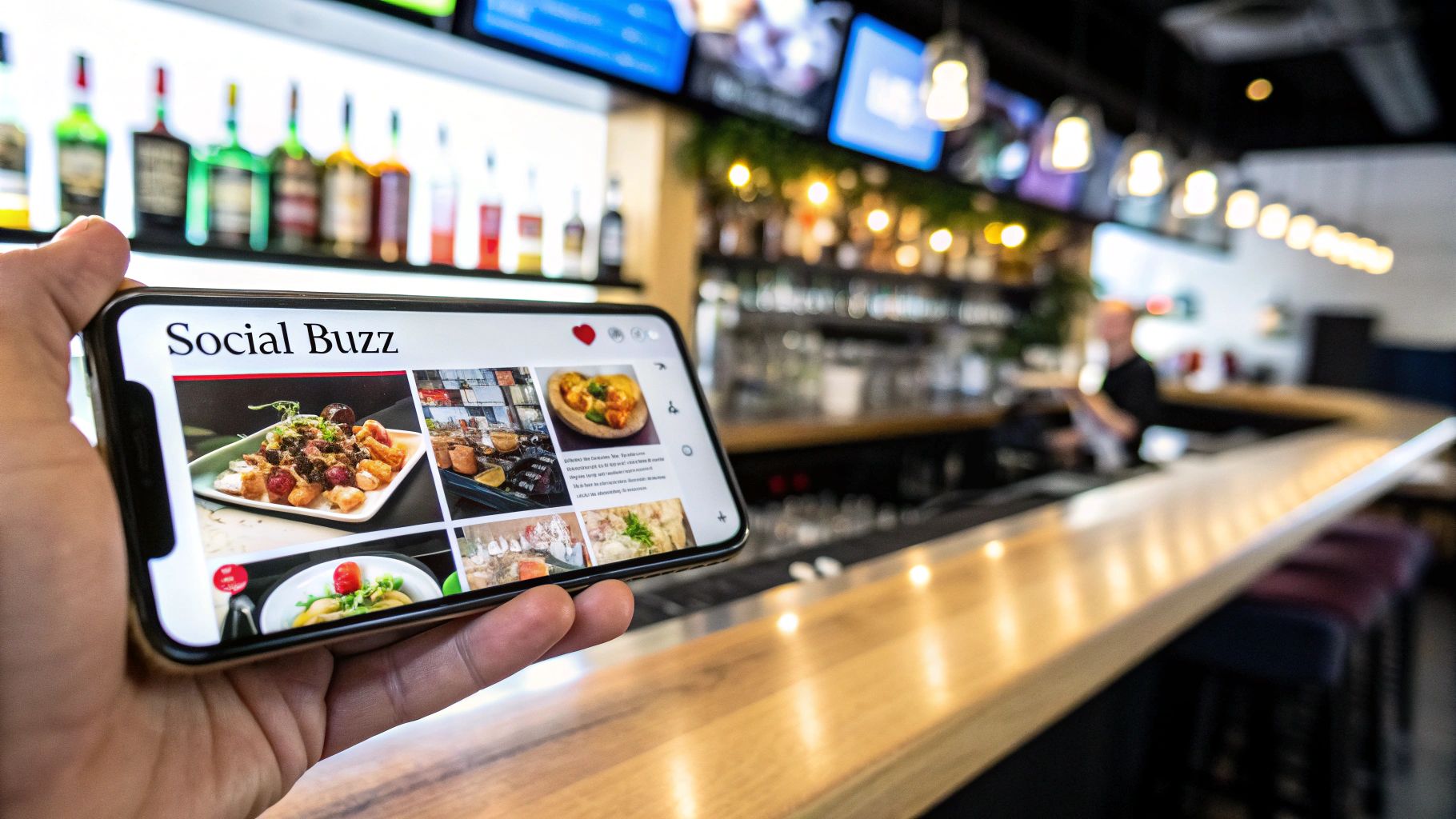
Long gone are the days when social media was just for snapping pictures of your food. Today, it’s a powerhouse for building a real community, telling your restaurant's story, and, most importantly, putting butts in seats. A smart social media presence is no longer optional—it's a direct line to both new faces and your most loyal regulars.
And the numbers don't lie. Roughly 74% of diners now scroll through social media to figure out where they want to eat, making it one of the biggest discovery tools out there. What’s more, 22% of people say a restaurant's social media is a key reason they come back. For a deeper dive, you can find more restaurant social media statistics on cropink.com.
Creating Content That Connects
Think of your social media feed as an extension of your restaurant's personality. It’s not just about broadcasting your menu. It’s about giving people a taste of the experience before they ever step through the door.
The real magic happens when you create content that feels genuine and offers something more than just a sales pitch. It’s a mix—some posts promote, while others entertain, educate, and get people talking.
Here are a few ideas to get you started:
- Behind-the-Scenes Action: Pull back the curtain! A quick video of your chef plating that signature dish or your bartender shaking up a new cocktail makes your place feel real and exciting.
- Meet the Team: Put a face to the name. Share a quick bio of your head server or a fun fact about a line cook. It humanizes your brand and makes you feel like a friendly neighborhood spot.
- User-Generated Content (UGC): This is gold. Encourage guests to tag you in their photos and stories, then reshare the best ones. It’s a genuine endorsement from a happy customer, and you can’t buy that kind of trust.
Mastering Engagement and Building Community
Just posting and ghosting is a huge missed opportunity. The real win is in the engagement—turning silent followers into a vocal, loyal community. This means you need to treat every comment and DM with the same attention you’d give a customer at a table.
When you respond quickly and with personality, you make people feel seen. It shows there's a real human behind the account who actually cares. That back-and-forth conversation is exactly how you build a tribe around your restaurant.
Don't think of your social media as a megaphone. Treat it like a dinner party. You're the host, sparking conversations, making everyone feel welcome, and keeping the vibe positive. That’s how you turn followers into regulars.
Turning Followers Into Bookings
At the end of the day, all this effort has to lead to more business. The good news is that platforms like Instagram and Facebook have built-in features designed to turn a casual scroll into a confirmed reservation.
Your job is to make the path from "ooh, that looks good" to "book a table" as short and simple as possible. It's all about using the tools each platform gives you to create clear, unmissable calls to action.
A visually driven platform like Instagram, for example, is perfect for making your restaurant look completely irresistible.
A clean, mouth-watering grid combined with fun, interactive Stories can stop scrollers in their tracks and get them thinking about dinner.
To get people clicking from your feed to your booking page, try these tactics:
- Instagram Stories: Go beyond pretty pictures. Use interactive polls ("Which new dish should we add?"), question stickers ("Ask our chef anything!"), and quizzes to get people tapping. Most importantly, add a direct link to your reservation page in your bio and stories.
- Facebook Events: Launching a new seasonal menu or hosting a wine-tasting night? Create a Facebook Event. It doesn't just notify your followers—it lets them invite their friends, which is a fantastic way to expand your reach for free.
- "Book Now" Buttons: This is a no-brainer. Both Facebook and Instagram let you add a direct booking button right on your profile. Get it set up and linked to your reservation system to capture that in-the-moment interest.
- Targeted Ads: Social media ads let you get incredibly specific. You can run hyper-local campaigns targeting people within a few miles of your restaurant who have shown an interest in "fine dining" or "cocktail bars." It's like putting your daily special directly in front of your ideal customer.
In a sea of dining options, a personal touch is the secret ingredient that sets you apart. Generic promotions just don't cut it anymore. To build real connections with your guests, you need to move beyond mass marketing and create experiences that feel personal and genuine. This is where you combine thoughtful personalization with your restaurant's core values.
Using the data you already have—from your email list or CRM—you can craft moments that feel exclusive. Imagine sending a loyal customer a birthday offer for a free dessert. Or maybe a discount on the dish they order almost every time. It’s a simple gesture, but it shows you're paying attention. It makes them feel seen, not just like another number on a spreadsheet.
This infographic breaks down a simple three-step cycle for turning that customer data into repeat business.
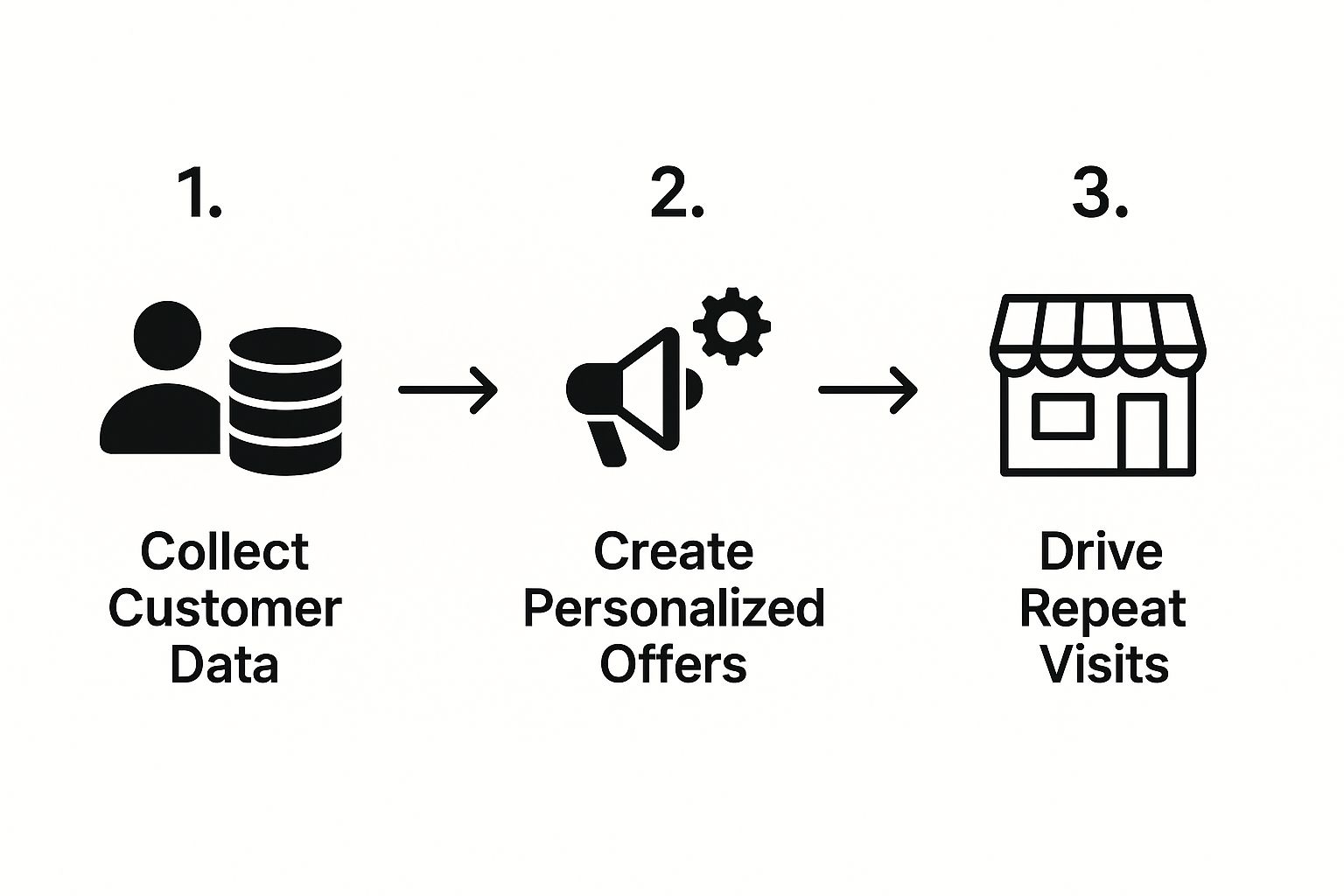
It’s a beautiful loop: you gather data, use it to create personalized offers, and that brings customers back again and again, fueling the cycle.
Crafting Personalized Experiences That Resonate
The whole point of personalization is to make every message feel like a one-on-one conversation. Luckily, technology makes this easier than ever. Hyper-personalization is all about using data-driven insights from your social media, loyalty programs, and website to build dining experiences tailored to individual tastes.
A solid loyalty application for restaurants is a fantastic tool for this. These apps are goldmines for gathering valuable customer data and can automate a lot of the personalized rewards for you, saving you a ton of time.
Here are a few ideas you can put into action right away:
- Segment Your Email List: Stop sending the same email to everyone. Group your customers based on their habits—think "Weekday Lunch Crew" vs. "Weekend Family Diners"—and send them offers that actually make sense for their routine.
- Celebrate Anniversaries: Birthdays are great, but what about the anniversary of a customer's first visit? A simple "Thanks for being with us for a year!" email with a small discount can go a surprisingly long way.
- "We Miss You" Campaigns: Got customers who haven't stopped by in a while? A friendly, automated email with a tempting offer can be the perfect nudge to get them back in the door.
Sharing Your Values Without "Greenwashing"
Today's diners, especially the younger crowd, care about more than what's on the menu. They want to support businesses that share their values. Talking about your commitment to sustainability, your community, or ethical sourcing is a powerful way to build a brand people are proud to stand behind.
The trick is to be authentic. Don't just make vague claims. Tell specific, compelling stories. This is where sharp copyrighting and good blog posting come in handy, helping you frame your efforts in a way that genuinely connects with people.
Your values are part of your restaurant's story. Sharing them isn't about bragging; it's about inviting customers to be part of something bigger than just a meal. It transforms a transaction into a relationship.
For example, if you've invested in energy-efficient kitchen equipment, like a modern charbroiler that cuts down on gas consumption, that's a great story. A simple blog post can explain how that one choice improves food quality and lowers your carbon footprint.
Show people what you're doing with concrete examples:
- Spotlight Local Suppliers: Run a social media series or blog feature on the local farms you source from. Tell their story and explain why you chose to partner with them.
- Detail Your Waste Reduction Efforts: Do you compost or use eco-friendly takeout containers? Make a short video or an infographic showing your process.
- Highlight Equipment Choices: If you’ve invested in sustainable restaurant equipment, talk about it. Explain how your high-efficiency fryer or charbroiler is part of your commitment to being green. It connects your back-of-house operations to your front-facing brand values.
When you weave these stories into your digital marketing, you build a brand that resonates on a much deeper level. You'll attract customers who value authenticity just as much as they value a great meal.
Amplifying Your Reach with Paid Ads and Content
Organic marketing, like local SEO and social media, is what builds the rock-solid foundation for your restaurant. It's the long game. But when you’re ready to really hit the accelerator and drive rapid growth, paid advertising is the high-octane fuel you need.
Simply put, it’s the fastest way to get your brand in front of new, highly relevant diners.
For a lot of restaurant owners, the world of paid ads on platforms like Google and Facebook can feel a bit intimidating, but it’s more accessible than you might think. These platforms give you incredibly powerful tools to target potential customers with almost surgical precision. This is a critical piece of a complete digital marketing for restaurants strategy.
Getting Hyper-Specific with Ad Targeting
The real magic of paid advertising isn't just reaching more people; it's reaching the right people. Instead of shouting your message from a rooftop to everyone in town, you get to whisper it directly to the folks most likely to book a table. This makes every dollar you spend so much more efficient and effective.
Just think about the possibilities here. You can target users based on:
- Location: Show your lunch special ad only to people who are currently within a one-mile radius of your restaurant, right between 11 AM and 1 PM.
- Interests: Reach people who have shown a clear interest in things like "craft beer," "fine dining," "vegan food," or even your direct competitors.
- Behavior: Target individuals who have recently searched for "best Italian restaurant near me" or have been browsing food blogs.
This level of detail means you stop wasting money on people who were never going to visit anyway. Your ads are served up to a pre-qualified audience that’s already hungry for what you offer.
Paid advertising isn't about spending more; it's about spending smarter. It ensures your message reaches the right person, in the right place, at the exact moment they're making a dining decision.
Combining Paid Ads with Powerful Content
Just running an ad that says "Come eat here!" is a huge missed opportunity. The campaigns that truly kill it are the ones that combine a strategic ad spend with compelling content—content that tells a story and builds a real connection. You've already done the hard work of creating great content for your blog or social media; now it's time to put a little budget behind it to make sure people actually see it.
This is where professional copyrighting and blog posting become such valuable assets. A well-written blog post about the origin of your signature pasta dish is fantastic for your website's SEO on its own. But when you promote that post with a targeted Facebook ad, you turn it into a powerhouse for brand building and customer acquisition.
Imagine a few scenarios:
- Promoting a Behind-the-Scenes Video: You shot a quick video tour of your kitchen, making sure to highlight your shiny new high-efficiency charbroiler from a top restaurant equipment supply company. A targeted ad campaign pushes this video to local foodies, showing off your commitment to quality.
- Boosting a Feature Article: A local food blogger writes a glowing review of your new seasonal menu. By putting ad spend behind that article, you amplify that third-party endorsement to thousands of potential customers in your area, building instant credibility. A targeted blogger outreach service can be a great way to land these features in the first place.
- Driving Traffic to a Recipe Post: You publish a blog post with the recipe for your famous house cocktail. A targeted ad can drive traffic there, where you can collect email sign-ups for your newsletter and build a list of engaged fans.
This combination of great article writing and strategic ad placement creates a powerful synergy. The content warms up the audience and tells your story, while the ad makes sure that story reaches the people who matter most. It’s how you drive immediate traffic while building the kind of lasting brand loyalty that keeps your tables full for years to come.
Your Restaurant Digital Marketing Questions Answered
Feeling like you're trying to spin a dozen plates at once? You're not alone. The world of digital marketing for restaurants can feel like a maze, but breaking it down into simple, straight answers is the first step to feeling in control.
Let's tackle the biggest questions I hear from restaurant owners. Think of this as your personal cheat sheet for making smarter marketing moves, starting right now.
What Is the Best Digital Marketing Strategy for a Restaurant?
Honestly, there's no single "best" strategy. The most powerful approach is getting all your channels to work together like a well-oiled kitchen brigade. You need a strong foundation: killer local SEO so you pop up on Google Maps, engaging social media that builds a real community, and a website that makes ordering or booking a table ridiculously easy.
From there, the "best" strategy is whatever helps you hit your specific goals. Need to fill seats on a slow Tuesday? Geo-targeted ads are your best friend. Want to turn first-timers into regulars? A simple digital loyalty program is the way to go.
The real magic happens when you create a seamless path for your customers. Someone should be able to see your special on Instagram, tap to check the menu on your mobile-friendly site, find you on Google Maps, and book a table—all in just a couple of clicks.
How Much Should a Restaurant Spend on Digital Marketing?
This is the million-dollar question, but you don't need a million-dollar budget. A solid benchmark is to set aside 5-10% of your total revenue for marketing. If you're brand new or in a serious growth spurt, you might want to nudge that closer to 12-15% to really build that initial buzz.
Where that money goes is just as important as the total amount. I usually recommend splitting it up:
- Content & SEO: This is your long game. Invest in professional article writing and consistent SEO to build that free, organic traffic.
- Paid Ads: Your short game. Dedicate a slice of the budget to Google Ads and social campaigns to get immediate eyes on your offers.
- Tools & Tech: Don't forget the software that makes it all happen, like your email marketing platform (Mailchimp), social scheduler, or loyalty program app.
My advice? Start small, track everything, and then double down on what’s actually bringing people through the door. If your Facebook ads are driving reservations for cheap, it's time to pour a little more fuel on that fire.
What Social Media Metrics Actually Matter for My Bottom Line?
It is so easy to get hypnotized by "vanity metrics" like follower counts and post likes. They feel good, but they don't pay the bills. Instead, you need to laser-focus on the numbers that signal someone is actually planning to spend money with you.
To simplify things, here’s a quick-reference guide to the channels we've talked about and what you should really be measuring.
Digital Marketing Channel Quick-Reference Guide
This table breaks down the most common digital marketing channels, their main job, and the one key performance indicator (KPI) that tells you if it's actually working.
| Channel | Primary Purpose | Key KPI to Track |
|---|---|---|
| Local SEO | Get found by hungry people nearby | Clicks to your website from Google Business Profile |
| Social Media | Build a community and spark interest | Click-through rate on links to your menu or booking page |
| Email Marketing | Keep regulars coming back for more | Redemption rate on exclusive offers |
| Paid Ads | Drive immediate bookings or orders | Conversion rate (e.g., cost per reservation) |
Focusing on these KPIs connects your marketing directly to real-world results. A high click-through rate from your Instagram bio to your reservation page is a far better sign of success than a thousand likes. It proves your content is actually moving people from scrolling on their phone to sitting at your tables.
At Charbroilers.com, we know that the heart of any great kitchen is the equipment. A top-tier charbroiler can be the star of your operation, delivering that unmistakable smoky flavor and perfect sear that makes a dish truly memorable. We also help restaurant equipment supply websites with their own digital marketing, providing expert services in SEO, local citation services, blog posting, blogger outreach, copyrighting, and article writing. Check out our selection of commercial charbroilers and find the perfect model to take your menu to the next level.