

Cool & Collected The Benefits of an Upright Display Refrigerator
Why an Upright Display Fridge is Essential for Your Business
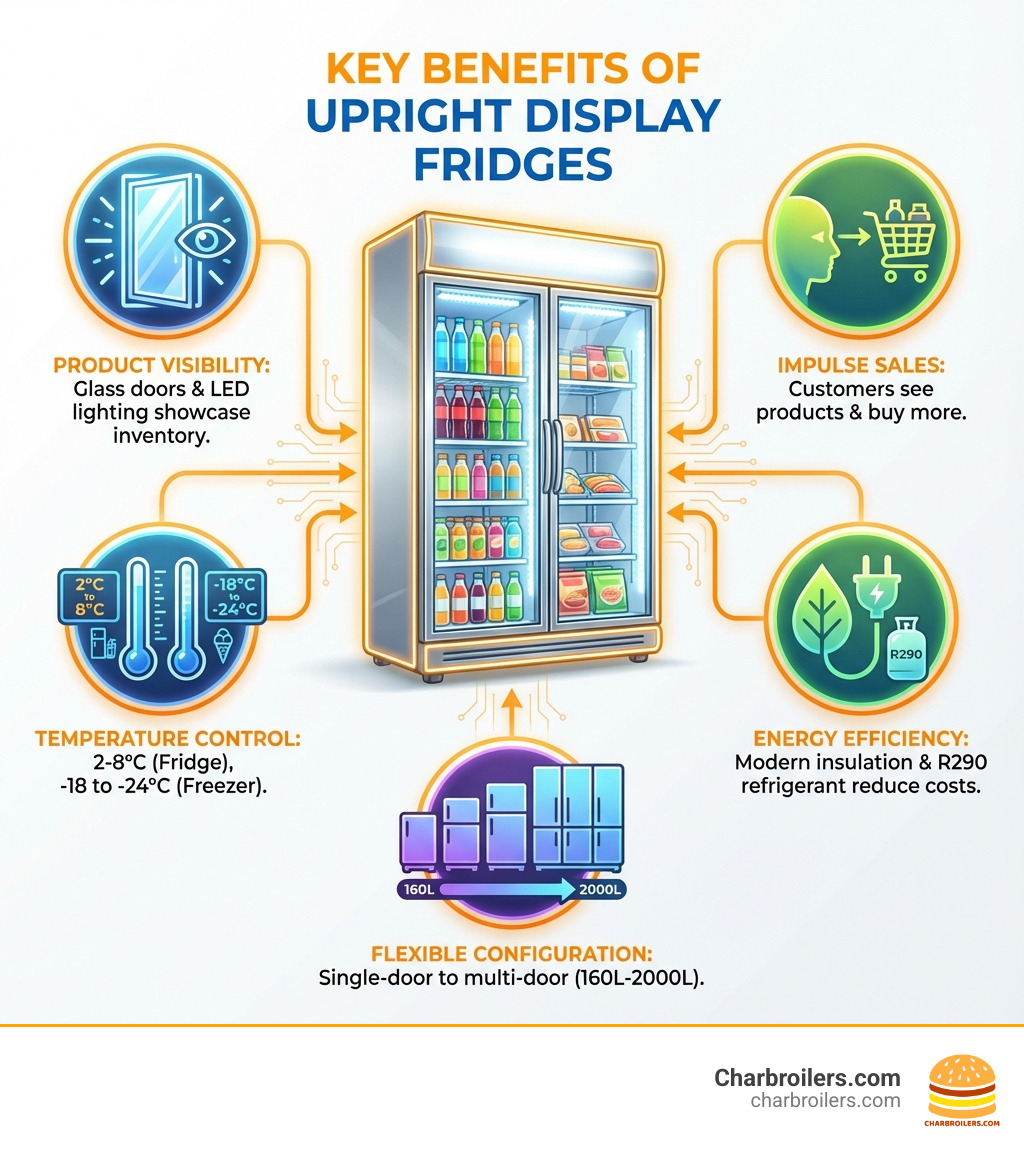
An upright display fridge is a commercial refrigerator with transparent glass doors designed to showcase chilled products while keeping them at safe temperatures. These units are used in cafes, restaurants, bars, supermarkets, and convenience stores to boost product visibility and drive impulse purchases.
Main Types of Upright Display Fridges:
- Glass Door Models - Feature transparent doors for maximum product visibility, ideal for customer-facing areas
- Solid Door Units - Offer better insulation and energy efficiency, best for back-of-house storage
- Single Door - Compact footprint (160-400L capacity), perfect for small spaces
- Multi-Door - Larger capacity (600-2000L), suitable for high-volume operations
- Countertop Display Coolers - Compact units designed for showcasing cakes, desserts, and grab-and-go items
Temperature Ranges:
- Refrigerators: 2°C to 8°C (beverages, dairy, prepared foods)
- Freezers: -18°C to -24°C (frozen products, ice cream)
If you've walked into a cafe and grabbed a cold drink without asking for help, you've experienced the power of display refrigeration. These units don't just keep products cold—they actively sell for you. With transparent glass doors, LED lighting, and strategic placement, an upright display fridge transforms inventory into a merchandising tool that customers can't ignore.
The benefits extend beyond visibility. Restaurant owners and chefs appreciate how these units improve organization, streamline service, and maintain consistent food safety standards. Whether you're displaying craft beers at a brewery, showcasing desserts at a bakery, or keeping beverages accessible at a busy cafe, the right display fridge becomes a critical part of your operation.
I'm Sean Kearney from Charbroilers.com, and over my decade-plus in the restaurant equipment industry, I've helped countless operators select the perfect upright display fridge for their specific needs and budgets. From compact single-door units for tight spaces to large-capacity multi-door systems for high-volume operations, understanding the options available helps you make a smart investment that pays dividends in both sales and efficiency.
Upright display fridge terms to know:
Why Your Business Needs an Upright Display Fridge
In the busy world of food service, every piece of equipment needs to earn its keep. An upright display fridge is far more than just a cold storage unit; it's a strategic asset that can significantly impact your bottom line and customer satisfaction.
Boosting Visibility and Impulse Buys
Think about the last time you were thirsty and saw a beautifully arranged selection of cold drinks. Chances are, you picked one up. That's the power of an upright display fridge at work. These units are designed to put your products front and center, making them irresistible to customers.
- Strategic product placement: By placing chilled items like beverages, sandwiches, or desserts directly in the customer's line of sight, you naturally draw their attention. This is especially effective for "grab-and-go" items, where convenience is key.
- Grab-and-go convenience: In environments like cafes or convenience stores, customers appreciate being able to quickly select an item without waiting for assistance. An easily accessible upright display fridge streamlines this process, improving customer flow and satisfaction.
- Showcasing promotions: Whether it's a new drink special or a bundled meal deal, an upright display fridge provides a perfect platform to highlight these offers. With clear glass doors and bright LED lighting, your promotions become impossible to miss.
- Highlighting fresh products: For bakeries or delis, displaying fresh salads, pastries, or pre-made meals in a clean, well-lit upright display fridge communicates quality and freshness, enticing customers to try them. The goal is to turn passive browsing into active purchasing. Our research shows that commercial upright display fridges with temperatures between 2°C and 8°C are ideal for promoting wine, beer, and other beverages in various retail settings, directly driving impulse sales.
Common Business Applications
The versatility of an upright display fridge makes it indispensable across a wide spectrum of businesses, from cozy Seattle cafes to busy supermarket aisles.
- Cafes: For cafes, an upright display fridge is crucial for showcasing bottled drinks, pre-packaged sandwiches, yogurt parfaits, and delectable desserts. A compact countertop model, for instance, is excellent for displaying cakes and desserts, enhancing the visual appeal of your offerings.
- Restaurants: While larger kitchens might use them for back-of-house storage, many restaurants use upright display fridges in their front-of-house areas or near the kitchen pass to display daily specials, bottled beverages, or even chilled appetizers, allowing diners to see their options.
- Bars: An upright display fridge is a bar's best friend. It keeps beers, ciders, and mixers perfectly chilled and visible, speeding up service and encouraging patrons to order another round.
- Supermarkets and Convenience Stores: These are perhaps the most common users. From rows of soda and juice to dairy products and chilled snacks, upright display fridges are fundamental to their merchandising strategy. They allow for high-volume storage and easy customer access.
- Bakeries: Bakeries use refrigerated display units, often with specialized humidity controls, to showcase delicate pastries, cakes, and other desserts, keeping them fresh and appealing.
- Farm Shops and Specialty Food Stores: These businesses often rely on the visual appeal of their fresh, local produce. An upright display fridge helps maintain the quality and presentation of items like artisanal cheeses, organic juices, or pre-cut fruits and vegetables, appealing to customers looking for premium selections.
Choosing the Right Upright Display Fridge: Key Features and Types
Selecting the perfect upright display fridge for your operation involves more than just picking the first one you see. We need to consider specific features and different types to ensure it aligns with your business's unique needs.
What to Look for in an Upright Display Fridge
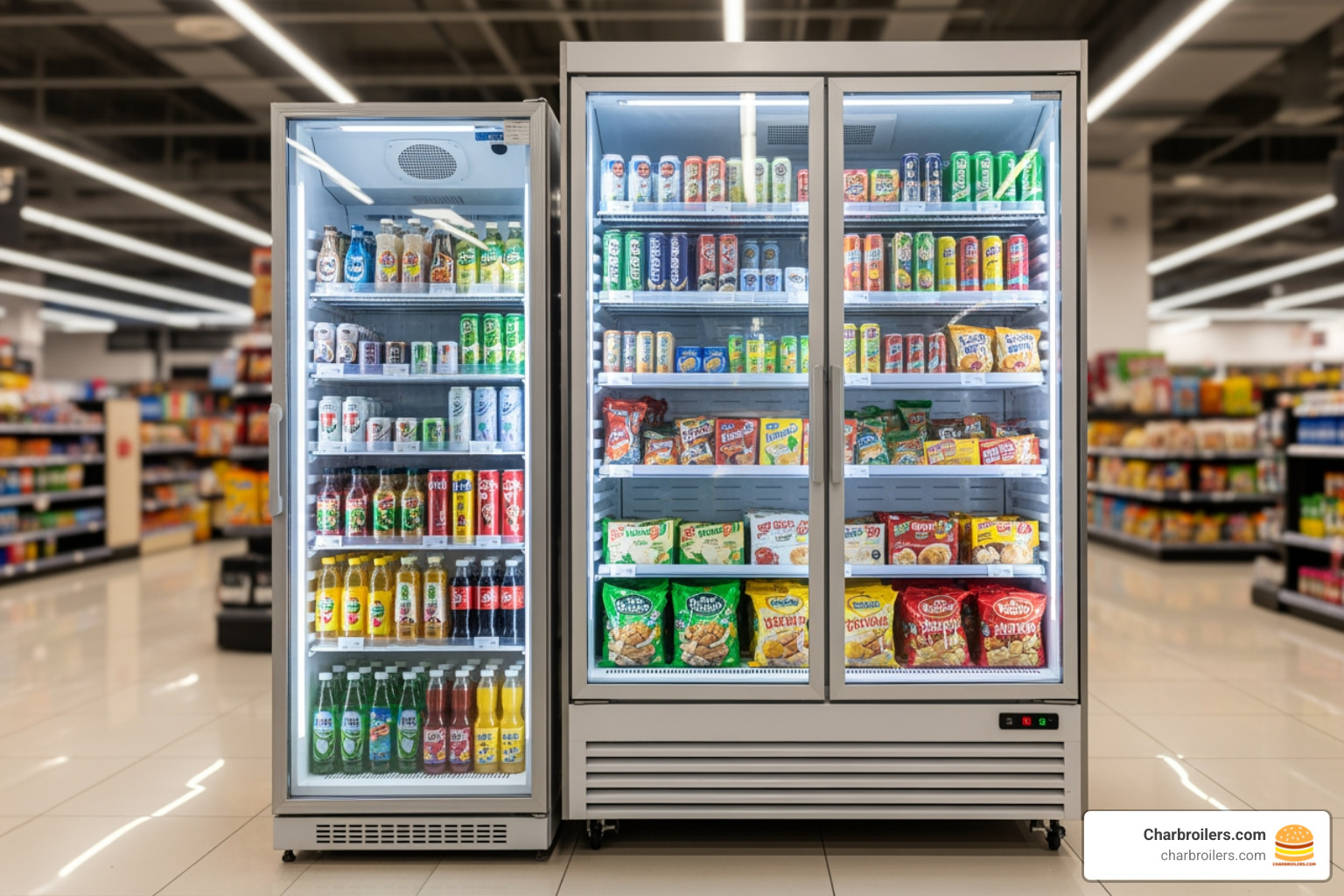
When we're helping you choose an upright display fridge, we always highlight features that improve both functionality and aesthetics:
- LED Lighting: This is a non-negotiable. Bright, energy-efficient LED lighting illuminates your products, making them pop and appear more enticing. It also generates less heat than traditional lighting, helping maintain consistent internal temperatures.
- Adjustable Shelving: Flexibility is key. Removable and adjustable shelves allow you to accommodate a variety of product sizes and shapes, from tall beverage bottles to stacked dessert containers. This feature is particularly useful for businesses with diverse inventory.
- Digital Temperature Controller: Precision is paramount for food safety. A digital controller allows you to set and monitor the internal temperature accurately, ensuring your products remain within the safe range. Many modern units feature these controllers for ease of use.
- Self-Closing Doors: In busy environments, doors can accidentally be left ajar, leading to temperature fluctuations and energy waste. Self-closing doors ensure that the fridge seals properly every time, maintaining optimal conditions and saving on energy costs.
- Lockable Doors: For security, especially in retail or after-hours, lockable doors are essential. They protect valuable inventory from theft and unauthorized access.
- Fan-Assisted Cooling (Ventilated Cooling): While some units use static cooling, fan-assisted cooling is superior for display fridges. It circulates cold air evenly throughout the cabinet, preventing hot spots and ensuring consistent temperatures for all products. This is crucial for maintaining product quality and safety, especially in units with frequent door openings.
Glass Door vs. Solid Door Units
The choice between glass and solid doors largely depends on the primary function and placement of the upright display fridge within your establishment.
| Feature | Glass Door (Display Refrigerator) | Solid Door (Reach-In Refrigerator) |
|---|---|---|
| Visibility | Excellent for product display; improves impulse purchases. | No visibility; contents are hidden. |
| Insulation | Good, but often slightly less efficient than solid doors due to glass. | Superior insulation properties; better energy efficiency. |
| Energy Use | Generally higher due to heat transfer through glass, though Low-E glass helps. | Lower energy consumption due to better insulation. |
| Placement | Ideal for customer-facing areas (front-of-house), retail floors, self-service. | Best for back-of-house storage, kitchens, prep areas. |
| Aesthetics | Designed to be visually appealing, often with sleek finishes and internal lighting. | Functional, typically industrial design; focus on durability. |
| Condensation | Can be an issue in humid environments; heated glass helps mitigate. | Not an issue. |
| Primary Use | Merchandising beverages, prepared foods, desserts, impulse items. | Bulk storage of ingredients, cooked foods, prepped items. |
For your front-of-house needs, a glass door upright display fridge is usually the way to go. It's an active sales tool. For pure storage or in areas where aesthetics aren't a concern, solid door units offer better long-term energy savings.
Single, Double, and Multi-Door Options
The number of doors on your upright display fridge directly relates to its capacity, footprint, and how you intend to use it.
- Single Door: These are typically more compact, ranging from 9.0 cu. ft. up to around 400 liters. They are perfect for smaller businesses, cafes, or as supplementary display units in specific zones of a larger store. They require less floor space, making them suitable for tight corners or limited counter space.
- Double Door: Offering significantly more capacity, double door units are a popular choice for medium to large-sized businesses. They can range from 600 liters to over 1000 liters. These are great for supermarkets, larger convenience stores, or busy restaurants needing to display a wider variety of items. They allow for better organization and often come with separate compartments, which can help manage different product types.
- Multi-Door (3+ doors): For high-volume operations like large grocery stores or specialty beverage shops, multi-door upright display fridges provide maximum capacity, sometimes reaching 2000 liters or more. These units are designed to handle high customer traffic and extensive product lines, ensuring that popular items are always in stock and readily available. When considering multi-door units, it's crucial to evaluate your stock volume, anticipated customer traffic flow, and the physical space available in your establishment.
Technical Considerations: Efficiency, Temperature, and Maintenance
Beyond aesthetics and capacity, the technical specifications of an upright display fridge are critical for its long-term performance, operational costs, and compliance with food safety standards. We want to ensure your investment is both effective and economical.
Energy Efficiency and Maintenance Essentials
Operating commercial refrigeration can be a significant expense, so energy efficiency is a key consideration. Modern upright display fridges are designed with features that help reduce running costs.
- Refrigerant Types: Many contemporary units use refrigerants like R290, which is a natural hydrocarbon refrigerant. R290 has a very low Global Warming Potential (GWP), making it a more environmentally friendly choice compared to older refrigerants. When we select new equipment, we always look for these advancements.
- Energy Efficiency Ratings: Look for units with good energy efficiency ratings. These ratings provide an indication of how much power the unit consumes. Features like thick insulation (e.g., 40-60mm) and Low-E glass (which improves insulation and reduces condensation) also contribute significantly to energy savings.
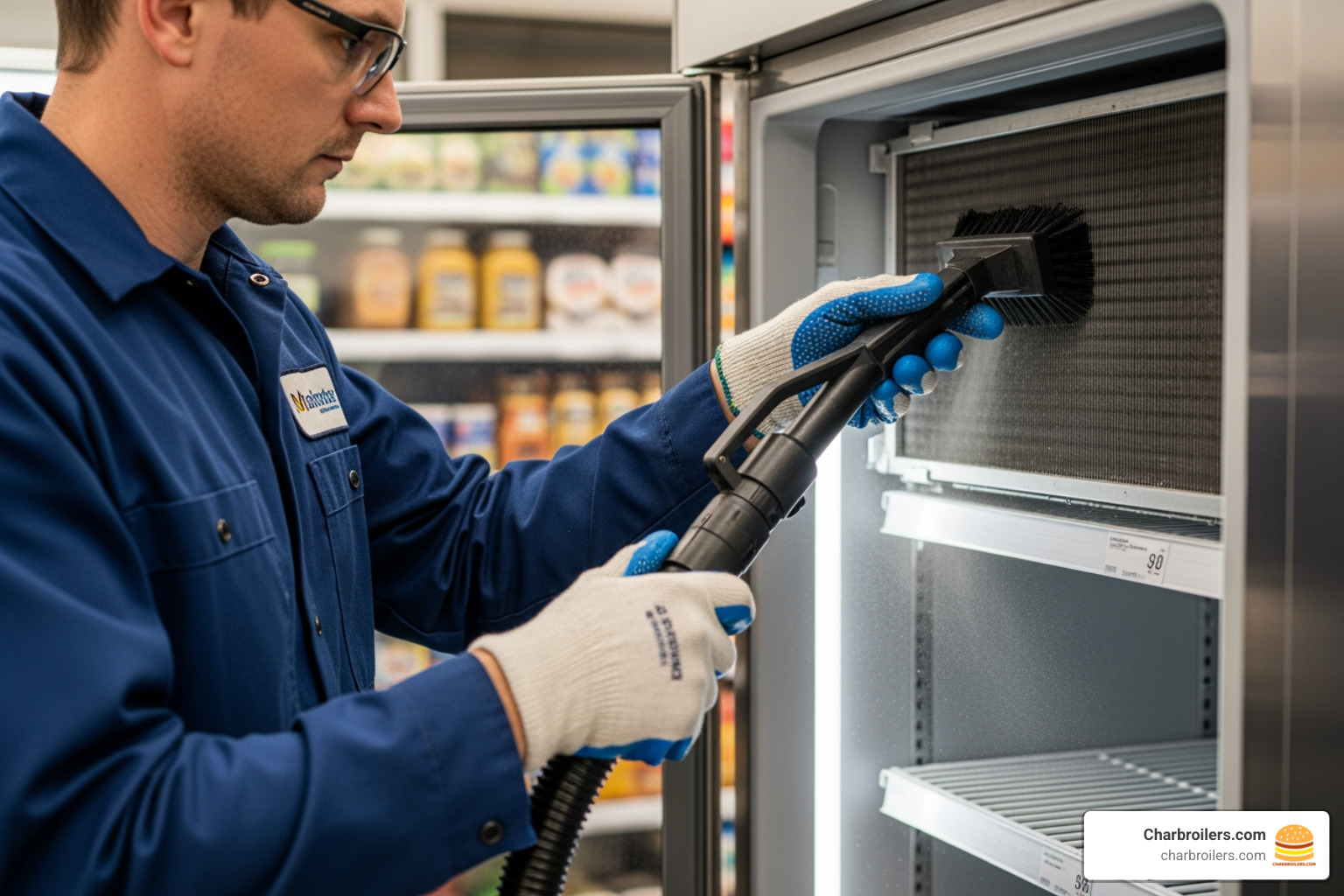
- Preventative Maintenance: Regular maintenance is crucial for the longevity and efficiency of any commercial refrigeration unit. This isn't just about avoiding breakdowns; it's about optimizing performance and extending the lifespan of your equipment. This includes routine checks by a qualified refrigeration engineer. Some manufacturers even specify that preventative maintenance every three months is required to validate warranties.
- Proper Ventilation: An upright display fridge needs adequate space around it for proper air circulation. Obstructed vents can lead to the compressor working harder, increasing energy consumption and the risk of overheating. Ensure there's sufficient clearance around the unit, and keep ventilation grill panels clear.
- Cleaning Schedules: A simple yet vital maintenance task is cleaning the condenser coil. We recommend cleaning the condenser coil at least four times a year. In a busy commercial kitchen or dusty retail environment, more frequent cleaning may be necessary. A dirty coil forces the unit to work harder, consuming more energy and potentially leading to premature failure.
Understanding Temperature Ranges and Food Safety
Maintaining precise temperatures is non-negotiable in food service. It's not just about keeping things cold; it's about preventing bacterial growth and ensuring consumer safety.
- Refrigerator Range (2°C to 8°C): This is the sweet spot for most chilled food and beverage items. Commercial upright display fridges are specifically designed to hold this range consistently, even with frequent door openings. This temperature is ideal for items like bottled drinks, dairy products, pre-made salads, and desserts.
- Freezer Range (-18°C to -24°C): For frozen goods, a dedicated upright display freezer is required. These units maintain much colder temperatures suitable for ice cream, frozen meals, and other frozen products. For example, a premium double-door upright display freezer can operate reliably between -18°C and -24°C.
- Food Preservation: Precise temperature control, coupled with features like fan-assisted cooling, helps preserve the quality and freshness of your products, minimizing waste.
- Preventing Spoilage: Keeping perishable items within the safe temperature zone is the primary defense against foodborne illnesses. Regular checks with a thermometer, alongside a reliable digital controller, are essential.
- Health Timer Locks: Some advanced upright display fridges offer features like health timer locks. These can be integrated to ensure proper temperature maintenance, providing an additional layer of security for food safety compliance.
Sizing, Customization, and Support
The right upright display fridge is an extension of your brand and an integral part of your operational flow. From choosing the correct size to customizing its appearance and understanding the support available, these factors contribute to a successful long-term investment.
Sizing Your Upright Display Fridge for Success
Finding the right size for your upright display fridge is a delicate balance between available space, product volume, and customer demand.
- Small Business Needs: For cafes, small offices, or even home use, a compact 9.0 cu. ft. commercial upright display refrigerator with a glass door can be an ideal solution. These units offer sufficient capacity without overwhelming limited floor space. They are perfect for displaying beverages or a curated selection of grab-and-go items.
-
Large Capacity Units: For high-volume operations like supermarkets or large restaurants, units with capacities of 944 liters, 1200 liters, or even up to 2000 liters are available. These multi-door units are designed to hold extensive inventory and cater to significant customer traffic. When considering larger units, we carefully plan for:
- Floor space planning: Always measure your available space, including door clearances, before purchasing.
- Stock rotation: Ensure the unit's layout allows for efficient stock rotation, keeping older products accessible for sale first.
- Anticipated demand: Project your peak and off-peak sales to determine the optimal capacity that prevents both overstocking and frequent restocking.
Branding and Customization Options
An upright display fridge is a blank canvas for your brand. Leveraging customization options can significantly improve your business's visibility and reinforce your brand identity.
- Custom Colors: Beyond standard black or white, some manufacturers offer custom color options that can match your brand's aesthetic or interior design.
- Lightbox Advertising: The top panel of many upright display fridges can be fitted with a lightbox. This illuminated space is perfect for displaying your logo, a promotional message, or eye-catching graphics, turning the fridge into a dynamic advertising tool.
- Engraved Logos: For a premium touch, some suppliers offer engraved logos, often illuminated by LED lights, directly on the fridge's exterior or even on the glass doors. This creates a distinctive focal point in your space.
- Glass Door Branding: Applying vinyl wraps or custom decals directly to the glass doors is another powerful way to brand your unit. This can feature your logo, product images, or promotional slogans, making the fridge an active part of your marketing strategy.
- Enhancing Business Visibility: By integrating your brand elements, your upright display fridge becomes more than just a cooler; it becomes a silent salesperson, consistently promoting your business and products to every customer who walks by.
Warranty and Customer Support
Investing in a commercial upright display fridge is a significant decision, and understanding the warranty and available support is crucial for peace of mind and operational continuity.
- Parts and Labor Warranty: Most commercial upright display fridges come with a standard warranty that covers both parts and labor for a specified period, often one or two years. This protects you against manufacturing defects or component failures. For example, some units offer a 2-year parts and labor warranty.
- Compressor Warranty Duration: The compressor is the heart of any refrigeration unit. It's common for compressors to have a separate, longer warranty, sometimes up to five years. For instance, some models may offer a 3-year product warranty and a 5-year compressor warranty. Always check these details, as a longer compressor warranty can save you significant repair costs down the line.
- Service Accessibility: When a commercial unit needs servicing, time is money. Having access to readily available and qualified service technicians is critical. We recommend choosing brands known for their robust service networks and prompt response times.
- Product Registration: Registering your upright display fridge with the manufacturer after purchase is a simple but important step. It ensures your warranty is active and makes it easier to access technical support or order replacement parts in the future.
Frequently Asked Questions about Upright Display Fridges
We often get asked similar questions about upright display fridges, so we've compiled some of the most common ones here to help you make informed decisions.
What is the ideal temperature for an upright display fridge?
The ideal temperature for most upright display refrigerators is between 2°C and 8°C (35°F and 46°F). This range is optimal for keeping beverages, dairy, and prepared foods fresh and safe for consumption without freezing them. It's also the range most commonly recommended for promoting items like wine, beer, and other chilled beverages. For frozen items, a display freezer would operate much colder, typically between -18°C and -24°C.
How often should I clean the condenser coils?
For optimal performance and energy efficiency, it is recommended to clean the condenser coils on your commercial refrigerator at least four times a year. In dusty environments like commercial kitchens or busy retail spaces, more frequent cleaning may be necessary. A clean condenser coil ensures your upright display fridge runs efficiently, maintains proper temperatures, and prolongs the lifespan of the compressor.
What is the difference between a static and a fan-assisted cooler?
Static cooling relies on natural air circulation, which can lead to temperature variations inside the unit, with warmer spots near the top and cooler spots near the bottom. Fan-assisted (or ventilated) cooling uses a fan to distribute cold air evenly throughout the cabinet, ensuring consistent temperatures from top to bottom. This is crucial for food safety and quality, especially in display fridges where products are frequently accessed and temperatures need to recover quickly. Fan-assisted cooling is generally preferred for upright display fridges due to its superior temperature uniformity.
Conclusion
The upright display fridge is an indispensable tool for any food service business looking to optimize sales, improve customer experience, and maintain stringent food safety standards. From boosting impulse purchases with vibrant LED lighting and clear glass doors to ensuring product freshness with precise temperature controls and efficient cooling systems, these units are a strategic investment.
We’ve explored the benefits, the features to look for, the different types available, and crucial technical and maintenance considerations. We've also touched on how customization can turn your fridge into a powerful branding asset, and why understanding warranty and support options is vital for your peace of mind.
At Charbroilers.com, we understand the nuances of equipping a commercial kitchen. While we specialize in charbroilers, deep fryers, and griddles, we recognize that every piece of equipment plays a role in your success. A well-chosen upright display fridge can significantly contribute to your operational efficiency and profitability.
Ready to improve your establishment with equipment that works as hard as you do? Find the perfect commercial equipment for your restaurant by exploring our comprehensive guides and products.