

Cooking on a Cedar Plank: The Ultimate Guide
Cooking on a cedar plank is a simple grilling technique that delivers an incredible payoff. It infuses your food with a rich, smoky flavor while keeping it unbelievably moist. By soaking the plank and placing it on a hot grill, it gently steams your food as it absorbs aromatic cedar oils. This method is the secret to perfectly cooked, flavorful fish, chicken, and even vegetables, every single time.
The Secret to Smoky Cedar Plank Flavor
Welcome to the world of cedar plank cooking! This is more than just placing food on a piece of wood—it's a genuine flavor infusion technique. This process not only imparts a signature smoky taste but also excels at preventing delicate foods like salmon from drying out or sticking to the grill grates. The plank creates an ideal barrier between the direct flame and your food, ensuring a consistent, even cook.
It all boils down to a few core principles:
- Smoke Infusion: As the soaked plank heats up on the grill, it begins to smolder. This is where the magic happens. The smoldering releases aromatic cedar smoke that envelops the food, imparting a unique, woodsy flavor that's impossible to replicate any other way.
- Moisture Retention: The water absorbed by the plank turns into steam during cooking. This steam keeps your food exceptionally moist and tender, which is often the biggest challenge when grilling leaner proteins.
- Even Cooking: The plank acts as a buffer, shielding food from the harsh, direct heat of the grill. This indirect cooking method lowers the risk of burning and ensures everything is cooked perfectly from edge to center.
Believe it or not, this is a centuries-old practice. It was pioneered by Indigenous cultures in the Pacific Northwest, who perfected the method for cooking salmon over open fires. Today, it’s become a go-to for home cooks looking to level up their grilling game.
For a broader perspective on how different woods create specific smoky flavors, you can explore this complete guide to wood chunks for smokers. For now, let's dive into the key principles and I’ll show you why cooking on a cedar plank is the best way to enhance everything from salmon and chicken to your favorite vegetables.
How to Choose and Prep Your Cedar Plank
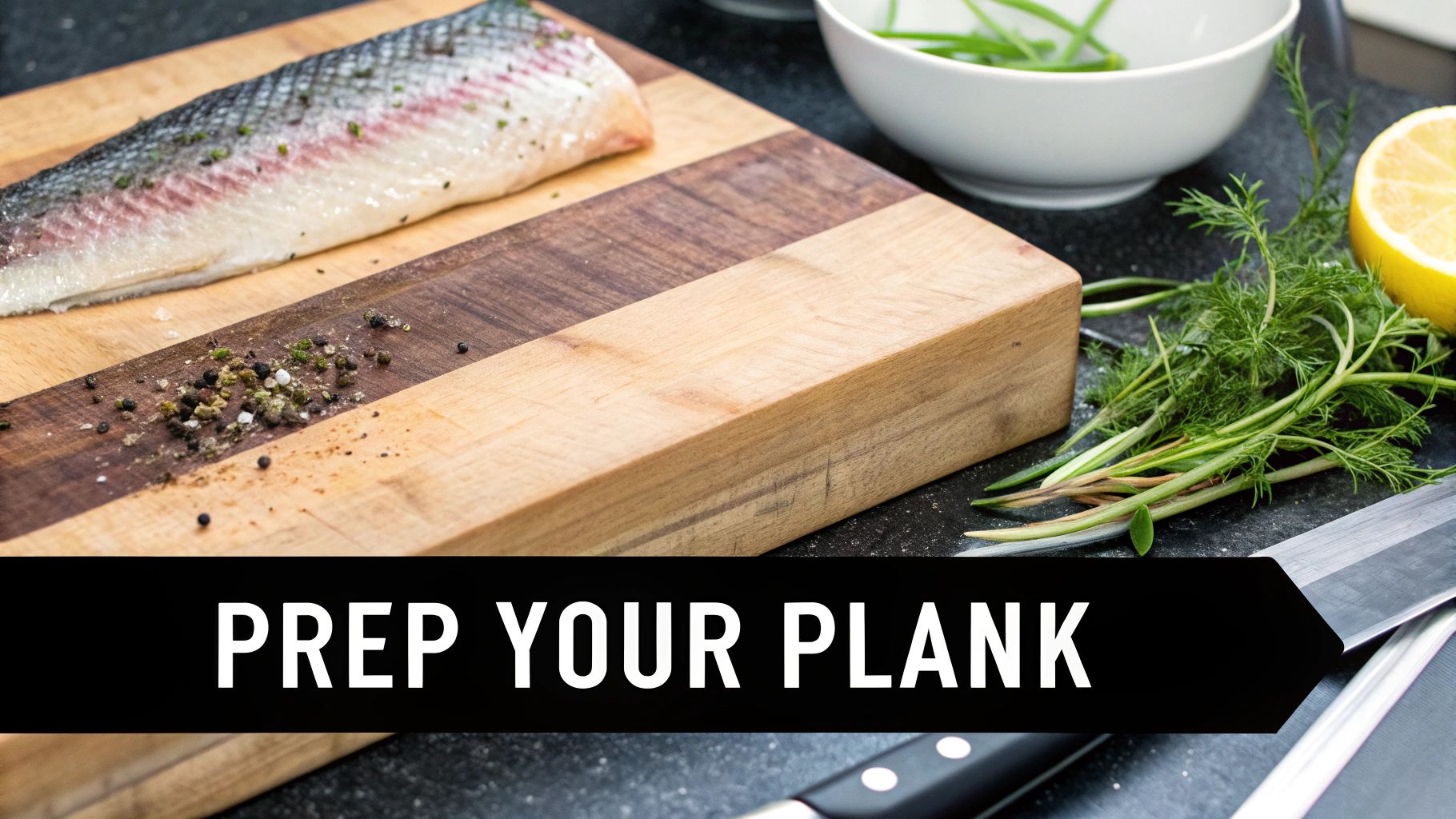
The secret to a great plank-grilled meal starts long before you fire up the grill. It begins with selecting the right plank. When shopping, look for thicker planks—they hold up better to the heat, are less likely to burn through, and can often be reused.
Ensure you're purchasing planks specifically marked as food-grade Western Red Cedar. This guarantees the wood is pure and hasn't been treated with chemicals you don't want near your food. A quality plank is a small investment that makes a significant difference in the final taste.
The Critical Soaking Process
Once you have your plank, it's time for the most important step: soaking it. This part is non-negotiable. Placing a dry plank on a hot grill will cause it to catch fire, resulting in a charred mess instead of a delicious meal. The goal is to get the wood so waterlogged that it smolders and steams, not burns.
As a rule of thumb, completely submerge the plank in water for at least one to two hours. You'll likely need to weigh it down with something like a coffee mug or a small pot to keep it from floating. It's a key safety step that over 85% of experienced grill enthusiasts swear by to prevent flare-ups and achieve a perfect, even cook. You can learn more from these great insights on cedar plank cooking.
Pro Tip: Don't just stick to water. This is your chance to add another layer of flavor. Think about what you're cooking and get creative with your soaking liquid.
Here are a few ideas to get you started:
- White Wine: Adds a bright, acidic pop to delicate fish like halibut or cod.
- Apple Cider or Juice: The subtle sweetness is an amazing match for pork or chicken.
- Beer: A rich stout or porter can add deep, malty notes to beef or portobello mushrooms.
Experimenting with your soaking liquid is one of the easiest ways to customize your flavor profile when cooking on a cedar plank. Don't be afraid to experiment.
A Practical Guide to Grilling on a Cedar Plank
Once your plank is soaked and ready, the real fun begins. Grilling on cedar creates a steamy, smoky environment right on your grill, gently cooking your food and infusing it with incredible woodsy flavor. This technique works equally well on both gas and charcoal grills, though the setup differs slightly.
First, ensure your grill is in good working order. There’s nothing worse than discovering a faulty burner or a wobbly leg when you're ready to cook. If you’re putting together a new grill, taking the time for proper grill assembly will pay off with safer, more reliable cooking.
Setting Up Your Grill
For a gas grill, aim for a medium-high temperature, around 350-400°F (175-200°C). The key is to set up for indirect heat. Turn on one or two burners and leave another one off. You'll place the plank over the unlit burner, away from the direct flames.
If you're using a charcoal grill, the principle is the same. Bank your hot coals to one side. This creates a two-zone fire—one side for searing and a cooler side for indirect cooking. Your plank will go on the grate over the side without coals.
With your grill preheated, place the soaked plank on the grates over the indirect heat. Close the lid and let it warm up for 5-10 minutes. You're waiting for the edges of the plank to smolder and char slightly and for the fragrant cedar smoke to appear. That’s your cue.
Cooking Your Food to Perfection
Now it’s time to add your food. Carefully place your seasoned salmon, chicken, or veggies onto the hot plank in a single, even layer to ensure consistent cooking. As soon as the food is on, close the grill lid.
The biggest mistake people make is peeking. Trust the process. Keeping the lid closed traps the smoky steam, which is essential for achieving that signature flavor and moist texture.
The right marinade can elevate your planked dish, adding another layer of flavor before it even hits the heat.
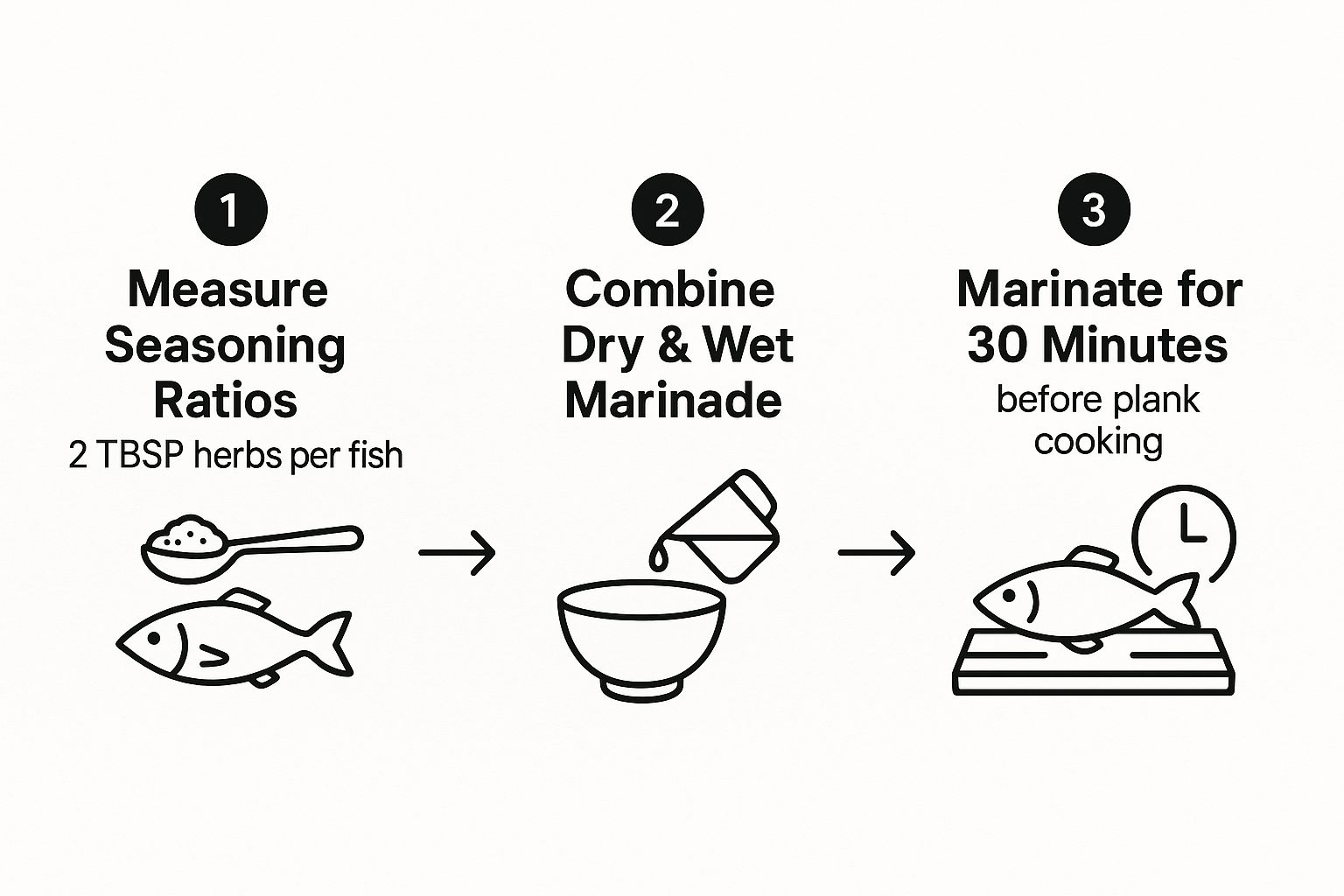
As this shows, even a quick 30-minute marinade can make a huge difference in the final taste of your food.
Cooking time depends on what you're making and its thickness. A typical salmon fillet takes around 15-20 minutes. The only way to be certain it’s cooked perfectly is to use an instant-read thermometer.
Cedar Plank Cooking Times and Temperatures
To take the guesswork out of it, here's a quick reference guide for popular items to cook on a cedar plank. Use these as a starting point—always cook to temperature, not just time.
| Food Item | Grill Temperature | Approximate Cooking Time | Target Internal Temp (°F) |
|---|---|---|---|
| Salmon Fillet | 350-400°F | 15-20 minutes | 145°F |
| Chicken Breast | 350-400°F | 20-30 minutes | 165°F |
| Pork Chop (1-inch) | 350-400°F | 15-25 minutes | 145°F |
| Asparagus Spears | 350-400°F | 10-15 minutes | Tender-crisp |
Using a thermometer ensures your food is both delicious and safe to eat. Once your food reaches its target temperature, you can serve it right off the plank for a fantastic presentation.
Go Beyond Salmon with Creative Plank Recipes
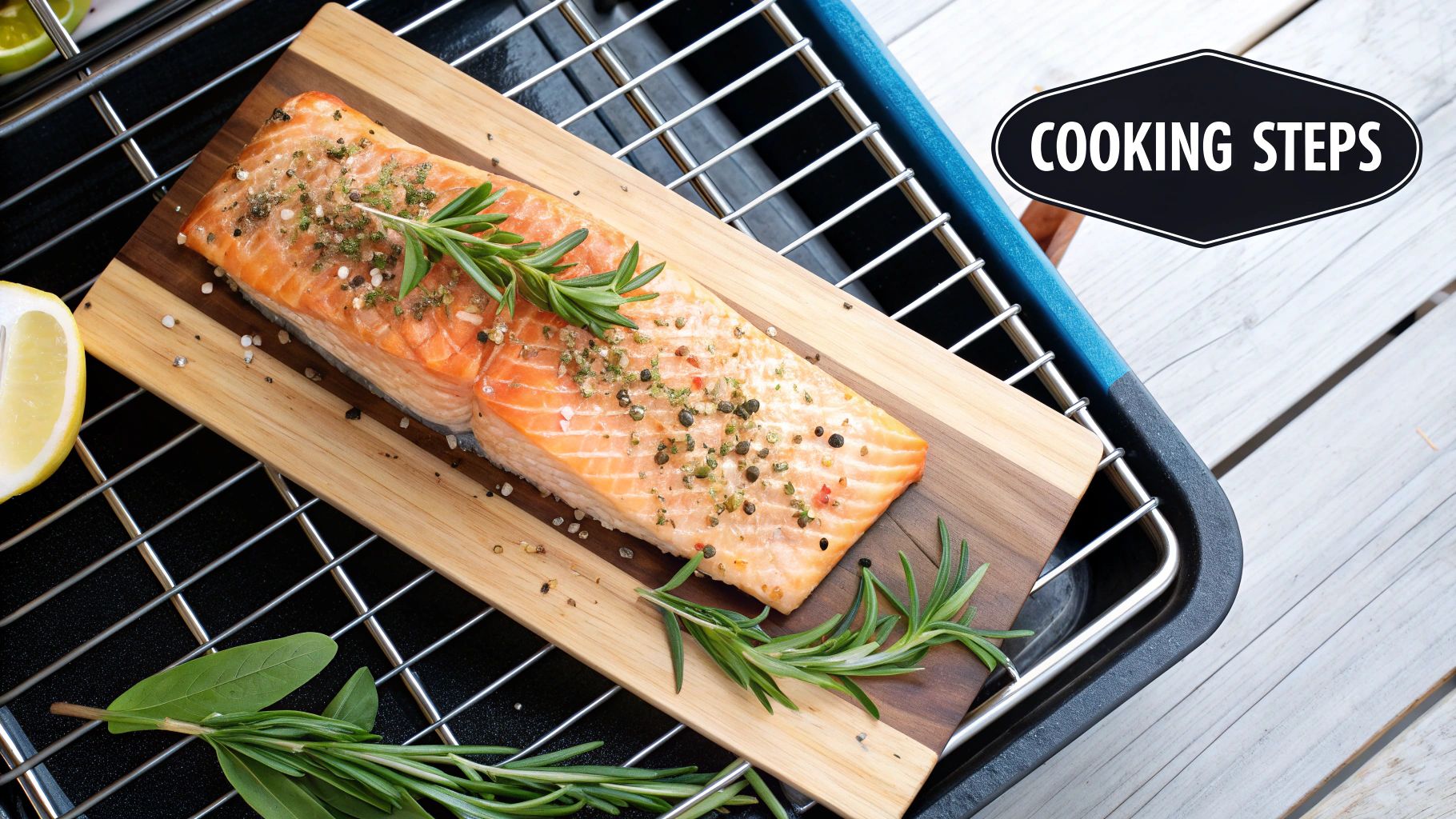
Cedar plank salmon is a beloved classic for good reason. But if salmon is the only thing you're cooking on a plank, you're missing out on the technique's full potential. The smoky, gentle heat can transform a wide variety of foods.
Start by thinking beyond salmon and exploring the world of flaky white fish. Halibut, cod, or mahi-mahi become unbelievably tender and flavorful on a cedar plank, soaking up the smoky essence without being overpowered.
Expand Your Protein Horizons
This method isn't just for seafood. Some of the best plank-grilled dishes involve other proteins that thrive in the gentle, steamy cooking environment.
Give these a try at your next cookout:
- Chicken Thighs: Boneless, skinless chicken thighs stay exceptionally juicy. Season them with rosemary, garlic, and a squeeze of lemon for a simple but elegant meal.
- Pork Tenderloin: A whole pork tenderloin, coated in a spicy-sweet rub, cooks perfectly evenly and develops an incredible smoky crust. Slice it thin to serve.
- Shrimp or Scallops: Whether skewered or placed directly on the plank, they cook in just a few minutes. A little garlic butter is all they need.
The secret to cedar plank cooking is the aromatic, steamy environment it creates. Any food that benefits from moist, indirect heat is a perfect candidate for this method.
Don't stop with proteins! Vegetables and even fruits are fantastic here. Asparagus spears, bell pepper strips, and zucchini rounds become tender and infused with that great woodsy flavor.
For a dessert that will impress your guests, try grilling sliced peaches or pineapple on a plank until they caramelize. A drizzle of honey or a scoop of vanilla ice cream on top makes for an unforgettable finish. Experimenting is half the fun of grilling.
The History Behind Cedar Plank Cooking
Cooking on a cedar plank is more than a popular grilling technique—it’s a culinary tradition with a history that goes back centuries. This method is not a modern fad; its roots are deeply planted with the Indigenous peoples of the Pacific Northwest.
For communities like the Chinook and Salish tribes, plank cooking was a way of life. They developed a brilliant method for cooking fresh-caught salmon by attaching the fish to large boards, usually made from Western Red Cedar, and slow-cooking it over open coals. This was more than just preparing a meal; it was a community practice that honored their natural resources.
From Ancient Tradition to Grilling Trend
When European settlers arrived, they observed the effectiveness of this cooking method and began to adopt it. For a long time, it remained a regional specialty—one of the best-kept secrets of the Pacific Northwest.
Eventually, word began to spread. Chefs were drawn to its unique ability to steam food, keeping it incredibly moist while infusing it with a wonderful smoky flavor.
The real turning point came in the 1990s. Seattle chef John Howie appeared on Martha Stewart’s popular TV show and demonstrated how to cook on a cedar plank. That single appearance launched the technique from a local tradition into the national spotlight.
After that, home cooks across the country started to discover what Indigenous communities had known for generations. The simple, elegant idea of using a piece of wood to create a smoky, flavorful, and perfectly cooked meal had finally gone mainstream.
You can dive deeper into the fascinating history of cedar plank salmon and its journey to our modern kitchens. Knowing the origin of this timeless method adds a new layer of appreciation when you fire up the grill.
Common Questions About Cedar Plank Grilling
Even seasoned grillers may have questions when trying a new technique. When it comes to cooking on a cedar plank, a few common queries consistently arise. Let's clear those up so you can grill with confidence.
One of the first questions is whether a plank can be reused. The short answer is sometimes. It depends on its condition after cooking. If the plank is excessively charred, has deep cracks, or is warped, it's time to retire it.
However, if it's still in good shape, you can get another use or two out of it. To clean it, scrub it with hot water and a stiff brush. Never use soap! The wood will absorb the soapy flavor. Keep in mind that a reused plank will impart a more subtle smoke flavor than a new one.
Troubleshooting Common Plank Issues
Another major concern is the plank catching fire. This almost always happens for one of two reasons: it wasn't soaked long enough, or your grill is too hot. The goal is a gentle smolder, not a bonfire.
A plank must be fully submerged in water for at least one to two hours before it touches the grill. This saturation allows it to steam and smoke instead of burning up.
If a flare-up occurs on the edges, don't panic. Spritz the burning spots with a spray bottle of water and close the grill lid to cut off the oxygen. Maintaining a steady grill temperature around 350-400°F also dramatically reduces the risk of unwanted flames.
Finally, people often wonder if they need to flip the food. For plank grilling, the answer is no. Think of the plank as a gentle, even heat source from below, while the hot air trapped inside the grill cooks the top. This creates a perfect oven-like environment that cooks everything through without requiring you to disturb it—a huge advantage for delicate fish fillets.
For commercial kitchens looking to perfect their grilling techniques, having the right equipment is essential. Our content marketing services help businesses like Charbroilers.com reach their target audience by creating high-quality, SEO-optimized articles, blog posts, and guides. By leveraging blogger outreach and expert copywriting, we build brand authority and drive traffic for restaurant equipment suppliers. For more info, explore their selection at https://charbroilers.com.