

A Proven Content Strategy Example for Restaurant Equipment Suppliers
Think of a great content strategy example like a master chef’s cookbook. It’s not just a list of recipes; it’s a detailed plan for what dishes (content) to prepare, for which diners (your audience), and precisely when to serve them for the biggest impact. This is how you shift from just randomly posting online to building a go-to resource hub for your customers.
Your Blueprint for a Winning Content Strategy

If you're selling restaurant equipment, your content has to do more than just list the specs on your charbroilers. The real goal is to become an indispensable advisor—the first resource chefs, kitchen managers, and restaurant owners think of when they have a problem.
A well-defined content strategy is your blueprint for earning that status. It lays out exactly how your blog posts, articles, blogger outreach, and SEO efforts will work together to attract, engage, and ultimately convert your ideal customers.
This plan gives every single piece of content you create a clear job to do. Maybe it's an article answering a chef’s late-night question about grill maintenance, or maybe it's a guide walking a procurement manager through the long-term ROI of buying new equipment. By mapping it all out, you're directly connecting your marketing activities to your business goals.
The Business Case for a Content Strategy
Putting a formal strategy in place isn't just a nice-to-have anymore; it's essential. The global content marketing market is expected to rocket from $413.2 billion in 2022 to an incredible $2 trillion by 2032.
That explosive growth tells you everything you need to know: businesses are using content to drive real, measurable results. In 2023, 34% of marketers reported that their content generated direct sales, while 29% saw a significant boost in their search engine rankings.
A documented plan is what turns your deep industry expertise into a powerful business asset. It’s the difference between just hoping the right customers stumble upon your website and building a clear, well-lit path that leads them right to your digital front door with effective SEO and article writing.
A content strategy provides the "why" behind your content creation—it connects your business objectives with your audience's needs, ensuring that every article or video you publish serves a strategic purpose.
This blueprint helps you get ahead of the game by anticipating the questions your customers are asking and giving them the answers before they even think to look elsewhere.
For instance, creating a deep-dive guide on "Gas vs. Electric Charbroilers" does more than just fill a page. It establishes your authority on the subject and attracts qualified buyers who are early in their decision-making process. To get started building your own blueprint, using a structured content marketing strategy template can make the process much smoother.
Before we get into the nitty-gritty of how to build your strategy, let's break down the core components. Think of these as the essential sections of your "cookbook."
Core Components of Your Content Strategy
This table outlines the essential pillars of a successful content strategy for any restaurant equipment supplier.
| Component | Description | Example for a Charbroiler Seller |
|---|---|---|
| Target Audience | A detailed profile of your ideal customer, including their job title, pain points, goals, and where they look for information. | A multi-unit restaurant's Executive Chef who is focused on menu consistency, equipment durability, and long-term operating costs. |
| Business Goals | Specific, measurable outcomes you want to achieve. This could be lead generation, brand awareness, or direct sales. | Increase qualified leads from restaurant procurement managers by 25% in the next six months through gated content. |
| Content Pillars | 3-5 broad topics your brand will consistently cover to build authority. These are the main "chapters" of your content library. | Equipment Maintenance, Cooking Techniques, Kitchen Efficiency, and Menu Innovation. |
| Content Formats | The types of content you'll create, like blog posts, videos, case studies, or downloadable checklists. | How-to video series on charbroiler cleaning, in-depth blog posts comparing models, and downloadable PDF pre-purchase checklists. |
| Distribution Channels | The platforms where you'll share your content to reach your target audience. This includes social media, email, and SEO. | LinkedIn for reaching chefs and owners, an email newsletter for existing contacts, and organic search (SEO) for new customers. |
| KPIs & Measurement | The key performance indicators (KPIs) you'll track to measure success and make adjustments, such as traffic or conversion rate. | Track website traffic to key blog posts, downloads of the pre-purchase checklist, and the number of "request a quote" form submissions. |
Each of these components works together to create a cohesive plan. When you know who you're talking to and what you want to achieve, deciding what to create becomes infinitely easier.
Figuring Out Your Audience and Business Goals
Before a single word is written, every solid content strategy starts by answering two dead-simple questions: Who are we talking to, and what are we trying to make happen? If you don't have clear answers, you're just making noise. It's like a chef prepping a five-course meal without knowing if they're cooking for a wedding party or a kid's birthday—a total shot in the dark.
The first move is to get way more specific than just "restaurant owners." We need to build out detailed buyer personas. Think of these as character sketches of your perfect customers, but built on real data and what you know about the industry. They turn a vague "market segment" into a real person with a job, frustrations, and goals. Getting this right means your content will actually connect with them.
Meet Your Ideal Customers
If you're selling charbroilers, you’re not talking to one type of person. You're dealing with different people who care about completely different things. Let's sketch out two personas to show you what I mean.
- “Chef Carlos” the Head Chef: He's in the trenches at a busy steakhouse and is completely obsessed with consistent cooking and perfect flavor. His biggest headaches? Uneven heat spots on the grill, cleaning that takes his staff forever, and gear that bogs down during a Friday night rush. He’s searching for things like "best commercial charbroiler for perfect sear marks" and "how to reduce grill flare-ups."
- “Maria” the Procurement Manager: She handles purchasing for a whole regional chain and lives and breathes ROI and equipment lifespan. She’s worried about the total cost of ownership, energy bills, warranty details, and how long a unit will last before it needs replacing. Maria is Googling "energy-efficient commercial grill ROI" and "charbroiler maintenance costs."
The gap between Carlos and Maria is huge. A video showing off perfect crosshatch grill marks will get Carlos excited, but it'll do nothing for Maria. She’d much rather see a downloadable guide comparing the 5-year operating costs of your top models.
Tying Personas to Business Goals
Once you know who you’re talking to, you have to decide what a "win" actually looks like. Fuzzy goals like "get more traffic" don't cut it. Your goals have to be specific, measurable, and hooked directly into what makes your business money.
A great content strategy doesn’t just pull in a crowd; it leads that crowd toward a specific business outcome. Every single piece of content needs to have a job.
For instance, you can link your persona-focused content straight to real-world objectives:
- Goal 1: Boost qualified sales leads for new charbroilers by 20% next quarter. We'll do this by creating content that directly answers Maria’s questions about ROI and long-term value.
- Goal 2: Cut down on maintenance-related support calls by 15%. We'll achieve this by rolling out a series of how-to videos and cleaning guides that solve Chef Carlos’s biggest operational headaches.
Structuring Your Content Pillars and Topic Clusters
Now that you know who you're talking to and what you want to achieve, it's time to build the foundation for your content. We're moving beyond scattered ideas and creating a powerful, interconnected structure that both search engines and your customers will love.
The secret is the content pillar and topic cluster model. Think of it as one of the most effective ways to show Google you're a true authority in your field, especially when combined with services like local citations to enhance your online presence.
Defining Your Core Content Pillars
Imagine your content pillars as the main support beams holding up your entire expertise. These are the 3-5 big, foundational topics your restaurant equipment business wants to be known for.
For a charbroiler seller, these aren't just product lists. They're concepts built around your customer's biggest problems and goals.
A solid set of pillars for a charbroiler supplier could look something like this:
- Commercial Grilling Excellence: This is your home base for everything related to mastering commercial grilling, from cooking techniques to choosing the right gear.
- Kitchen Profitability and ROI: This pillar speaks directly to the business owner, focusing on how equipment choices hit the bottom line through efficiency, menu pricing, and long-term value.
- Equipment Maintenance and Safety: Here, you address the real-world, day-to-day concerns of kitchen staff—cleaning, upkeep, and safety compliance to keep things running smoothly.
This model helps you visualize how one central pillar can support a whole network of related content.
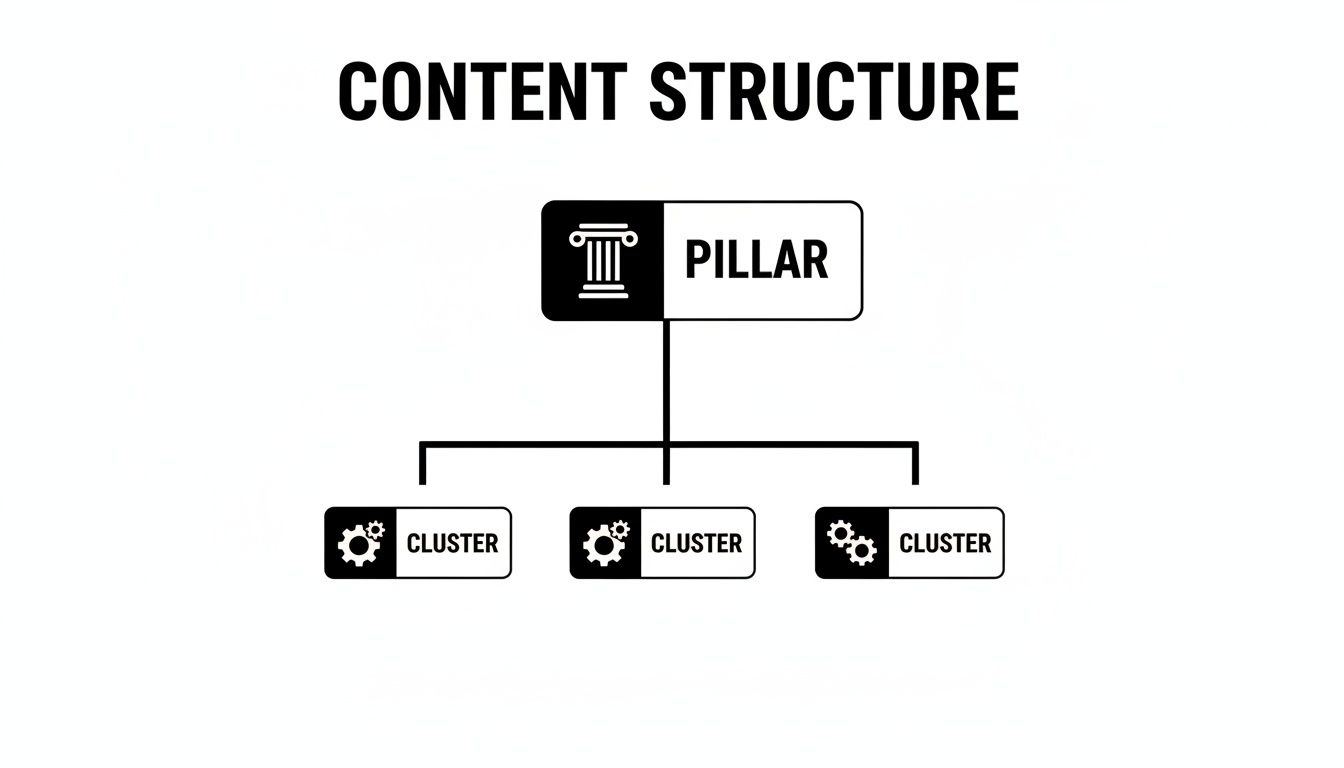
This clear hierarchy signals to search engines that you have deep, well-organized expertise on a subject, making your website a go-to source.
Building Topic Clusters Around Each Pillar
Once your pillars are in place, you start building topic clusters around them. A topic cluster is simply a group of articles that dive deep into specific questions related to that main pillar. Your pillar page is the central hub that links out to all these detailed articles.
This approach not only organizes your content logically for your readers but also creates a powerful internal linking web, which is a huge win for SEO.
A topic cluster model basically tells search engines you have comprehensive knowledge on a subject. Each cluster article reinforces the authority of the main pillar page, creating a system where the whole is greater than the sum of its parts.
Let's put this into practice with our "Commercial Grilling Excellence" pillar. The main pillar page might be a massive resource called "The Ultimate Guide to Commercial Charbroilers." From that guide, you'd link out to more specific, focused cluster articles.
Each of these cluster articles will target a very specific, long-tail keyword that your potential customers are actually typing into Google. To find these terms, you’ll need a solid keyword research process. You can learn more about how to build a keyword list and uncover these high-value opportunities.
Here’s what that topic cluster might look like in action:
- Pillar Page: The Ultimate Guide to Commercial Charbroilers
-
Cluster Content (linked from the pillar):
- Gas vs. Electric Charbroilers for Steakhouses
- How to Properly Season Commercial Grill Grates
- Top 10 High-Margin Menu Items for Your Charbroiler
- Troubleshooting Common Charbroiler Flare-Ups
- A Chef’s Guide to Radiant vs. Lava Rock Grills
This structure creates a seamless path for your audience, guiding them from a broad topic to the exact answer they need. Even better, it proves your expertise to search engines, helping your entire website rank higher for the commercial terms that really matter.
Mapping Your Editorial Calendar with a Real Example
Once you've locked in your content pillars, it's time to get down to business. You need to move from big ideas to a practical, week-by-week plan. This is where your editorial calendar comes in—it’s your operational headquarters.
Think of it like a prep list in a busy kitchen. A head chef doesn't just show up on a Tuesday morning and decide to cook "something with chicken." They have a detailed plan mapping out every task, from dicing onions to searing steaks, all timed perfectly for the dinner rush. Your editorial calendar brings that same level of organization to your marketing.
This structure gets rid of the guesswork. It makes sure every blog post, video, and social media update is pulling its weight and supporting your core business goals. It's the tangible roadmap that turns your content strategy example into a real plan for becoming a go-to authority.
Building Your One-Month Content Plan
Let's walk through a real-world scenario for a company that sells commercial charbroilers. The calendar below lays out a simple one-month plan, showing how you can hit different buyer personas with various content formats across your channels.
You'll see how each piece of content ties back to a specific pillar we've talked about—like "Commercial Grilling Excellence" or "Kitchen Profitability and ROI"—and answers a specific question a potential customer would have.
An editorial calendar is more than just a schedule. It’s a strategic tool that guarantees a steady stream of valuable information for your audience, building trust and momentum over time.
For this plan to actually work, every "Target Keyword" needs to be backed by research. You have to know what your customers are really searching for. Understanding how to determine search volume for keywords is a non-negotiable first step to making sure your content actually gets found by the right people.
This sample calendar is just a blueprint. Feel free to adapt it, but notice how a balanced mix of content can speak to both the hands-on chef and the budget-focused manager, guiding each of them along their unique path to purchase.
Sample One-Month Editorial Calendar
Here’s a look at how a content plan for a restaurant equipment supplier focused on charbroilers can put strategy into motion.
| Week | Content Title | Format | Target Keyword | Audience Persona | Distribution Channel |
|---|---|---|---|---|---|
| 1 | Choosing the Right Charbroiler for a Small Kitchen | Blog Post | small commercial charbroiler | Chef Carlos | SEO, LinkedIn |
| 2 | Gas vs. Electric Charbroiler: The 5-Year Cost Breakdown | Infographic | gas vs electric charbroiler cost | Maria (Manager) | Email Newsletter, Website |
| 3 | Daily Charbroiler Cleaning Hacks in Under 5 Minutes | Video | how to clean a charbroiler quickly | Chef Carlos | YouTube, Instagram Reels |
| 4 | Case Study: How ABC Steakhouse Increased Profit Margins | PDF Download | charbroiler ROI case study | Maria (Manager) | Gated Content on Blog |
This plan shows a deliberate mix of formats and targets. Week 1 uses a practical blog post to attract chefs like Carlos who are in the research phase with a high-intent keyword. In contrast, Week 4 uses a downloadable case study to capture leads from procurement managers like Maria who are focused on the bottom line.
Creating Content That Engages and Converts

Having a solid editorial calendar is a huge step forward, but the real magic happens in the content itself. In a market this crowded, you have to find ways to capture and hold your audience's attention. Let's be honest: standard blog posts just don't cut it anymore.
The next leap for a smart content strategy is to create dynamic, interactive experiences that give people immediate value. This is how you transform your website from a passive digital brochure into an active, hardworking business tool. Instead of just telling someone about your product, you're helping them solve a real problem, right then and there.
Moving Beyond Static Content
Think about it from your customer’s perspective. What’s more memorable: reading a dry spec sheet or using a simple tool that actually helps their business? For a charbroiler supplier, this means building resources that do more than just inform—they actively assist.
This shift isn't just a nice idea; it's a proven winner. Interactive content has become a game-changer, with research showing that 44.4% of marketers who use it report successful outcomes. That gives them a noticeable edge over the 39.9% who stick to traditional methods.
With things like AI Overviews changing how search works, creating these hands-on experiences helps your brand stay visible and deliver undeniable value that both people and algorithms can see.
Here are a few practical examples of what this could look like for a charbroiler seller:
- An ROI Calculator: Imagine a simple tool on your site where a restaurant manager can plug in their current energy costs and menu volume. Instantly, they see the potential savings from upgrading to one of your new, energy-efficient charbroilers.
- A "Perfect Grill" Quiz: A short, engaging quiz that walks a chef through questions about their menu, kitchen size, and cooking volume, then recommends the ideal charbroiler model for their exact needs.
- Downloadable Checklists: Think of a pre-opening equipment checklist for new restaurateurs or a daily maintenance checklist for kitchen staff. These are powerful lead magnets when you offer them in exchange for an email address.
Interactive content does more than just engage; it qualifies your leads. A user who calculates the ROI of a new charbroiler is showing strong purchase intent, making them a much warmer lead for your sales team.
These tools create a memorable brand experience that goes miles beyond a simple product listing. And when you're crafting any kind of content, it's critical to know what truly connects with your audience. For those in the foodservice world, learning how to write recipes that truly engage and convert offers fantastic lessons on creating actionable, user-focused material.
By offering genuine utility, you set your business apart. You build a reputation as a helpful expert, not just another equipment vendor. This is how you create content that doesn’t just get read—it gets used, shared, and ultimately, drives sales.
Measuring Your Content's Impact and ROI
A strategy without measurement is just guesswork. Pouring time and money into content without tracking what it does for your business is like a chef meticulously prepping ingredients but never tasting the final dish. You absolutely have to know what's working and what's falling flat to justify the investment and make smarter moves next quarter.
This means looking past the easy-to-find, surface-level numbers. Things like total page views or social media likes are often called vanity metrics. They might make you feel good, but they don't tell you if your content is actually ringing the cash register.
Instead, a real content strategy—one that gets the leadership team excited—is all about tracking the key performance indicators (KPIs) that connect directly to your bottom line.
Key Performance Indicators That Matter
For a restaurant equipment supplier, the only metrics that truly count are the ones that prove your content is creating tangible business opportunities. These KPIs show your efforts are pulling in qualified buyers and inching them closer to a purchase.
You should build a simple dashboard to keep an eye on what really matters:
- Conversion Rate on Gated Content: What percentage of people who land on your "ROI Calculator" or "Charbroiler Maintenance Checklist" actually fill out the form to get it? This is a brutally honest measure of how badly your audience wants what you've created.
- Quote Requests from Content: Can you connect the dots between a new quote request and a specific blog post or guide they read first? Using tracking tools, you can see exactly which articles are turning readers into warm leads for your sales reps.
- Organic Keyword Rankings: Are you climbing the search results for the big-money terms like "best commercial charbroiler for steakhouses"? Seeing your rank improve for these kinds of searches is a massive win.
Tracking the right KPIs transforms your content from a marketing expense into a measurable business asset. It gives you the hard evidence you need to show stakeholders that your strategy is delivering a real, positive return on investment (ROI).
When you connect these dots, you build a powerful case for your marketing. Understanding how to measure SEO performance is the foundation for all of this, as it gives you the framework to link your content directly to sales.
Frequently Asked Questions
Even with a solid plan in hand, some practical questions always pop up. Let's tackle a few of the most common ones we hear from equipment suppliers just starting to build their online presence.
How Often Should I Publish New Content?
Here's the thing: consistency always beats frequency. For a specific B2B world like commercial charbroilers, putting out one high-quality, genuinely helpful article or video a week is a fantastic goal.
This pace lets you build a serious library of resources over time without burning out your team. The real aim isn't to publish the most content; it's to create the single best answer online for each of your customers' biggest questions.
Is a Content Strategy Just Having a Blog?
Not even close. A blog is just a tool, like a single knife in a chef's roll. The content strategy is the entire recipe book.
A strategy means you're not just posting randomly. You are intentionally creating content that solves specific customer problems, organizing it to rank on Google, and measuring how it actually generates leads and sales. It's the difference between just throwing ingredients in a pan and following a proven recipe for a perfect dish.
Can I Do This Without a Big Marketing Budget?
Absolutely. Your biggest asset isn't a pile of cash; it's the expertise already sitting in your building. Your sales team knows customer pain points inside and out, and your technicians have an incredible depth of product knowledge.
Start there. Turn that powerful internal knowledge into simple articles, how-to guides, and videos that answer the questions you get every single day. The most important investment you can make is your time and a real commitment to being helpful.
Ready to bring that perfect char-grilled flavor to your menu? Check out the huge selection of commercial charbroilers at Charbroilers.com and find the right model for your kitchen's needs. Visit us at https://charbroilers.com to see what's possible.