
Your Ultimate Checklist for Opening a Restaurant in 2025
Launching a successful restaurant is a complex recipe involving precise planning, financial acumen, and operational excellence. Many aspiring restaurateurs have a passion for food but underestimate the intricate steps required to transform a concept into a thriving establishment. The gap between a brilliant culinary idea and a bustling, profitable business is filled with critical tasks, from navigating legal requirements to designing an efficient kitchen.
This comprehensive guide serves as your master checklist for opening a restaurant, detailing every essential stage from initial brainstorming to your first service. We will navigate the entire journey step-by-step, providing the actionable insights needed to build a solid foundation and avoid common pitfalls. This isn't just a list; it's a strategic roadmap designed to bring order to a process that can often feel chaotic.
You will learn how to:
- Develop a rock-solid business plan and secure funding.
- Obtain all necessary licenses and design an effective layout.
- Recruit and train a high-performing team.
- Establish critical food safety protocols.
Moreover, we'll highlight how strategic digital marketing is no longer an afterthought. Building a strong online presence from the start is a crucial ingredient for attracting diners and ensuring your grand opening is a success. For restaurant equipment supply websites, providing valuable content like this is key. We help these suppliers connect with new entrepreneurs through expert SEO, local citation services, blog posting, blogger outreach, and professional article writing, ensuring they are visible at the most crucial stage of their customer's journey. Let’s dive into the definitive checklist for opening a restaurant.
1. Develop a Comprehensive Business Plan
Your business plan is the foundational document that guides every decision you make, from securing funding to defining your menu. This comprehensive blueprint is essential for a successful launch and is a non-negotiable first step in our checklist for opening a restaurant. It forces you to think critically about your concept, analyze the market, and create a realistic financial roadmap.
Why It's Your Most Critical Tool
A well-researched business plan goes beyond a simple idea; it demonstrates viability to potential investors, partners, and lenders. It typically includes an executive summary, company description, detailed market analysis, an organizational structure, marketing strategies, and, most importantly, financial projections for the first three to five years. For example, Shake Shack's initial plan meticulously defined its "fine-casual" niche, allowing it to stand out in a crowded burger market from day one. When developing your own, referring to existing examples can be highly beneficial. For instance, review a sample restaurant business plan to understand structure and depth.
Actionable Tips for a Winning Plan
- Define Your Unique Value Proposition (UVP): What makes your restaurant different? Is it farm-to-table sourcing, a unique fusion concept, or exceptional service? Clearly articulate this.
- Conduct Hyper-Local Market Research: Analyze the demographics, psychographics, and competition within a one-to-three-mile radius of your proposed location.
- Build Realistic Financials: Create detailed pro forma statements, including a profit and loss statement, cash flow projection, and a break-even analysis. Always add a 15-20% contingency fund for unexpected costs.
This infographic breaks down the essential pillars of an effective restaurant business plan.
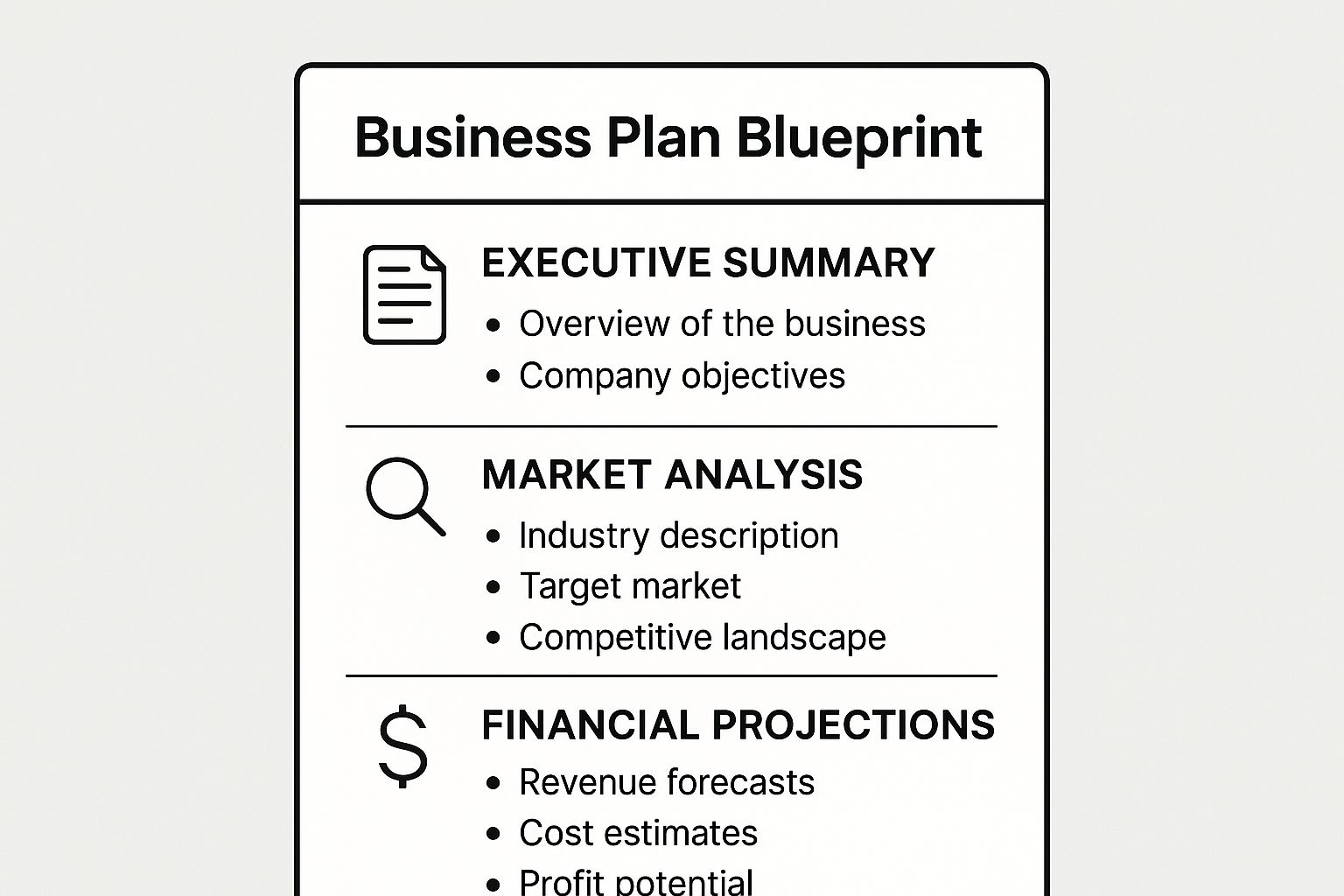
As the blueprint shows, these three components work together to present a compelling and complete vision for your restaurant's future.
2. Secure Adequate Funding and Financial Planning
Securing capital is the lifeblood of your restaurant venture, turning your business plan from a document into a tangible reality. This crucial step on our checklist for opening a restaurant involves not just acquiring funds but also meticulous financial planning to ensure long-term stability. Startup costs, which can range from $175,000 to over $750,000, cover everything from kitchen equipment and renovations to the first few months of payroll and rent.
Why It's Your Most Critical Tool
Proper funding and a solid budget prevent premature closure, which often stems from undercapitalization. This financial strategy is your primary defense against unexpected expenses and slow initial months. It proves to lenders and investors that you have a firm grasp on the financial realities of the industry. For example, Danny Meyer famously raised $400,000 to launch Union Square Cafe, while many successful restaurateurs get their start with Small Business Administration (SBA) loans. As you prepare to seek capital, understanding how to apply for a business loan is a fundamental step towards securing the necessary funds.
Actionable Tips for a Winning Plan
- Maintain a Cash Reserve: Always keep at least six months of operating expenses in a reserve fund to navigate unforeseen challenges or seasonal dips in business.
- Explore Diverse Funding Options: Look beyond traditional bank loans. SBA loans often have more favorable terms, and equipment leasing can conserve precious upfront cash.
- Build Relationships with Lenders: Don't just apply to one institution. Cultivating relationships with multiple lenders can provide more options and better terms.
- Track Expenses Religiously: From day one, use accounting software to meticulously track every dollar spent. This data is vital for financial control and future planning.
3. Choose the Right Location and Negotiate Lease Terms
Your restaurant's physical location is one of the most significant factors determining its success. A prime spot can drive organic foot traffic and establish brand visibility, while a poor one can doom even the best concepts. This step in our checklist for opening a restaurant covers the dual challenge of finding the perfect site and securing a lease that supports long-term profitability.
Why It's Your Most Critical Tool
The right location aligns with your concept, target demographic, and budget. It considers visibility, accessibility, parking, and proximity to complementary businesses. After identifying a site, the lease negotiation becomes paramount; this legal document dictates your largest fixed cost and operational freedoms. Starbucks, for example, uses extensive data analysis to select high-traffic corners, while In-N-Out Burger famously targets highly visible freeway-adjacent lots. A favorable lease can save you tens of thousands of dollars over its term and provide crucial flexibility.
Actionable Tips for a Winning Plan
- Study Traffic Patterns: Visit potential locations at various times, including weekdays, weekends, lunch, and dinner, to accurately gauge foot and vehicle traffic.
- Negotiate a Tenant Improvement (TI) Allowance: Ask the landlord to contribute financially to the costs of building out the space to fit your restaurant's needs.
- Secure an Exclusivity Clause: Negotiate a clause that prevents the landlord from leasing another space in the same property to a direct competitor, protecting your market share.
- Include Favorable Options: Push for renewal options with pre-negotiated rent caps and an early termination clause in case your business model needs to pivot.
4. Obtain All Required Licenses and Permits
Navigating the complex web of federal, state, and local regulations is a critical milestone in our checklist for opening a restaurant. Obtaining all necessary licenses and permits is a mandatory, often lengthy process that ensures your establishment operates legally and safely. Failing to secure the correct permits can result in hefty fines, forced closures, and significant delays, making this step a crucial hurdle to clear before your grand opening.
Why It's Your Most Critical Tool
Proper licensing is the foundation of a legally sound restaurant. It serves as proof to authorities, investors, and customers that you are committed to upholding health, safety, and business standards. The specific requirements can vary dramatically by location. For example, New York City can require up to 30 different permits, while California's Alcoholic Beverage Control (ABC) liquor license application process can easily take 90 days or more. This bureaucratic journey, while tedious, protects your business from legal liabilities and is non-negotiable for long-term success.
Actionable Tips for a Winning Plan
- Start the Process Immediately: Many permits have long lead times. Begin applications as soon as you have your business entity and a potential location identified.
- Create a Compliance Checklist: List every required permit, including food service, liquor, building, health, and sign permits. Track application dates, fees, and renewal deadlines.
- Budget Accordingly: Allocate between 5-10% of your total startup capital for fees associated with licenses, permits, and potential legal consultations.
- Build Relationships with Local Officials: Fostering a positive, professional relationship with health and building inspectors can make the process smoother and provide clarity on specific requirements.
5. Design an Efficient Kitchen Layout and Workflow
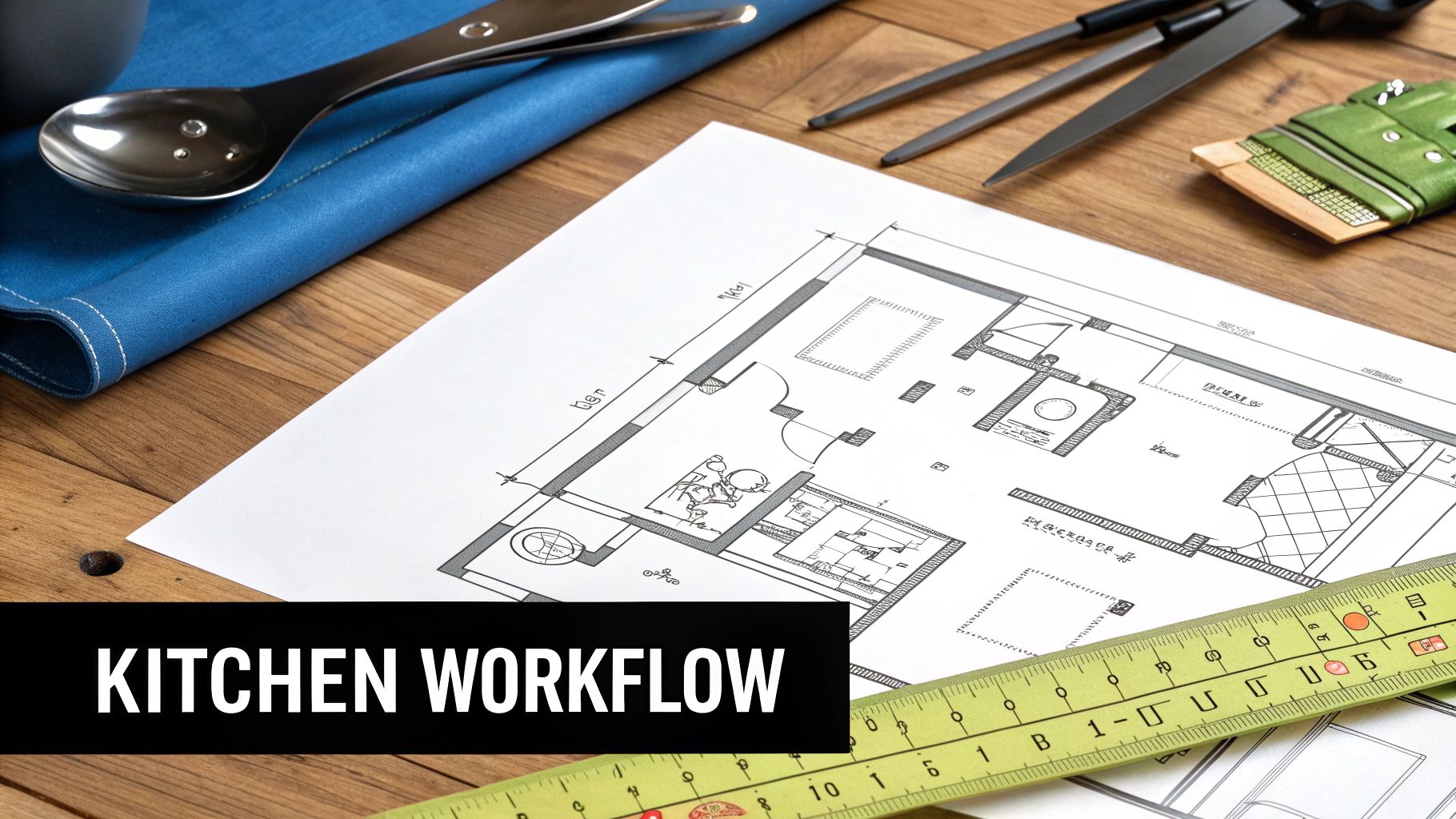
The layout of your kitchen is the engine room of your restaurant, directly dictating speed, safety, and staff morale. A strategic kitchen design optimizes the flow of food from delivery to the customer's plate, minimizing steps and preventing bottlenecks. This crucial step in our checklist for opening a restaurant ensures your back-of-house operations run smoothly, supporting your front-of-house service and overall profitability. It’s about creating an ergonomic and logical workspace that enhances productivity.
Why It's Your Operational Backbone
An inefficient kitchen layout leads to chaos, slower ticket times, food quality issues, and potential safety hazards. A well-planned design, however, facilitates seamless communication and movement. For example, McDonald's pioneered a standardized assembly-line layout that ensures consistency and speed across thousands of locations. Similarly, the popular open-kitchen concept seen at chains like Chipotle builds transparency and customer trust by making the food preparation process part of the dining experience. Ghost kitchens take this a step further, designing hyper-efficient, compact layouts purely for delivery-only output.
Actionable Tips for a Winning Layout
- Consult a Professional: Hire an experienced commercial kitchen designer who understands health codes, ergonomics, and equipment specifications from manufacturers like Hobart.
- Plan for Ample Storage: A common mistake is underestimating storage needs. Allocate space for at least 25% more dry, cold, and frozen storage than you think you need.
- Prioritize a Ventilation System: A powerful and correctly installed ventilation and hood system is non-negotiable for safety, air quality, and meeting local fire codes.
- Create Designated Workstations: Establish separate, dedicated areas for different tasks such as receiving, washing, raw protein prep, vegetable prep, and the main cooking line to prevent cross-contamination.
6. Develop Your Menu and Pricing Strategy
Your menu is the heart of your restaurant, serving as your primary sales and marketing tool. Menu development is the strategic process of creating dishes that reflect your brand concept, appeal to your target audience, and are profitable. This crucial step in our checklist for opening a restaurant involves much more than just listing food items; it requires a delicate balance of creativity, cost analysis, and consumer psychology.
Why It's Your Primary Profit Driver
A well-engineered menu directly influences your revenue and brand identity. It guides customers toward high-margin items while reinforcing your restaurant's unique story. For instance, In-N-Out Burger's famously simple menu streamlines operations and reinforces its brand of classic quality, while The Cheesecake Factory's extensive 250+ item menu caters to a broad demographic, promising something for everyone. Both are intentional strategies designed to maximize profitability and guest satisfaction. An effective menu sets you apart and is a key driver of your business's financial health.
Actionable Tips for a Winning Menu
- Engineer for Profit: Use menu engineering principles to analyze item popularity and profitability. Strategically place high-margin "star" items in prime locations on the menu, such as the top right corner.
- Implement Psychological Pricing: Price items at $14.95 instead of $15.00 to make them appear more affordable. Avoid using dollar signs ($) which can make customers more price-conscious.
- Cost Every Recipe: Calculate the exact plate cost for every single dish to ensure your pricing achieves the target food cost percentage, typically between 28-35%.
- Test Extensively: Before finalizing the menu, conduct multiple rounds of tastings with a diverse group to gather feedback on flavor, presentation, and portion size.
7. Install Restaurant Management Technology Systems
Modern restaurants are complex operations that rely on a suite of integrated technologies to function efficiently. Installing the right restaurant management technology systems, from your Point of Sale (POS) to inventory and customer management tools, is a crucial step in our checklist for opening a restaurant. These systems are the central nervous system of your business, streamlining operations, ensuring accuracy, and providing critical data for informed decision-making.
Why It's Your Most Critical Tool
Your technology stack does more than just process orders; it connects every facet of your restaurant. An integrated system provides a real-time view of sales, inventory levels, and labor costs, allowing you to optimize for profitability. For example, Toast POS, popular among independent restaurants, combines payment processing with kitchen display systems (KDS), payroll, and marketing tools in one platform. Similarly, Square offers accessible solutions for smaller operations, while platforms like OpenTable and Resy manage the crucial front-of-house function of reservations, preventing overbooking and improving the guest experience.
Actionable Tips for a Winning Plan
- Choose Cloud-Based for Flexibility: Opt for cloud-based systems that allow you to access your restaurant’s data from anywhere and scale more easily as you grow.
- Prioritize Integration Capabilities: Ensure your POS system can seamlessly integrate with other essential software, such as accounting, payroll, and reservation platforms, to create a unified data ecosystem. For a deeper look at managing complex projects like a tech rollout, you can review some best practices for project management.
- Plan for Staff Training: Don't underestimate the learning curve. Schedule dedicated training sessions for all staff before your grand opening to ensure they are confident using the new technology.
- Prepare Backup Systems: Technology can fail. Have a plan for handling offline payment processing and manual order taking to keep your business running during an outage.
8. Recruit, Hire, and Train Quality Staff
Your restaurant is only as good as the people running it, making your hiring and training process a critical component of our checklist for opening a restaurant. Excellent food can be ruined by poor service, and an efficient kitchen can be undermined by an untrained front-of-house team. This step involves creating detailed job descriptions, establishing a rigorous interview process, and developing a comprehensive training program to instill your brand's values and operational standards from day one.
Why It's Your Most Critical Tool
Your staff represents your brand's promise to every customer who walks through the door. A well-trained, motivated team directly impacts customer satisfaction, operational efficiency, and ultimately, your bottom line. Industry leaders like Danny Meyer have built empires on the principle of "hospitality-first" hiring, prioritizing personality and attitude over technical skill alone. Similarly, In-N-Out Burger's success is linked to its strategy of offering above-market wages and clear career paths, resulting in exceptionally low employee turnover and consistently high service standards.
Actionable Tips for a Winning Team
- Hire for Attitude, Train for Skill: You can teach someone how to carry a tray, but you can't teach a naturally positive and empathetic disposition. Prioritize candidates who align with your hospitality philosophy.
- Offer Competitive Compensation: Research local market rates for all positions and aim to offer a competitive package that includes fair wages, benefits, and potential perks. This reduces turnover and attracts top talent.
- Implement a Buddy System: Pair new hires with experienced, high-performing employees. This peer-to-peer training method fosters camaraderie and accelerates the learning process in a real-world environment.
- Create Clear Advancement Paths: Show your team there is a future for them within your organization. Define the skills and performance metrics needed to move from server to shift lead, or from line cook to sous chef.
9. Implement Food Safety and Sanitation Protocols
Food safety and sanitation protocols are the non-negotiable systems that protect your customers, your reputation, and your business from legal action. This critical step in our checklist for opening a restaurant involves establishing rigorous procedures for food handling, temperature control, and cleanliness to comply with health department regulations and prevent foodborne illnesses. It's the bedrock of guest trust and operational integrity.
Why It's Your Most Critical Tool
Robust food safety protocols are not just about passing inspections; they are about building a culture of safety that permeates every aspect of your kitchen. This includes implementing a Hazard Analysis Critical Control Points (HACCP) system, which proactively identifies potential food safety risks. After its food safety incidents in 2015, Chipotle completely overhauled its protocols, implementing high-resolution DNA-based testing and enhanced supplier standards, demonstrating a commitment to guest safety that rebuilt public trust. You can find detailed guidelines in the FDA Food Code to structure your own program.
Actionable Tips for a Winning Plan
- Certify Your Team: Get managers and key kitchen staff ServSafe certified. This program provides nationally recognized training in food safety and handling.
- Utilize Digital Tools: Implement digital temperature logs for coolers and food prep, ensuring accurate, consistent records and instant alerts for deviations.
- Create Visual Reminders: Post clear, visual guides for handwashing procedures, cross-contamination prevention, and proper food storage temperatures in key areas.
- Schedule Deep Cleaning: Go beyond daily tidying. Create and follow a detailed schedule for deep cleaning all equipment, storage areas, and customer-facing spaces.
10. Develop Marketing Strategy and Build Online Presence
Your marketing strategy is the engine that drives customers through your doors, transforming your culinary vision into a bustling business. A modern, multi-channel approach is a critical step in our checklist for opening a restaurant, as it builds brand awareness before you even serve your first customer. It involves creating a strong digital footprint and engaging with your local community to generate excitement and loyalty.
Why It's Your Most Critical Tool
In today's digital-first world, your online presence often precedes a customer's physical visit. A strategic marketing plan ensures your restaurant is discoverable, desirable, and accessible to your target audience. This includes everything from a professional website and optimized local listings to an active social media presence. For example, Domino's pizza completely revitalized its brand through digital ordering innovations and a transparent marketing campaign, making it a leader in the fast-food space. Your plan must outline how you'll reach, engage, and retain customers.
Actionable Tips for a Winning Plan
- Claim and Optimize Your Digital Real Estate: Immediately claim your Google Business Profile. Fill it out completely with high-quality photos, your menu, hours, and accurate contact information. This is the single most important step for local visibility.
- Build a Compelling Social Media Presence: Focus on platforms where your audience is active. Post high-quality, mouth-watering photos and videos of your food and ambiance consistently. Engage with followers' comments and messages promptly.
- Establish a Foundational Website: Your website is your digital storefront. Ensure it's mobile-friendly, features your menu, tells your brand story, and offers an easy way for customers to make reservations or place online orders. Understanding the benefits of local SEO can significantly boost your website's visibility to nearby diners.
12. Create a Compelling Restaurant Website
Your restaurant's website is its digital front door and a critical marketing asset in today's online-first world. It's often the first interaction a potential customer has with your brand, serving as a central hub for your menu, location, hours, and story. A professional, user-friendly website is no longer optional; it is an essential part of any comprehensive checklist for opening a restaurant.
A great website builds credibility, showcases your unique atmosphere, and drives reservations and orders. It acts as the anchor for all your digital marketing efforts, from social media campaigns to local SEO. For example, a well-designed site allows you to integrate online ordering systems directly, capture email sign-ups for a newsletter, and tell the story behind your culinary vision, creating a deeper connection with your audience before they even step inside.

Why It's Your Digital Cornerstone
An effective website gives you complete control over your brand narrative, unlike third-party review sites or delivery apps. It's the perfect platform to feature high-quality photos of your dishes and interior, which are proven to influence customer decisions. Furthermore, having your own website is foundational for local SEO, helping your restaurant appear in "near me" searches on Google. Investing in content strategies like blog posting about your suppliers or unique recipes can attract organic traffic and establish your authority in the local food scene.
Actionable Tips for a Powerful Website
- Prioritize Mobile-First Design: Ensure your website looks and functions perfectly on smartphones, as the majority of customers will search for restaurants on their mobile devices.
- Make Key Information Obvious: Your address, phone number, hours, and a link to your menu should be immediately visible on the homepage without any scrolling.
- Integrate Online Ordering and Reservations: Use services like Toast, ChowNow, or OpenTable to allow customers to place orders or book a table directly from your site.
- Optimize for Local Search: Include your city and neighborhood in page titles and descriptions. Partner with a service specializing in local citations to ensure your business information is consistent across all online directories, boosting your search ranking.
12-Point Restaurant Opening Checklist Comparison
| Item | Implementation Complexity 🔄 | Resource Requirements ⚡ | Expected Outcomes 📊 | Ideal Use Cases 💡 | Key Advantages ⭐ |
|---|---|---|---|---|---|
| Develop a Comprehensive Business Plan | High – detailed research and writing needed | Moderate – time and expertise | Clear business direction, risk identification, funding | Startups needing funding and strategy alignment | Provides funding leverage, thorough market research, clear roadmap |
| Secure Adequate Funding and Financial Planning | Moderate – complex sourcing and budgeting | High – significant capital required | Financial stability, operational buffer | New restaurants requiring capital investment | Enables purchases, covers costs, builds credit |
| Choose the Right Location and Negotiate Lease Terms | Moderate to high – analysis and negotiation | Moderate – leasing costs, research | Enhanced revenue potential, brand visibility | Restaurants dependent on location traffic | Increases revenue, reduces marketing costs |
| Obtain All Required Licenses and Permits | High – extensive regulatory navigation | Moderate – fees and application efforts | Legal compliance, customer trust | All restaurants before opening | Avoids shutdowns, ensures full operational capabilities |
| Design an Efficient Kitchen Layout and Workflow | High – specialized design and planning | High – design, equipment, space | Improved efficiency, food quality, staff productivity | New or renovated kitchens focusing on efficiency | Reduces prep time, enhances safety, maximizes workflow |
| Develop Your Menu and Pricing Strategy | Moderate – ongoing refinement needed | Moderate – ingredient sourcing and testing | Increased profitability and customer appeal | Restaurants refining offerings and margins | Drives revenue, establishes brand, controls costs |
| Install Restaurant Management Technology Systems | Moderate – setup and staff training | Moderate to high – technology costs | Streamlined operations, accuracy, data insights | Modern restaurants seeking efficiency | Improves accuracy, operational efficiency, customer experience |
| Recruit, Hire, and Train Quality Staff | High – continuous hiring and training | Moderate to high – HR resources | Consistent service quality, reduced turnover | Businesses prioritizing service and culture | Builds strong team, reduces turnover costs |
| Implement Food Safety and Sanitation Protocols | Moderate – ongoing training and compliance | Moderate – certification, equipment maintenance | Regulatory compliance, health protection | All foodservice operations | Prevents illness, protects reputation, reduces liability |
| Develop Marketing Strategy and Build Online Presence | Moderate to high – ongoing content and engagement | Moderate – marketing tools and time | Brand awareness, customer acquisition and retention | Restaurants aiming to grow and engage customers | Builds brand, drives traffic, cost-effective acquisition |
From Checklist to Check, Please: Your Journey Begins
Completing this comprehensive checklist for opening a restaurant is a monumental achievement. You have navigated the intricate maze of business planning, secured vital funding, and meticulously planned everything from your kitchen's workflow to your brand's digital footprint. This journey, from a simple concept to a fully operational establishment, is a testament to your vision, dedication, and resilience. Each ticked box represents a critical milestone, a hurdle cleared on the path to bringing your unique culinary dream to life.
Remember, this checklist is more than just a list of tasks; it is a strategic framework. It’s the architectural blueprint for building a business that can not only survive but thrive in the competitive hospitality industry. By systematically addressing legal requirements, operational logistics, and marketing imperatives, you have laid a foundation of stability and preparedness. This proactive approach allows you to anticipate challenges rather than just react to them, giving you a significant advantage from day one.
Key Takeaways for Your Grand Opening and Beyond
As you transition from planning to operating, let’s distill the most critical insights from our guide:
- Financial Diligence is Non-Negotiable: Your business plan and funding are the bedrock. Continuously monitor your cash flow, manage your budget with precision, and always have a contingency fund. Financial health is the lifeblood of your restaurant.
- Your Team is Your Brand: The staff you hire and train are the face and heart of your establishment. Invest in thorough training, foster a positive culture, and empower your team to deliver exceptional service. They are your most valuable asset in creating loyal customers.
- Technology is Your Ally, Not an Afterthought: From your Point of Sale (POS) system to online ordering and reservation platforms, technology is essential for efficiency and growth. Embrace it to streamline operations, gather valuable data, and enhance the guest experience.
- Your Digital Presence is Your Modern-Day Curb Appeal: In today's market, your online identity is just as important as your physical location. A strong marketing strategy, including an optimized website, active social media, and positive online reviews, is crucial for attracting and retaining customers.
For businesses that supply the restaurant industry, providing this kind of detailed guidance is a powerful marketing tool. At our agency, we specialize in empowering restaurant equipment supply websites to become trusted authorities. By crafting valuable content like this checklist for opening a restaurant and amplifying it through strategic SEO, local citation services, blog posting, and blogger outreach, we connect them with new restaurant owners precisely when they are making critical purchasing decisions.
Your Next Steps: From Plan to Plate
The journey doesn’t end when the doors open; it truly begins. Treat this checklist as a living document, a guide to revisit and adapt as your business evolves.
Actionable Insight: Schedule a quarterly review of your business plan, menu performance, marketing analytics, and financial statements. Use this checklist as your agenda to ensure you are staying on track and adapting to market changes.
Embrace the dynamic nature of the restaurant world. Listen to customer feedback, stay informed about industry trends, and never stop refining your concept. The passion that fueled you to start this venture is the same energy that will drive its long-term success. You have done the hard work of planning and preparation. Now, it's time to fire up the grills, welcome your first guests, and start creating unforgettable dining experiences. Your adventure in the culinary world has officially begun.
As you move from planning your kitchen layout to sourcing the best equipment, remember that high-quality, reliable cooking appliances are the heart of your operation. For a full range of durable and efficient cooking equipment, from griddles to stock pot ranges, our experts at Charbroilers.com are here to help you equip your kitchen for success. Explore our extensive selection and find the perfect tools to bring your menu to life at Charbroilers.com.