

10 Key Challenges in Marketing for Restaurant Equipment Suppliers in 2025
In the highly competitive world of restaurant equipment and hospitality, standing out is tougher than ever. Business owners consistently face evolving challenges in marketing, from navigating complex SEO for their specific niche to proving a tangible return on their digital advertising spend. This isn't just about listing a high-quality commercial oven; it's about forging a real connection with restaurant owners and chefs in a crowded online marketplace where everyone is vying for attention.
Many equipment suppliers struggle with the technical details of building local citations, creating blog content that actually ranks for valuable keywords, or executing blogger outreach that generates results. This guide is designed to transform these persistent hurdles into strategic opportunities for growth. We will directly address the 10 most significant marketing challenges you'll encounter in the coming year and provide clear, actionable strategies to overcome them.
From advanced copywriting and article writing tactics to specific SEO techniques tailored for your industry, the insights here will equip your restaurant equipment supply website to not only compete but to dominate its market. It’s time to turn these common challenges into your most powerful competitive advantage.
1. Content Saturation and Differentiation
One of the most significant challenges in marketing today is content saturation. For a restaurant equipment supplier, the digital space is flooded with articles like "best commercial ovens" or "choosing a charbroiler." This endless sea of similar content makes it incredibly difficult for your unique voice and expertise to be heard, let alone remembered. Standing out requires moving beyond generic product lists and providing unparalleled, specific value that solves real-world problems for chefs and restaurant owners.
The core challenge is creating high-quality, targeted content that cuts through the noise and positions your brand as an indispensable authority. This means shifting focus from merely selling equipment to becoming a trusted resource for operational excellence. Instead of just listing features, your content, from blog posting to in-depth articles, must demonstrate a deep understanding of the hospitality industry's pain points.
Actionable Strategies to Differentiate
To overcome content saturation, you must create content that serves your audience's needs beyond just a transaction.
- Focus on Niche Problems: Instead of a generic blog post, create a hyper-specific guide like "The Ultimate Charbroiler Grill Mark Guide for Instagrammable Steaks." This targets a specific desire within your audience and showcases your deep expertise.
- Leverage Expert Collaboration: Partner with a local chef to create a video series demonstrating how different equipment impacts flavor profiles. This provides authentic, third-party validation and practical insights. Brands like Wistia have popularized using video to build deep audience connections.
- Develop Interactive Tools: Build a calculator on your website that helps businesses estimate the ROI of a new combi oven or a high-efficiency fryer. This utility-driven content provides immediate value and captures user data.
By focusing on audience insights rather than just industry trends, you can develop a unique brand voice and perspective. This approach, supported by strategic SEO and targeted blogger outreach, ensures your content not only gets seen but also establishes genuine authority.
2. Ad Fatigue and Banner Blindness
One of the most persistent challenges in marketing is overcoming ad fatigue. For a restaurant equipment supplier, this means your target audience of chefs and owners has likely seen countless ads for commercial ranges and refrigerators. This overexposure leads to banner blindness, a phenomenon documented by Nielsen where users subconsciously ignore ad placements, rendering your digital advertising budget ineffective. Breaking through requires a shift from repetitive, hard-sell ads to creative, value-driven engagement.

The core challenge is that constant exposure to the same message makes it invisible. Your ads for a new walk-in freezer might perform well initially, but as the same audience sees them repeatedly, engagement plummets. To combat this, marketing efforts must prioritize novelty, storytelling, and interactivity to recapture attention and deliver a message that resonates instead of just interrupts.
Actionable Strategies to Combat Fatigue
To overcome ad fatigue and banner blindness, your campaigns must feel fresh, authentic, and genuinely useful to your audience.
- Rotate Creative and Messaging: Instead of running one ad for two months, plan to refresh your ad creative every one to two weeks. Test different images, headlines, and call-to-actions to see what resonates most, preventing your message from becoming stale.
- Leverage Dynamic and Interactive Formats: Use dynamic creative optimization (DCO) to automatically generate ad variations for different user segments. Incorporate interactive elements like polls, quizzes, or short video testimonials from chefs to encourage active engagement rather than passive viewing.
- Implement Strict Frequency Capping: Set limits on how many times a single user can see your ad within a specific period. This prevents oversaturation and ensures your budget is spent reaching new or less-exposed prospects rather than annoying your core audience.
By focusing on creative diversity and audience experience, you can ensure your advertising cuts through the noise. This approach, combined with strategic copywriting that tells a story, transforms your ads from ignored banners into compelling brand touchpoints.
3. Omnichannel Attribution and Measurement
Another of the most complex challenges in marketing is omnichannel attribution. For a restaurant equipment supplier, a customer might see a Facebook ad for a new convection oven, read a blog post comparing models on your site, receive a promotional email, and finally make a purchase after an in-person demo. Pinpointing which touchpoint truly drove the sale is incredibly difficult, leading to misallocated budgets and missed opportunities.
The core challenge is that fragmented data across devices and platforms obscures the true customer journey. Without a unified view, you cannot accurately measure the ROI of your marketing efforts, from your local citation services to your paid social campaigns. This makes it nearly impossible to know which channels to invest in for maximum growth.
Actionable Strategies for Better Measurement
To overcome attribution hurdles, you must unify customer data and adopt a more sophisticated measurement framework.
- Implement a Customer Data Platform (CDP): Use a platform like Segment to create a single, unified profile for each customer by collecting data from your website, email platform, and POS system. This provides a holistic view of their journey.
- Standardize UTM Parameters: Enforce a strict, company-wide policy for using UTM parameters on all marketing links. This ensures that data flowing into Google Analytics is clean, consistent, and correctly attributed to the right campaign and channel.
- Leverage First-Party Data: As third-party cookies phase out, focus on collecting first-party data through newsletter sign-ups, lead magnets (e.g., "The Chef's Guide to Kitchen Layouts"), and loyalty programs. This data is essential for accurate tracking and personalization.
By building a robust attribution model, you can understand how different marketing activities work together to drive sales. This insight is critical for optimizing your marketing mix and effectively demonstrating ROI. Learn more about how to measure SEO performance on restaurantequipmentseo.com to get a clearer picture of your digital impact.
4. Content Saturation and Differentiation
One of the most significant challenges in marketing today is content saturation. For a restaurant equipment supplier, the digital space is flooded with articles like "best commercial ovens" or "choosing a charbroiler." This endless sea of similar content makes it incredibly difficult for your unique voice and expertise to be heard, let alone remembered. Standing out requires moving beyond generic product lists and providing unparalleled, specific value that solves real-world problems for chefs and restaurant owners.

The core challenge is creating high-quality, targeted content that cuts through the noise and positions your brand as an indispensable authority. This means shifting focus from merely selling equipment to becoming a trusted resource for operational excellence. Instead of just listing features, your content must demonstrate a deep understanding of the hospitality industry's pain points. A key part of this is understanding which content actually drives results, a topic that introduces complex Attribution Challenges In Marketing Analytics but is essential for optimizing your strategy.
Actionable Strategies to Differentiate
To overcome content saturation, you must create content that serves your audience's needs beyond just a transaction.
- Focus on Niche Problems: Instead of a generic blog post, create a hyper-specific guide like "The Ultimate Charbroiler Grill Mark Guide for Instagrammable Steaks." This targets a specific desire within your audience.
- Leverage Expert Collaboration: Partner with a local chef to create a video series demonstrating how different equipment impacts flavor profiles. This provides authentic, third-party validation and practical insights.
- Develop Interactive Tools: Build a calculator on your website that helps businesses estimate the ROI of a new combi oven or a high-efficiency fryer. This utility-driven content provides immediate value and captures user data.
By focusing on audience insights rather than just industry trends, you can develop a unique brand voice and perspective. This approach, supported by strategic SEO and targeted blogger outreach, ensures your content not only gets seen but also establishes genuine authority.
5. Influencer Marketing ROI and Authenticity
One of the most complex challenges in marketing is navigating the high-stakes world of influencer marketing. For a restaurant equipment supplier, this channel promises direct access to engaged audiences of chefs and food bloggers. However, the industry is fraught with fake followers, questionable engagement metrics, and influencers whose values don't align with your brand. Measuring true return on investment becomes incredibly difficult when authenticity is in question.
The primary challenge lies in separating genuine influence from inflated metrics to ensure your investment drives actual sales, not just vanity numbers. Success requires moving beyond follower counts and focusing on audience alignment, authentic engagement, and transparent performance tracking. This means finding partners who genuinely believe in your products and can credibly demonstrate their value to a highly targeted niche audience, a core principle of effective blogger outreach.
Actionable Strategies to Drive Authentic ROI
To overcome influencer fraud and measure real impact, you must implement a data-driven and relationship-focused approach.
- Partner with Micro-Influencers: Instead of targeting celebrity chefs with massive followings, collaborate with micro-influencers (10K-100K followers) who have a dedicated, engaged community of restaurant professionals. Their recommendations often carry more weight and deliver a higher ROI.
- Implement Affiliate Tracking: Provide influencers with unique coupon codes or trackable affiliate links. This creates a direct line between their promotional efforts and your sales, making ROI measurement transparent and accurate.
- Use Verification Tools: Leverage platforms like HypeAuditor to analyze an influencer's audience for authenticity, engagement quality, and demographic alignment. This helps vet potential partners and avoid those with fraudulent followings.
By focusing on long-term partnerships and transparent tracking, you can transform influencer marketing from a high-risk gamble into a reliable revenue driver. This strategy, combined with a solid foundation of SEO and targeted content, ensures your brand builds trust and credibility in the competitive foodservice space.
6. AI and Marketing Automation Adoption
One of the most complex challenges in marketing is the effective adoption of AI and marketing automation. For a restaurant equipment supplier, these technologies promise hyper-personalized outreach and operational efficiency. However, the reality often involves struggling with complex implementation, integrating new platforms with legacy systems, and addressing significant skill gaps within marketing teams. The fear of over-automation alienating customers adds another layer of difficulty.
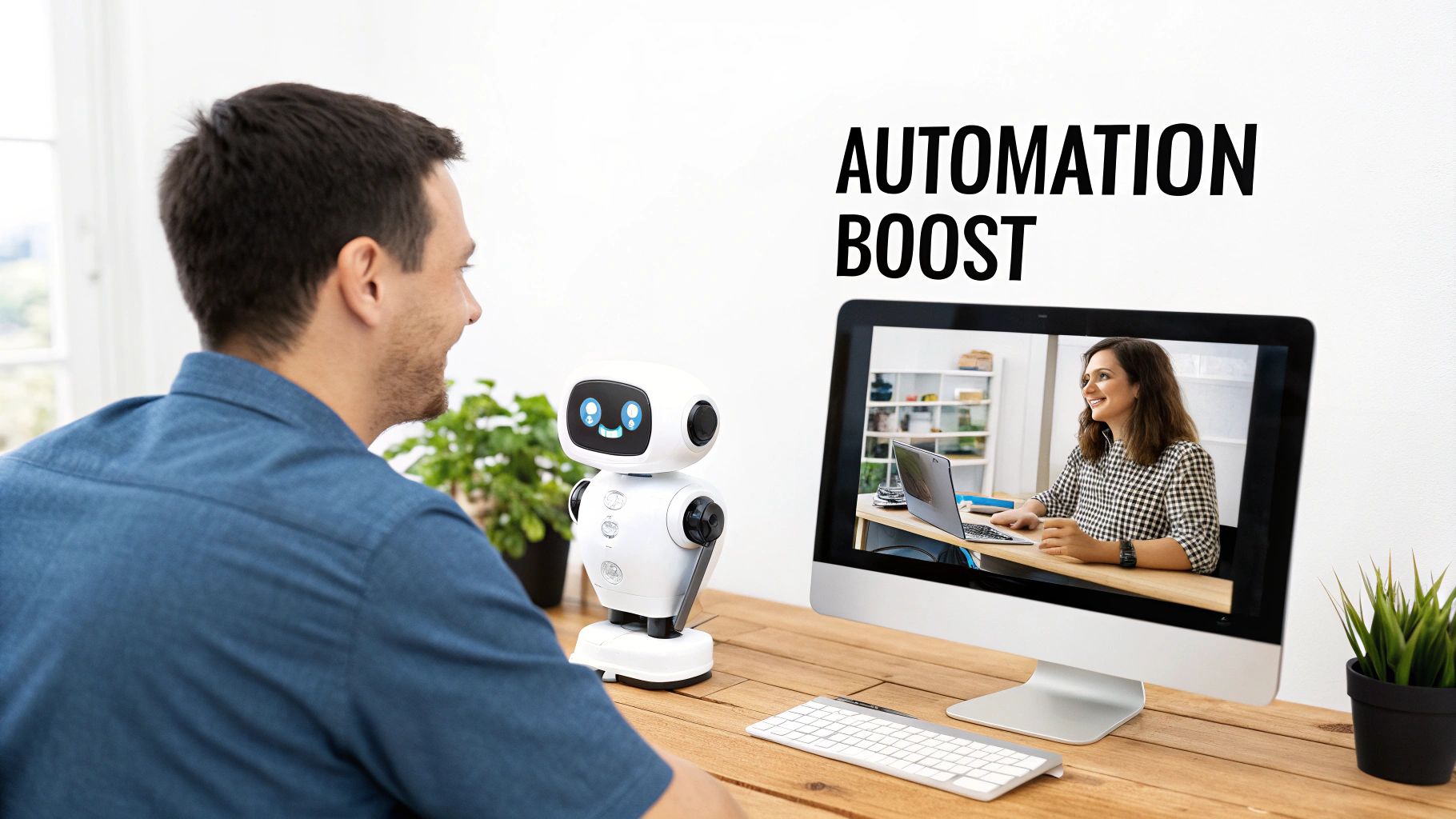
The core challenge lies in harnessing these powerful tools without losing the human touch essential in the hospitality industry. It's about using technology to augment, not replace, relationship-building. For instance, platforms like HubSpot use AI for lead scoring, but a skilled sales team must still interpret that data to nurture a lead from a catering business into a long-term client. The goal is to strategically implement automation to handle repetitive tasks, freeing your team to focus on high-value strategy and customer interaction.
Actionable Strategies for AI Adoption
To overcome implementation hurdles, start small and focus on augmenting your team's capabilities rather than overhauling your entire process at once.
- Start with Specific, High-Impact Projects: Instead of a full-scale AI integration, begin with a manageable task. Use an AI-powered copywriting tool to generate initial drafts for blog posts about commercial refrigeration maintenance, which your expert writers can then refine.
- Invest in Continuous Team Training: The technology landscape evolves rapidly. Provide regular training on your chosen platforms to ensure your team is proficient. This builds confidence and encourages creative use of the tools for tasks like targeted blogger outreach.
- Prioritize Data Quality and Governance: AI and automation are only as good as the data they use. Before implementation, clean your CRM data to ensure accuracy for personalized email campaigns to restaurant owners. A tool is useless if it's sending the wrong message to the wrong person.
By treating AI as a powerful assistant rather than a replacement, you can navigate these challenges. This approach ensures technology enhances your marketing efforts, driving efficiency while preserving the critical customer relationships that define the hospitality sector.
7. Customer Acquisition Cost (CAC) Inflation
One of the most pressing challenges in marketing is the relentless rise in Customer Acquisition Cost (CAC). For businesses in the restaurant and hospitality space, the cost to attract a new customer through paid channels like Google or Meta ads is continually climbing. This is driven by increased competition, platform algorithm changes, and market saturation, making it harder for your restaurant or equipment supply company to achieve profitable growth.
The core challenge is balancing growth with profitability when every new click and lead costs more than it did last year. Simply pouring more money into advertising becomes unsustainable. To succeed, you must adopt a more strategic, efficiency-focused approach to acquisition while maximizing the value of every customer you already have. This means shifting from a "growth-at-all-costs" mindset to one centered on sustainable, long-term unit economics.
Actionable Strategies to Combat Rising CAC
To mitigate the impact of CAC inflation, focus on efficiency, retention, and diversifying your marketing channels.
- Focus on High-LTV Customer Segments: Instead of marketing to all restaurants, identify and target segments with the highest lifetime value (LTV), such as high-volume chains or niche ghost kitchens. This ensures your marketing spend is directed where it will generate the greatest long-term return.
- Invest in Owned Channels: Shift resources toward building channels you control, such as your email list and blog. High-quality content marketing and strategic SEO attract organic traffic that converts at a fraction of the cost of paid ads. This creates a durable asset that lowers your blended CAC over time.
- Implement a Referral Program: Encourage your happiest customers to become brand advocates. A well-structured referral program that rewards both the referrer and the new customer can be one of the most cost-effective acquisition channels, leveraging word-of-mouth trust.
By optimizing your conversion rates and building a strong organic presence through consistent article writing and SEO, you can effectively lower your dependency on expensive paid channels and build a more resilient customer acquisition engine.
8. Social Media Algorithm Changes and Organic Reach Decline
One of the most persistent challenges in marketing is navigating the ever-changing landscape of social media algorithms. For restaurant equipment suppliers, platforms like Facebook and Instagram once offered a direct line to their audience. Now, those same platforms prioritize paid content, causing organic reach for business pages to plummet, often to less than 2% of followers. This decline means your carefully crafted posts showcasing a new convection oven might never reach the chefs and managers who follow you.
The core challenge is maintaining visibility and engagement without a massive ad budget. Brands are forced to adapt constantly as algorithms shift, such as Instagram's preference for Reels over static images or TikTok's content-first discovery model. Staying relevant requires a deep understanding of what each platform values and a strategy that moves beyond simply posting product updates.
Actionable Strategies to Combat Reach Decline
To overcome shrinking organic reach, your social media strategy must focus on genuine community building and platform-native content creation.
- Create 'Thumb-Stopping' Native Content: Instead of cross-posting the same image everywhere, create content tailored for each platform. Film a short, engaging TikTok or Reel showing a high-efficiency fryer in action, using trending audio and quick cuts to grab attention in the first three seconds.
- Prioritize Engagement Over Followers: Ask questions in your captions to spark conversation. For example, "What’s the one feature you wish your commercial mixer had?" Actively respond to every comment to signal to the algorithm that your content is valuable and community-focused.
- Build an Owned Audience: Use your social channels to drive traffic to a newsletter signup. Offering an exclusive guide, like "A Chef's Guide to Kitchen Workflow Efficiency," in exchange for an email address gives you a direct communication channel that algorithms can't control. This strategy complements efforts to build consistent traffic growth through Google updates.
By focusing on creating high-value, engaging content specific to each platform, you can foster a loyal community that algorithms are more likely to reward.
9. Personalization at Scale Without Compromising Privacy
One of the most complex challenges in marketing is delivering the highly personalized experiences customers now expect while respecting their privacy. For a restaurant equipment supplier, this means moving away from third-party cookies and invasive tracking. The challenge lies in using your own first-party data, like customer purchase history or website interactions, to create relevant recommendations and offers without overstepping privacy boundaries.
The goal is to build direct relationships and trust, using the information customers willingly share to enhance their experience. Instead of tracking a chef across the internet, you can use their on-site search for "deck ovens" to tailor email content about pizza-making equipment. This approach, championed by privacy-forward companies like Apple, builds loyalty by proving you can provide value without compromising user data.
Actionable Strategies for Privacy-First Personalization
To master personalization at scale, focus on transparently collecting and strategically using first-party data. This builds trust and delivers relevance.
- Implement Progressive Profiling: Use your email newsletter sign-up to ask for one key piece of information, like business type (e.g., pizzeria, cafe, fine dining). Over time, ask for more details in exchange for tailored guides or discounts, gradually building a rich customer profile.
- Build a Value-Driven Loyalty Program: Offer members-only access to content like a "Commercial Kitchen Efficiency" webinar or exclusive discounts. This provides a clear value exchange for their data, encouraging them to share information about their equipment needs and purchasing cycles.
- Leverage Contextual Targeting: Instead of personalizing based on a user’s off-site browsing history, use on-site context. If a user is reading a blog post comparing combi ovens, display a call-to-action for a detailed combi oven buying guide or a special offer on related accessories.
By focusing on the data you own, you can create a more authentic and effective marketing engine. This strategy, supported by expert article writing that addresses specific customer needs, turns privacy constraints into a competitive advantage.
10. Customer Retention and Churn Reduction
One of the most pressing challenges in marketing is shifting from a purely acquisition-focused mindset to one that prioritizes customer retention. For a restaurant equipment supplier, acquiring a new customer is far more expensive than keeping an existing one. Yet, many businesses pour their budgets into attracting new leads while their existing customer base slowly erodes, creating a "leaky bucket" that demands constant refilling just to stay afloat.
The core challenge lies in understanding why customers leave and proactively building systems to keep them engaged and loyal. This requires a deep commitment to delivering continuous value long after the initial sale. Instead of just being a transactional supplier, the goal is to become an indispensable partner in your client's success, whether they're a single cafe or a multi-location chain.
Actionable Strategies to Reduce Churn
To combat churn, you must create a customer experience that builds loyalty and demonstrates ongoing value.
- Implement a Proactive Onboarding Program: Don't just deliver equipment. Create a post-purchase content series, like "Getting the Most Out of Your New Combi Oven," with video tutorials and maintenance checklists. This ensures customers achieve value quickly, reducing early-stage dissatisfaction.
- Segment and Personalize Communication: Use customer data to segment your audience. Send targeted emails to clients who purchased a specific fryer a year ago with tips on deep cleaning or a special on replacement parts. This shows you understand their needs and aren't just sending generic promotions.
- Build a Value-Added Resource Hub: Develop exclusive content for existing customers, such as articles on optimizing kitchen workflow or guides on menu costing. By leveraging professional article writing services, you can create a high-quality knowledge base that positions you as a critical resource, not just a vendor.
By focusing on the entire customer lifecycle, you can transform one-time buyers into lifelong advocates. This strategic approach not only boosts revenue but also turns your customer base into a powerful marketing asset.
Top 10 Marketing Challenges Comparison
| Challenge | Implementation Complexity 🔄 | Resource Requirements ⚡ | Expected Outcomes 📊 | Ideal Use Cases 💡 | Key Advantages ⭐ |
|---|---|---|---|---|---|
| Data Privacy and Compliance (GDPR, CCPA) | High — legal, tech, and process changes; ongoing audits | High — consent platforms, legal counsel, IT effort | Lower legal risk, increased consumer trust, reduced targeting scope | Companies processing EU/CA user data or personal identifiers | Compliance, trust, brand protection |
| Ad Fatigue and Banner Blindness | Medium — creative cadence and testing infrastructure | Medium — creative teams, dynamic ad tools, media spend | Short-term CTR lift with refreshed creatives; better engagement if rotated | High-impression digital campaigns, retargeting-heavy programs | Forces creativity; improves content quality |
| Omnichannel Attribution and Measurement | Very High — data integration, model selection, validation | Very High — CDP, analytics, attribution tools, data engineers | Clearer ROI allocation, optimized budgets, tougher to perfect under privacy limits | Enterprise marketing with multi-touch funnels and offline channels | Better budget decisions; improved journey visibility |
| Content Saturation and Differentiation | Medium — strategic repositioning and creative investment | Medium-High — editorial talent, production costs, research | Higher engagement for unique content; variable ROI and longer cycles | Brands seeking thought leadership or niche positioning | Rewards originality; builds stronger audience bonds |
| Influencer Marketing ROI and Authenticity | Medium — vetting, contracts, and tracking setups | Medium — influencer fees, verification tools, tracking links | Amplified reach and social proof when authentic; measurement challenges persist | Product launches, niche audience engagement, UGC campaigns | Access to engaged communities and rapid amplification |
| AI and Marketing Automation Adoption | High — integrations, data readiness, governance | High — platforms, training, data engineering, monitoring | Efficiency gains, personalization at scale, risk of bias or depersonalization | Scale-driven businesses needing personalization and efficiency | Time savings, predictive insights, scalable personalization |
| Customer Acquisition Cost (CAC) Inflation | Medium — strategy shifts and channel optimization | Medium-High — higher media budgets, conversion optimization | Higher acquisition spend; forces focus on LTV and retention | Competitive markets and high-growth startups needing cost control | Encourages efficiency and emphasis on retention |
| Social Media Algorithm Changes and Organic Reach Decline | Medium — content strategy overhaul and testing | Medium — creative, paid budgets, community management | Lower organic reach; paid required for scale; native formats favored | Brands relying on social for awareness and community | Pushes quality and platform-native creativity |
| Personalization at Scale Without Compromising Privacy | High — first-party data strategy, segmentation, modeling | High — CDP, analytics, loyalty programs, ML expertise | Privacy-aligned personalization; initial precision trade-offs | Brands with loyal customers or strong owned channels | Builds trust; sustainable first-party advantage |
| Customer Retention and Churn Reduction | Medium — cross-functional programs and analytics | Medium — retention tools, CX investment, product changes | Higher LTV, reduced acquisition dependency, long-term margin gains | Subscription and repeat-purchase businesses prioritizing unit economics | Most cost-effective growth lever; improves profitability |
Turning Marketing Challenges into Your Greatest Strengths
The modern marketing landscape, especially for restaurant and hospitality professionals, is a dynamic and often demanding arena. We've navigated the complexities of data privacy and compliance, dissected the nuances of ad fatigue, and explored the ever-present issue of content saturation. Each of these hurdles, from managing rising customer acquisition costs to deciphering social media algorithm changes, represents more than just an obstacle; it's a clear opportunity to innovate and excel. The core lesson is that a reactive, one-size-fits-all approach is no longer sufficient. Winning in this environment requires a proactive, strategic mindset.
The most significant takeaway is the shift from broad-stroke campaigns to highly targeted, value-driven engagement. Addressing challenges in marketing effectively means moving beyond simply selling products. It's about building a brand that becomes a trusted resource for your target audience, such as restaurant owners and chefs. By focusing on foundational elements like expert SEO, creating genuinely helpful blog content, and establishing authority through targeted blogger outreach, you build a resilient marketing engine that weathers algorithmic shifts and market fluctuations.
Your Actionable Roadmap to Success
Transforming theory into practice is what separates successful brands from the rest. Instead of feeling overwhelmed by the list of challenges, view them as a strategic checklist. Your next steps should be deliberate and focused:
- Prioritize One Key Area: Don't try to solve every problem at once. Select the single biggest challenge holding your business back, whether it's declining organic reach or low customer retention, and commit to mastering it.
- Invest in Foundational Tools: Many marketing hurdles can be simplified with the right technology. For instance, understanding customer behavior for personalization becomes much easier when implementing an effective restaurant POS system, which provides invaluable data to inform your strategy.
- Commit to Quality Content: Overcome content saturation by investing in high-quality, expert-driven article writing. Develop content that answers the specific, pressing questions of restaurant equipment supply customers, positioning your brand as an industry leader.
- Strengthen Your Local Presence: For businesses serving specific geographic areas, enhancing your visibility through dedicated local citation services is a non-negotiable strategy for attracting qualified, ready-to-buy customers.
Ultimately, navigating the modern marketing maze is not about having all the answers, but about building the systems and partnerships that help you find them. By embracing these challenges as catalysts for growth and focusing on authentic, value-first strategies, you can turn potential weaknesses into your most powerful competitive advantages. The goal is to build a brand that not only survives but thrives, earning the long-term trust and loyalty of the hospitality professionals you serve.
Ready to equip your customers with the best? At Charbroilers.com, we understand that your marketing efforts are only as strong as the products you represent. Partner with us to provide top-tier charbroilers and cooking equipment that give your restaurant clients the quality and reliability they demand. Visit Charbroilers.com to explore our catalog and become a trusted supplier.