

10 Profitable Blog Subject Ideas for Restaurant Equipment Suppliers
In the competitive market of restaurant equipment supply, a generic blog no longer captures attention. Your target audience, composed of discerning restaurant owners, chefs, and foodservice managers, seeks specific, actionable content that solves their immediate challenges. They need to know how to maximize kitchen efficiency, choose the right equipment, and make smart financial investments, not read surface-level product descriptions. Stale content fails to build trust or generate leads, leaving your website invisible to potential customers actively searching for solutions.
This article delivers a comprehensive collection of powerful blog subject ideas designed specifically for your niche. We move beyond simplistic suggestions, providing a strategic blueprint you can implement immediately. Each idea is crafted to resonate with the practical needs of hospitality professionals, incorporating critical elements like search engine optimization (SEO), local citation services, and persuasive copyrighting techniques. These are not just topics; they are content frameworks engineered to establish your authority and attract highly qualified traffic.
To demonstrate the depth and utility of these concepts, we will use commercial charbroilers as a running example throughout the list. You will see how a single product category can be transformed into a rich source of engaging, high-value content that answers your audience's most pressing questions. From detailed maintenance guides to in-depth ROI analyses, these blog subject ideas will provide the foundation for a content strategy that drives measurable results, positioning your brand as an indispensable resource in the foodservice industry. Get ready to ignite your content plan and start creating articles that truly connect with your customers.
1. The Complete Guide to Choosing Between Countertop, Modular, and Floor Model Charbroilers
An equipment comparison guide is a powerful type of blog post that positions your business as an industry authority. This format directly addresses a critical purchasing decision for restaurant operators, making it a high-value piece of content that can attract qualified leads and drive sales. This is one of the most effective blog subject ideas for building trust and demonstrating deep product knowledge, a core component of effective article writing for equipment suppliers.
The core principle is to compare the three main types of commercial charbroilers: countertop, modular, and floor models. By breaking down the specific pros and cons of each, you help readers match the equipment to their unique operational context, from a small ghost kitchen to a large-scale steakhouse.
Why This Blog Topic Works
This topic is ideal because it targets readers at the bottom of the marketing funnel, those actively researching a purchase. It provides immense value by simplifying a complex decision, focusing on practical factors like space, capacity, installation, and cost. When a restaurant owner finds a comprehensive guide that answers their specific questions, they are more likely to trust the source for their purchase.
For example, a fast-casual burger spot with limited space would benefit from understanding the compact efficiency of a countertop model. Conversely, a high-volume hotel kitchen might discover that a modular setup offers the flexibility they need for diverse menu demands.
Actionable Tips for Implementation
To create a successful guide, focus on clarity and practical advice:
- Create a Comparison Chart: Use a table to visually compare key features like footprint, BTU output, price range, and ideal use cases for each charbroiler type.
- Use Real-World Scenarios: Describe how a bustling steakhouse utilizes a floor model for its high capacity, while a food truck leverages a countertop unit for mobility.
- Incorporate a Needs-Assessment Checklist: Guide readers with questions like, "What is your peak hourly output for grilled items?" and "What is your available ventilation capacity?" This interactive element makes the content more engaging. For a broader overview, you can reference a complete commercial kitchen equipment checklist to help them plan.
- Highlight Maintenance and Installation: Discuss the different utility requirements (gas, electric) and cleaning procedures for each model, as these are crucial long-term operational costs.
2. How to Maximize Charbroiler Efficiency: Proven Strategies for High-Volume Restaurants
An operational "how-to" guide is another high-impact format for your blog, shifting the focus from purchasing equipment to optimizing its use. This type of post demonstrates your expertise beyond the initial sale, positioning your brand as a long-term partner in your customers' success. By offering actionable advice on efficiency, you address a universal pain point for restaurant operators: maximizing throughput without sacrificing quality. This is where high-quality blog posting shines.
This specific topic details the techniques high-volume restaurants use to get the most out of their charbroilers. The goal is to provide a blueprint for improving workflow, managing heat, and coordinating staff to handle peak service times effectively. This is a fantastic example of blog subject ideas that provides immediate, practical value to chefs and kitchen managers.
Why This Blog Topic Works
This topic resonates deeply because it directly impacts a restaurant's profitability and customer satisfaction. It targets operators who already own the equipment and are looking for ways to boost performance. By sharing proven strategies, you help them increase revenue during busy periods and maintain food consistency, which builds brand loyalty for both their establishment and yours.
For instance, a fast-casual burger chain needs to master rapid production during lunch rushes, while a popular steakhouse must manage a constant flow of perfectly cooked steaks. An efficiency guide speaks directly to these operational challenges, making it highly shareable and valuable content.
Actionable Tips for Implementation
To create a powerful efficiency guide, concentrate on specific, repeatable processes:
- Illustrate Zone-Based Cooking: Use diagrams or photos to show how to create different heat zones on the grill for searing, cooking, and resting proteins.
- Provide Scheduling Templates: Offer a downloadable checklist for pre-service prep, including preheating schedules and mise en place organization for the grill station.
- Develop Staff Training Points: Create a bulleted list of key training tips, such as optimal product placement for even cooking, using timers effectively, and coordinating with the expo line.
- Discuss Energy and Cost Savings: Explain how proper heat management and maintenance not only improve output but also reduce utility consumption. Beyond optimizing cooking processes, understanding how to select equipment for optimal performance and lower running costs is crucial. You can learn more about strategies for reducing energy costs with efficient commercial equipment choices to further help your audience.
3. Charbroiler Maintenance Essentials: Preventing Breakdowns and Extending Equipment Life
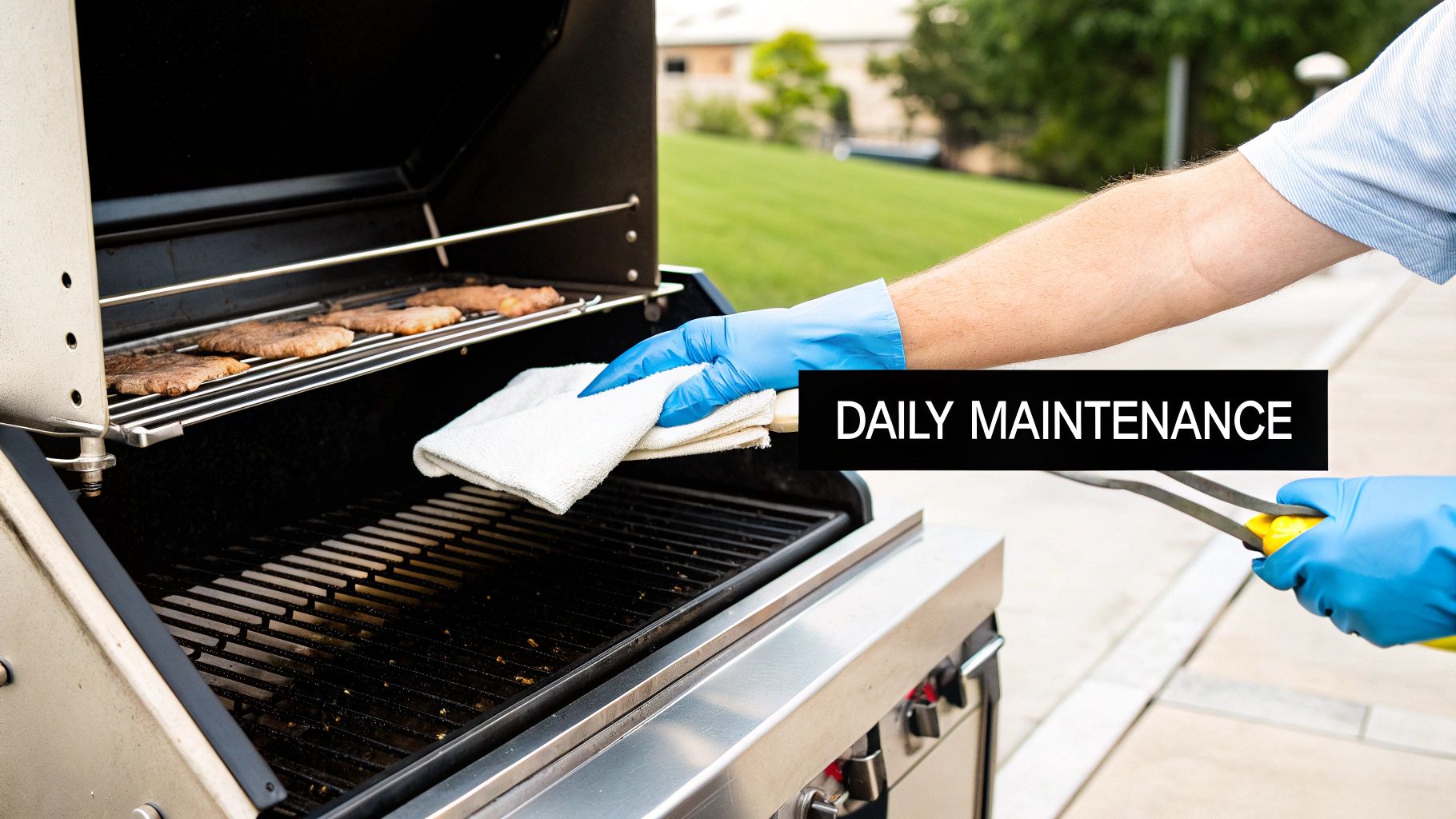
A comprehensive maintenance guide is an excellent blog subject idea that provides immense practical value to restaurant operators long after a purchase. This type of content focuses on helping customers protect their investment, which builds brand loyalty and establishes your company as a supportive, knowledgeable partner. By detailing preventative care for a critical piece of equipment like a charbroiler, you address a major pain point: unexpected downtime and costly repairs.
This format shifts the focus from pre-sale decisions to post-sale success. You provide a detailed roadmap for daily, weekly, and monthly maintenance routines that keep equipment running efficiently. This content, when supported by a solid SEO strategy for restaurant equipment, is highly shareable among kitchen staff and managers, positioning your blog as an essential resource for operational excellence.
Why This Blog Topic Works
This topic is powerful because it addresses the total cost of ownership, a crucial concern for any business. It targets existing customers and potential buyers alike, demonstrating that your company cares about their long-term success. A well-maintained charbroiler not only lasts longer but also performs better, ensuring consistent food quality, which directly impacts a restaurant's reputation.
For example, showcasing how a local steakhouse has kept its charbroiler operational for 20 years through rigorous care protocols provides a compelling case study. Likewise, referencing the strict maintenance standards of QSR giants reinforces the importance of preventative measures in a high-volume environment.
Actionable Tips for Implementation
To create a valuable maintenance guide, focus on clear, step-by-step instructions:
- Develop Downloadable Checklists: Create printable or laminated checklists for daily (e.g., scrape grates, empty grease traps), weekly (e.g., deep clean radiants), and monthly (e.g., inspect burners and valves) tasks.
- Use Video Demonstrations: Embed short videos showing how to properly clean specific components, such as removing and soaking cast iron grates or cleaning burner ports.
- Create a Troubleshooting FAQ: Answer common questions like, "Why is my charbroiler heating unevenly?" or "What does a yellow flame mean?" and provide simple diagnostic steps and solutions.
- Recommend Specific Products: Suggest manufacturer-approved cleaning solutions and tools, and link to where they can be purchased. This adds another layer of helpfulness and can create affiliate revenue opportunities.
4. Creating the Perfect Char: Mastering Temperature Control and Cooking Techniques
A technical "how-to" guide focused on culinary technique is a superb way to build credibility with chefs and kitchen managers. This type of post moves beyond equipment specs and into the craft of cooking, positioning your brand as a true partner in culinary excellence. This is one of the more advanced blog subject ideas, where expert copyrighting can attract a highly skilled and engaged professional audience.
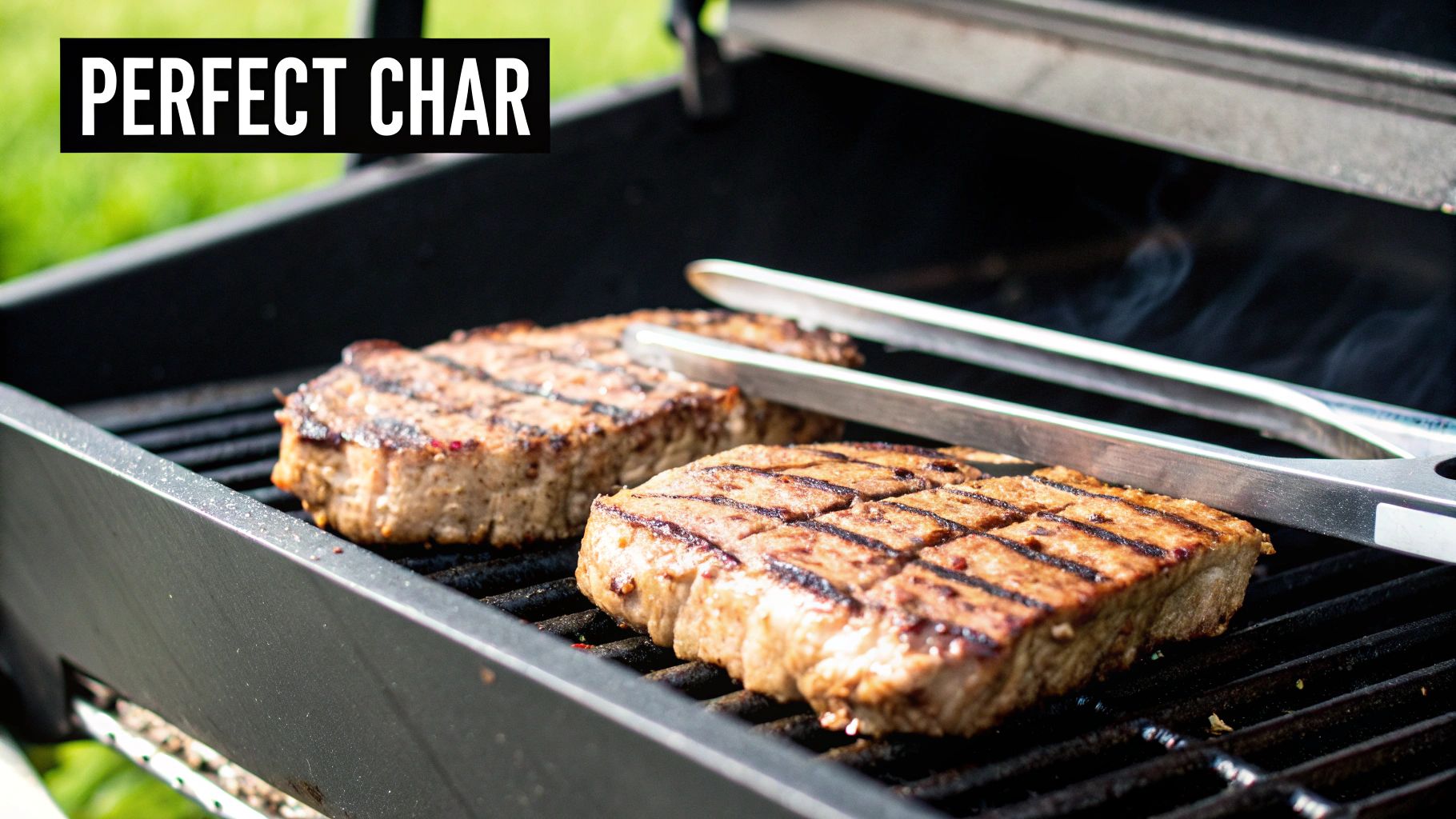
The goal is to provide expert advice on achieving consistent, high-quality results from a charbroiler. By detailing the science and art behind temperature management, cooking times, and flavor development, you offer tangible value that helps a restaurant elevate its menu and impress customers with the signature charbroiled taste they crave.
Why This Blog Topic Works
This topic works because it speaks directly to the passion and professionalism of your core audience: chefs. It targets readers who are not just buying equipment but are dedicated to perfecting their craft. By providing content that helps them improve their final product, you build a relationship based on expertise and shared culinary standards, fostering immense brand loyalty.
For instance, a high-end steakhouse has built its reputation on the perfect char. A blog post that deconstructs these techniques provides aspirational and practical value, showing readers how to achieve similar premium results. This content demonstrates that you understand their challenges and can provide solutions that go beyond the equipment itself.
Actionable Tips for Implementation
To create a guide that resonates with culinary professionals, focus on technical precision and practical application:
- Develop a Temperature Guide Chart: Create a visual chart detailing ideal grill temperatures for different proteins (beef, chicken, fish, vegetables) and desired levels of doneness (rare, medium, well-done).
- Showcase Proper Technique: Use high-quality photos or short video clips to demonstrate key techniques, such as the 90-degree turn to create perfect diamond-shaped grid marks.
- Create a "Perfect Char" Checklist: Offer a downloadable checklist for kitchen staff that covers pre-service prep (e.g., preheat for 15-20 minutes), cooking procedures (e.g., use a meat thermometer), and post-cooking steps (e.g., allow proteins to rest).
- Discuss Flavor Development: Explore the differences in flavor profiles between gas, radiant, and charcoal or wood-fired charbroilers. Explain how to use marinades, rubs, and wood chips to enhance the smoky flavor.
5. Charbroiler Safety: Essential Protocols for Staff Training and Kitchen Compliance
A comprehensive safety guide is a cornerstone of responsible content marketing, demonstrating a commitment to customer success that extends far beyond the initial sale. This type of post addresses the critical, non-negotiable aspects of running a commercial kitchen, positioning your brand as a safety-conscious partner. For businesses selling high-temperature equipment like charbroilers, it is one of the most vital blog subject ideas for building long-term trust and mitigating client risk.
The primary goal is to create an authoritative resource on charbroiler safety, covering everything from daily operational procedures to emergency protocols. By detailing best practices for staff training, burn prevention, gas leak detection, and fire suppression, you provide immense value to restaurant managers and owners focused on protecting their team and their investment.
Why This Blog Topic Works
This topic works because it addresses a fundamental pain point: compliance and employee safety. Restaurant operators are legally and ethically obligated to maintain a safe working environment, making content that simplifies OSHA requirements and health department regulations incredibly valuable. It targets readers with a high level of responsibility, who appreciate practical, expert guidance that helps them run a better, safer business.
For example, a new kitchen manager can use this guide to build their staff training program from the ground up, while an experienced restaurateur might use it as a checklist to audit their existing protocols. It proves that your company cares about the full lifecycle of its products, not just the transaction.
Actionable Tips for Implementation
To create a safety guide that resonates, prioritize clear, direct, and actionable advice:
- Develop a Safety Checklist: Create a downloadable checklist that staff can use daily, weekly, and monthly. Include items like "Check gas lines for leaks," "Confirm fire suppression system is armed," and "Ensure all grill operators are wearing proper PPE."
- Use Visuals for Procedures: Incorporate photos or short videos demonstrating the correct way to light a pilot, clean the grates without causing injury, and use tongs to handle hot food safely.
- Detail Emergency Protocols: Outline step-by-step instructions for responding to a grease fire, a gas leak, or a severe burn. Include information on when to use a Class K fire extinguisher versus activating the kitchen-wide suppression system.
- Emphasize Ventilation's Role: Explain how proper ventilation is not just for comfort but is a critical safety component for removing flammable grease vapor and harmful fumes. You can explain how to meet commercial kitchen ventilation requirements to ensure full compliance.
6. Charbroiler Menu Development: Designing Dishes That Highlight Your Equipment's Strengths
A menu development guide is a sophisticated content strategy that shifts the focus from the equipment itself to the profitable results it creates. This approach positions your business as a culinary partner, not just a supplier. By showing chefs and restaurant owners how to build a menu around a specific piece of equipment like a charbroiler, you provide immense value and cement your authority. This is one of the most strategic blog subject ideas for engaging a creative, results-driven audience.
The core concept is to demonstrate how a charbroiler’s unique cooking properties, like intense heat and distinctive grill marks, can become the foundation of a signature menu. This moves beyond technical specs to explore flavor profiles, ingredient pairings, and menu engineering, directly impacting a restaurant's brand identity and profitability.
Why This Blog Topic Works
This topic resonates deeply because it connects equipment investment directly to revenue generation. It targets chefs and operators who are thinking about menu innovation and differentiation. A well-crafted guide that explains how to leverage a charbroiler for standout dishes provides practical, actionable advice that can immediately influence a restaurant’s bottom line. It answers the crucial question: "How will this equipment make me money?"
For instance, a steakhouse builds its entire brand around char-grilled steaks, while a fast-casual concept uses its charburgers as a key market differentiator. These examples prove that equipment-centric menu design is a winning formula.
Actionable Tips for Implementation
To create an impactful menu development guide, focus on culinary creativity and business acumen:
- Structure by Ingredient: Organize your post into sections for proteins (beef, chicken, fish), vegetables, and even fruits. Discuss how the charbroiler enhances the flavor of each.
- Provide Menu Engineering Advice: Suggest pricing strategies, such as positioning charbroiled items as premium offerings with a 15-25% higher price point to boost profit margins.
- Include Compelling Menu Descriptions: Offer readers sample menu descriptions that use evocative language to highlight the "smoky," "flame-kissed," and "char-grilled" attributes.
- Discuss Operational Training: Emphasize the importance of training kitchen staff on precise cooking times and techniques to ensure consistency for all new charbroiled dishes. Consider creating a downloadable prep sheet template.
7. Charbroiler Investment ROI: Financial Analysis and Budgeting for Restaurant Equipment
A financial analysis post is a highly strategic content piece that helps restaurant owners justify a significant capital expenditure. This format moves beyond product features and delves into the business case for a new charbroiler, framing it as a profit-generating asset rather than just an expense. This is one of the most sophisticated blog subject ideas for engaging serious buyers and high-level decision-makers.
The goal is to provide a clear framework for calculating the return on investment (ROI) for a new charbroiler. By outlining factors like initial cost, operational expenses, potential revenue uplift, and payback period, you empower operators to make a data-driven purchasing decision that aligns with their financial goals.
Why This Blog Topic Works
This topic excels because it directly addresses the primary concern of any business owner: profitability. It targets readers deep in the consideration phase who are evaluating the financial viability of an equipment upgrade. By providing a detailed financial roadmap, you establish immense credibility and position your company as a strategic partner, not just a supplier.
For example, a steakhouse owner can use this guide to calculate how adding a high-capacity charbroiler could increase their peak-hour output, leading to higher table turnover and a quantifiable revenue boost. This helps them see the equipment's direct impact on their bottom line, making the purchase decision much easier.
Actionable Tips for Implementation
To build an effective financial guide, focus on providing practical, easy-to-use tools and clear data points:
- Provide a Downloadable ROI Calculator: Create a simple spreadsheet template where users can input their own figures (purchase price, estimated utility costs, average price of grilled menu items) to see a projected payback period.
- Outline Lease vs. Buy Scenarios: Break down the pros and cons of equipment financing versus an outright purchase. Discuss cash flow implications, long-term costs, and potential tax benefits for each option.
- Use a Total Cost of Ownership (TCO) Framework: Explain that the sticker price is only one part of the investment. Guide readers to factor in installation, staff training, maintenance, and energy efficiency savings over the equipment's lifespan.
- Incorporate Real-World Financial Case Studies: Feature a short, anonymized story of a restaurant that upgraded its charbroiler. Detail their initial investment, the resulting increase in sales (e.g., "added 20 grilled salmon orders per night"), and their calculated ROI timeline.
8. Comparing Charcoal vs. Gas Charbroilers: Which Fuel Source is Right for Your Restaurant?
A fuel source comparison is another high-impact type of post that addresses a fundamental decision for kitchen operators. This format moves beyond equipment models to explore the core operational choice between charcoal and gas, helping readers align their purchase with their brand identity, menu concept, and budget. This is a perfect example of blog subject ideas that establish you as a thoughtful industry partner rather than just a seller.
The central idea is to pit charcoal against gas, analyzing the distinct advantages and disadvantages of each. By detailing factors like flavor infusion, temperature control, operational cost, and maintenance, you provide a balanced view that empowers chefs and owners to make an informed choice that will define their grilled offerings.
Why This Blog Topic Works
This topic resonates deeply because it connects equipment to the final product: the food. It targets operators at the decision-making stage who are weighing the authentic, smoky flavor of charcoal against the consistency and convenience of gas. A premium steakhouse might see charcoal as essential to its brand, while a high-volume fast-casual chain will prioritize the speed and efficiency of gas models.
By thoroughly exploring this trade-off, you create a resource that directly influences a significant capital investment. When you help an operator calculate the long-term fuel costs or understand the labor involved in charcoal management, you build a layer of trust that generic product descriptions cannot achieve.
Actionable Tips for Implementation
To make your comparison guide truly useful, focus on tangible data and practical advice:
- Develop a Cost-Benefit Analysis: Create a simple table or infographic that compares upfront equipment cost, average monthly fuel expenses (charcoal vs. local gas rates), and estimated cleaning time for both types.
- Discuss the Flavor Profile: Go beyond saying "charcoal adds flavor." Describe the specific chemical reactions, like the vaporized drippings creating smoke, that produce the desired taste, positioning your content as expert-level.
- Include a Ventilation Guide: Detail the different ventilation requirements for each fuel type. Charcoal often requires a more robust and expensive hood system, a crucial detail for operators planning a new kitchen or a retrofit.
- Feature Chef Testimonials or Mini-Case Studies: Quote a steakhouse chef who swears by charcoal for searing and a quick-service restaurant manager who relies on gas for its "turn-key" efficiency and consistent output during peak hours.
9. Charbroiler Space Planning: Designing Your Kitchen Layout for Maximum Efficiency
A blog post focused on kitchen layout and space planning is a highly practical resource that addresses a fundamental challenge for any foodservice operator. This topic moves beyond the equipment itself to discuss its integration into the heart of the operation, the kitchen. It positions your brand as a consultative partner invested in the customer's overall success, making it a powerful blog subject idea for building long-term relationships and authority.
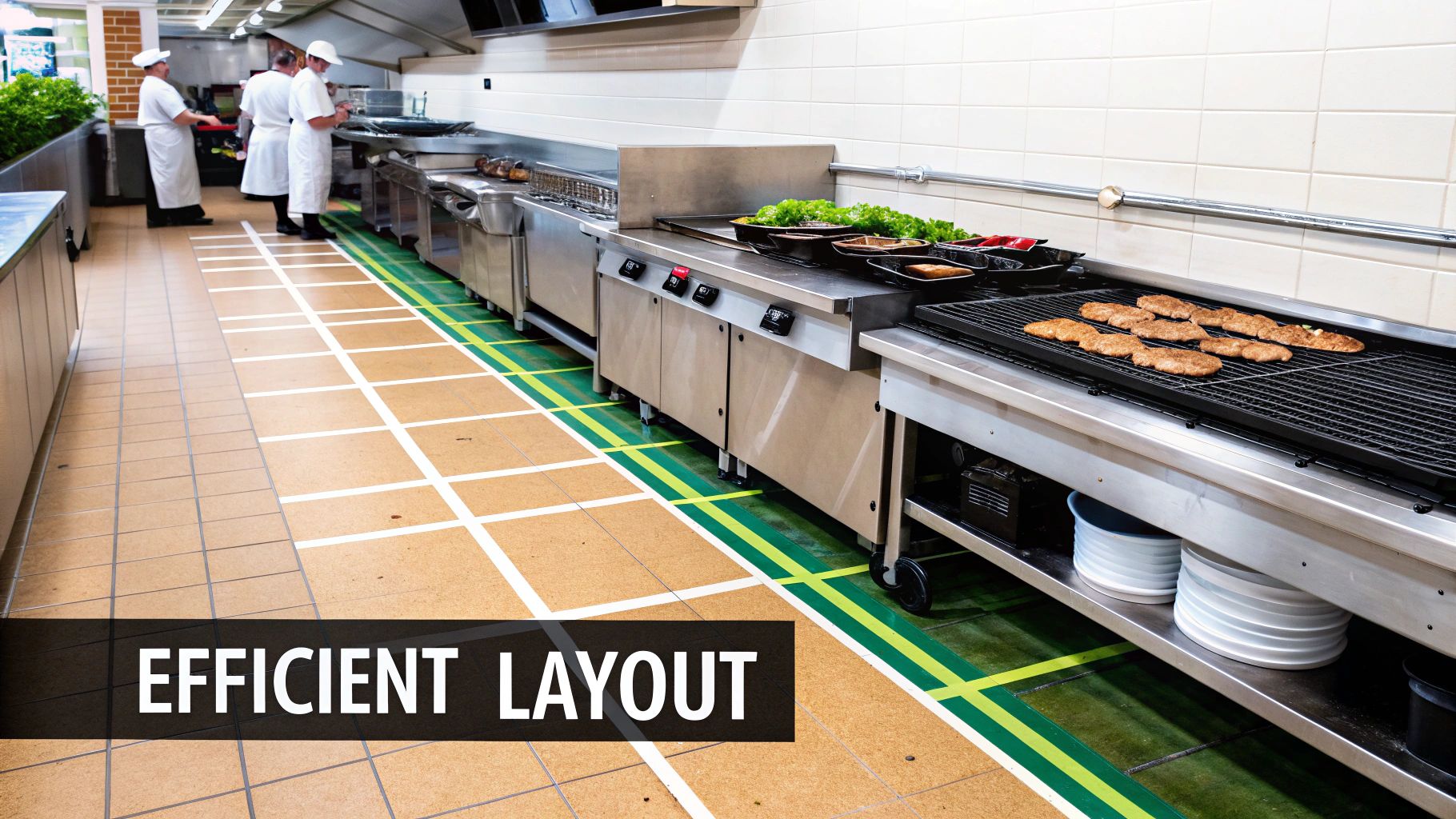
This subject centers on optimizing the kitchen environment around a key piece of equipment, the charbroiler. It covers crucial elements like workflow, ventilation, safety clearances, and utility placement to help operators create a seamless and productive cooking line.
Why This Blog Topic Works
This topic resonates because poor kitchen design leads to inefficiency, increased staff stress, and service delays. By providing a guide on how to plan the space correctly, you offer tangible value that directly impacts a restaurant's profitability and operational harmony. It targets owners, chefs, and managers during the critical design, build-out, or renovation phase.
For instance, a steakhouse planning an open-kitchen concept needs to consider not only workflow but also how the charbroiler's placement enhances the dining ambiance. A fast-casual chain, however, will prioritize a linear production line to maximize speed and consistency. This content helps both operators make informed decisions.
Actionable Tips for Implementation
To create a valuable guide, focus on practical design principles and clear instructions:
- Illustrate Workflow Paths: Use simple diagrams to show efficient movement from the prep station to the charbroiler, then to the plating and service areas. Highlight how to minimize cross-traffic and wasted steps.
- Create a Spatial Requirements Checklist: List key clearances, such as maintaining 3-4 feet of working space around the equipment and ensuring proper distance from combustible materials for fire safety.
- Discuss Ventilation Strategy: Explain the importance of positioning the ventilation hood to capture all smoke and heat, detailing how this impacts air quality and staff comfort. For a deeper dive into overall kitchen planning, explore our complete guide on commercial kitchen design and layout.
- Detail Utility and Maintenance Access: Emphasize planning for gas lines, electrical outlets, and water connections during the initial design phase. Remind readers to leave adequate space for future equipment maintenance and replacement.
10. The Evolution of Charbroiler Technology: Modern Features and Smart Equipment Innovation
A technology-focused article positions your brand as a forward-thinking industry leader. This topic explores the cutting edge of commercial charbroilers, moving beyond basic BTUs to highlight smart features, automation, and energy-saving innovations. It's an excellent blog subject idea for attracting operators of modern, tech-forward restaurant concepts who are looking to optimize their kitchen operations.
This type of content delves into how new technologies are solving old problems. You can discuss everything from cloud-connected platforms that monitor performance across multiple locations to charbroilers with predictive maintenance alerts that prevent costly downtime. The goal is to show how investing in modern equipment translates to tangible benefits like improved food consistency, reduced labor costs, and lower utility bills.
Why This Blog Topic Works
This topic appeals to a sophisticated audience interested in efficiency, data, and future-proofing their business. It targets restaurant owners who understand that equipment is not just a cost but an investment in their operational ecosystem. By explaining complex features in a clear, benefit-driven way, you build authority and attract high-value customers who appreciate quality and innovation.
For example, a fast-growing restaurant chain could use this information to understand how a smart platform provides centralized control over their grilling operations. Similarly, an independent fine-dining establishment might be drawn to the precise temperature control offered by digital thermostats, ensuring perfect execution on every dish. For instance, staying informed about the latest hospitality technology trends for restaurants can inspire new content ideas about smart equipment.
Actionable Tips for Implementation
To create a compelling technology deep-dive, focus on tangible outcomes and practical advice:
- Spotlight Specific Innovations: Instead of speaking generally, focus on specific features like app-controlled cooking systems, digital thermostats, or automated cleaning cycles. Explain exactly how each one works and the problem it solves.
- Create a "Future-Proof Your Kitchen" Checklist: Frame the article around helping readers prepare for the future. Include questions like, "Does this equipment integrate with my existing kitchen management system?" and "What kind of data does it provide for performance analysis?"
- Calculate ROI: Feature a section that helps readers calculate the potential return on investment. Compare the upfront cost of a smart charbroiler against long-term savings from energy efficiency and reduced food waste.
- Discuss Implementation and Training: Address the practicalities of adopting new technology. Cover topics like the need for IT support, the importance of staff training on new user interfaces, and reviewing warranty coverage for sensitive electronic components.
Top 10 Charbroiler Blog Topics Comparison
| Topic | 🔄 Implementation complexity | ⚡ Resource requirements | ⭐📊 Expected outcomes | Ideal use cases | 💡 Key advantages |
|---|---|---|---|---|---|
| The Complete Guide to Choosing Between Countertop, Modular, and Floor Model Charbroilers | Moderate — measurement + comparison | Low–Medium — time, vendor quotes | Informed equipment choice; cost/space clarity | New builds or equipment upgrades | Reduces purchase risk; side-by-side framework |
| How to Maximize Charbroiler Efficiency: Proven Strategies for High-Volume Restaurants | High — workflow redesign & training | Medium — staff time, possible upgrades | Higher throughput; reduced wait and waste | High-volume QSRs and steakhouses | Increases capacity, consistency, revenue |
| Charbroiler Maintenance Essentials: Preventing Breakdowns and Extending Equipment Life | Moderate — recurring routines & logs | Low–Medium — staff time, parts, servicing | Fewer failures; longer equipment life | All operations prioritizing uptime | Prevents emergencies; preserves warranty |
| Creating the Perfect Char: Mastering Temperature Control and Cooking Techniques | High — skill development & control tuning | Medium — chef training, thermometers | Consistent sear quality; premium dishes | Steakhouses, premium burger concepts | Elevates flavor, presentation, priceability |
| Charbroiler Safety: Essential Protocols for Staff Training and Kitchen Compliance | Moderate — policy + drills + training | Medium — PPE, suppression, training | Reduced injuries; regulatory compliance | Regulated kitchens and large teams | Minimizes liability; protects staff health |
| Charbroiler Menu Development: Designing Dishes That Highlight Your Equipment's Strengths | Moderate — R&D, costing, testing | Medium — ingredient sourcing, test runs | Signature items; improved margins | Concepts focused on grilled offerings | Differentiates menu; maximizes equipment ROI |
| Charbroiler Investment ROI: Financial Analysis and Budgeting for Restaurant Equipment | Moderate–High — financial modeling | Low–Medium — sales data, accountant time | Clear payback timeline; financing plan | Owners planning capital expenditures | Data-driven justification; identifies savings |
| Comparing Charcoal vs. Gas Charbroilers: Which Fuel Source is Right for Your Restaurant? | Moderate — trial & cost comparison | Medium — fuel projections, infrastructure | Matched flavor vs efficiency; operational fit | Concept selection based on flavor/cost | Aligns authenticity with operating needs |
| Charbroiler Space Planning: Designing Your Kitchen Layout for Maximum Efficiency | High — design, ventilation, utilities | High — designers, construction, permits | Optimized workflow; fewer bottlenecks | New builds or major remodels | Maximizes productivity, safety, maintenance access |
| The Evolution of Charbroiler Technology: Modern Features and Smart Equipment Innovation | High — tech integration & training | High — purchase premium, IT support | Better consistency; remote diagnostics, energy savings | Multi-location chains; tech-forward concepts | Automation, predictive maintenance, data insights |
Turn Ideas Into Authority: Your Next Steps in Content Marketing
You now possess a comprehensive arsenal of blog subject ideas, moving you far beyond the frustrating question of "What should I write about today?" We've explored everything from the granular details of charbroiler maintenance and safety protocols to high-level strategic topics like menu development and calculating your equipment's return on investment. Each idea is a seed, a starting point designed to do more than just fill a space on your content calendar; it's engineered to solve a real problem for your target audience.
The true value of this list lies not in the ideas themselves, but in their execution. A title like "The Complete Guide to Choosing Between Countertop, Modular, and Floor Model Charbroilers" is a promise to your reader. Fulfilling that promise with well-researched, detailed, and actionable advice is what transforms a simple blog post into an authoritative resource. This is how you stop being just a vendor and become a trusted partner in your customers' success.
From Blueprint to Published Post: A Strategic Checklist
Having a great blog subject idea is only the first step. To consistently turn these concepts into traffic-driving assets, you must build a repeatable and strategic workflow. This process ensures every piece of content you create is optimized for both search engines and human readers.
Follow these critical next steps to bring your content strategy to life:
- Prioritize with Purpose: Review the list of ideas. Which topics align most closely with your current sales promotions or the most common questions your sales team receives? Start there. A post on "Charbroiler Maintenance Essentials" could be a powerful tool for your support team to share with existing clients.
- Deep Dive into Keyword Research: For each chosen topic, expand on the initial keyword suggestions. Use SEO tools to find long-tail variations and related questions. A search for "charbroiler efficiency" might also reveal user queries like "how to reduce gas consumption on a commercial charbroiler" or "best way to clean charbroiler grates for better heat."
- Structure for Skimmability: Before you write a single word, create a detailed outline. Use H2, H3, and H4 headings to structure the article logically. Incorporate bullet points for lists, bold text for key terms, and blockquotes to highlight expert insights. This makes your content accessible and easy to digest for busy restaurant professionals.
- Write with Authority and Empathy: Your content must demonstrate genuine expertise. Go beyond surface-level advice. Interview one of your technicians for the maintenance article. Talk to a chef about how they create the perfect char. This primary-source information is invaluable and sets your content apart from generic competitor articles.
Amplifying Your Reach Beyond the Blog
Publishing the article is not the final step. To maximize your return on investment, you need a robust promotion strategy. A well-written blog post without an audience is like a state-of-the-art kitchen with no customers.
Key Insight: Your content's value is directly tied to its visibility. A strategic promotion plan ensures your expertise reaches the right people at the right time, turning your blog into a lead-generation engine.
Focus your efforts on these high-impact promotional channels:
- Strategic Blogger Outreach: Identify non-competing blogs in the restaurant industry, such as food service consultant sites or chef forums. Reach out to them with a link to your new, in-depth resource, explaining why it would be valuable to their audience. Securing even one high-quality backlink can significantly boost your article's authority and search ranking.
- Optimize Local Citations: For restaurant equipment suppliers, local search is paramount. Ensure your business name, address, and phone number are consistent across all online directories. A strong local citation service foundation means that when a nearby restaurant manager searches for "commercial charbroiler repair tips," your expertly written blog post is more likely to appear.
- Leverage Your Email List: Your email subscribers are your most engaged audience. Send out a dedicated newsletter announcing your new article. Frame it as exclusive, helpful content designed to help them run their business more effectively. This not only drives traffic but also strengthens customer loyalty.
By consistently applying this framework of ideation, creation, and promotion, you will build a powerful content marketing machine. Each article becomes another entry point for potential customers, another proof point of your industry leadership, and another step toward dominating the search results for your most important products and services.
Ready to move from theory to practice? For a real-world example of expert-driven content and the highest quality equipment, explore the resources at Charbroilers.com. We don't just sell equipment; we provide the knowledge and support to help your foodservice business thrive. Visit Charbroilers.com to see how top-tier products and in-depth expertise come together.