

Beyond the Bistro: Your Guide to Using Commercial Refrigerators at Home
Why Home Cooks Are Going Commercial
A commercial fridge for home use is becoming increasingly popular among homeowners who need serious storage capacity, superior cooling power, and restaurant-grade durability. Here's what you need to know:
Key Considerations for Commercial Fridges at Home:
- Pros: Massive storage space (20-35+ cu. ft.), built to last decades, rapid temperature recovery, professional stainless steel aesthetic
- Cons: Higher energy consumption, louder operation (50-60+ dB), fewer organizational features (no crisper drawers or door bins), higher upfront cost ($1,300-$5,000+)
- Best for: Large families, bulk shoppers, home chefs, frequent entertainers, home-based food businesses
- Installation needs: 110V electrical, proper ventilation clearance, strong floor support, delivery access for large units
Commercial refrigerators are engineered for round-the-clock use in demanding restaurant kitchens, so they're built tough. They can easily dwarf residential counterparts with capacities exceeding 27 cu. ft., and they boast a sleek stainless steel design that exudes professionalism. But they also require more power than residential units and lack the convenient organizational features like produce drawers, door bins, and egg trays that home fridges typically include.
The question isn't whether you can use a commercial fridge at home—it's whether you should. The answer depends on your storage needs, budget, available space, and tolerance for higher energy bills and compressor noise.
I'm Sean Kearney, founder of Charbroilers.com, with over a decade of experience in the restaurant equipment industry helping both commercial kitchens and home enthusiasts find the right *commercial fridge for home use that balances performance, durability, and value.* Whether you're considering a reach-in refrigerator for your garage or an undercounter unit for your kitchen island, understanding the trade-offs will help you make the right choice.
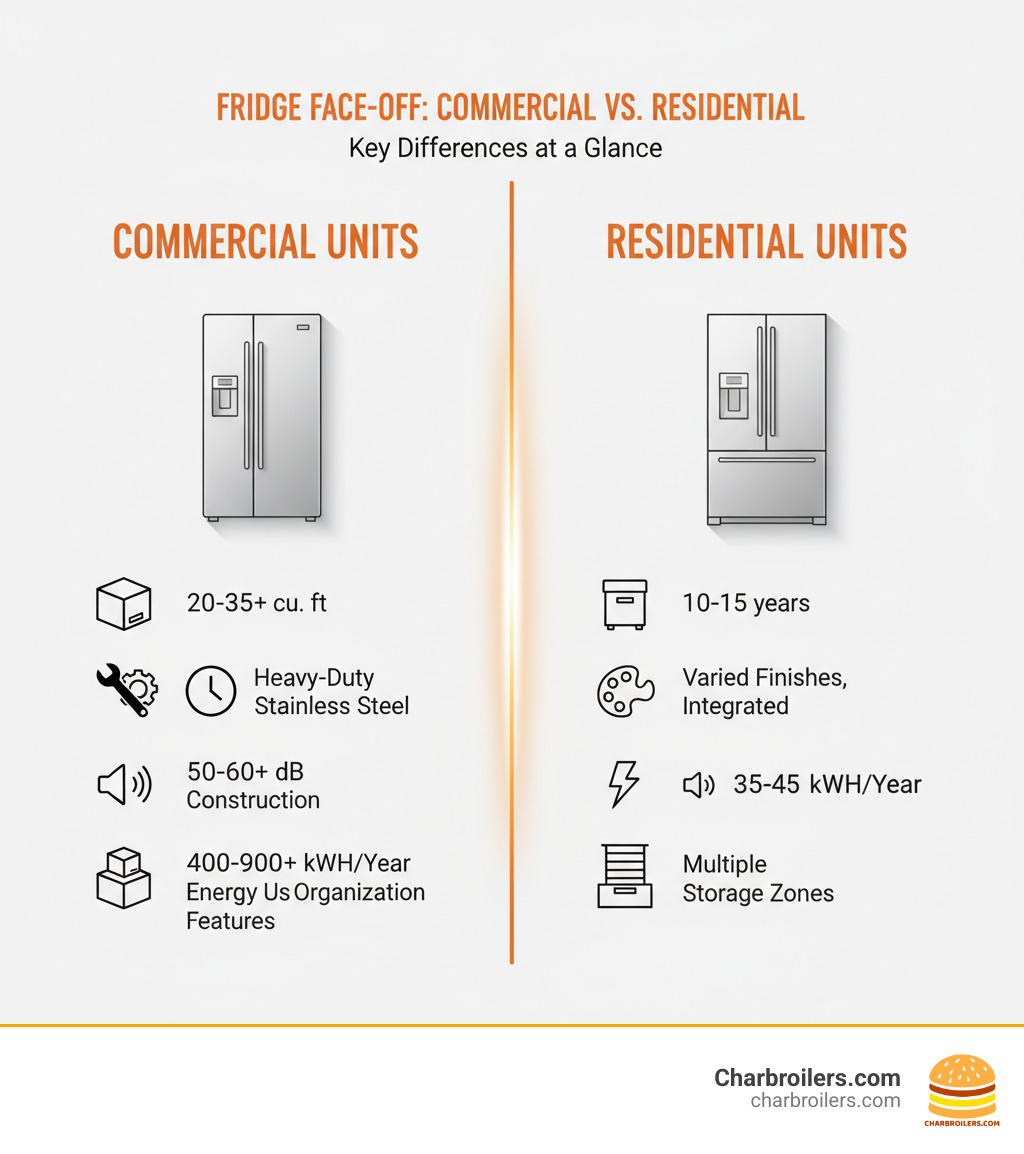
Basic commercial fridge for home vocab:
The Pros and Cons: Is a Commercial Fridge Right for You?
Thinking about bringing a commercial fridge for home use into your kitchen? These units are built for busy restaurant kitchens, not cozy residential spaces, which creates some important trade-offs.
Let's look at how commercial refrigerators stack up against standard home models across the metrics that matter most:
| Metric | Commercial Refrigerators (as offered by Charbroilers.com) | Standard Home Refrigerators |
|---|---|---|
| Lifespan | 10-20+ years (built for continuous operation) | 10-15 years |
| Capacity | 20-35+ cu. ft. (often much larger) | 10-25 cu. ft. |
| Durability | Heavy-duty stainless steel, robust components | Varied materials, less robust components |
| Initial Cost | $1,300 - $5,000+ | $500 - $3,000+ |
| Noise Level | 50-60+ dB (louder operation) | 35-45 dB (quieter operation) |
| Energy Use | 400-900+ kWh/year (higher overall due to size/power) | 300-600 kWh/year |
| Organizational Features | Minimal (open shelving, no dedicated drawers) | Multiple storage zones, crisper drawers, door bins |
The real strength of commercial refrigerators lies in their superior cooling power, rapid temperature recovery, and ability to handle heavy-duty, round-the-clock use. Their utilitarian design is all about performance, though the professional stainless steel look has its own appeal.
The Upside: Best Power, Space, and Durability
A commercial fridge for home shines with its massive storage capacity. Routinely exceeding 27 cubic feet, these units eliminate the struggle of fitting bulk purchases or large platters. Beyond size, their superior cooling power and rapid temperature recovery are engineered for consistency. Even with frequent door openings, the interior quickly returns to its set temperature, keeping food fresher for longer and reducing waste.
This performance is backed by built-to-last construction. Made with heavy-duty stainless steel and superior-grade components, commercial refrigerators are designed for 24/7 operation and can last over 20 years, offering exceptional long-term value compared to residential models that typically last 10-15 years.
The Downsides: Noise, Energy, and Practicality
The trade-offs are practical. The louder operation is a primary concern. The powerful compressors and fans produce noise levels around 50-60 dB, significantly louder than a typical 35-45 dB home fridge. In an open-concept living space, this constant compressor and fan noise is a factor to consider.
Higher energy consumption also translates to increased electricity bills. A commercial unit's larger size and power can lead to an annual energy use of 900+ kWh, compared to 300-600 kWh for many residential models. Finally, their design prioritizes space over convenience, meaning fewer organizational features. The interior consists of open, adjustable shelving, lacking the crisper drawers and door bins common in residential fridges. This requires a more hands-on approach to organization.
Understanding these trade-offs is essential before you invest in a commercial fridge for home use. For the right household, the benefits far outweigh the drawbacks.
Your Pre-Purchase Checklist for a Commercial Fridge for Home
Before you bring a commercial powerhouse into your home, let's talk planning. Think of this like prep work before a big dinner party—measure twice, buy once, and you'll save yourself a lot of headaches down the road.

Cost & Energy Consumption: What's the Real Price?
The purchase price for a commercial refrigerator typically ranges from $1,300 to over $5,000. While a significant upfront investment, it buys equipment built for decades of service. Operating costs will be higher due to increased energy consumption (often 900+ kWh/year). Look for modern units using efficient R290 refrigerant to help manage costs, as Energy Star ratings are rare on commercial equipment.
Also, budget for warranty and service options. Commercial warranties (e.g., 2 years parts, 1 year labor, 5 years compressor) are robust but may require specialized technicians for repairs, which can differ from standard home appliance service.
Installation & Space: Will It Fit in Your Kitchen?
This is where planning prevents major frustration. Pay close attention to unit dimensions and weight. A large unit can be over 76 inches tall and weigh 200+ pounds empty. Measure your entire delivery path—doorways, hallways, and corners—before buying.
Ventilation requirements are non-negotiable; these units need several inches of air clearance for heat dissipation to ensure efficiency and prevent overheating. Most run on a standard 110V electrical outlet, so special wiring is usually not needed, but always verify the specs. Finally, confirm your floor has adequate floor support for the heavy, fully-loaded unit, and plan for delivery access to handle the large, awkward appliance.
When you're ready to explore options, you can explore different models and their specs available at Charbroilers.com to find dimensions that work for your space.
Noise & Aesthetics: Living with a Workhorse
Living with a commercial unit means adapting to its workhorse nature. The decibel levels (around 56 dB) are noticeably louder than a home fridge, with more frequent compressor cycles and fan noise. Consider placement carefully, especially in open-plan homes.
Aesthetically, the professional stainless steel finish is a major draw, offering a sleek, industrial look. However, most are freestanding units not designed for seamless integration with cabinetry. You'll also choose between a glass door, which offers visibility but less insulation, and a solid door, which is more energy-efficient. Choose based on whether visibility or insulation is more important for your needs.
Choosing the Right Type of Commercial Fridge for Your Home
Not all commercial refrigerators are created equal. Understanding the different types available helps you match the right appliance to your specific needs, kitchen layout, and how you actually use your space.

Reach-In Refrigerators
These are the tall, stainless steel workhorses seen in restaurant kitchens. Offering maximum capacity in single or double-door models, reach-ins are perfect for bulk storage. Due to their size and noise, many homeowners place them in a garage, pantry, or basement, creating a dedicated cold storage zone for bulk buys, produce, or items for a home-based food business.
Undercounter & Worktop Models
For targeted cooling in a compact form, undercounter and worktop models are ideal. These space-saving units fit under countertops, perfect for a kitchen island prep station, a home bar, or an entertainment room beverage center. They provide the same commercial-grade durability and cooling power as larger models but are integrated into your workspace as a convenient secondary refrigeration source.
Commercial-Style Options for Home Use
A growing category bridges the gap between commercial and residential. These "commercial-style" refrigerators are designed for home use but incorporate commercial engineering—robust construction, powerful compressors, and precise temperature control. They offer improved durability and performance over standard models but with quieter operation and designs better suited for a home kitchen. They represent a compelling middle ground for those who want professional performance without the full industrial experience.
Whether you're envisioning a massive reach-in for your garage or a sleek undercounter unit for your kitchen island, finding the right configuration matters. You can explore different models and their specs available at Charbroilers.com to see what might work best for your home setup.
Daily Life: Maintenance, Organization, and Safety
So, you've decided to bring a commercial fridge for home into your life. With a few smart strategies and some regular upkeep, your commercial unit will serve you reliably for years to come.
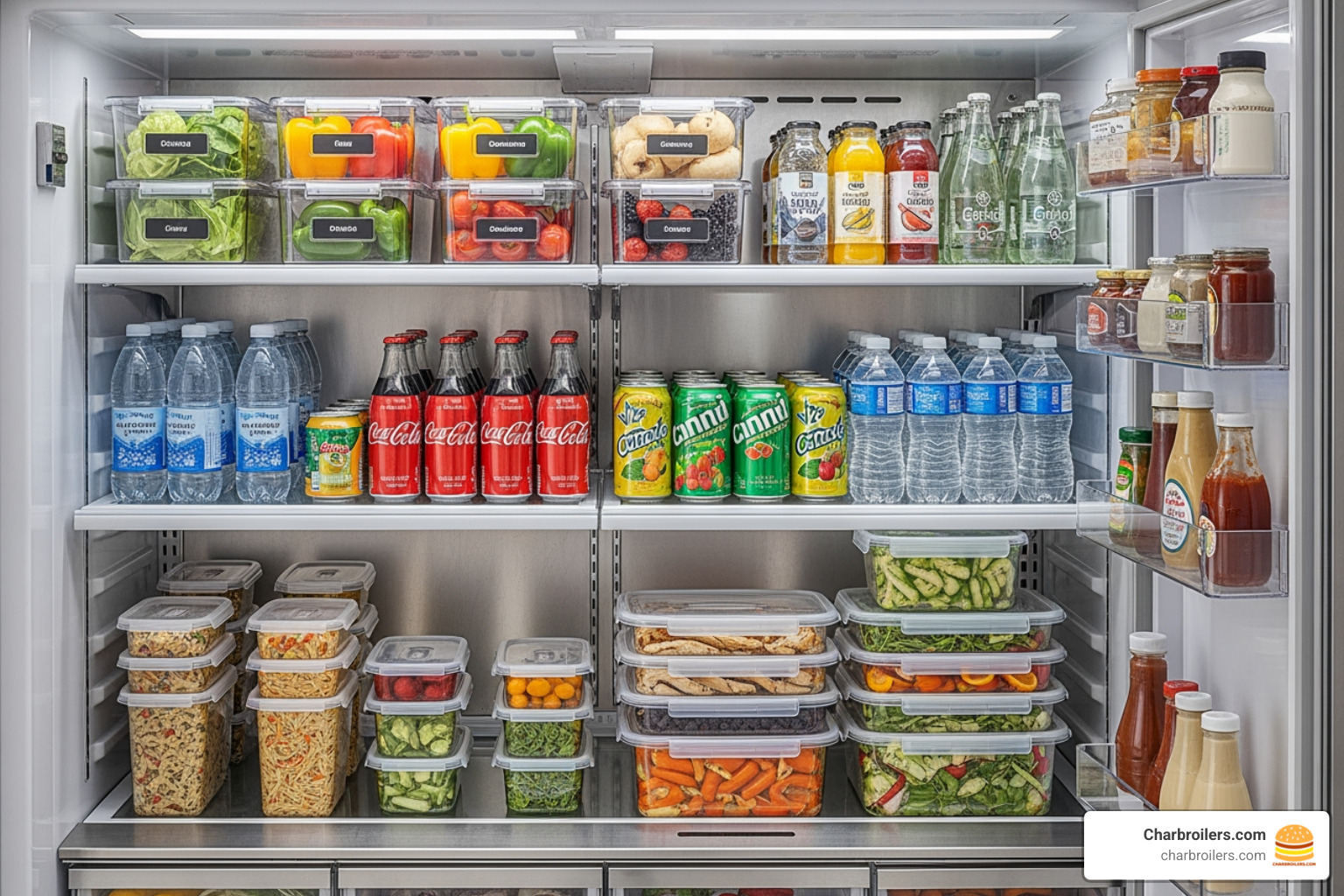
Keeping It Organized Without Crisper Drawers
Since commercial fridges lack built-in organizers, you'll create your own system. The key is using clear, food-safe bins and containers to group items like dairy, produce, and meats. This modular approach, combined with labeling, lets you see everything at a glance and reduces food waste. Take advantage of the fully adjustable shelving to customize the layout for tall items or stacking trays, and use stackable containers to maximize vertical space.
Organizational Tools That Make Life Easier:
- Clear, stackable food-safe bins in various sizes
- Airtight containers for opened items and leftovers
- Label maker or waterproof labels
- Wire shelf dividers to create zones
- Lazy Susans for condiments and smaller items
Maintenance and Upkeep for your commercial fridge for home
Regular upkeep is simple but crucial for your investment. Wipe down the stainless steel finish to keep it looking professional. The most important task is cleaning the condenser coils every few months to ensure proper heat dissipation and energy efficiency. Also, periodically check the door gaskets for a tight seal to prevent cold air loss. For repairs beyond basic maintenance, use a technician specializing in commercial refrigeration and keep your warranty information handy.
Health and Safety with your commercial fridge for home
A key benefit of a commercial fridge is superior food safety. They are engineered to maintain consistent, precise temperatures, a critical factor in preventing bacterial growth. Many carry NSF certification, meeting the same sanitation and safety standards required in professional kitchens. This reliable temperature control keeps food fresher for longer, reducing spoilage and the risk of foodborne illness. An organized bin system also makes it easy to prevent cross-contamination by separating raw meats from other foods.
Who Benefits Most from a Commercial Fridge at Home?
While not for every home, a commercial fridge for home use is a transformative upgrade for certain lifestyles. You'll benefit most if you are one of the following:
- Large Families: Easily store bulk groceries, drinks, and meal prep for a full household without the daily struggle for space.
- Bulk Shoppers: Take full advantage of warehouse club deals by having ample room for large-quantity purchases.
- Serious Home Chefs: Get the reliable, spacious, and temperature-consistent storage needed for specialty ingredients and complex dishes.
- Frequent Entertainers: Effortlessly store party platters, cases of beverages, and prepped food, freeing up your main fridge.
- Home-Based Food Businesses: Meet health standards and manage inventory with the commercial-grade capacity and reliability required for professional operations.
- Gardeners and Homesteaders: Preserve large harvests, game, or fish with robust cold storage that prevents spoilage.
The common thread is a need for capacity and performance beyond what standard residential refrigerators can offer. If you see yourself in any of these descriptions, a commercial fridge might just be the kitchen upgrade that makes your daily life significantly easier.
Conclusion: Elevating Your Home Kitchen
Is a commercial fridge for home the right choice for you? It's a decision that balances substantial benefits with practical trade-offs. You gain massive storage capacity, superior cooling performance, and decades-long durability. In return, you accept higher energy bills, more operational noise, and the need to create your own organization system.
This is a considered choice, best suited for those whose needs justify the investment: large families, passionate home chefs, frequent entertainers, or operators of home-based food businesses. If you see your needs reflected here, a commercial refrigerator can be a truly transformative upgrade for your kitchen.
At Charbroilers.com, we've spent over a decade helping customers find professional-grade equipment that fits their lifestyle and supports their culinary ambitions. We understand the nuances of bringing commercial power into a home setting.
Ready to explore your options? Browse our selection of commercial refrigerators to find a model that fits your needs and space. And if you're considering other commercial-grade upgrades for your home cooking space, our Guide to commercial charbroilers for your restaurant offers insights into another category of professional equipment that's making its way into passionate home kitchens.