

Choosing Your Barbecue Char Broil
When you're running a commercial kitchen, the right barbecue char broil isn't just another piece of equipment—it's the heart of your operation. It’s what gives steaks those perfect grill marks and infuses burgers with that authentic, smoky flavor customers crave. Think of it as the tool that defines your signature dishes.
Your Guide to Commercial Charbroiler Technology
Choosing a commercial charbroiler is a serious decision for any chef or restaurant owner. It's a choice that directly impacts your menu, your kitchen's efficiency, and the final taste and texture of your food. I've seen it firsthand—the right unit can elevate a kitchen, while the wrong one can be a constant source of frustration.
This guide is here to cut through the noise. We'll walk through the core technologies out there so you have the confidence to pick the perfect machine for your business.
We're going to focus on the three main players in the commercial charbroiler world, each with its own personality and strengths:
- Gas Charbroilers: These are the powerful, reliable workhorses you'll find in countless busy kitchens.
- Electric Charbroilers: The go-to for convenience and consistency, especially in modern setups.
- Infrared Charbroilers: The high-octane option built for ultimate searing power and precision.
Why Everyone Is Craving That Grilled Flavor
Let's be clear: the demand for authentic grilled food isn't just a fleeting trend. It’s a massive market driver. People are drawn to that unique smoky taste and satisfying char that you can only get from a real barbecue char broil.
The numbers back this up. The market was valued at a huge USD 855.6 million in 2025 and is expected to hit USD 1,316.1 million by 2035. This isn't just happening in traditional steakhouses; it's being fueled by everything from new restaurant concepts to the explosion of interactive dining like Korean barbecue and Japanese Yakiniku.
What does this mean for your kitchen? Investing in top-notch grilling equipment isn't about playing catch-up. It’s about leading the pack and giving your customers exactly what they’re looking for. A great charbroiler is your ticket to that signature flavor.
The Three Pillars of Charbroiler Performance
Every charbroiler technology—gas, electric, and infrared—generates heat in a fundamentally different way. Getting a handle on these differences is the first real step toward making a smart choice. If you want a full breakdown of the basics, you can get more detail from our guide on what a charbroiler is and how it works.
To start, a quick comparison can help map out the territory. Take a look at this table to see how each technology stacks up against the needs of a professional kitchen.
Commercial Charbroiler Types At a Glance
Here’s a quick comparison of the three primary commercial charbroiler technologies to help you understand their core strengths and best use cases in a professional kitchen.
| Technology Type | Primary Heat Source | Best For | Key Advantage |
|---|---|---|---|
| Gas | Direct flame heating radiants or lava rocks | High-volume kitchens needing reliable power and classic grilled flavor | Unbeatable power output and fast recovery times |
| Electric | High-powered heating elements | Kitchens without gas lines or with flame restrictions | Precise temperature control and operational simplicity |
| Infrared | Intense infrared energy from ceramic plates | Steakhouses and high-end restaurants demanding perfect sears | Extremely fast cooking, moisture retention, and reduced flare-ups |
This table gives you a bird's-eye view, but the real magic is in the details.
As we continue, we’ll dive deeper into each of these types. I’ll share real-world scenarios—from a bustling food truck to an upscale steakhouse—to help you picture how a particular barbecue char broil would perform in your own space. With this foundation, you’ll be ready to choose a unit that doesn’t just cook your food, but truly elevates your entire menu.
Gas Charbroilers for Power and Precision
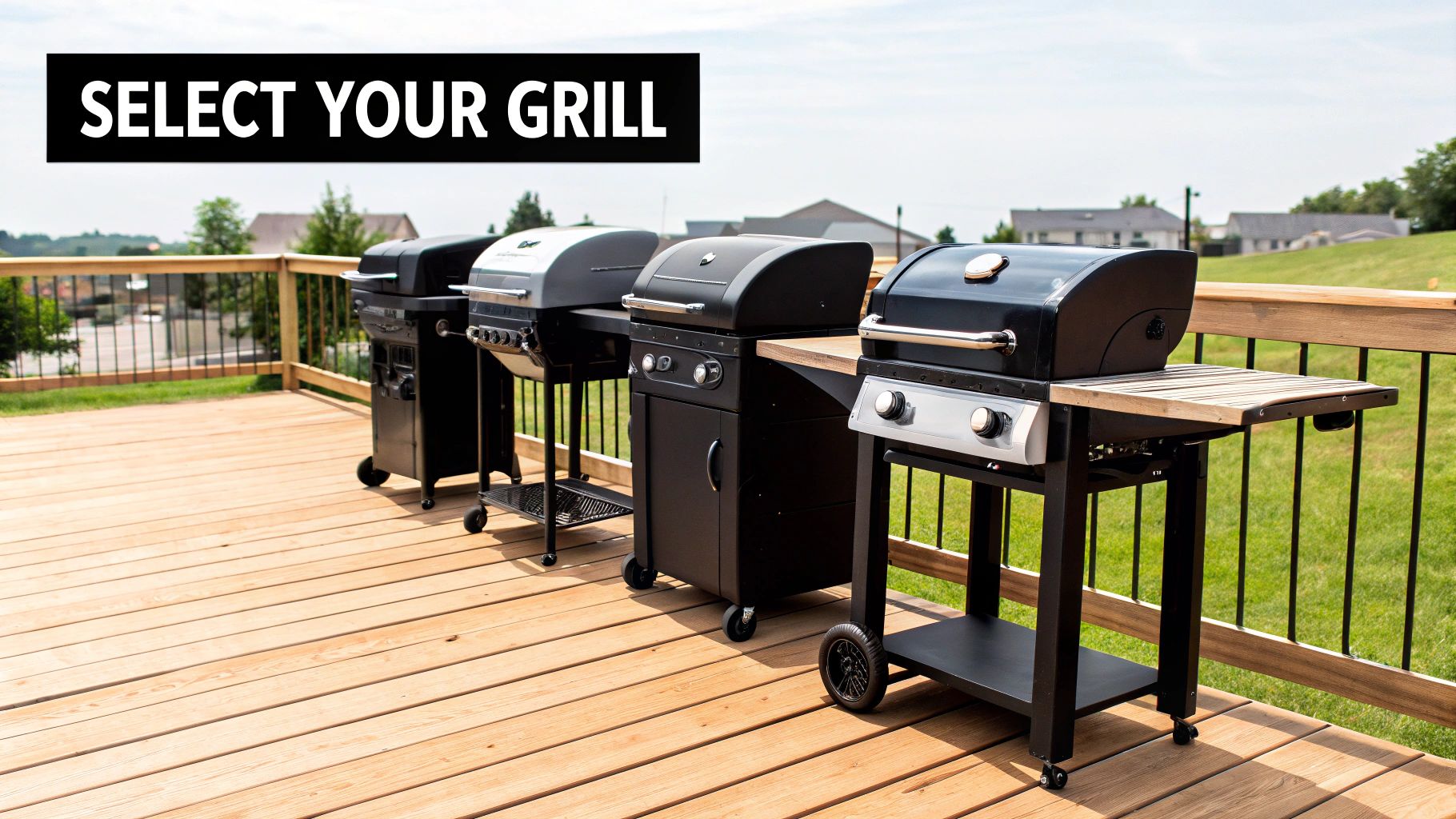
Walk into just about any busy commercial kitchen, and you’ll likely hear the roar of a gas charbroiler. These units are the real workhorses of the industry, and for good reason. They’re prized for their raw power, fast recovery times, and their ability to impart that classic grilled flavor customers crave.
If your restaurant relies on high-volume output without ever compromising on quality, a gas barbecue char broil is almost always the most dependable and logical investment you can make. They hook right into a natural gas or propane line, giving you immediate, intense heat that can keep up with a relentless dinner rush. When tickets are flying and you're constantly loading up with burgers, steaks, and chicken, this is the kind of performance you need.
Radiant vs. Lava Rock Models
Your first big decision with a gas charbroiler comes down to the heat distribution system. This choice directly impacts everything—from the flavor of your food to your daily cleaning routine. You're essentially choosing between radiant and lava rock models.
Radiant Charbroilers These models use heavy-duty metal plates, often called radiants or heat shields, that sit right above the gas burners. The plates soak up the heat from the flames and radiate it evenly across the entire cooking surface.
- Fast and Even Heating: Radiants get hot quickly and spread that heat uniformly, which means fewer frustrating hot or cold spots on your grill.
- Easier Cleanup: Drippings hit the hot radiants and vaporize into flavorful smoke. What's left is far easier to scrape off than trying to clean porous rocks.
- Reduced Flare-Ups: The angled design of most radiants is brilliant—it channels excess grease away from the open flame, dramatically cutting down on the flare-ups that can scorch your food.
Lava Rock Charbroilers Just like the name suggests, these units use a bed of porous volcanic rocks over the burners. The rocks heat up and radiate that warmth to the grates above.
- Exceptional Flavor: This is where lava rock shines. When drippings hit those hot rocks, they create a massive plume of smoke that infuses food with a smoky taste that many chefs (and customers) absolutely love.
- Authentic Feel: For some kitchens, lava rocks just feel more "authentic," almost like a nod to traditional charcoal grilling.
- Higher Maintenance: There's a trade-off. Because lava rock is porous, it soaks up grease. You have to stay on top of flipping or replacing the rocks to avoid grease fires and rancid flavors tainting your food.
Here's a real-world example: A high-end steakhouse that needs perfect, consistent sear marks with minimal flare-ups would be much better off with a radiant gas charbroiler. But a laid-back diner going for that intensely smoky burger might find the flavor from a lava rock model is worth the extra cleaning commitment.
Essential Buying Considerations
Once you've settled on the heating system, there are a few other details to iron out. Getting these right ensures you're buying a machine that will last for years in a tough commercial environment.
First, check the BTU (British Thermal Unit) rating. This is a straight-up measure of heat output. For any serious commercial use, you want a high BTU rating per burner—look for something in the 15,000 to 20,000 BTUs range. This guarantees you get fast preheating and quick recovery when you throw a new batch of cold steaks on the grill.
Next up, take a close look at the control valves. Good valves give you precise, independent control over each burner. This is non-negotiable if you want to create different temperature zones on the grill. Think searing a thick-cut ribeye on high heat while gently grilling asparagus on low right next to it. For a closer look at specific models and their features, our deep dive into the Char-Broil brand has some fantastic insights.
Finally, don't forget the grate material. This is where the magic happens—it’s the point of contact with your food.
| Grate Material | Advantages | Best For |
|---|---|---|
| Cast Iron | Holds heat like nothing else and produces those deep, beautiful sear marks. | Steakhouses and burger joints where that visual "wow" factor matters. |
| Stainless Steel | Resists rust and is much easier to keep clean. It’s durable but doesn't retain heat quite as well. | High-volume spots grilling more delicate items, like fish or vegetables. |
Choosing a well-built gas barbecue char broil is a true investment in your kitchen’s output and your menu’s reputation. When you understand these key differences, you can pick a powerful, precise tool that will be a reliable part of your team, service after service.
Electric Charbroilers: The Go-To for Convenience and Consistency
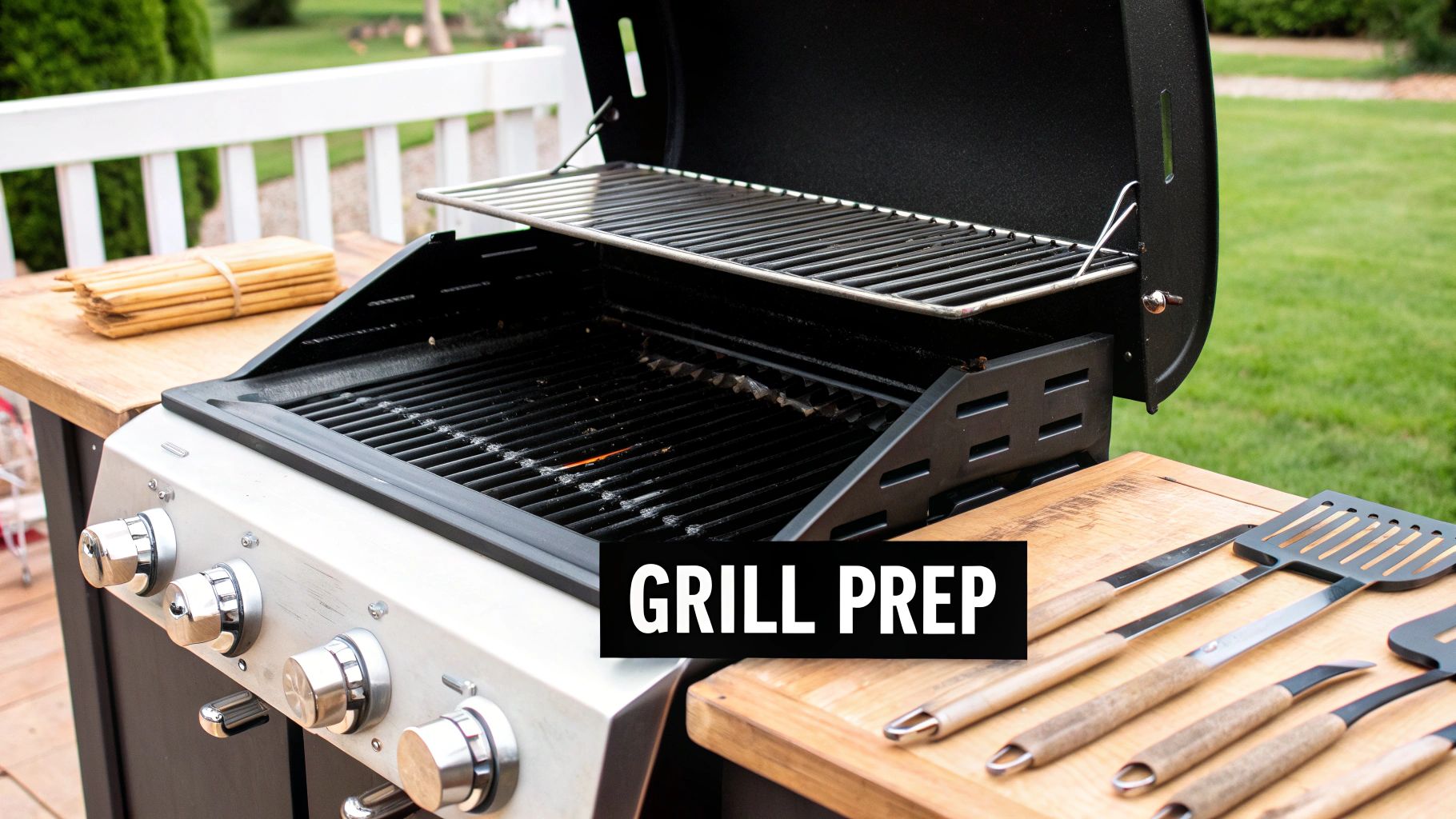
For a long time, gas was king in the commercial kitchen. But I’ve seen a real shift happening lately. Electric charbroilers are carving out their own space, and for good reason. They offer an incredible mix of convenience, safety, and consistent results, especially in places where gas just isn't practical.
In kitchens without existing gas lines or where local fire codes are strict, an electric barbecue char broil isn't a second-best option anymore—it's often the smartest choice. These machines give chefs a level of control and ease that gas models struggle to match, making them a fantastic fit for all kinds of food service operations.
Precision, Safety, and Rock-Solid Performance
The biggest win with an electric charbroiler is its pinpoint temperature control. Gas flames can waver, but electric elements deliver a constant, even heat. You can set a specific temperature and know with confidence that the unit will hold it, ensuring every single steak or vegetable skewer is cooked exactly the same way, every time.
This takes the guesswork out of grilling, which is a lifesaver for kitchens that pride themselves on consistency. On top of that, not having an open flame is a huge safety boost. This is a massive plus in a cramped back-of-house or an open kitchen where you want to keep risks to a minimum.
I've seen electric charbroilers become the perfect solution in a few key scenarios:
- The Urban Food Truck: With tight spaces and even tighter fire regulations, a gas grill is often a non-starter. A compact electric unit gives you that essential grilling power without the ventilation nightmares or the hassle of storing propane tanks.
- The Upscale Open Kitchen: When your kitchen is part of the show, you can't have smoke and flare-ups ruining the guest experience. Electric models cook cleanly, protecting the air quality for both diners and your team.
- The Institutional Kitchen: Places like hospitals, schools, and corporate cafeterias operate under very strict safety rules that often ban open flames. Electric charbroilers meet those standards while still producing delicious, authentically grilled food.
A lot of chefs still think you can't get that classic smoky flavor from an electric unit. That’s a myth. Most of that signature "grill" taste actually comes from juices and fats hitting a hot surface and vaporizing. Modern electric charbroilers are designed to do this perfectly with incredibly efficient heating elements.
It's Time to Bust Some Performance Myths
Let's put those old ideas about electric charbroilers to bed. The commercial models on the market today are absolute workhorses. They're built for power, preheating fast to get you up to searing temperatures quickly, so you're not left waiting around during a busy service.
These units use high-wattage elements paired with heavy-duty cast iron or stainless steel grates that hold heat exceptionally well. This design means you can get those deep, dark sear marks that look and taste just like they came off a gas-powered barbecue char broil. For delicate items like fish that demand precise heat, their performance is often even better than gas.
This isn't just an anecdotal trend; the numbers back it up. The global market for electric grills, a core part of the charbroiler industry, hit around USD 4.77 billion in 2023. It's expected to jump to USD 7.55 billion by 2032, largely because of urbanization and stricter fire codes. As more kitchens demand safe, efficient equipment, electric technology just keeps getting better.
If your kitchen prioritizes consistency, safety, and simplicity without giving up on performance, an electric charbroiler is a serious contender. You can check out a full lineup of models to find the right one for your setup in our detailed guide on the commercial electric charbroiler.
Infrared Charbroilers for Ultimate Searing Performance
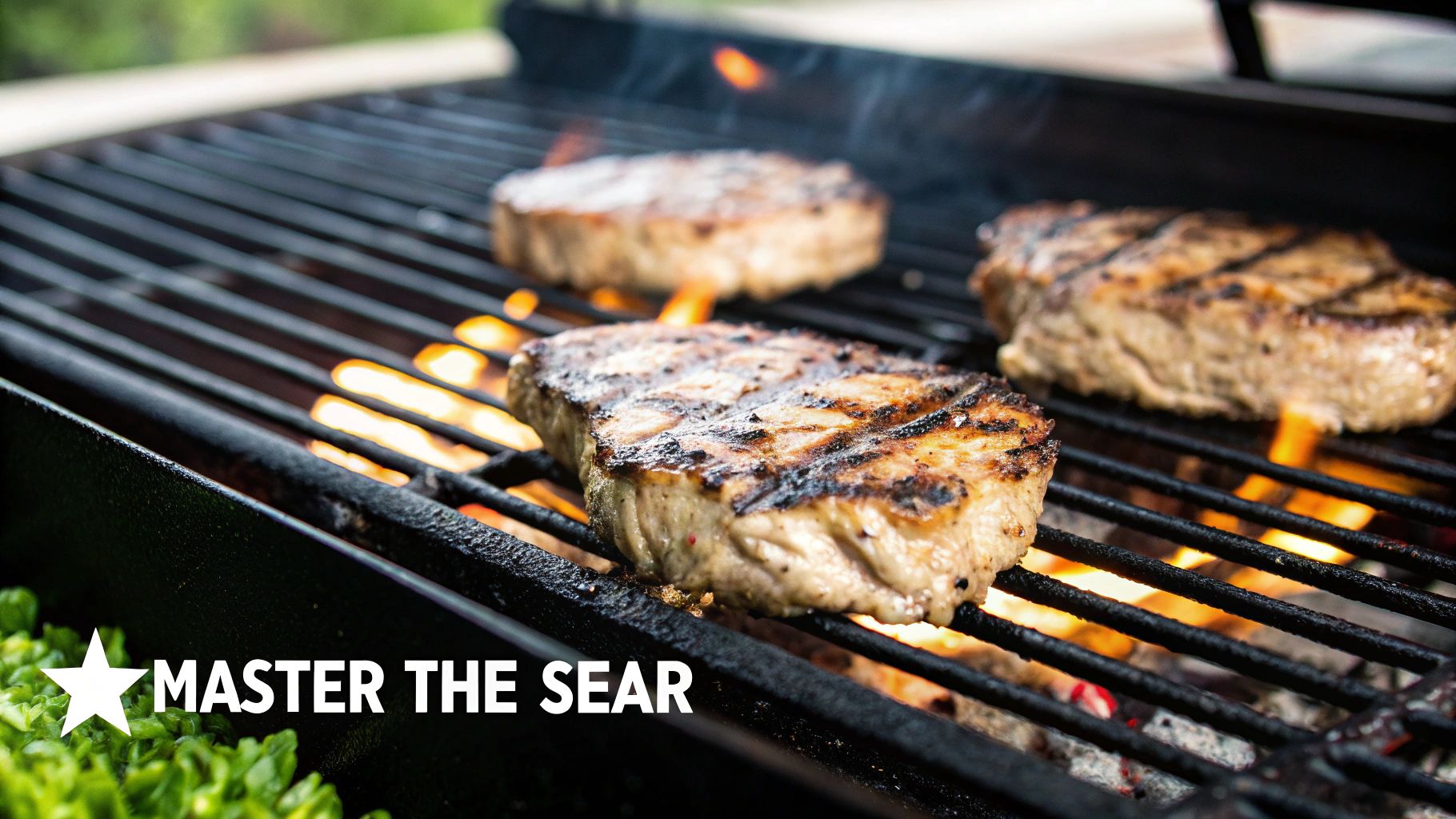 When your kitchen needs to deliver nothing short of perfection, it’s time to look at infrared technology. An infrared barbecue char broil is the go-to for restaurants that stake their reputation on speed, consistency, and an absolutely flawless sear. These aren't your everyday grills; they're precision instruments built for high-stakes cooking.
So what's the big deal? Unlike typical gas or electric charbroilers that just blast hot air (convection), infrared models work on a whole different level. They generate intense, focused infrared energy that heats the food directly, not the air around it. This is a far more efficient method, cooking food significantly faster while locking in juices for a succulent result that's honestly tough to match.
This technology is a real game-changer for any high-end steakhouse. Picture cooking a thick, 2-inch tomahawk steak. With a conventional grill, you’re always fighting to get that deep crust without turning the center into leather. An infrared charbroiler, on the other hand, instantly sears the surface with intense heat, creating a perfect, edge-to-edge crust while the interior stays unbelievably tender and juicy.
The Science of a Superior Sear
Infrared energy is a lot like the heat you feel from the sun. It penetrates food more deeply and evenly than hot air, which can cut your cooking times by as much as 50%. That’s a massive advantage when the tickets are piling up during a busy dinner service.
Another huge benefit is the massive reduction in flare-ups. Because the heat is so directional and doesn't rely on roiling currents of hot air, drippings are far less likely to ignite. Instead, they often vaporize the moment they hit the hot ceramic surface, creating a clean smoke that adds flavor without that awful, acrid taste of burnt grease.
Key Takeaway: An infrared barbecue char broil sends heat straight to the food, not the air. The payoff? Faster cooking, incredible moisture retention, and minimal flare-ups, which all add up to a consistently superior product.
This efficiency hits your bottom line, too. Faster cooking means faster table turnover. Fewer flare-ups mean less food waste from scorched steaks. And because infrared burners are so effective, they often use less energy than traditional gas units of the same size, trimming your utility bills over time.
Weighing the Investment Against the Rewards
Let's be honest: infrared charbroilers have a higher price tag. That initial cost can be a hurdle, but for the right operation, the long-term gains are more than worth it. You have to see it not just as an expense, but as a strategic move to boost quality and efficiency.
Think about these long-term benefits:
- Faster Ticket Times: Cooking proteins in a fraction of the time directly improves your kitchen's throughput.
- Lower Energy Bills: High-efficiency burners mean less wasted energy and real savings on your monthly gas or electric costs.
- Superior Food Quality: That unmatched sear and moisture retention can elevate your signature dishes, justifying premium prices and building a loyal following.
To make the right call, take a hard look at your menu and your volume. If you're a high-volume steakhouse, a fine dining restaurant, or any spot where the grilled food is the star of the show, the ROI on an infrared unit often becomes crystal clear.
Understanding Infrared Burner Types
Not all infrared systems are built the same. As you look at different models, you'll see a couple of main designs. Knowing the difference is key to picking a unit that’s both high-performing and built to last.
| Burner Type | How It Works | Durability & Performance |
|---|---|---|
| Ceramic Plate Burners | Gas is pushed through a porous ceramic plate with thousands of tiny holes. It ignites on the surface, creating an intensely hot, glowing panel. | The most common and effective type. They deliver incredibly high, even heat but can be fragile. A dropped tool or thermal shock (cold water on a hot plate) can crack them. |
| Metal Screen Burners | A metal screen or mesh is set over a standard gas burner. The screen glows red-hot and radiates infrared heat. | Generally tougher than ceramic and less likely to crack. The trade-off is they might not get quite as scorching hot as the best ceramic burners. |
When you're inspecting a potential barbecue char broil, really zero in on the burner system's construction. Look for heavy-gauge stainless steel housings and ask the dealer about the expected lifespan of the ceramic plates or metal screens. A well-built infrared charbroiler is a beast in the kitchen, and choosing one with robust, high-quality burners ensures it will be a reliable workhorse for years to come.
How to Select the Best Charbroiler for Your Menu
Choosing the right commercial barbecue charbroil isn’t about grabbing the biggest or most expensive model off the shelf. I’ve seen that mistake happen, and it costs money and creates headaches. The real secret is finding the unit that fits your restaurant like a glove. It’s a strategic decision that needs to line up perfectly with your menu, your daily customer volume, your kitchen’s layout, and, of course, your budget.
So, let's connect the dots. You already know the differences between gas, electric, and infrared. Now, we’ll walk through how to apply that knowledge to your specific operation and pick a charbroiler that will become a true workhorse for your team.
Let Your Menu Lead the Way
Forget the specs for a minute and just look at your menu. What are you actually cooking? This is, without a doubt, the most important question to answer.
For instance, if you're a classic steakhouse, getting that deep, flavorful crust on a thick-cut ribeye is your signature. That’s non-negotiable. But if you’re a neighborhood bistro, you might be grilling everything from delicate fish and asparagus to hearty burgers, all on the same service. The answer immediately starts to narrow down your options.
A high-end steakhouse might run two or three infrared units side-by-side. I’ve seen this setup in action, and it’s impressive—they can fire off perfectly medium-rare tomahawk steaks with incredible speed and consistency. That intense, direct heat is exactly what you need for a world-class sear.
On the other hand, that bustling bistro with a varied menu would probably get more mileage out of a classic radiant gas charbroiler. The real advantage there is the ability to create different heat zones on the same grill. A smart chef can have chicken searing on high on one side while gently warming veggies on the other. And for kitchens where a gas line isn't an option or ventilation is a major concern, a modern electric barbecue charbroil delivers that same precise control without the open flame.
The demand for grilled food isn't just in your head; it's a global trend. The barbecue grill market hit a value of USD 5.28 billion in 2024 and is on track to reach USD 7.08 billion by 2030. Much of that growth comes from North America, which holds a 56.7% market share, fueled by a love for social grilling and quick, flavorful meals. You can get more details on the expanding barbecue grill market on grandviewresearch.com.
This trend confirms what most chefs already know: investing in the right grill is a smart business move. It’s all about picking the one that lets you capitalize on that demand most effectively.
Face Your Kitchen's Reality
Okay, now it's time for the practical stuff. Before you get too attached to a specific model, you need to be brutally honest about your kitchen's limitations.
- Space and Ventilation: First, get out the tape measure. How much counter or floor space can you realistically spare? Even more important, what’s your ventilation situation? A beast of a gas charbroiler needs a powerful hood to match. Skimp on this, and you’ll create a hot, smoky, and potentially unsafe work environment for your crew.
- Utility Hookups: Is a commercial gas line already installed and accessible? If not, the cost of running one could blow your budget, making a powerful electric model the obvious choice. Always check the voltage and amperage requirements for electric units—they need serious juice.
- Daily Volume: Think honestly about your busiest hours. A small cafe that grills a few paninis will do just fine with a compact countertop unit. A restaurant that's slammed every Friday night needs a floor-model barbecue charbroil that won’t lose its temperature when the grill is loaded with orders.
Don't forget about upkeep. Regular maintenance is just part of the reality of owning professional equipment. This quick guide breaks down what to expect.
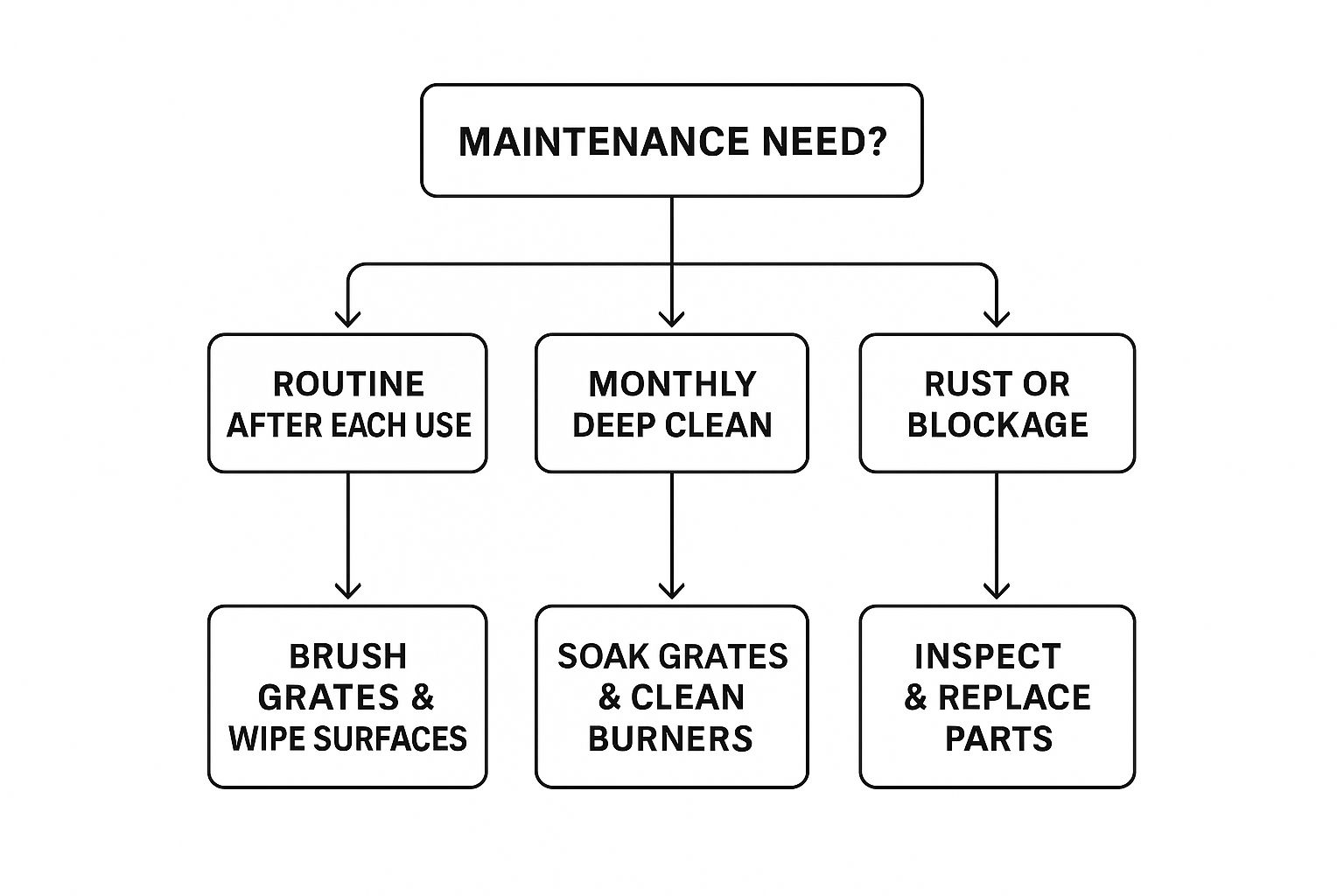
As you can see, routine care is pretty straightforward. It's the bigger issues, like rust, that demand more hands-on attention and potentially replacing parts to keep the unit running well.
A Final Comparison for Your Decision
To bring it all together, I’ve put this table together to give you a clear, side-by-side look at how the three main charbroiler types stack up.
Decision Matrix Gas vs Electric vs Infrared Charbroilers
Use this table as a final sanity check. It’s a great way to compare your top contenders against the specific needs and realities of your restaurant.
| Feature | Gas Charbroiler | Electric Charbroiler | Infrared Charbroiler |
|---|---|---|---|
| Heat-Up Time | Fast (15-20 minutes) | Moderate (20-25 minutes) | Very Fast (5-10 minutes) |
| Temp Control | Good, with zone potential | Excellent and precise | Good, but primarily for high heat |
| Energy Use | Moderate to High (gas) | High (electric) | Lower (highly efficient) |
| Best For | High volume, all-purpose grilling | Consistency, flame-free kitchens | Speed and premium searing |
| Maintenance | Moderate (radiant) to High (lava rock) | Low | Low to Moderate (fragile ceramics) |
| Upfront Cost | $$ | $$ | $$$$ |
By working through these steps—your menu, your kitchen's physical limits, and your budget—the right choice usually becomes pretty obvious. A well-chosen barbecue charbroil does more than just cook great food; it slots right into your workflow, makes your kitchen more efficient, and directly helps your bottom line.
Your Questions About Commercial Charbroilers, Answered
Stepping into the world of commercial kitchen equipment, especially something as central as a barbecue charbroil, naturally brings up a ton of questions. You're not just buying a piece of steel; you're investing in the heart of your menu, something that has to deliver on flavor, reliability, and performance day in and day out.
To help you sort through the options, I've pulled together the most common questions I hear from chefs and restaurateurs. Think of this as a cheat sheet for making a smart decision and getting the most out of your new charbroiler.
How Do I Figure Out the Right Size Charbroiler for My Kitchen?
Getting the size right is probably the single most critical decision you'll make. It's all about matching the machine to your menu and your busiest moments.
Start by thinking about your peak rush. How many burgers, steaks, or chicken breasts are you firing at once? A good rule of thumb is to figure out that maximum number—say, 20 steaks or 30 burgers—and then make sure your cooking surface can handle it without everything being jammed together. You need room to work.
But it’s not just about the grill top. You have to measure your physical space, especially your ventilation hood and counter area. You absolutely must leave at least 6 inches of clearance around the unit for safety and airflow. A charbroiler that’s too small will create a massive bottleneck during service, while one that's too big is just a waste of energy and precious kitchen space.
Radiant vs. Lava Rock Gas Charbroilers: What's the Real Difference?
This is a classic debate, and the choice you make will have a huge impact on your food's flavor and your kitchen's cleanup routine.
- Radiant Charbroilers: These are the workhorses. They use metal plates, or "radiants," over the burners to heat the grates. They get hot fast, give you incredibly even heat, and are a breeze to clean. When drippings hit those hot radiants, they sizzle and create that signature grilled flavor with far fewer flare-ups.
- Lava Rock Charbroilers: These are all about a specific flavor profile. They use a bed of porous volcanic rocks to soak up and radiate heat. When drippings hit those rocks, you get an intense, smoky flavor that some chefs swear by. The trade-off? They require a lot more work to keep clean, and if you don't stay on top of it, grease buildup can cause serious flare-ups.
For most busy kitchens that need consistency and easy maintenance, radiant is the way to go. If your whole concept is built around a deep, smoky char, lava rocks might be worth the extra elbow grease.
Can Electric Charbroilers Actually Deliver Real Grill Marks and Flavor?
Yes, they absolutely can. Modern commercial electric charbroilers are not the weak appliances you might be thinking of. These are serious pieces of equipment, engineered with high-wattage heating elements and heavy-duty cast iron or steel grates that get screaming hot and stay that way.
You'll get fantastic sear marks, no question. And while you don't get flavor from burning gas, you get something very similar when marinades and meat drippings hit the hot elements and vaporize. This process is almost identical to what happens in a gas unit, creating an authentic grilled taste that will fool even the toughest critics.
If your kitchen is in a building with strict fire codes, has no gas line, or you need precise temperature control for delicate items like fish, an electric barbecue charbroil isn't just a good option—it's often the best one.
Are Infrared Charbroilers Really Worth the Higher Price Tag?
For the right kind of restaurant, the answer is a definite yes. If you're running a high-end steakhouse or any kitchen where speed and quality are everything, an infrared charbroiler is a game-changing investment.
Infrared technology cooks food incredibly fast—often cutting cook times in half—which means you can turn tables faster. It also does an amazing job of searing the outside while locking in moisture, giving you a much juicier final product. That intense, direct heat also means flare-ups are almost nonexistent, so you're not burning expensive cuts of meat.
When you factor in the energy savings and the ability to serve more customers, that higher initial cost can pay for itself surprisingly quickly.
We offer a wide selection of commercial charbroilers for your restaurant, including powerful gas, efficient electric, and high-performance infrared char broilers. Explore our collection of countertop, modular, and floor units designed to meet the demands of any professional culinary operation. Find your ideal barbecue char broil today on charbroilers.com.